Set Up For A Stock Market Crash

Last week I posted 30 bearish indicators here. Since then equities have begun to sell off and change trend after historic and solar-maximum inspired levitation. There is a long way to go to mean-revert, wash-out or fulfil these indicators, but that can be achieved in a shorter timescale with the help of HFT by way of a crash or waterfall declines.

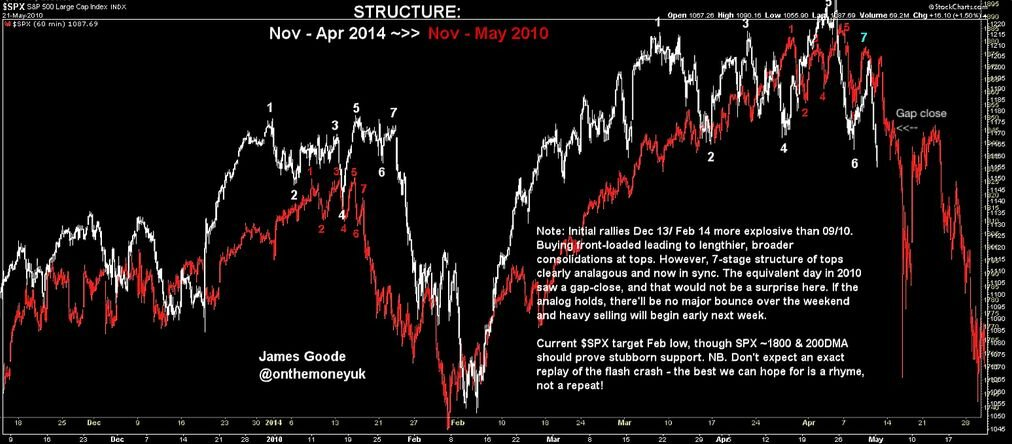
Within that list of indicators we see identification similar to the backdrop to the May 2010 flash crash, and I posted about that here.

We see a similar price pattern into the flash crash repeated here too:

13ap1

Source: James Goode

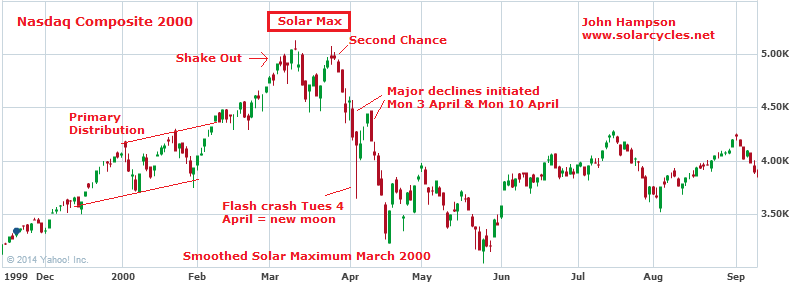
We also see identification similar to the Nasdaq peak in 2000, before a flash crash and waterfall declines:

13ap2

13ap1

And the same applies to the Nikkei 1989 and solar maximum.

Additionally, recall that major declines in history have often initiated following a weekend, where equities sold off into the Friday close, and market participants have time to stew Saturday and Sunday. Stocks sold off into the close on Friday, in a fairly decisive Thu-Fri trend change.

Recall that the biggest decline days in history have typically occurred close to new moons and full moons. This coming Tuesday is a full moon.

Recall that geomagnetism is bearish for the stock market. We have been experiencing geomagnetic disturbance both Saturday and Sunday this weekend.

Recall that periods of heavy falls in the stock market have typically occurred in the inverted geomagnetic seasonal lows of March/April and October. This is April.

In short, the set-up is here for a crash or waterfall declines, and the greatest potential lies in Mon April 14 – Tues April 15 (tomorrow and Tuesday) for a major historic down day. I balance that with certain short term indicators suggestive of bounce potential, and were that to occur we might look to around the new moon of April 28th for fulfillment. But the crash set up is there for tomorrow, so let’s see.

Markets Update

The selling in equities into Tuesday did not wash out indicators, suggesting a lower low should be ahead. Yesterday’s bounce produced a very low put/call reading signalling high complacency.

10ap1

 Source: Stockcharts

Risk of an outsized move remains historically high:

10ap2

 Source: Barcharts

Investors Intelligence bulls back up to 54.6%, bears unchanged at 18.6%, continuing the historical extreme cluster of readings.

There is downward pressure into next Tuesday’s full moon. Presidential seasonality peaks out in mid-April. Earnings season ramps up as of next week.

8ap3

 Source: Fat-Pitch / StockTradersAlmanac

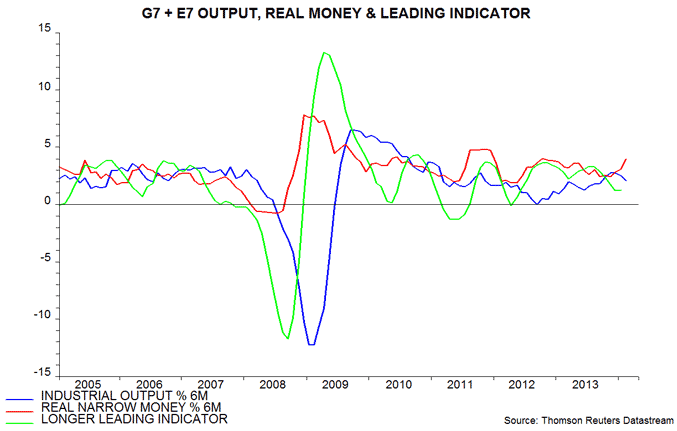
Narrow money and OECD derived leading indicators continue to point to weakness in global industrial output into May, before a summer pick up. Economic surprises for the main regions ticked further negative this week.

After a little consolidation, commodities (CCI and CRY indices) are breaking upwards again:

8ap5

 Source: Bloomberg

Whilst the US Dollar is flirting with breakdown again:

8ap4

 Source: Stockcharts

Treasuries and yields are in a range, watch for resolution:

8ap6

 Source: Stockcharts

In short, I expect the current bounce in equities to be short lived and roll over into further declines into next week’s full moon. April remains my target window for major declines in equities, based on historic patterns of falls accompanying this inverted geomagnetic seasonal low period, together with an anticipated solar maximum now on the wane. That would imply this earnings season would be a sell, and I think this is reasonable given we have negative earnings guidance once again whilst stocks have front-run up to valuations that in contrast demand a return to solid earnings and revenue growth. Leading indicators also suggest economic data should continue to disappoint into May, adding to this April window of opportunity. However, if equities can hold up in a range through this period until data picks up again, then maybe we could have a mirror of 2011, whereby stocks did not break down until the Fall. For now though, I suggest this the lower probability, and I expect April can deliver the goods.

The State Of The Markets

Thank you so much for all the messages of support – I was really touched to read them all. I had a burn out and now have to take things easy. I was working long days with the markets and doing too much of everything on top. So my posts will be less frequent for the foreseeable future, but as my focus is on the medium and long term, less intensive tracking may be no bad thing. I come back to the markets after a couple of weeks away and although price continues to frustrate, little has changed in the big picture. Some of my near term timings didn’t work out, but the overall case remains solidly bearish, and it’s a question of patiently waiting for price to fall in line.

Focusing on US stock indices, I have updated the bearish indicators and flags and added some new ones below:

1. A 5-year bull trend only occurred once before, in the 1990s, and was followed by 3 down years

2. Historic levitation above longer term moving averages and lack of 10%+ correction since 2012

3ap35

Source: Gordon T Long

3. Last 2 years rally in US stock indices has been made up of less than 20% earnings growth and more than 80% multiple expansion. The last 2 such occurrences in history were 1985:1986 (leading into 1987 crash) and 1997:1998 (leading into 1999 real Dow peak)

4. Compound annual growth rate in equities since 2009 was only exceeded in 1929, 1937, 1987 and 2000, all of which led to steep market declines

5. Crestmont P/E is the 3rd highest in history after 1999-2000 (market peak) and 1929 (market peak), and in 97th percentile

6. This is the 2nd highest market capitalistation to GDP valuation outside of 1999-2000 (market peak)

7. This is the 2nd highest Q ratio valuation in the last 100 years outside of 1999-2000 (market peak)

8. This is the 3rd highest CAPE valuation in the last 100 years outside of 1928-1929 (market peak) and 1999-2000 (market peak), and the US is the 4th highest CAPE valuation in the world currently.

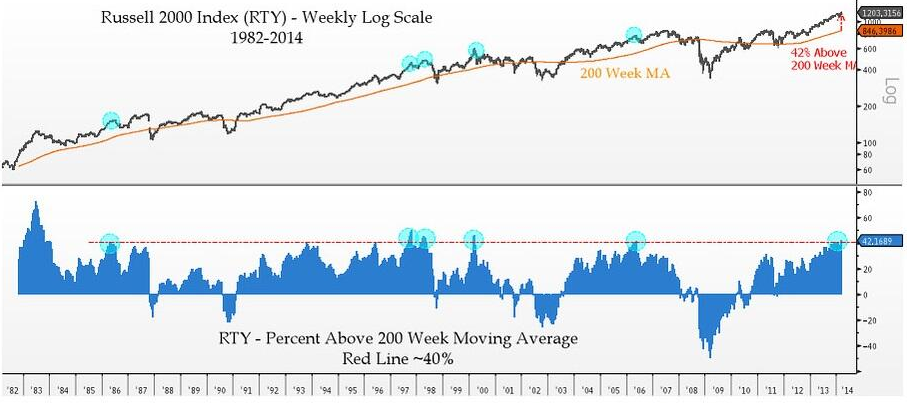
9. Russell 2000 index p/e is currently 74.8; Russell 2000 to SP500 valuation differential at all time record

10. 84% of companies have offered negative earnings guidance for Q1 2014 so far; Last quarter’s revenue growth was the lowest since 2009

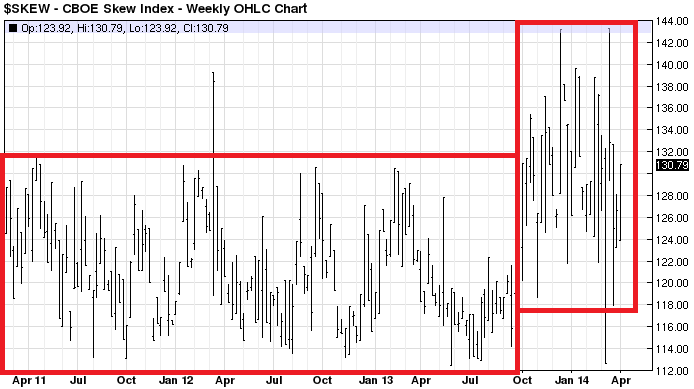
11. Skew is in elevated range for the last 6 months; Cluster of extreme Skew readings not seen since June 1990 before recession began July 1990

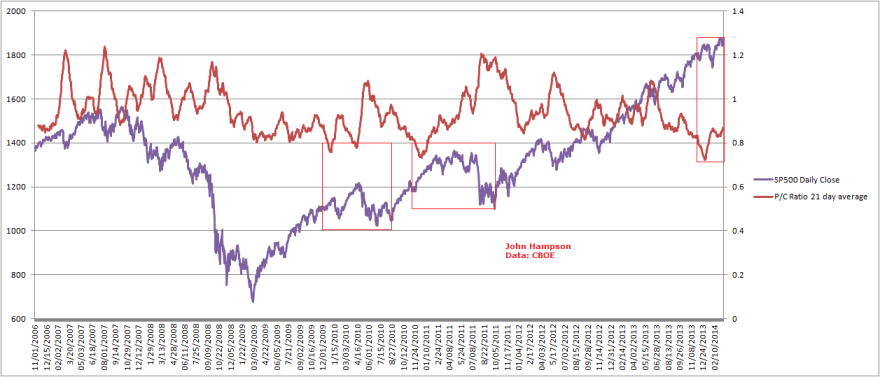
12. Put Call ratio 21 day average over the last several months has clustered in the extreme low zone that previously led to sharp corrections
3ap1

13. Greedometer – aggregate of macroeconomic, fundamental and technical data – is at a record level exceeding the 2000 and 2007 market peaks

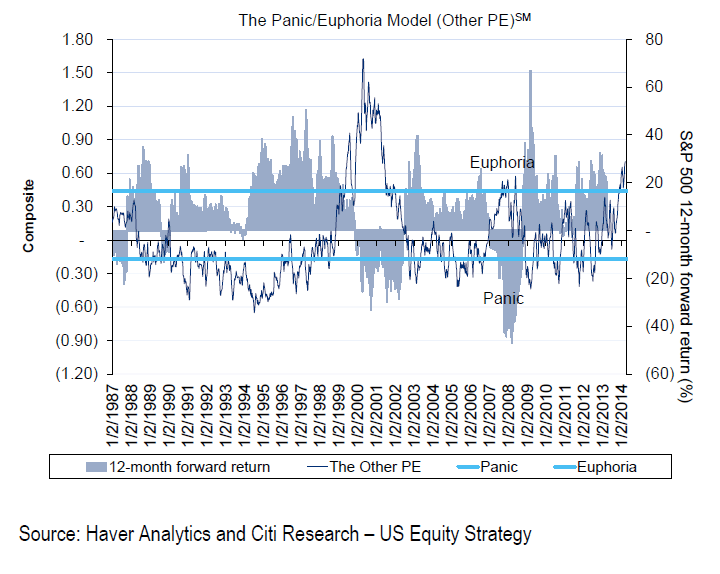
14. Citi Panic/Euphoria model at a level only exceeded into the 2000 peak:
3ap2

Source: Fat-Pitch

15. NAAIM sentiment remains historically high

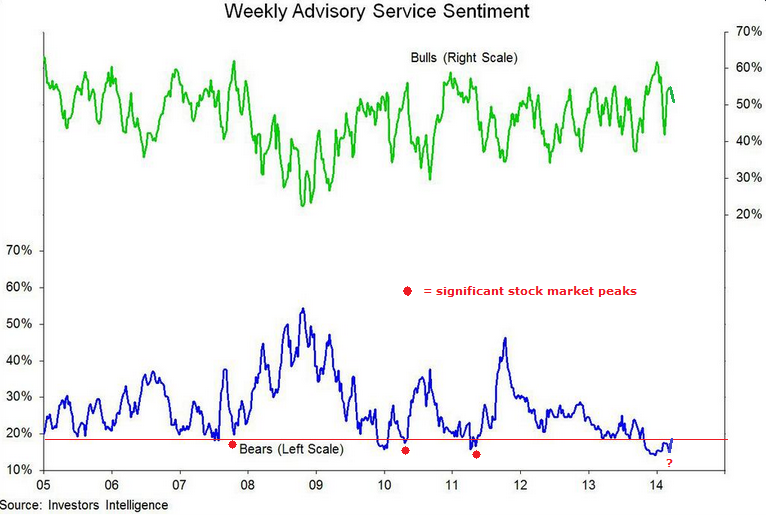
16. Investor Intelligence % bears levels and pattern similar to previous significant stock market peaks

3ap29

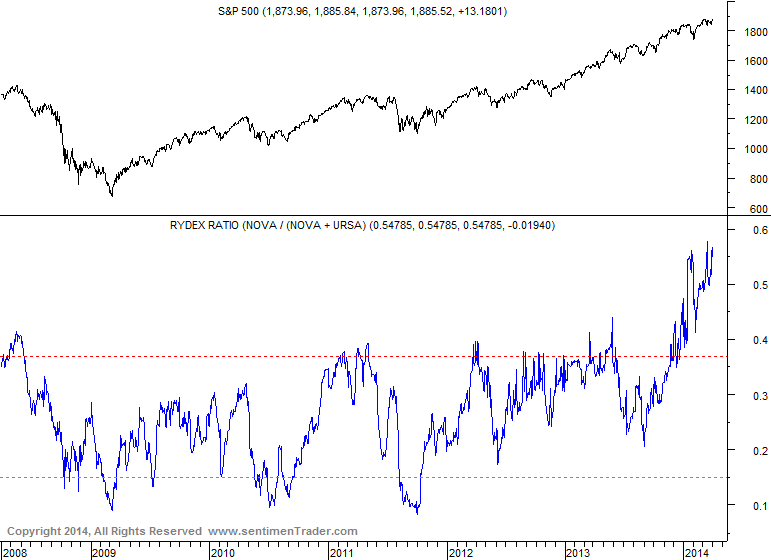
17. Rydex bull ratio at extreme historic high
3ap16

 Source: Sentimentrader

18. Margin debt (updated for Feb 2014) is at an all-time record, both in nominal and real terms, and as a percentage of market cap; Net investor credit balances are at an all time low

3ap4

Source: Dshort

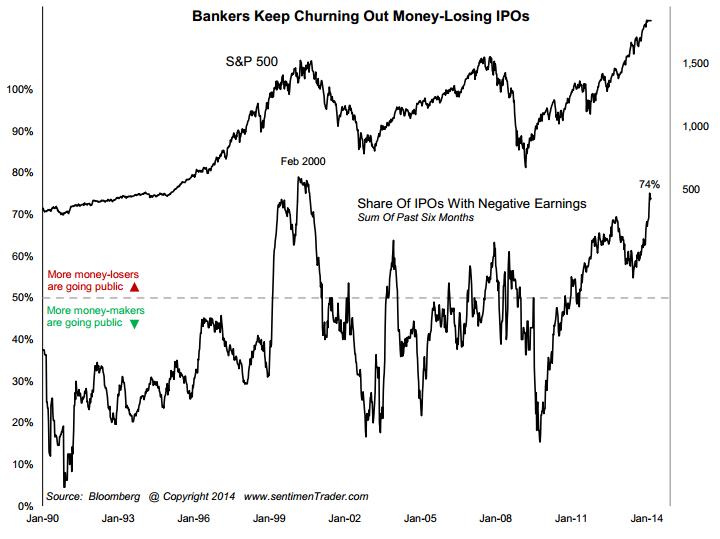
19. IPOs with negative earnings at levels consistent with previous market peaks

20. Leveraged loan issuance at record, surge mirrors 2007 and 2011 important stock market peaks

21. High yield corporate bonds to 20+ year treasuries shows a divergence with the stock market that has previously marked tops

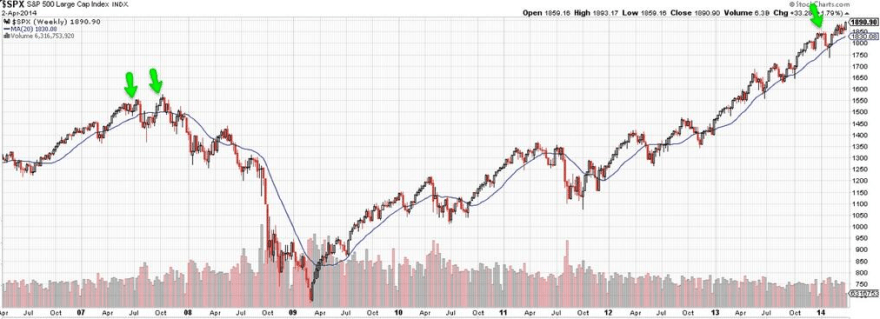
22. AAII equity allocations highest since June and Sep 2007 and Dec 2013
3ap5

 Source: UKarlewitz

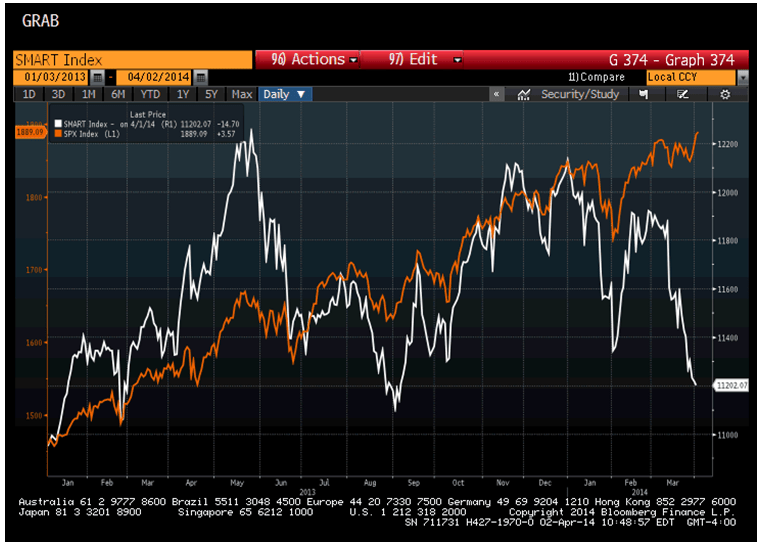
23. Smart Money Flow Index shows siginificant divergence in 2014
3ap6

Source: Todd Harrison

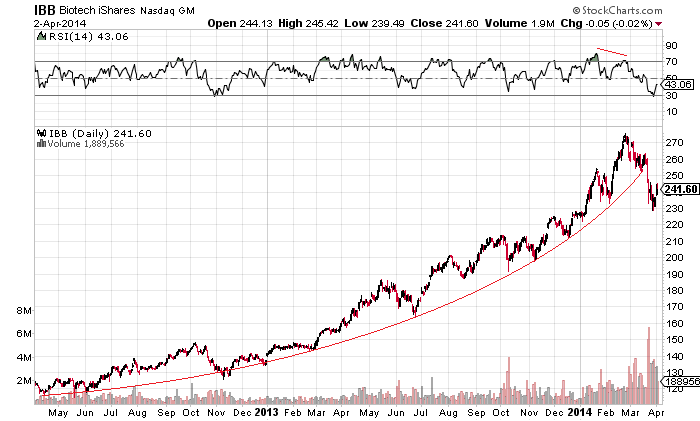
24. Biotech parabolic bubble breakdown

3ap7

Source: Stockcharts

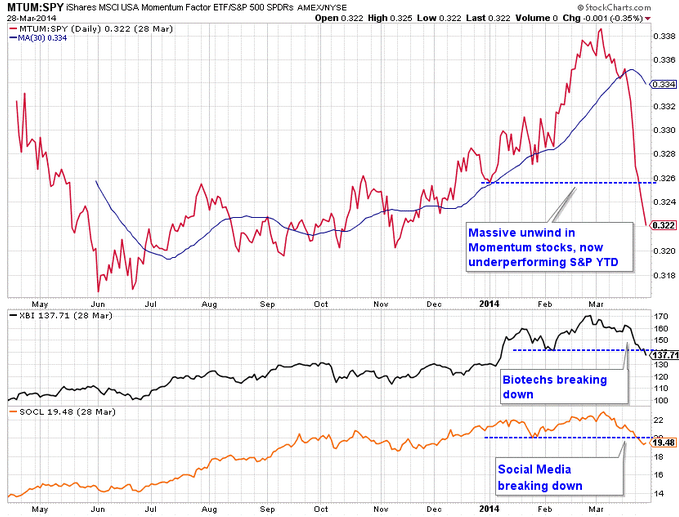
25. Wider momentum stocks breakdown
3ap14

Source: Charlie Bilello

26. Leading indicators suggest global industrial output slowdown into a May trough, then a pick up into late summer

3ap15

Source: MoneyMovesMarkets

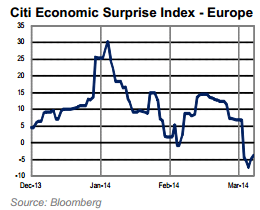
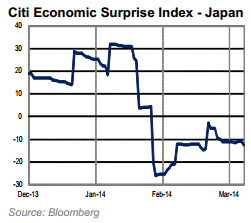
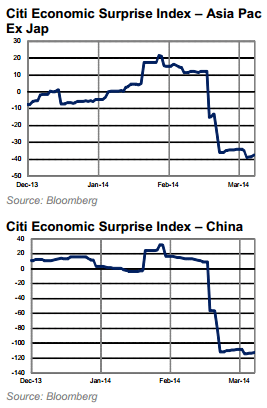
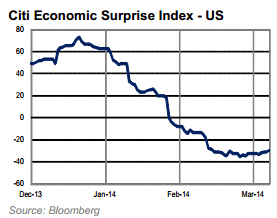
27. Citi Economic Surprise Indices for major global regions all negative
3ap17 3ap18 3ap19 3ap20Source: Citigroup

28. Fund manager allocation to global equities is at levels that previously led to a market peak or correction

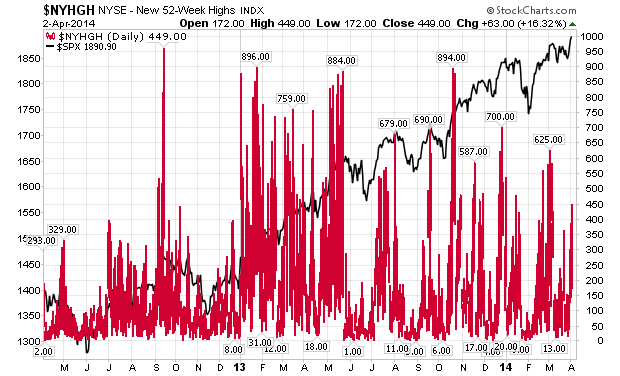
29. Percentage of stocks hitting new highs is thinning into current new SP500 highs
3ap10

Source: Stockcharts

30. Six month breadth divergence in Nasdaq 100 in stocks above 200MA
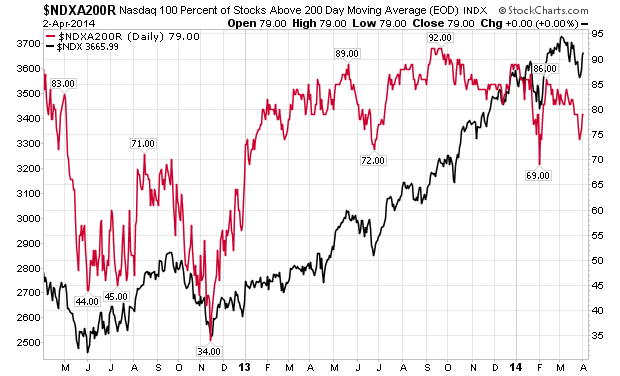
3ap11

Source: Stockcharts

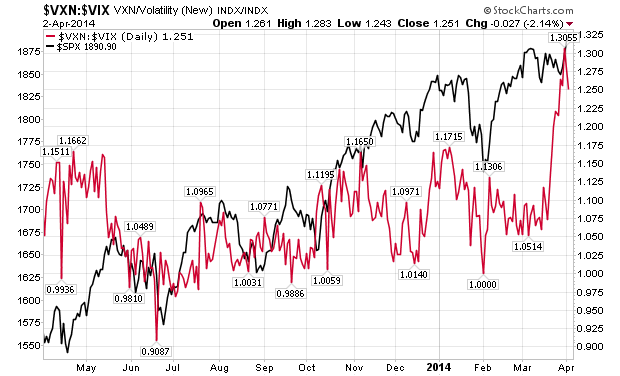
31. VXN/VIX ratio is a risk-off current flag

3ap22

Source: Stockcharts

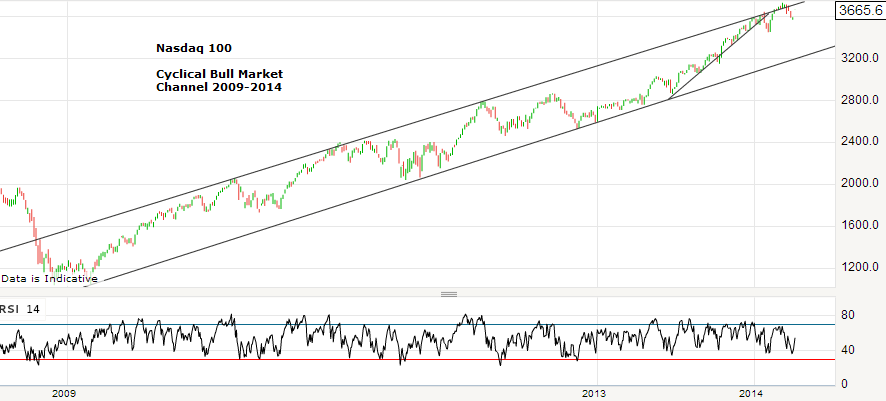
32. Nasdaq 100 made a fake-out from its cyclical bull channel in March
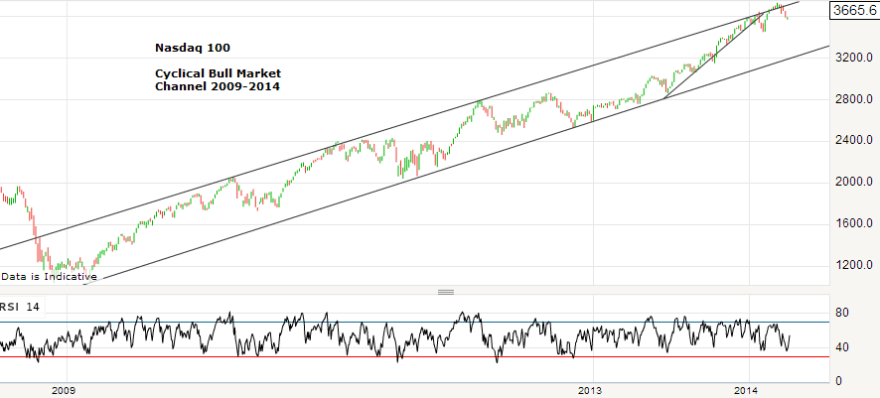
3ap24

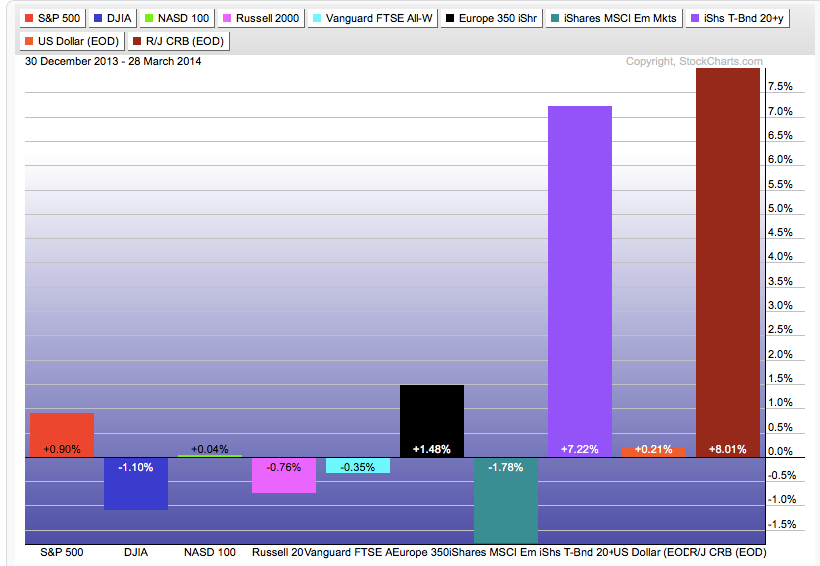
33. Best performing classes and sectors in Q1 2014 were commodities, treasuries and defensives

3ap30 3ap31

Source: Fat-Pitch

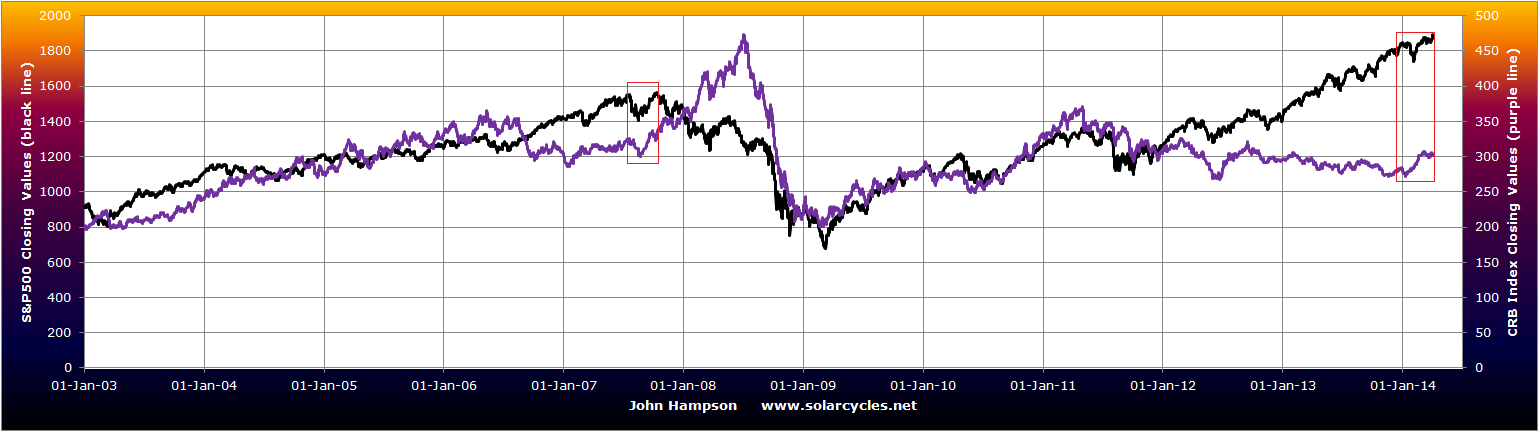
34. Late cyclical outperformance of commodities as equities top out consistent with 2000 and 2007 peaks
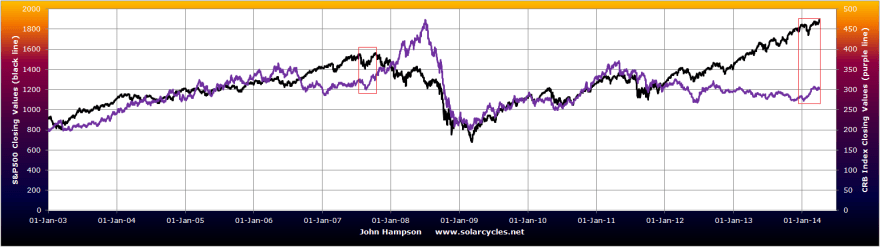
3ap32

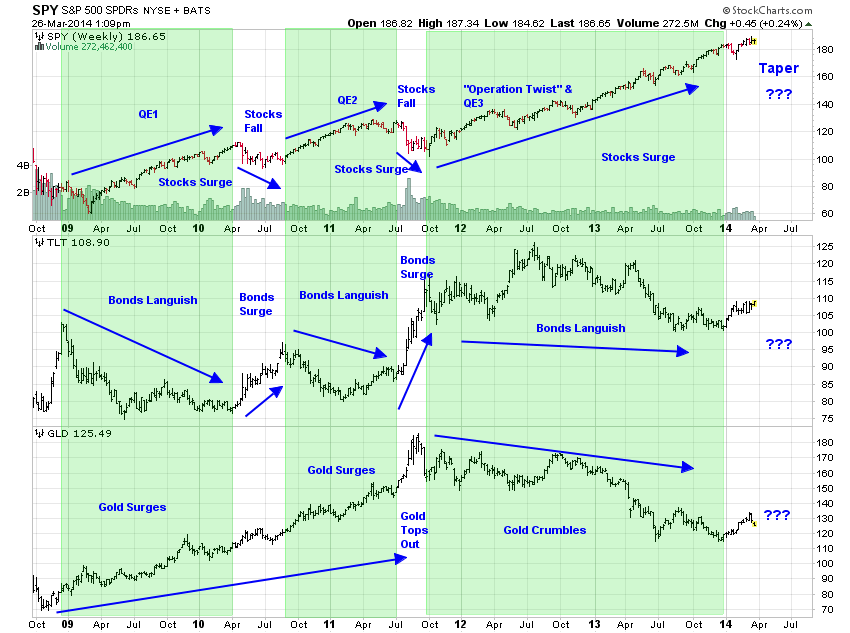
35. Winding down of QE historically negative for equities, positive for bonds and gold

3ap21

Source: Jesse Felder

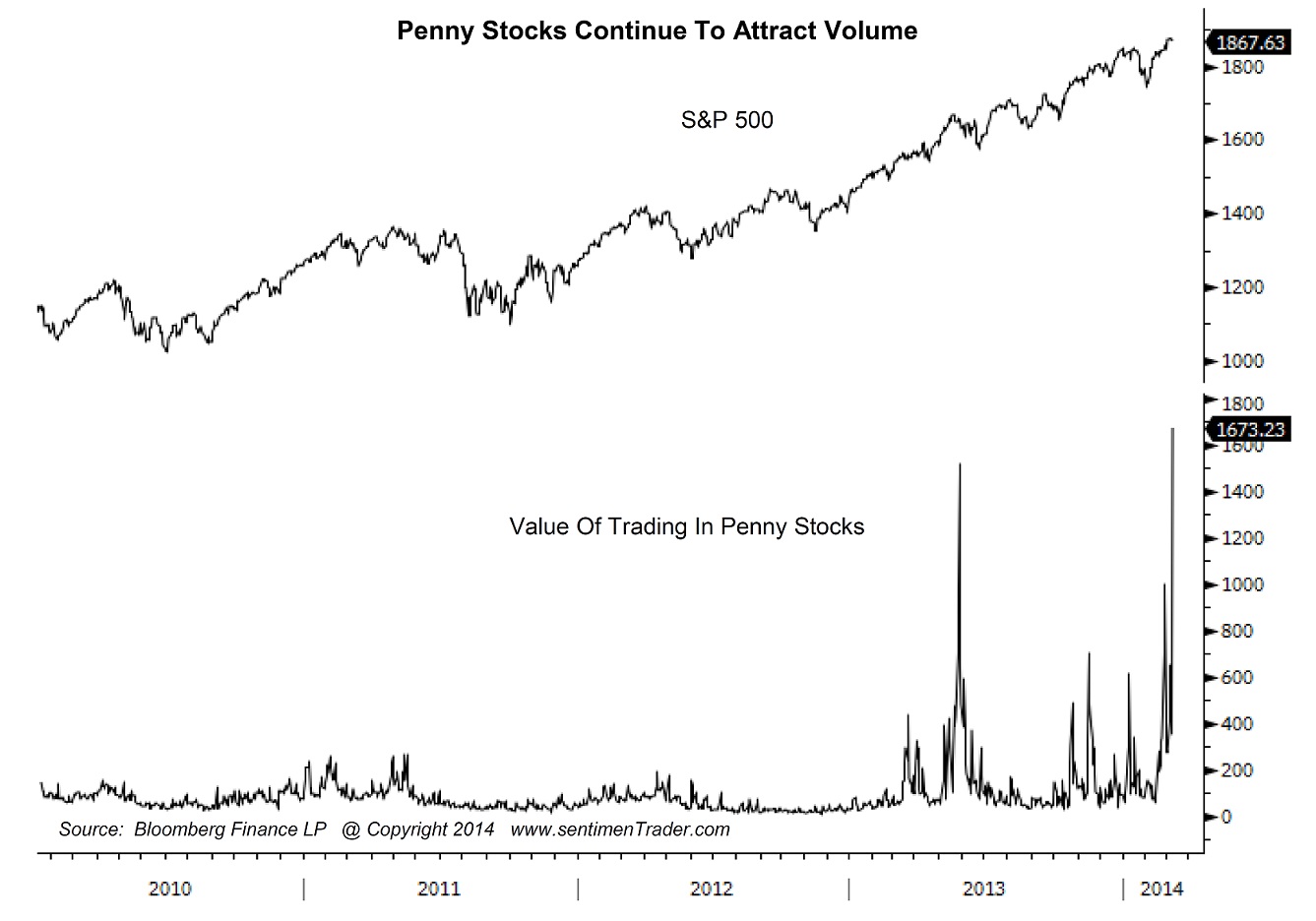
36. Trading in penny stocks signalling a peak
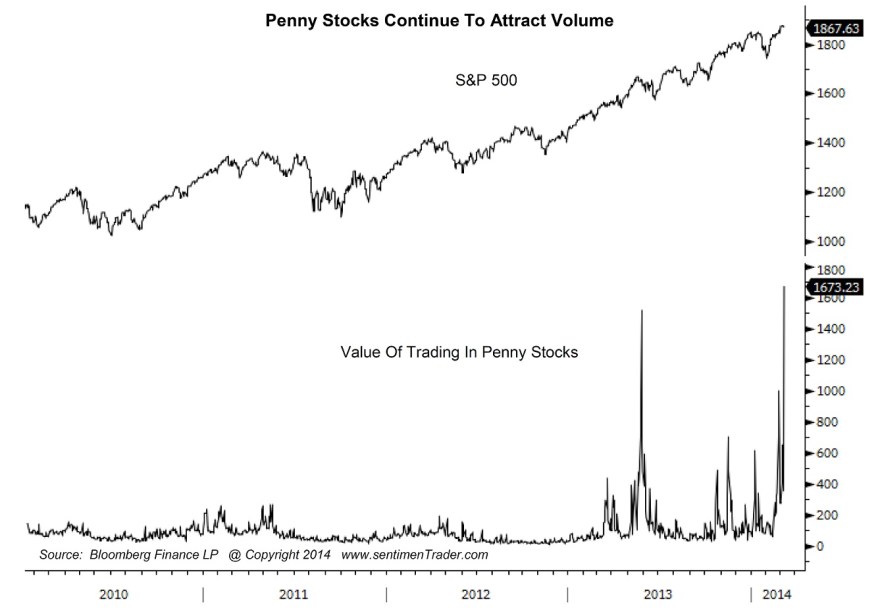
3ap36

Source: Sentimentrader

37.  Dow, FTSE and Nikkei are all at long term resistance levels (connecting 2000 and 2007 peaks)

38. Treasury Bond Yields Rate Of Change over last 12 months is at a level that previously led to market tops in 2000 and 2007

39. Rydex money market assets back to 1999 lows

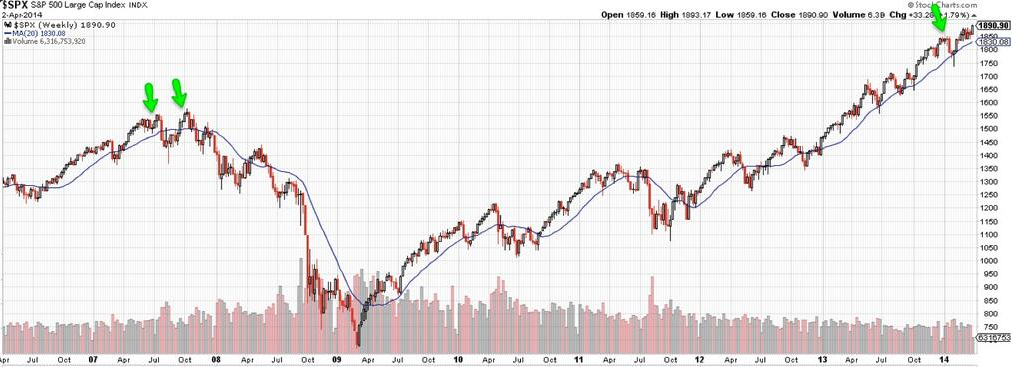
40. Equities topping out with the solar maximum, in line with history

3ap23

Underlying Source: Solen.info

A 40-indicator case is a fairly strong case to go short. But we need to balance with what’s supporting the bullish case.

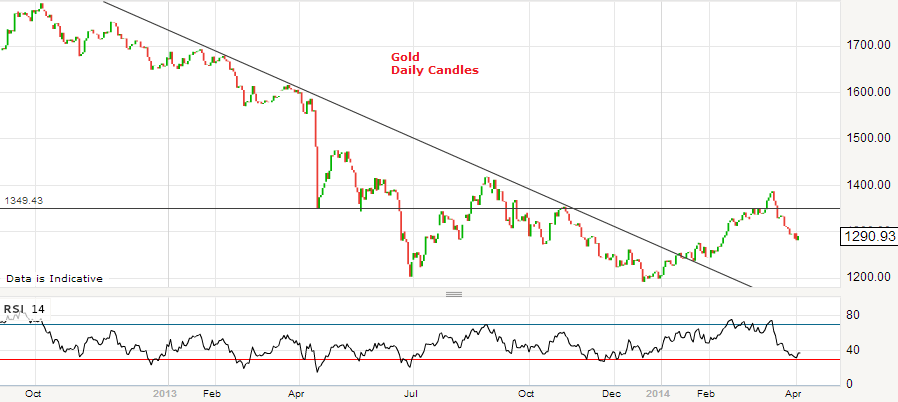
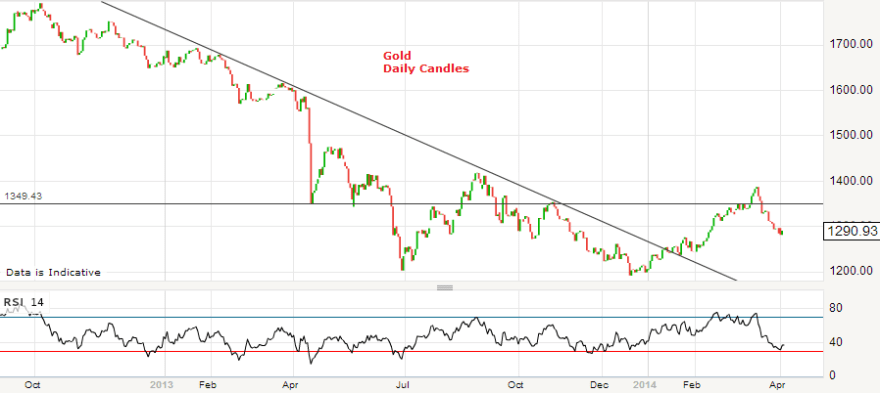
Cyclical stocks have broken out upwards over the last week. The cumulative advance-declines breadth measure remains in an uptrend, supporting the advance in equities. Euro Stoxx broke out to a new high. Gold and gold miners have pulled back in March, with gold having failed to hold a break out above the first meaningful resistance level:
3ap27

The question is whether a higher low can now be made in gold, to continue the bottoming process.

Margin debt, for which we have data up to the end of February, did not yet top out. I had initially expected margin debt to top out in December with an anticipated highest monthly sunspots spike at that time. However, a higher monthly sunspot spike in February suggests speculation could have topped out as we moved into March instead. We have thus far seen peaks in the Russell 2000, Nasdaq and Biotech in March, and we saw a lower monthly sunspot spike in March than in February. The consensus view is that the smoothed solar maximum for SC24 already passed at the turn of the year and that sunspots should decline from here. However, SIDC are still running a second alternative whereby a smoothed solar peak still lies ahead in H2 2014:

3ap34

 Source: SIDC

Playing to that possibility is the trend in leading indicators noted above. If stocks can hold up whilst economic data starts to improve again as of May then may be they can rally through to the Fall. On the flip side, we should have another month of disappointing data right ahead which could equally pull the rug from under equities. Were the second SIDC scenario to occur then I would expect speculation not to top out until the Fall, and a suitable technical mirror from history may be 1987 whereby sentiment reached record levels in Q1 1987 but stocks did not fall hard until Q3. But for now, the more probable scenario is of a smoothed solar maximum having passed and speculation declining from here, and for this to be confirmed I would be looking to see that the RUT and Nasdaq indices do not make a higher high from here, and that margin debt tops out. Sunspots should also notably trend down as we head into mid-year to confirm this.
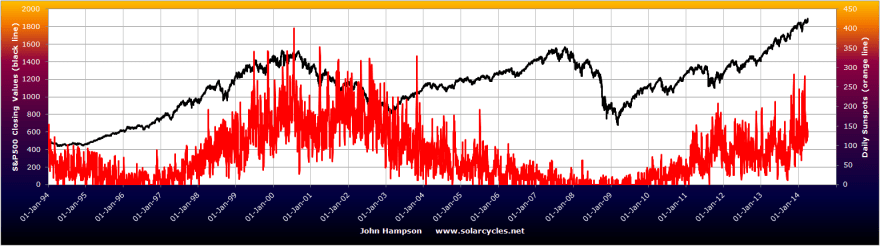
3ap33

There have been a concentration of market falls occurring in the inverted geomagnetism seasonal lows of March-April and October. So again taking that primary scenario of sunspots now on the wane, I look to this new month of April to deliver major falls in equities, in line with the Nasdaq in 2000 (smoothed solar max and sunspot spike March 2000). Presidential cycles in the market suggest stocks could eek out further gains in the first part of April before falling for a period of weeks. DeMark also believes a top is within days but suggests the SP500 could reach 1931 before inverting.

The primary scenario of a smoothed solar maximum having occurred in December 2013 and a highest monthly sunspot spike in Feb 2014 is supported by a chain of events to date: Bitcoin peaked in Dec, Nikkei and Dow (very tentative at the time of writing) peaked and money flows switched into defensives at the turn of the year, the ‘theme’ stock indices and sectors of the cyclical bull exuberance phase peaked out Feb-Mar 2014. But this is all subject to confirmation or invalidation. So let’s see how April develops. I remain significantly short equities, and siginificantly long precious metals, with other smaller positions long commodities. My worst case scenario is the continuation of speculation into late summer before Q3 falls in equties, and I would hold my positioning until then if so. But for now this is the outside scenario, and I maintain good odds of April delivering significant falls in equities, and momentum returning to gold with a higher low.

Thank you for all your input whilst I was away.

Demographics And Secular Bull Markets

First a quick note on yesterday’s stock market action. An indecisive day overall again, and on the lowest volume yet. The biotech breakdown remains tentative, but volume has been significantly higher on the down days versus the up days such as yesterday. Volume is also rapidly accelerating into BIS Ultrashort Biotech. For the wider US markets: put-call remains 5 months under 1, Skew remains 5 months historically elevated, Investors Intelligence % bears remains 5 months in the historic low band, and breadth divergences (% stocks above MA) have been running for 5 months too. With every day that passes, the likelihood of the elastic band snapping grows.

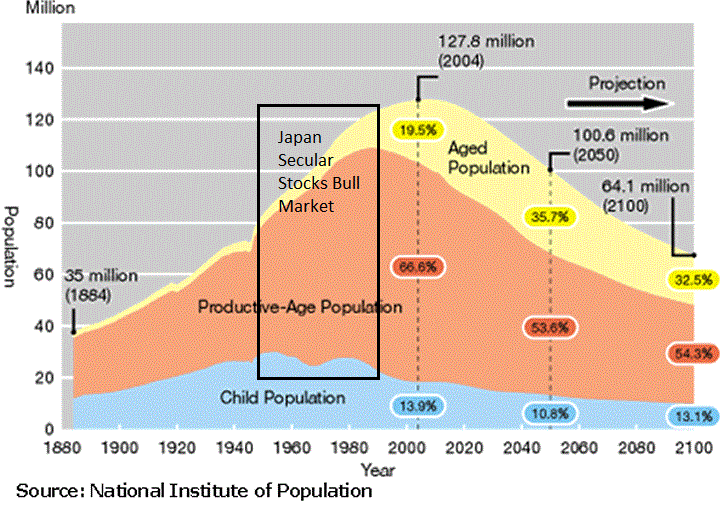
Now to the title of this post. Secular bull markets and superpeaks have always been driven by demographics. Simply, secular = demographic. If there is a swell in the middle-aged group that is the main buyer of equities, particularly if set against declines in the young dependents and in the old age disinvestors groups, then we have the recipe for an increasing flow of money into equities until the demographic trends reverse. Note that this applies to stable, developed, free market countries – a poor country run by a dictator but with a demographic tailwind will not experience the same results.

Japan’s secular bull market into 1989/1990 is explained by these two charts. A birth swell around 1950 makes for a swell in equities buyers into 1990, and from around 1950 through to 1990 there was a potent combination of a swelling middle-age group and a declining child dependent group. Thereafter the middle-age demographic trend reversed and the old-age group began to accelerate, making for a secular bear.

11ma1 11ma2

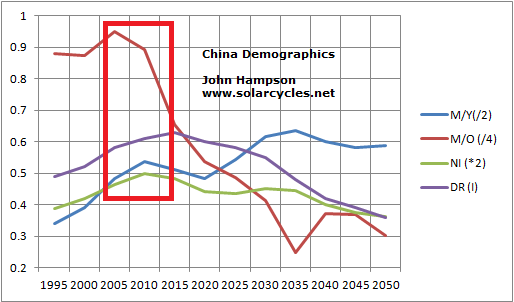
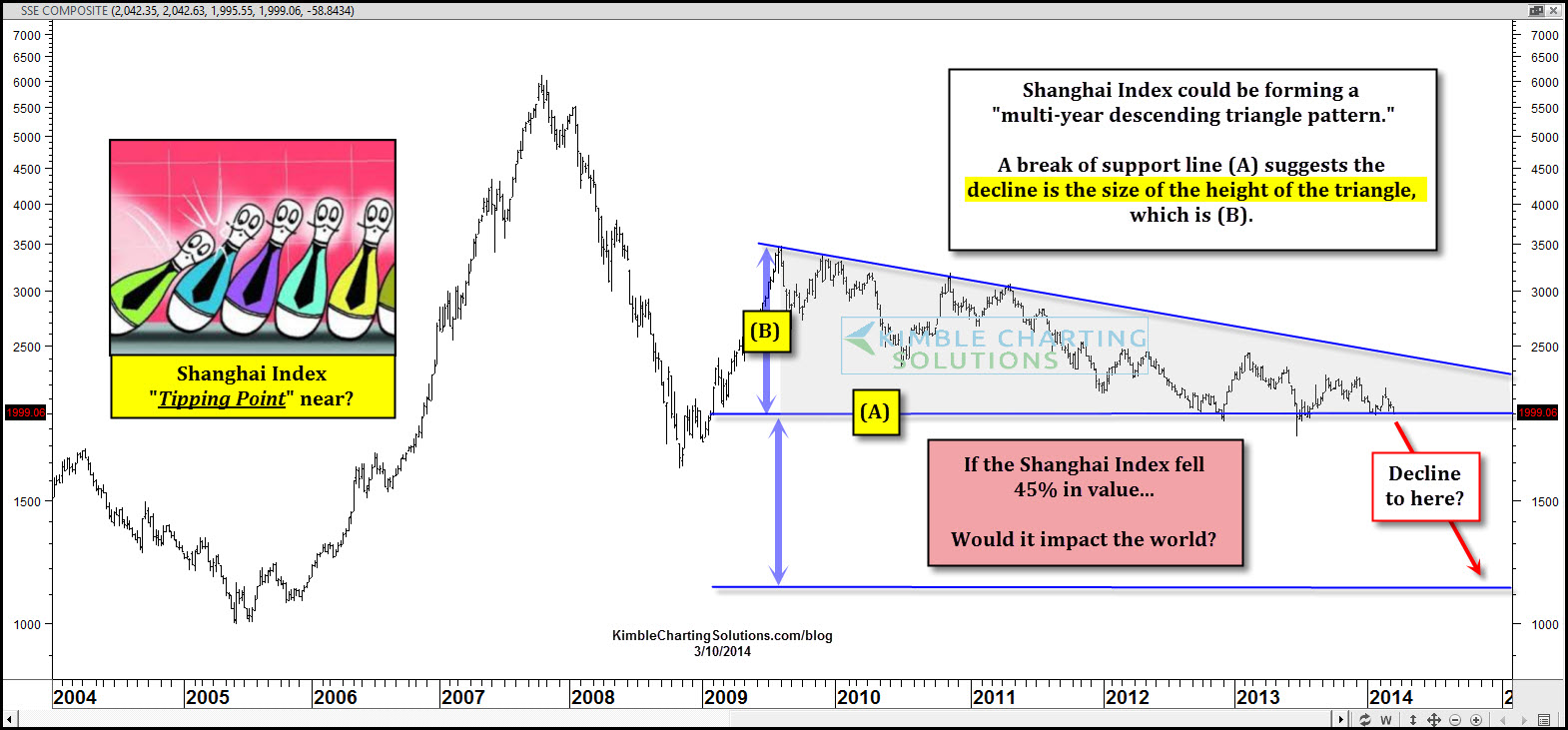
China’s Shanghai Composite superpeak appeared as its 4 demographic measures topped out, and now that stock market is currently threatening to break down even further, as all demographic measures are trending downward:

11ma7

11ma9

Source: Chris Kimble

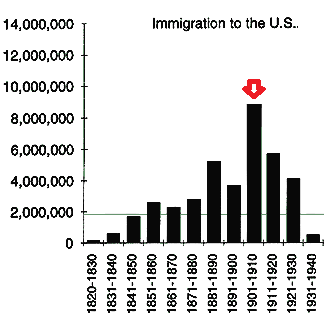
The Dow secular bull and superpeak into 1929 was a result of record immigration of younger adults into the US at the start of the 1900s followed by restriction as of the 1920s, and that swell became the key middle-age group in the 1920s. Plus a decline in births in the 1920s reduced the child dependent ratio as the decade progressed.

11ma5

Source: Susps.org11ma6

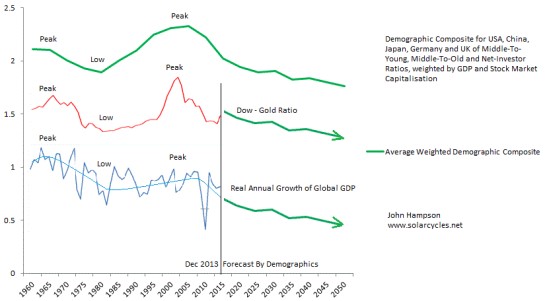
The US stock market secular bull of 1980-2000 was the result of demographic measures trending upwards for that window of time, supplemented by similar rising demographic trends in Europe and China (and Japan in the 1980s), which added to the world boom. Thereafter US demographic measures turned down and the current downward pressure is supplemented by similar downtrends in China and Europe, the recipe for a global bust.

11ma3

11ma4The secular bear market in stocks is still very much in play, and there should be a real lower low in global equities ahead. Gold behaves as the anti-demographic, making a secular peak into 1980 and beginning a secular bull in 2000 that by demographic trends should run on to the next solar maximum of the mid 2020s (solar maxima generate speculative peaks and there is a correlation between sunspot cycles and demographics).

Valuing country stock markets by PE or CAPE has to be considered relative to demographics. An expensive valuation is likely to become more expensive if demographic trends are upward, due to the increasing flows of new buyers. Hence, as the below chart shows, we saw the highest set of global CAPEs into 2000 due to the combined demographic uptrends of USA, Europe and China. Their combined current downtrends have produced a historically low set of overall CAPES.

11ma8Source: Megane Faber

The US stock market is currently the second most expensive in the world by CAPE, and above all other bands in the chart above. Relative to demographics, this is very much overvalued. As per the two charts just above this one, there is a compelling case for US and global equities to enter a new cyclical bear and continue the secular gradual washout following the 2000 superpeak, whilst gold should resume its secular bull as the anti-demographic.

Monday Charts

Whilst Friday’s action in the stock markets was not decisive, it looks promising for a reversal, so let’s see how this week begins.

1. Insider selling consistent with peaks:

10ma1Source: ShortSideOfLong

2. Euphoria model now up to +0.65:

10ma2Source: Barrons/Citi

3. Latest Economic Surprises US:

10ma3Source: Citi

4. IPO characteristics consistent with peaks:

10ma4Source: Sentimentrader

5. From Kent’s link, US small caps peaked at the beginning of 2002:

10ma5Source: ClaassenResearch

6. And that fits with the second peak of solar cycle 23:

10ma6Underlying Source: Solen

7. The anticipated smoothed solar maximum at the end of 2013 and the February 2014 monthly sunspots spike is very similar to the solar peak at the start of 2000, and the monthly candles in the Nasdaq 100 show a similar pattern. A series of green candles into the end of 1999/2013, a red January candle, up again in February and now a potential March reversal:

10ma7

The reason it is not as supersized as the 2000 peak is due to the difference in demographics, but we see a similar monthly RSI peak and by various measures the current high compares to the top of 2000 (such as margin debt, sentiment and certain valuations).

Friday Charts

1. Biotech followed through on Friday’s high volume down day with a second one yesterday:

7ma5

Source: Stockcharts

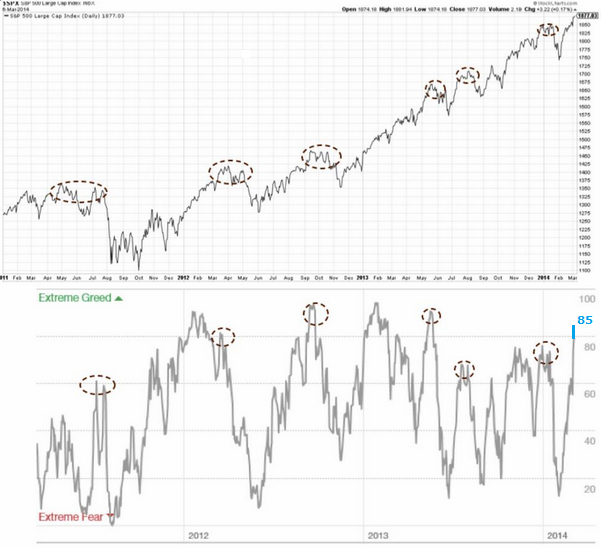
2. Greed and Fear Index has rallied up to extreme greed territory:

7ma1Source: UKarlewitz

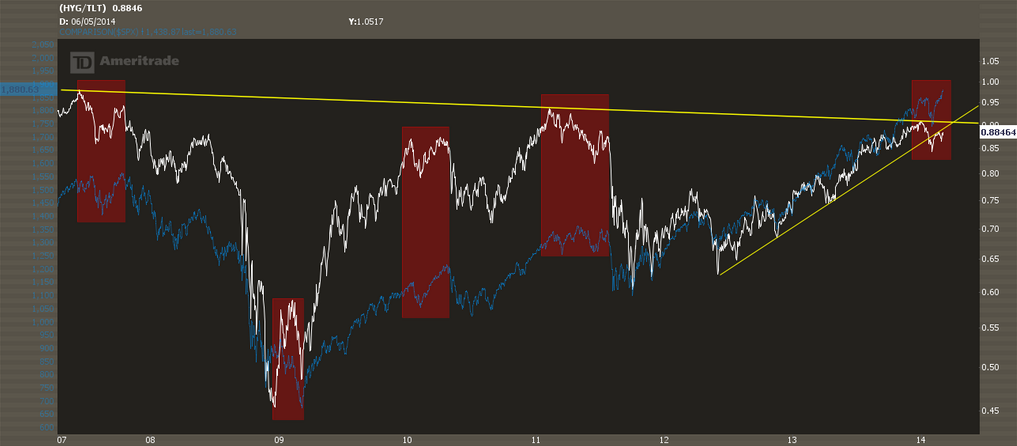
3. High yield corporate bonds to 20+ year treasuries shows a divergence with the stock market that has previously marked tops:

7ma2Source: Inflated Temper

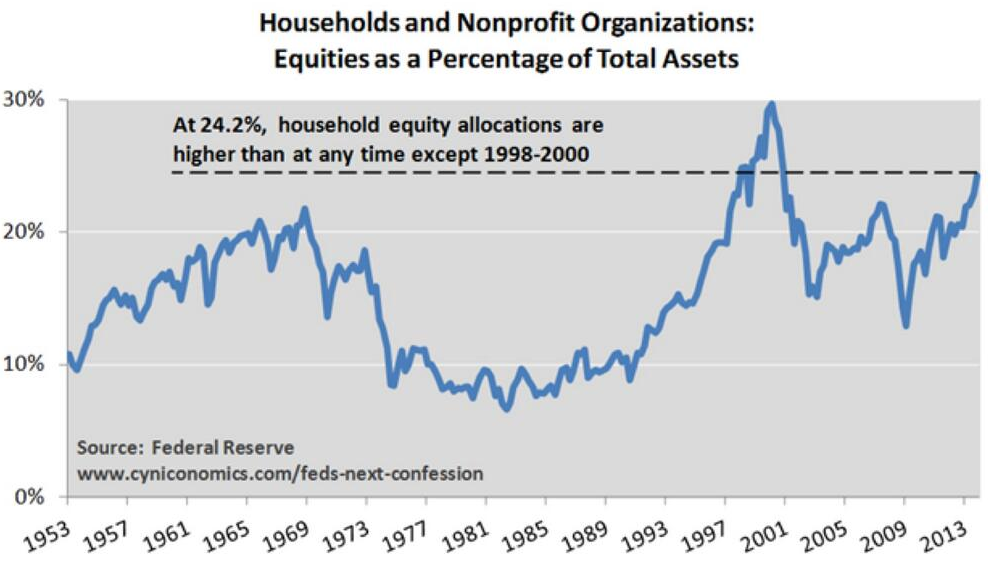
4. Household and non-profit organisations allocations to equities:

7ma4

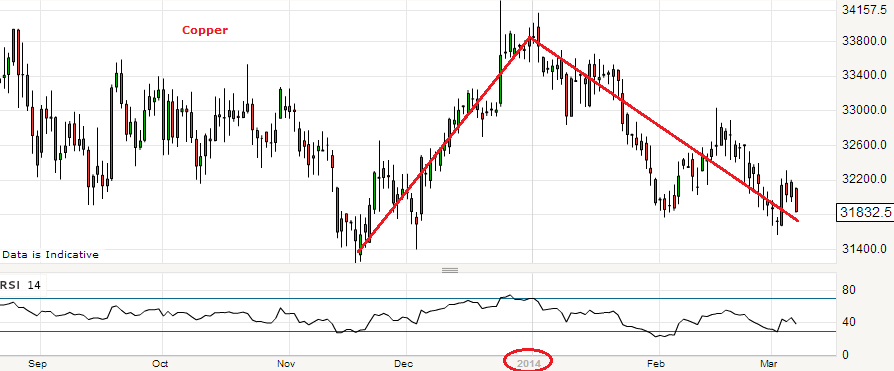
5. Dr.Copper does not think much of the global economy in 2014:

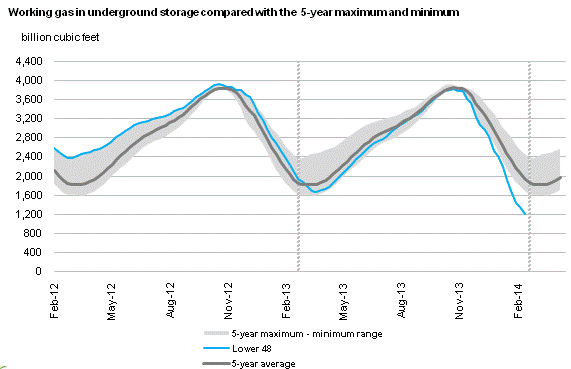
7ma66. Natural Gas inventories are some way below their historic normal range and I expect this commodity can make a renewed bid for $5:

7ma3Source: EIA

Thursday Charts

Small range day for equities yesterday, on low volume, consolidating the previous day’s advance. Gold has paused at its first meaningful resistance level of 1350. Treasury yields decline also currently arrested. So are we to see precious metals and bonds reverse their 2014 trends here whilst equities break up and away? Let’s take a look at some charts.

1. We have a possible analogy from July/August last year, shown below. Then, the market appeared to be rolling over by the end of July, only for a gap-up candle to a new high, as occurred this Tuesday. In that 2013 instance, it represented exhaustion.

6ma6Source: Stockcharts (and next two charts)

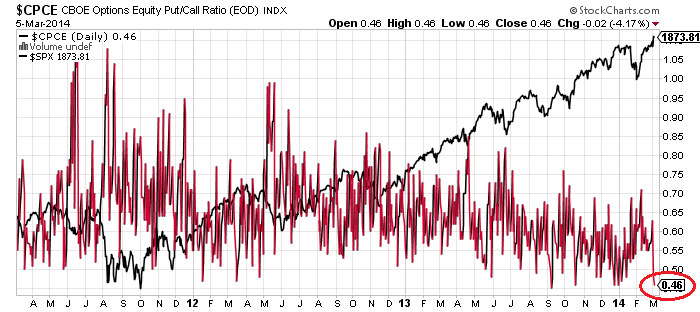
2. Total put/call ratio is now 5 months under 1.0, which is a historical extreme:

6ma23. Equity options put/call ratio yesterday moved back to historic extreme low:

6ma14. ISEE put/call index 5 day average over 200 for the second day, other instances shown:

6ma5

Source: Helen Meisler

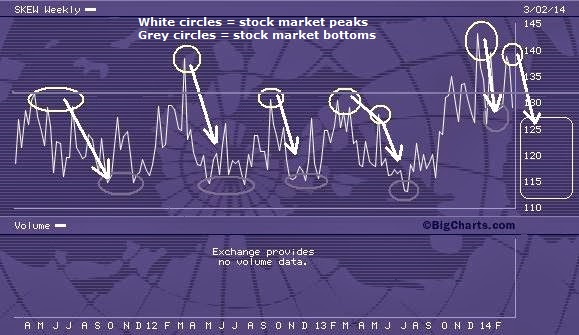
5. Skew remains historically elevated for 5th month. Weekly Skew reading suggestive of another top, as per the beginning of Jan and other historic incidences.

6ma10Source: Keystone Speculator

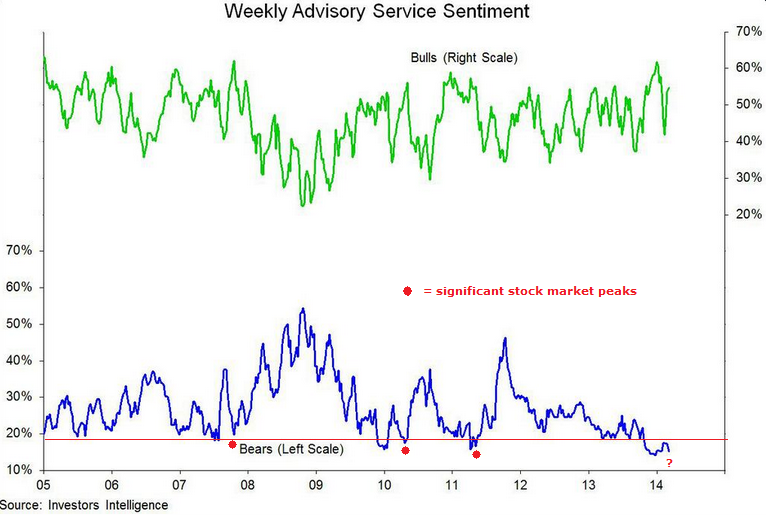
6. Investors Intelligence %bears is beneath the level associated with significant market tops in 2007, 2010 and 2011. Also note those peaks occurred on the second spike down in %bears, which is potentially what we have now (with end of Dec dip):

6ma11

Source: Willie Delwiche (My annotations)

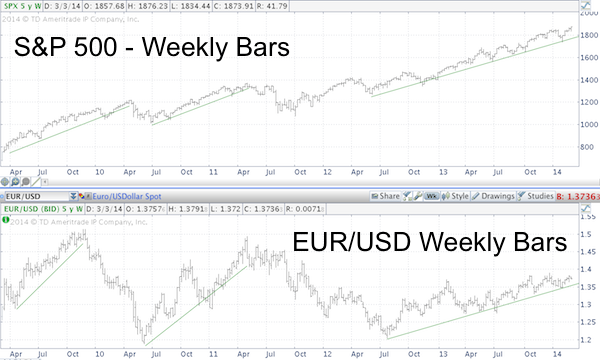
7. Euro-USD is at long term resistance and has had a reasonable correlation with stock market performance. Break out or break down here?

6ma7 6ma8Source: Ispyetf

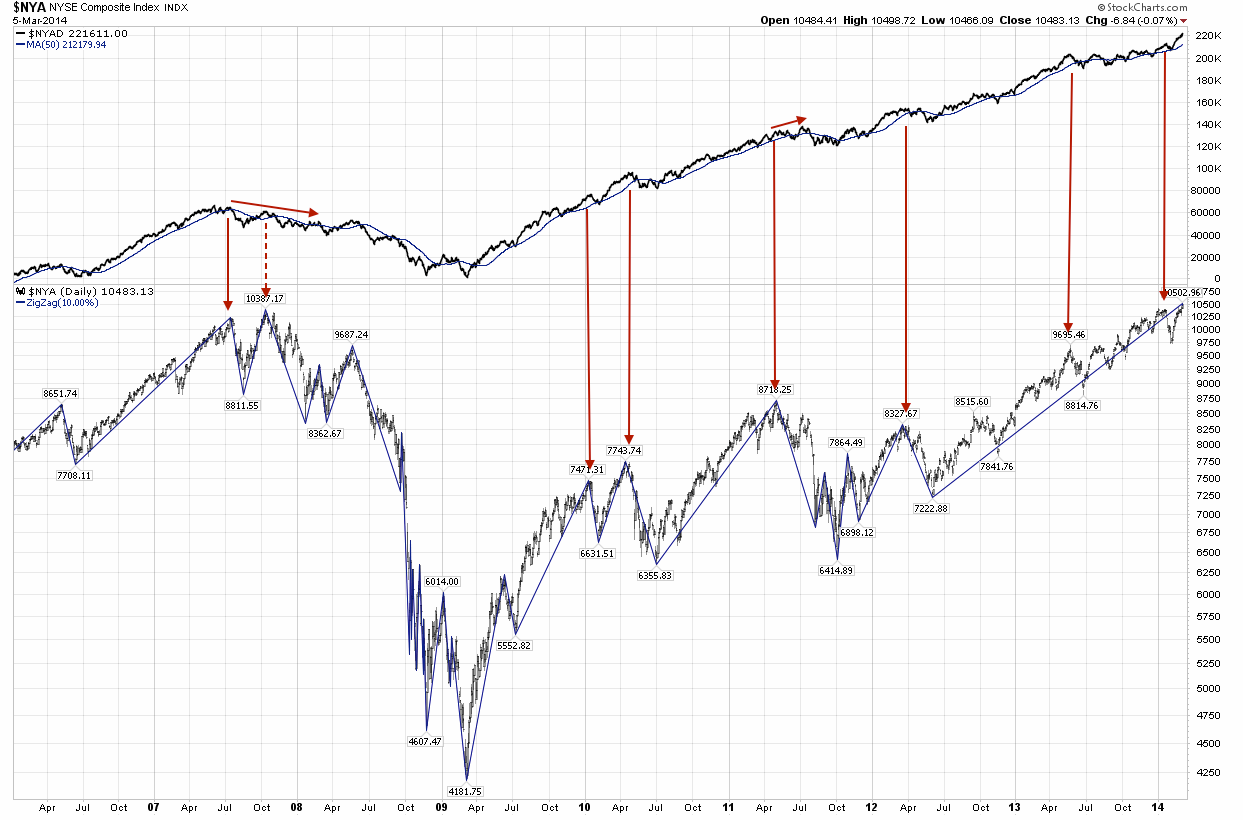
8. The two measures of breadth of cumulative advance-declines and % stocks above MA are divergent. Which one is more reliable as a leading indicator? The below charts show that the former (NYAD) typically expands into market peaks whilst the latter (using a combination of 50MA and 200MA) typically diverges into market peaks and is more of a leading indicator. This suggests we should be looking at a market peak now, not a break out.

6ma3 6ma4Source: Fat-Pitch

In short, the balance of evidence still points to the stock market reversing down here, rather than breaking up and away. Maybe tomorrow’s employment report will be the catalyst.
Post Pop

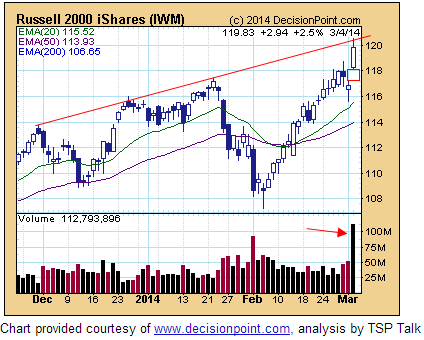
A surprising day yesterday. Russell 2000 up 2.75%, and all US indices popped strongly. Clearly nothing to do with Ukraine. If we look beyond price, not much has changed. There is still a momentum divergence on this new high. The Russell 2000 is up 15 out of 16 days, which is a record. Indicators suggest this is more likely to be an overshoot rather than a breakout. Put/call is sub 1 for 5 months now, and is 5 days away from an all-time record. Skew is is also 5 months at historic elevation levels. Investors Intelligence sentiment is back to extreme (see below). I remain confident a crash is ahead, but yesterday’s action has made the short term picture less clear. For that reason I did not add further short positions into the rip. So let’s see how today unfolds, I expect more clarity by tomorrow/Friday.

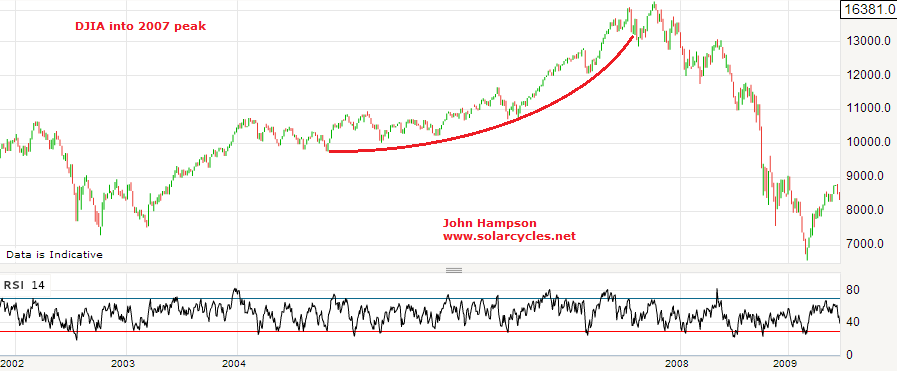
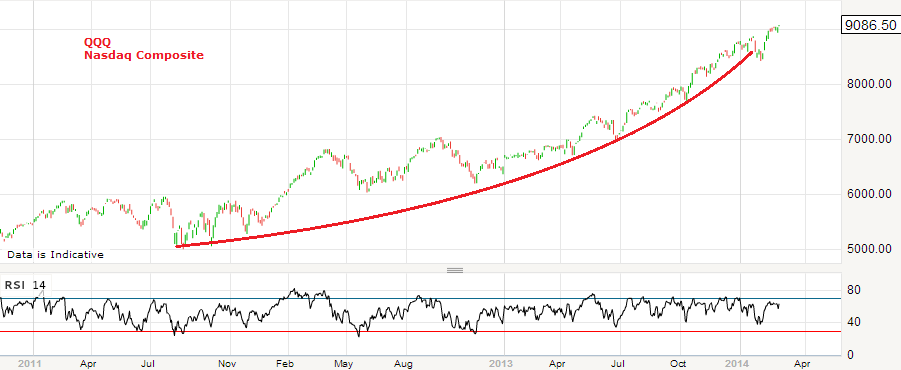
I leave you with a few charts, which are hopefully self-explanatory. At the bottom I looked to see how the Dow’s parabolic ascent into 2007’s peak terminated, which may give us clues about how the Nasdaq’s current parabolic could feasibly resolve if this short term action is an overshoot before renewed downside. The Dow made a higher high then a lower low, which was the definitive kill of the parabolic. The Nasdaq has made a higher high, but remains in the parabolic until we see a lower low.

5ma5

5ma1

5ma2

5ma3

5ma4