Cyclical / Secular

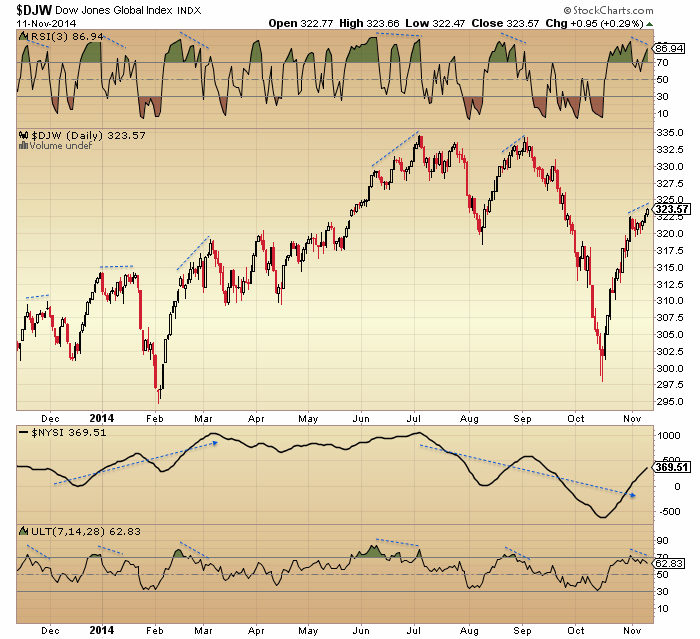
The short term first. The Dow Jones World stock index looks like this:

12nov1

Source: Stockcharts

The current high is someway beneath the July/Sept highs and the lower high lower low trend in tact. The last week and a half has produced negative divergences in RSI and ULT and the previous highlighted instances add to the case for the rally imminently failing.

Bullish percent to put/call ratio and cyclical sector to defensives ratios also show a telling divergence since we turned into November, suggesting the edging up in price over the last few days will be reversed.

12nov2

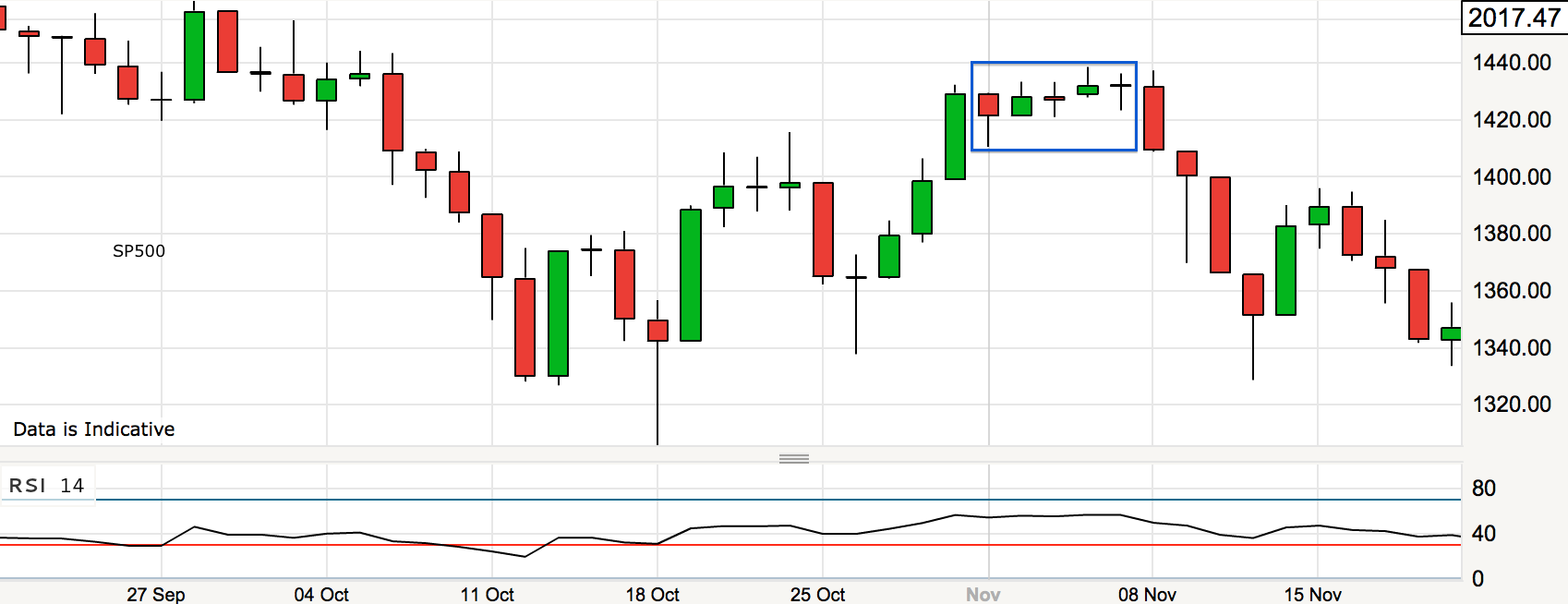
By cross-referencing indicators I’ve previously explained why the most relevant analog puts us equivalent to November 2000, and I am still looking for the bar following this box to be delivered this week to mark the trend change:

12nov8

Interestingly, precious metals and miners have built out a potential reversal base these last few sessions, and back in 2000 at the exact same point gold made its secular bear market low, marked above.

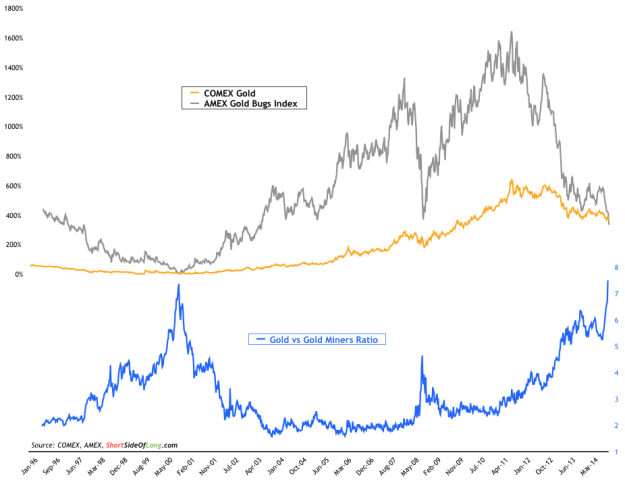
We can cross-reference this with the gold/miners ratio that has reached the same washout level as 2000:

2nov9

 Source: ShortSideOfLong

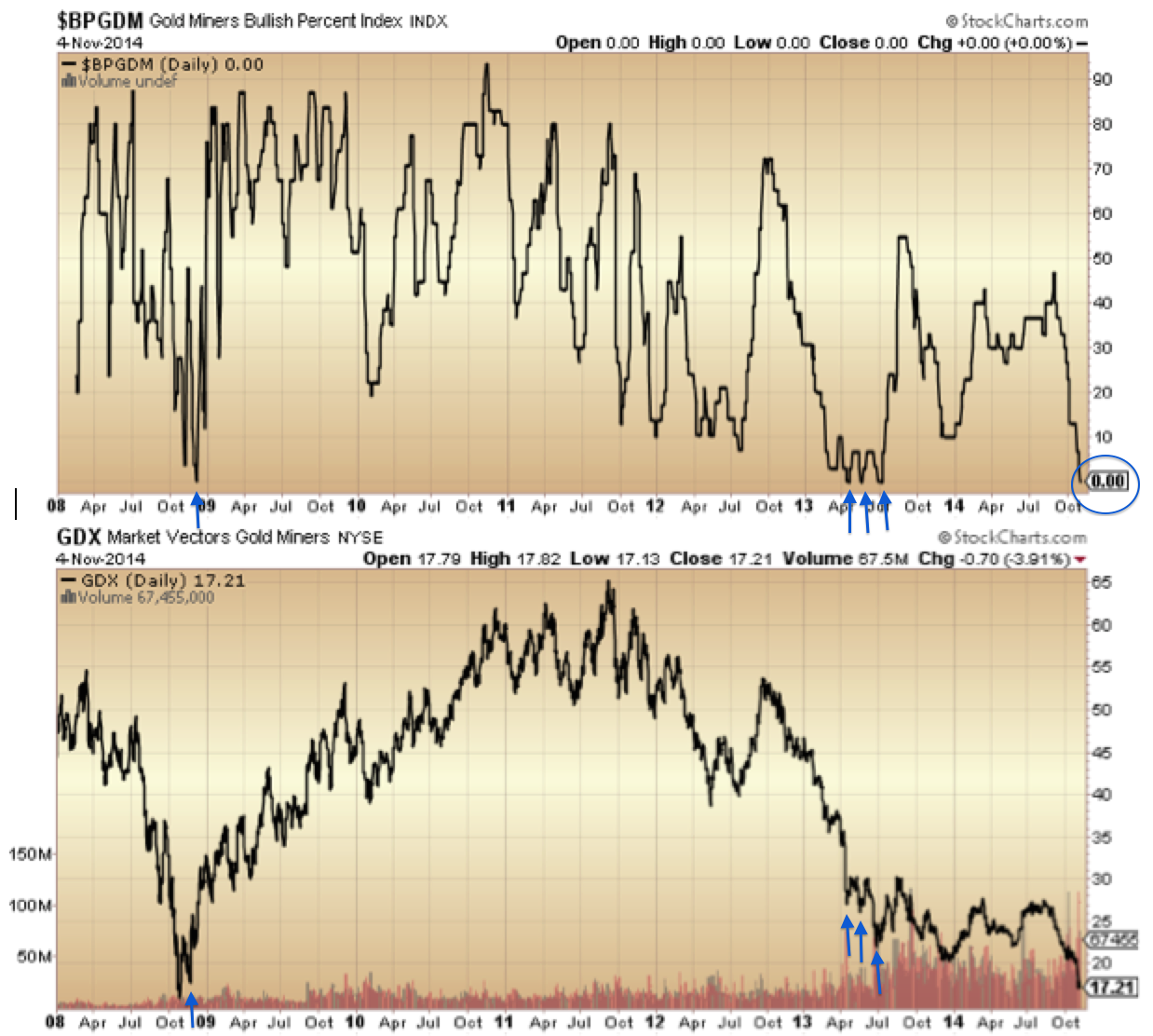
And gold miners sentiment which also reached bottoming levels:

Screen Shot 2014-11-05 at 12.54.51

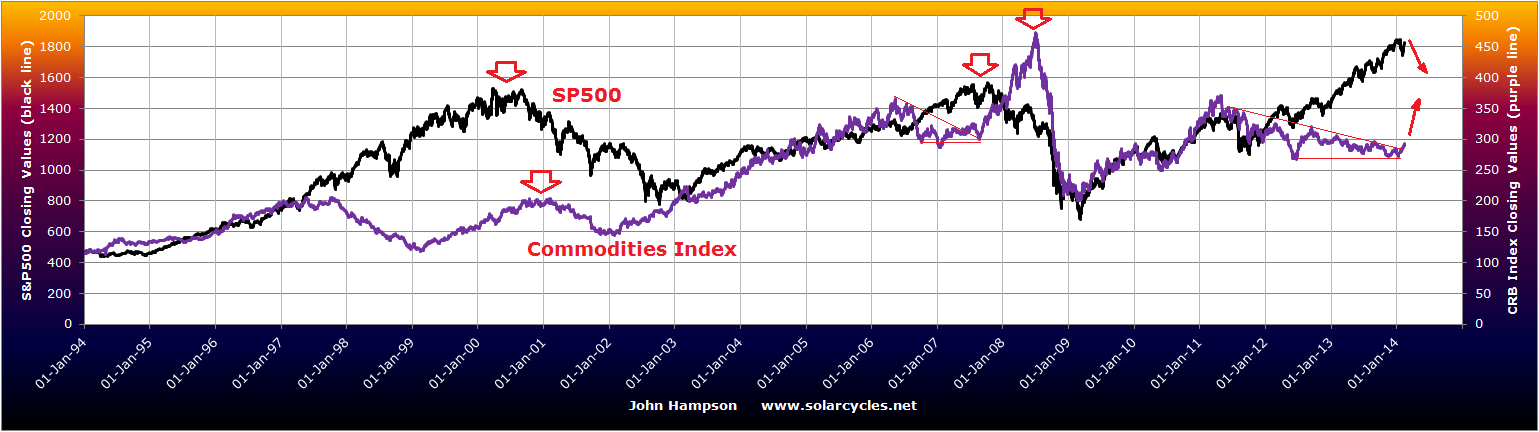
With equities at the end of their bull market topping process, this set-up looks compelling as the launch point for gold into a new cyclical bull within an ongoing secular bull. By demographics, the cyclical bear in gold from 2011-2014 has just been a pause in a longer term bull market that should extend to the next solar maximum of circa 2025.

12nov9

On the flip side of that, equities should now enter a new cyclical bear within an ongoing secular bear. One of the most common misperceptions out there is that stocks are in a new secular bull market. But demographics, inflation-adjusted stocks and p/e valuations reveal otherwise:

Screen Shot 2014-11-11 at 19.05.37

Viewing stocks relative to treasuries reveals more clearly the major tops and bottoms. Below, RSI and TSI show an early warning system for the major peaks. They flagged again by the end of 2013 and have since been divergent, as stocks:bonds has made an identifiable topping process.

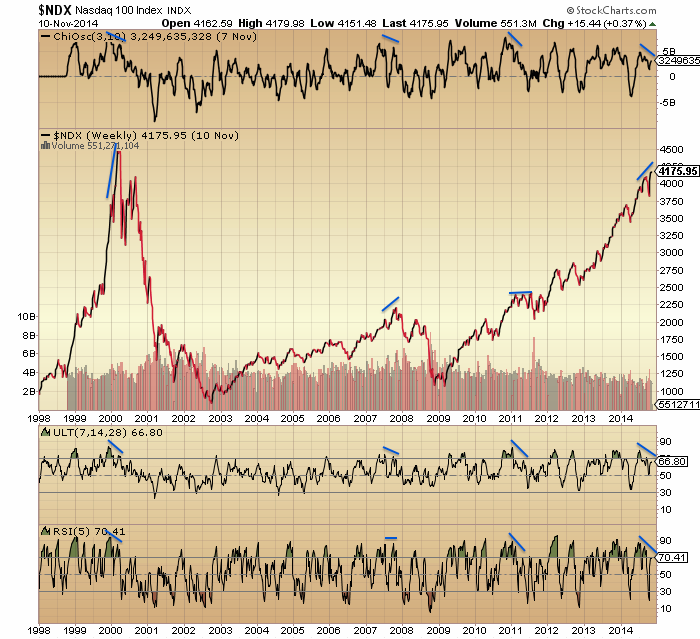
11nov22The Nasdaq 100 index has had the most parabolic shape of all the major stock indices, but we can see below the same telltale buy/sell pressure and momentum divergences as the previous major peaks have been in place since the turn of July 2014. Those divergences lasted 3-5 months in the earlier events, and the current divergence has now been 4 months.

11nov14

Finally for today, here are the smoothed solar maxima of the last 11 cycles plotted against Q ratio valuation for equities. Barring the 2000 outlier it has reached the same topping valuation level here at the 2014 solar max as previous solar cycle highs, and should be destined for a true washout level of circa 0.3 before the secular equities bear is over.

10nov1

Underlying chart: Doug Short 

Charts Update

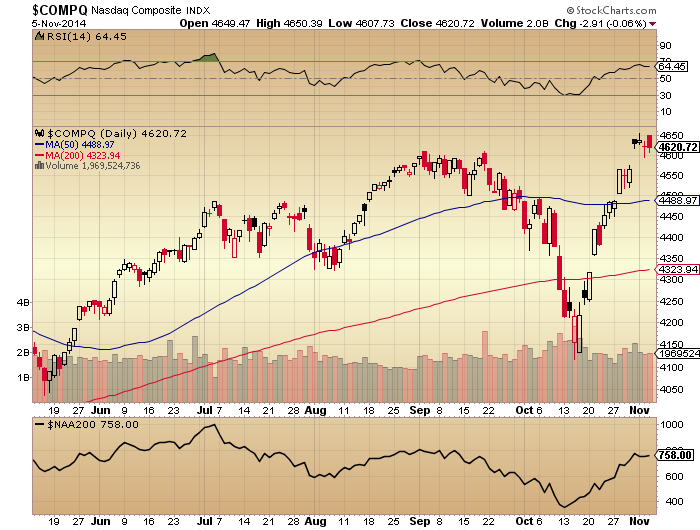
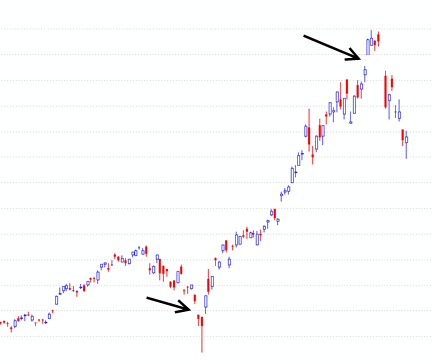
The exhaustion gap (from Friday) is still in play, and I’m now looking for a gap down day. The current Nasdaq is shown below followed by a typical exhaustion gap pattern:

6nov85

Source: Stockcharts6nov82

Source: TraderPower

The equivalent point from the year 2000 looked like this on the SP500:

Screen Shot 2014-11-06 at 06.29.45It took a few days to reverse, but the key is no significant break higher. Today is the full moon (or early tomorrow if in the US) which could mark the reversal, plus we have a potential gap down trigger from ECB disappointment. If the ECB surprise to the upside then I still don’t have a case for a continued rally, and that’s because I don’t see the fuel for higher.

The latest II % bears reading is 15, which has been the historic limit, and AAII bears also now stand at 15%, which is their lowest reading since 2005. Rydex closed yesterday just below 12 which is thereabouts the historic limit too. Here we can see the market went down or sideways-then-down at such high allocation readings:

5nov62

Add in the overbought indicators and current geomagnetic disturbance and it is likely the next move is down. Junk bonds appear to be leading this move.

6nov80Plus note at the foot of the chart the renewed move lower in defensives versus cyclicals: XLY:XLU.

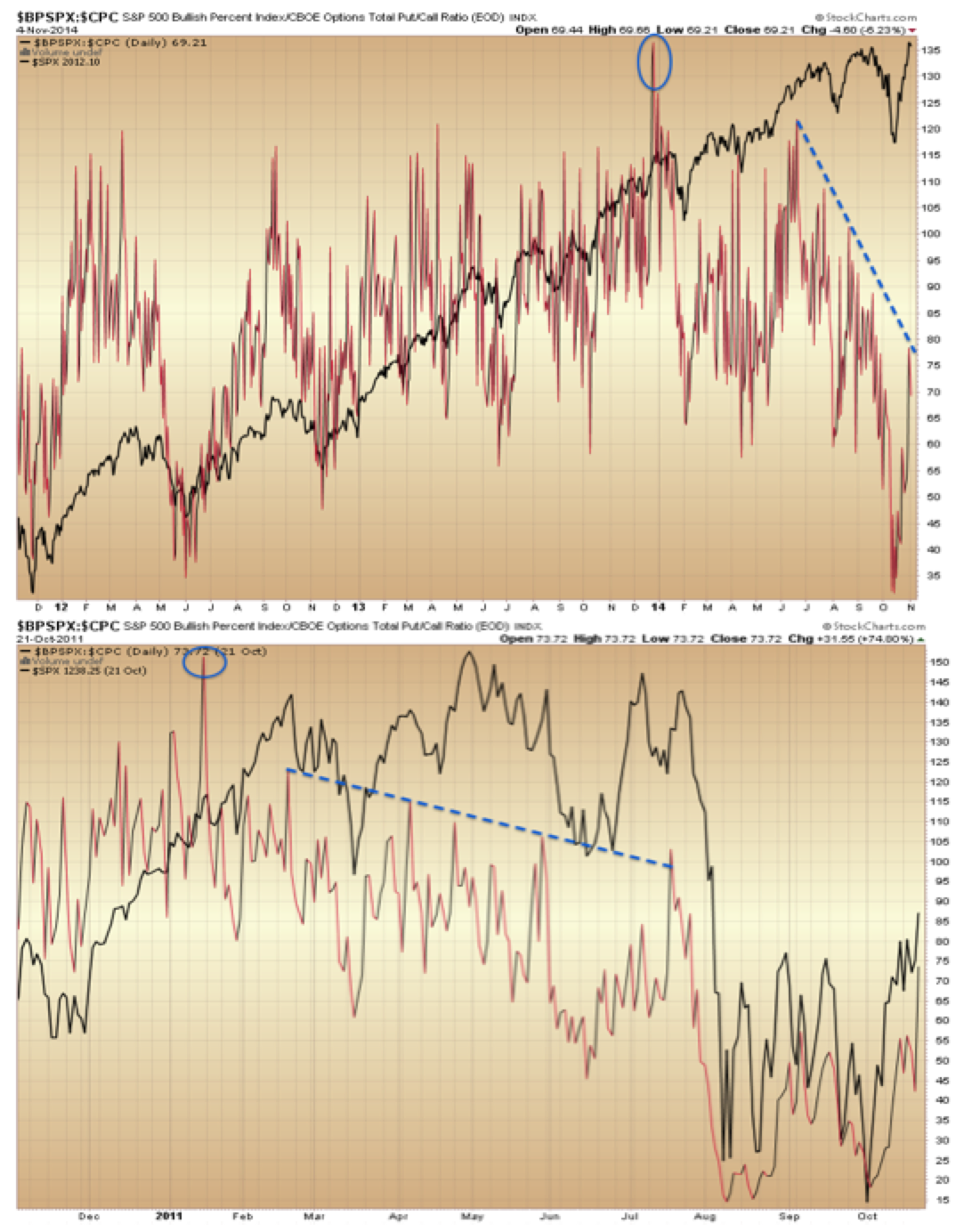
Bullish percent over put/call ratio is showing a five month divergence following a turn-of-year spike peak. The only mirror I can find for this is 2011, where something very similar occurred.

Screen Shot 2014-11-05 at 12.33.33For those who missed it, gold miner bullish percent is now at zero and suggests an imminent bounce or bottom for GDX:

Screen Shot 2014-11-05 at 12.54.51

This is the flip side of the equation: gold and miners are capitulating whilst stocks top out. Reversals in both should occur together. I wondered previously whether gold miners would be sold off in a steep stocks sell-off, but the difference this time, say compared to 2008, is that they start from total washout levels, so I see the only way is up.

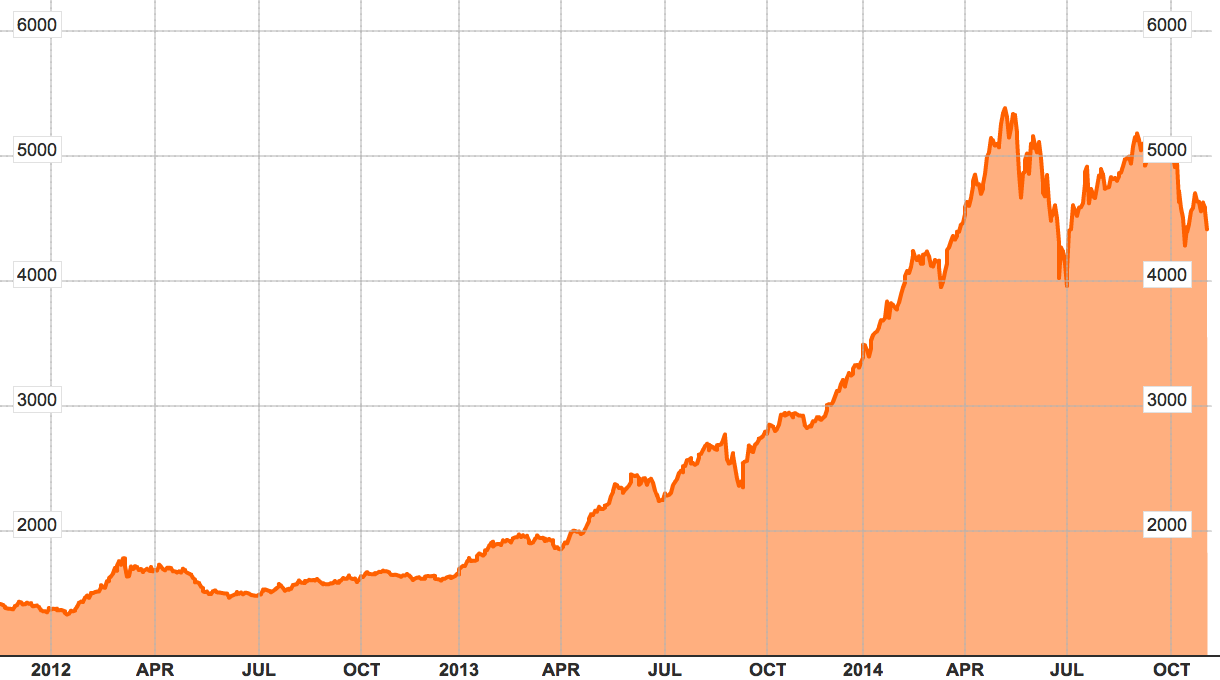
Moving on, a bubble I noted previously was the Dubai stock index. The parabolic terminated in May and there is a clear second chance peak since. This is a text book bubble/pop chart as it stands, and plays into the solar max being behind us circa April.

Screen Shot 2014-11-06 at 06.30.52Source: Bloomberg

The bubbles in Indian and US stocks look to be the the last to pop.

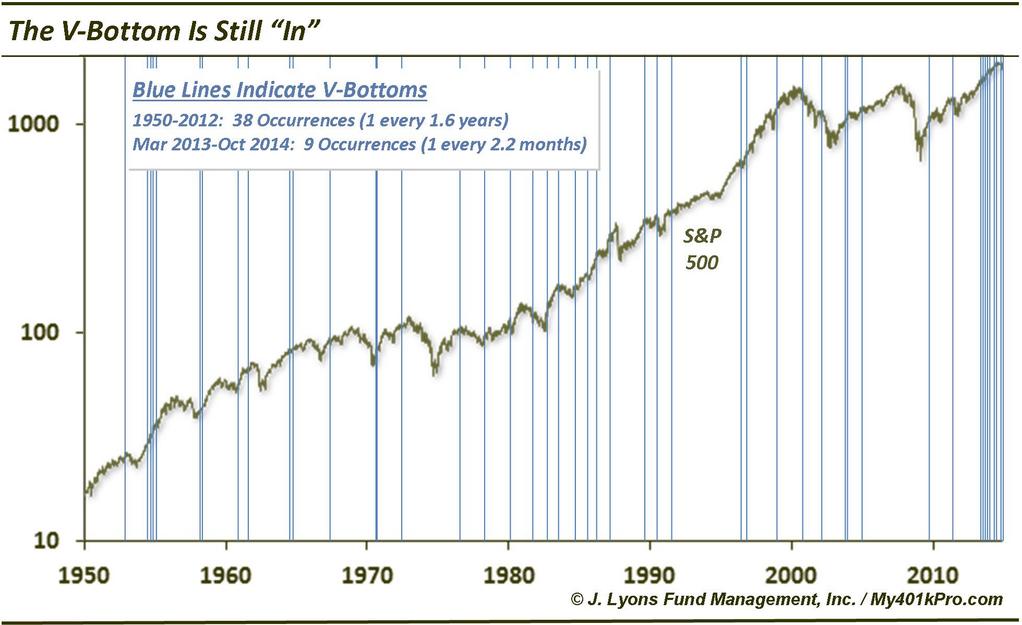
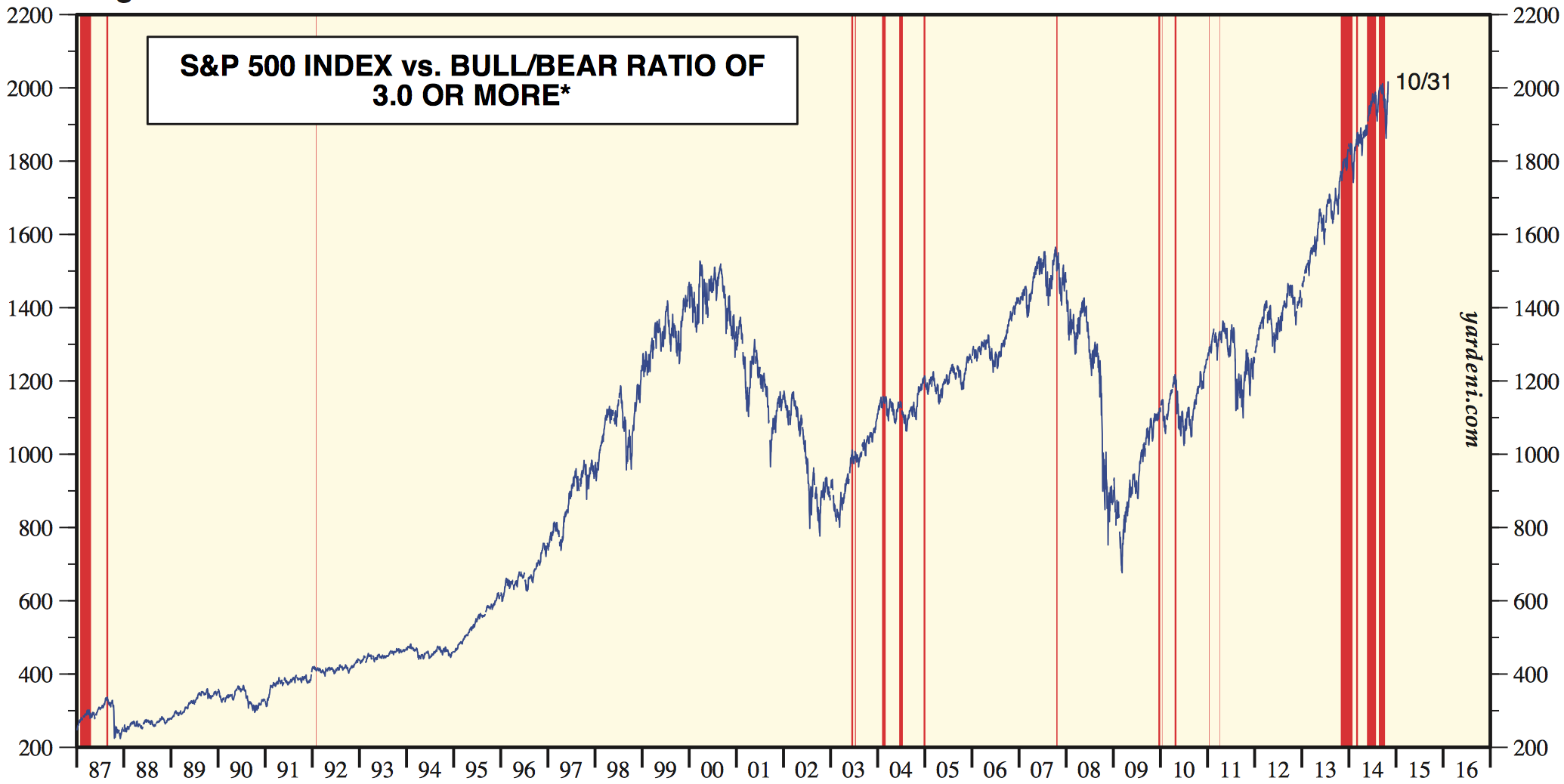
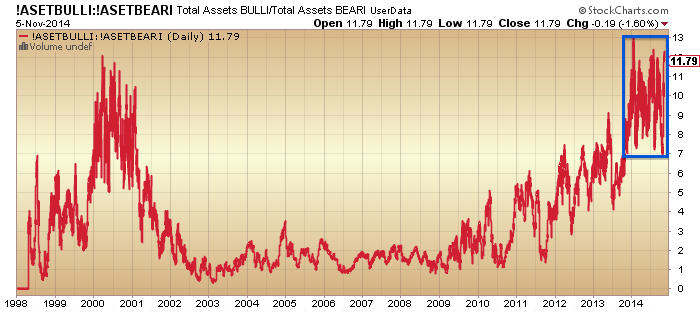
The mania in US stocks has been unprecedented in history in various ways:

2nov9

Source: Dana Lyons
Screen Shot 2014-11-02 at 07.16.11

Source: Ed Yardeni

6nov87

Source: Rory Handyside6nov89Source: Doug Short

6nov90

In short, sentiment, allocations and leverage have stretched to levels and durations not seen before. The unprecedented v-bounce cluster or swift dip buying has, in my opinion, stored up a mega-correction, and the record Skew level and duration warns of such a large drop. The October drop in equities did nothing to reset sentiment or allocations. I won’t be shifted from my stance that this is the set-up for a crash unless these indicators reset without a crash (which would also be a first in history).

It’s clear to me that the solar maximum has driven the mania and the lack of demographic tailwind has been compensated for by investors going all in on allocations, leverage and bullishness. With the mantra for the mania being central bank policy trumps all and the Fed being the most aggressive CB (until BOJ this year) I believe that’s why the stretching has been so pronounced in US markets. But ultimately, no-one could be prepared for this set of unprecedented developments in the markets. History has been well and truly made this year.

Recall at the October low we saw a capitulative breadth reading similar to bear market bottom lows? Bullish percent shows something similar:

Screen Shot 2014-11-05 at 12.27.19

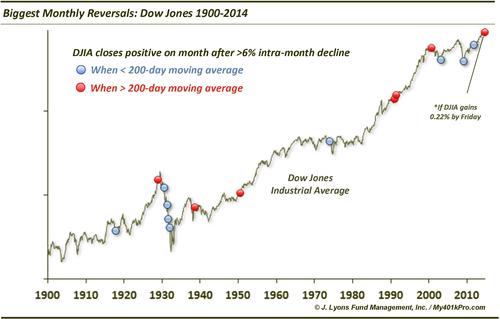
Drawing in the nature of the reversal…

6nov85Source: Dana Lyons

…similar reference points are popping up. Namely, what happened in October is either a sign of a market top or early bear, or it is a bear market bottom or major (~20%) correction bottom. It is neither of the latter two, so I suggest it is in fact the market peak / early bear sign and I have shown similar hanging man candles to October’s at the end of the 2000 and 2007 topping processes. However, there is one other option: it is an unprecedented catapult to an even bigger leg up in equities, which would fit with an anomalous delayed solar peak, if the bulk of the solar scientist models have it wrong, as well as the general ‘unprecedented’ markets theme.

I can’t rule that out. But it’s the cross-referencing again that keeps me from giving that serious probability. Leverage has failed to increase since February, sentiment and allocations are at an invisible limit. Negative divergences in breadth, defensives, volatility, smart money and other indicators are mature, and particularly compelling since the start of July. Since that point we have lower highs and lower lows on European indices and US small caps, which I believe are in bear markets. The positioning by indicators puts us right at the end of the topping process, meaning the next leg down is the definitive. In my opinion the case is so strong now that I can’t give an alternative much weight. So I continue short stock indices and long precious metals, but I am ready to step aside and wait if the market decides otherwise.

UBS see similar signs for a leg down from here but believe we will then scrape another marginally higher high by the end of December – but just in US large caps. I know this fits with some of your views that the final peak won’t happen until then. So, I would say: let’s see what indicator signals we get if and when this November leg down erupts. I believe this will be the definitive fall, but the possibility of a year-end peak would become clearer if we were to see swift capitulation again.

Key Time

Break out in stocks or new moon reversal back into the range?

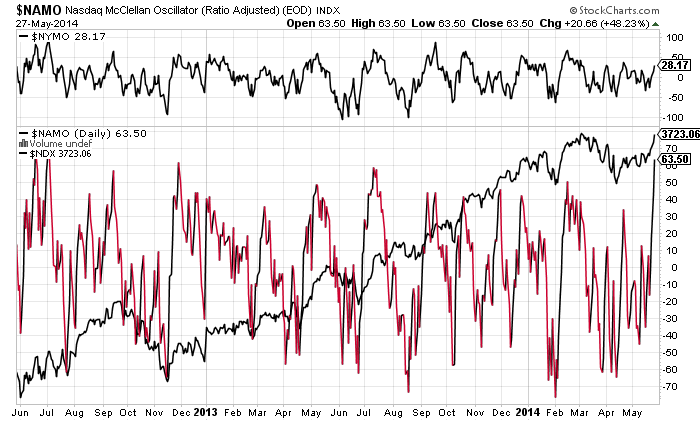
The Nasdaq 100 has climbed back up towards its previous high, and so is adding to the moment with the prospect of a double top or bull resumption. Namo is overbought, which could be a constraint on further upside in the near term.

28m7

 Source: Stockcharts

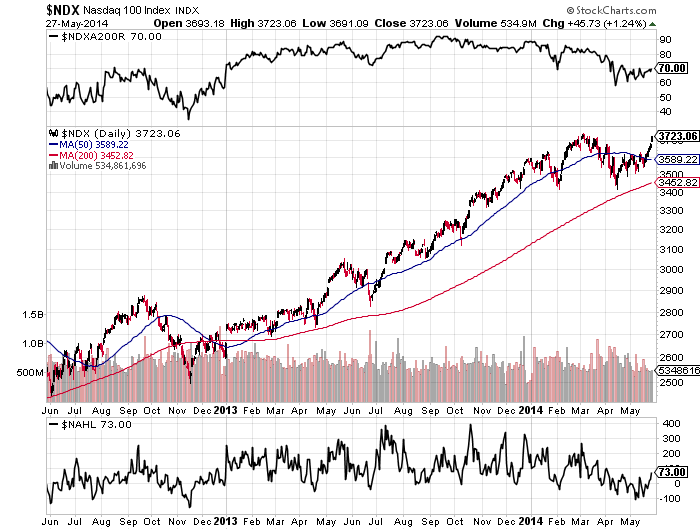
Breadth and volume are more bearish than bullish:

28m8

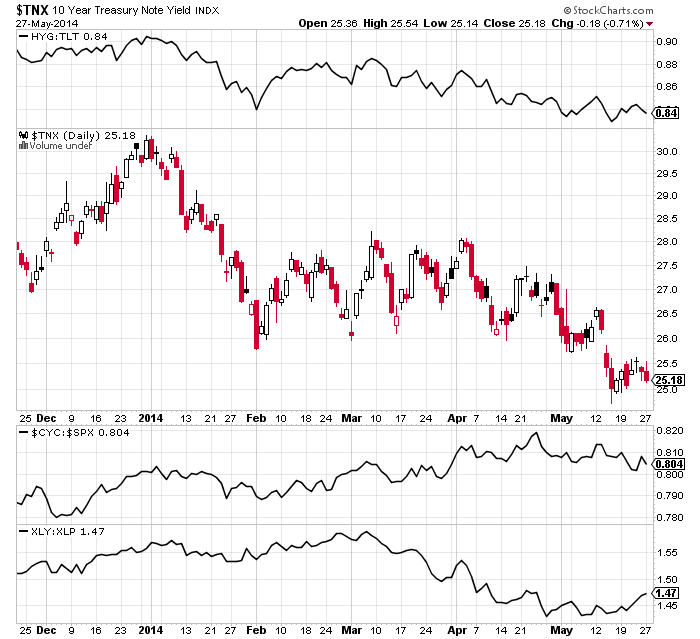
There is renewed momentum in small caps, biotech and consumer discretionary, which is bullish, but we continue to see money flows into treasuries, out of high yield and recently out of other cyclical sectors.

28m5Treasuries have been outperforming the SP500 all year, and despite new highs in that stock index yesterday, bonds still rallied. The money flows into defensives would rather fit with a stock market in decline, so who has got it wrong?

28m6

 Source: AThrasher

Either the short interest and money parked in cash, bonds and defensives provides the fuel for another leg higher, or the stock market is overdue an imminent correction. The stats show that large speculators are short, that smart money flows have negatively diverged and that a significant degree of the buying is by companies purchasing their own shares. But unless the market is swiftly pulled back into the range here, then short covering could propel it higher.

The Dax made new highs, but has the same weakness in breadth as the US indices. The contrast in volume to price in the SP500 is shown here as the prelude to a correction, historically:

28m4

Source: J Lyons

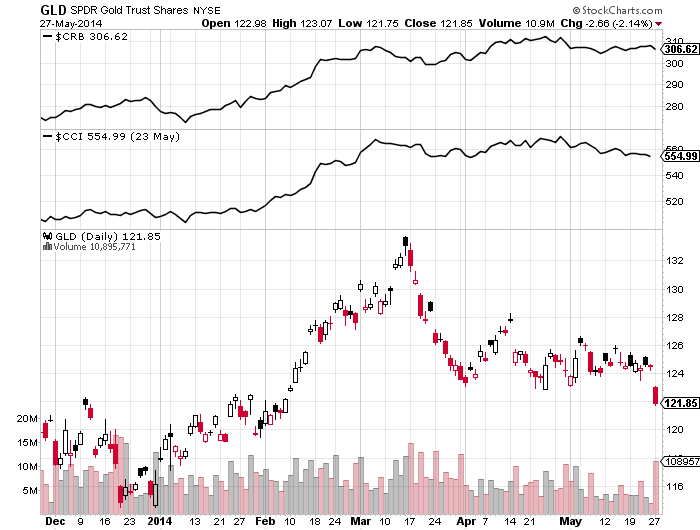
Gold broke down yesterday as stocks broke up, which is more supportive of equities mustering a rally here. The two commodity indices are also charted below and show a loss of momentum the last 3 months:
28m16

If stocks can break out here, then it’s going to sting. But all those bearish indicators remain in place, and we would likely be looking at a final overthrow move. As one example, in 1987, sentiment hit similar extreme readings around Feb/March time and price range-traded until May before an overthrow rally to a final market peak in August. But let’s first see how price behaves as we pass through today’s new moon, as internals are weak and a true breakout may again prove beyond reach.

The State Of The Markets

Thank you so much for all the messages of support – I was really touched to read them all. I had a burn out and now have to take things easy. I was working long days with the markets and doing too much of everything on top. So my posts will be less frequent for the foreseeable future, but as my focus is on the medium and long term, less intensive tracking may be no bad thing. I come back to the markets after a couple of weeks away and although price continues to frustrate, little has changed in the big picture. Some of my near term timings didn’t work out, but the overall case remains solidly bearish, and it’s a question of patiently waiting for price to fall in line.

Focusing on US stock indices, I have updated the bearish indicators and flags and added some new ones below:

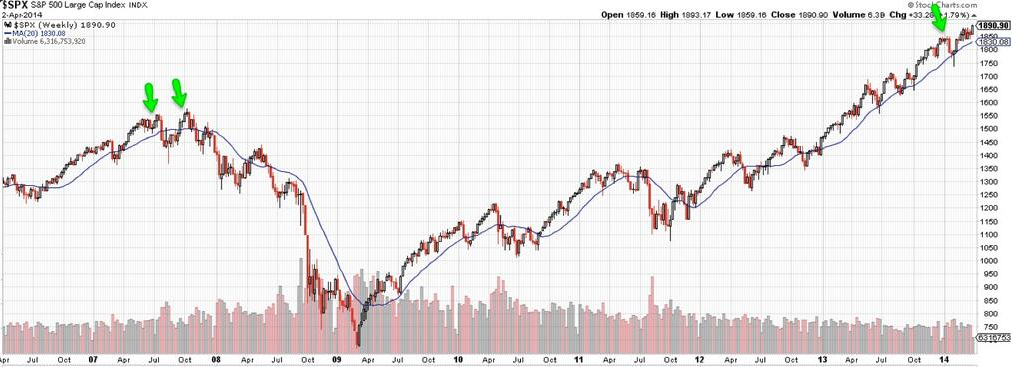
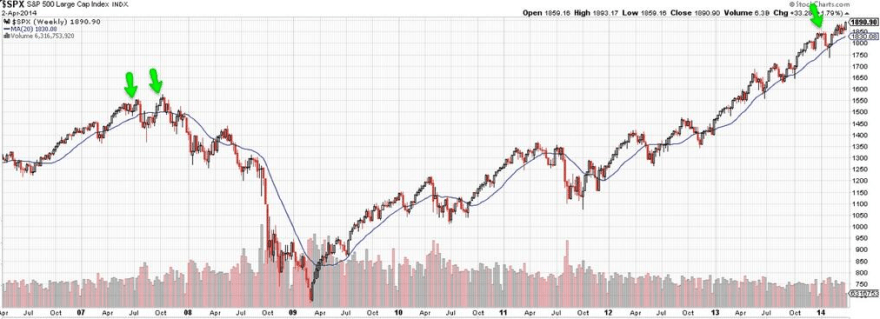
1. A 5-year bull trend only occurred once before, in the 1990s, and was followed by 3 down years

2. Historic levitation above longer term moving averages and lack of 10%+ correction since 2012

3ap35

Source: Gordon T Long

3. Last 2 years rally in US stock indices has been made up of less than 20% earnings growth and more than 80% multiple expansion. The last 2 such occurrences in history were 1985:1986 (leading into 1987 crash) and 1997:1998 (leading into 1999 real Dow peak)

4. Compound annual growth rate in equities since 2009 was only exceeded in 1929, 1937, 1987 and 2000, all of which led to steep market declines

5. Crestmont P/E is the 3rd highest in history after 1999-2000 (market peak) and 1929 (market peak), and in 97th percentile

6. This is the 2nd highest market capitalistation to GDP valuation outside of 1999-2000 (market peak)

7. This is the 2nd highest Q ratio valuation in the last 100 years outside of 1999-2000 (market peak)

8. This is the 3rd highest CAPE valuation in the last 100 years outside of 1928-1929 (market peak) and 1999-2000 (market peak), and the US is the 4th highest CAPE valuation in the world currently.

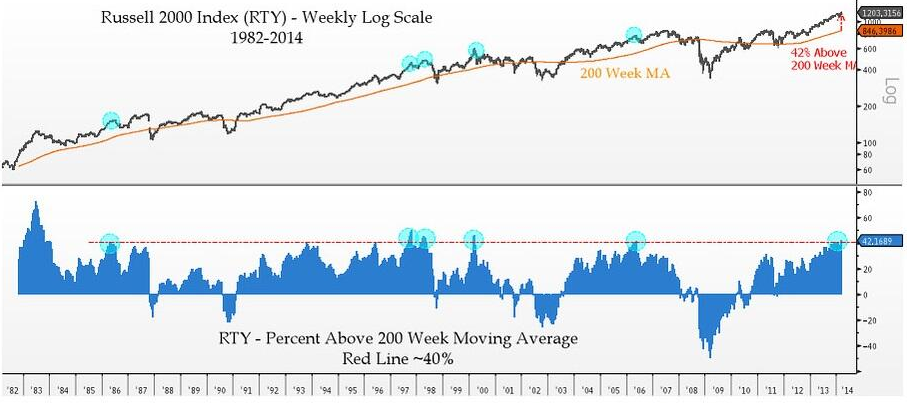
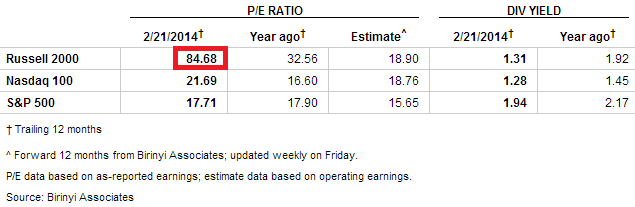
9. Russell 2000 index p/e is currently 74.8; Russell 2000 to SP500 valuation differential at all time record

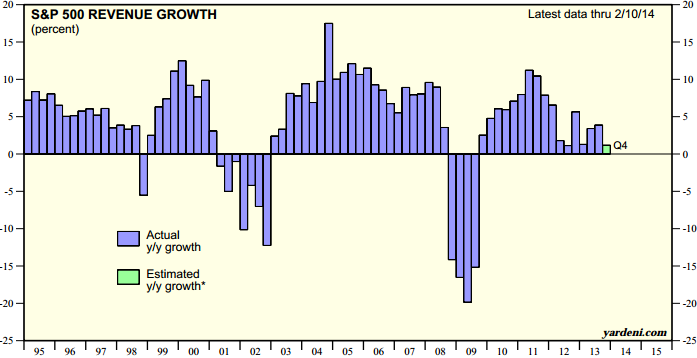
10. 84% of companies have offered negative earnings guidance for Q1 2014 so far; Last quarter’s revenue growth was the lowest since 2009

11. Skew is in elevated range for the last 6 months; Cluster of extreme Skew readings not seen since June 1990 before recession began July 1990

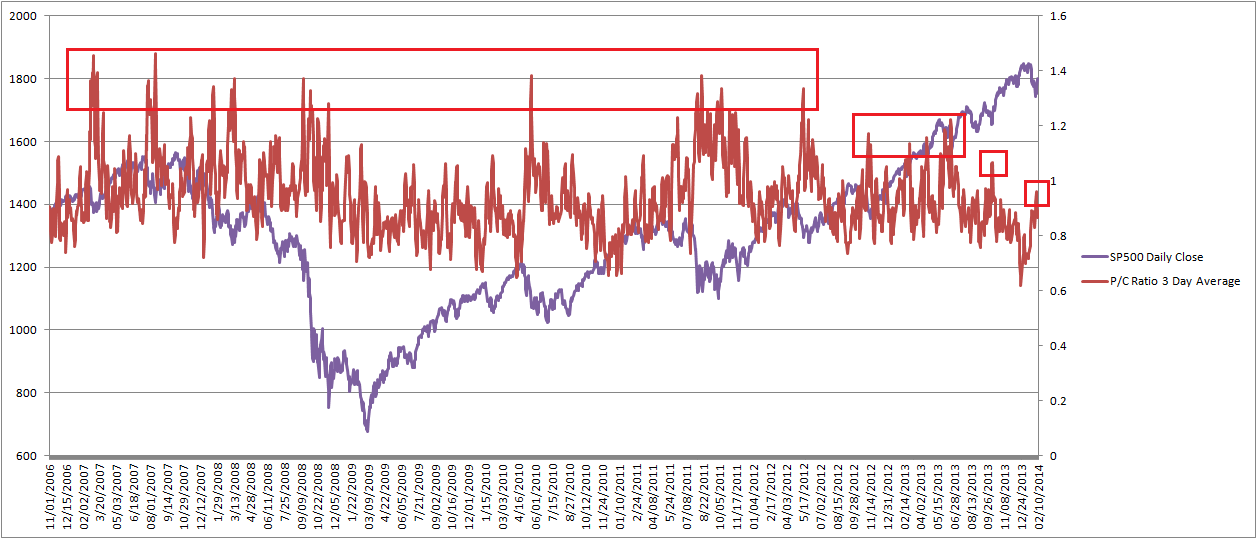
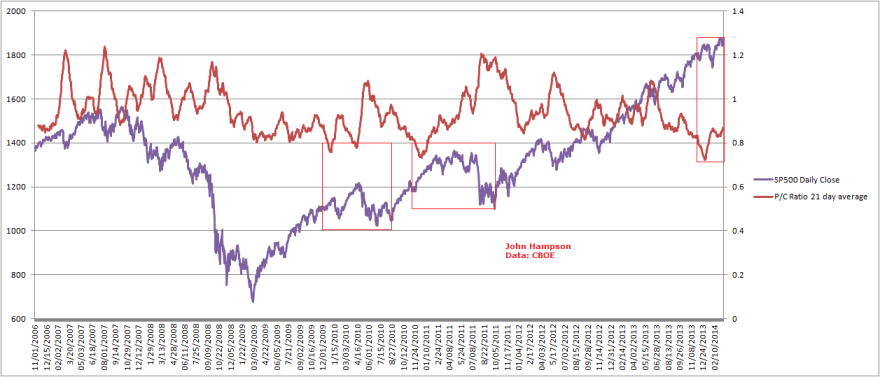
12. Put Call ratio 21 day average over the last several months has clustered in the extreme low zone that previously led to sharp corrections
3ap1

13. Greedometer – aggregate of macroeconomic, fundamental and technical data – is at a record level exceeding the 2000 and 2007 market peaks

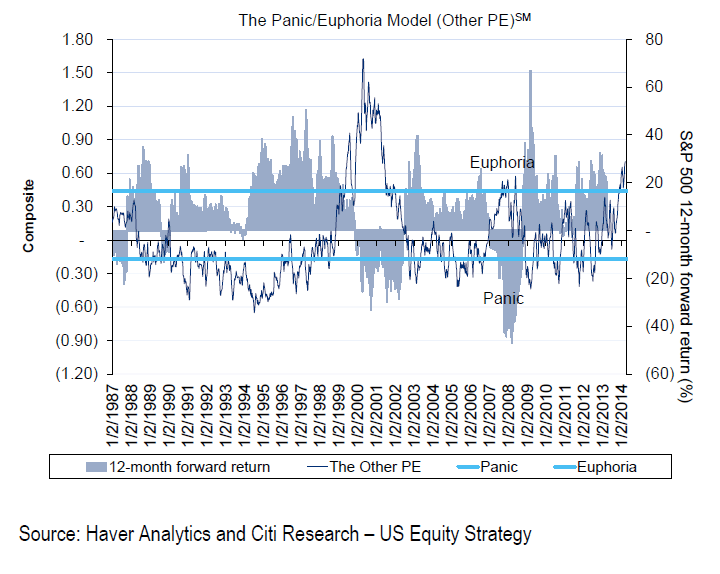
14. Citi Panic/Euphoria model at a level only exceeded into the 2000 peak:
3ap2

Source: Fat-Pitch

15. NAAIM sentiment remains historically high

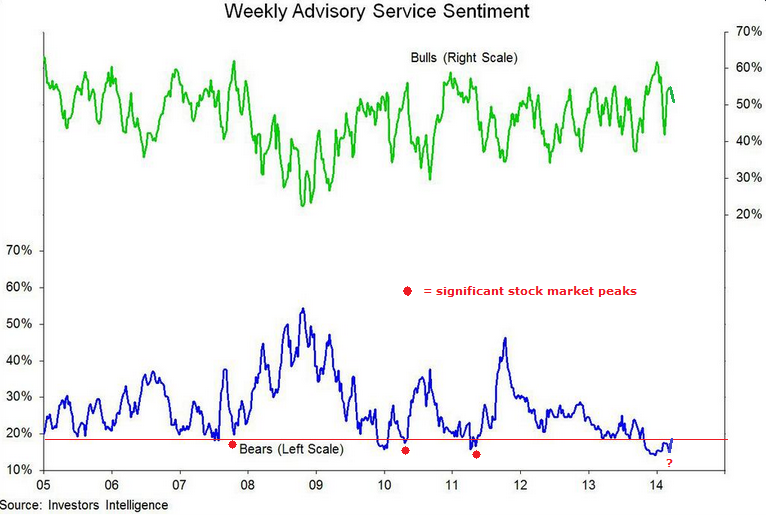
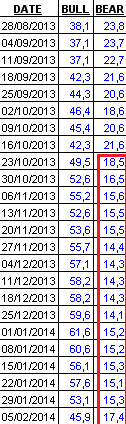
16. Investor Intelligence % bears levels and pattern similar to previous significant stock market peaks

3ap29

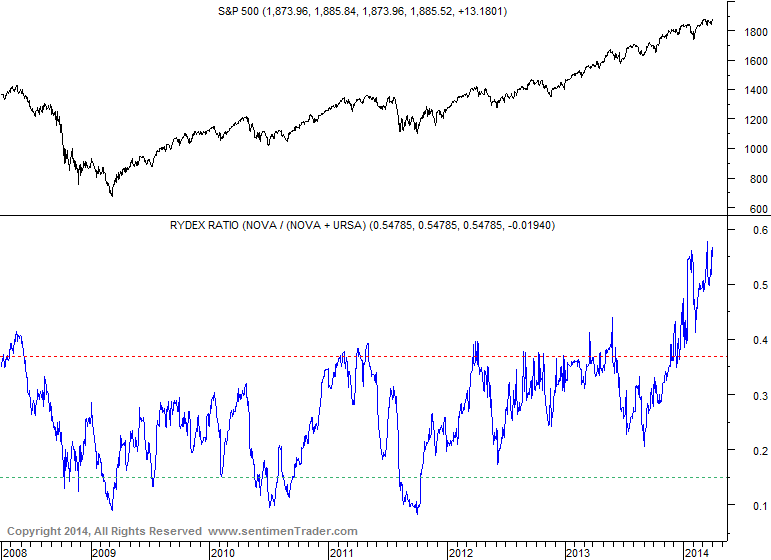
17. Rydex bull ratio at extreme historic high
3ap16

 Source: Sentimentrader

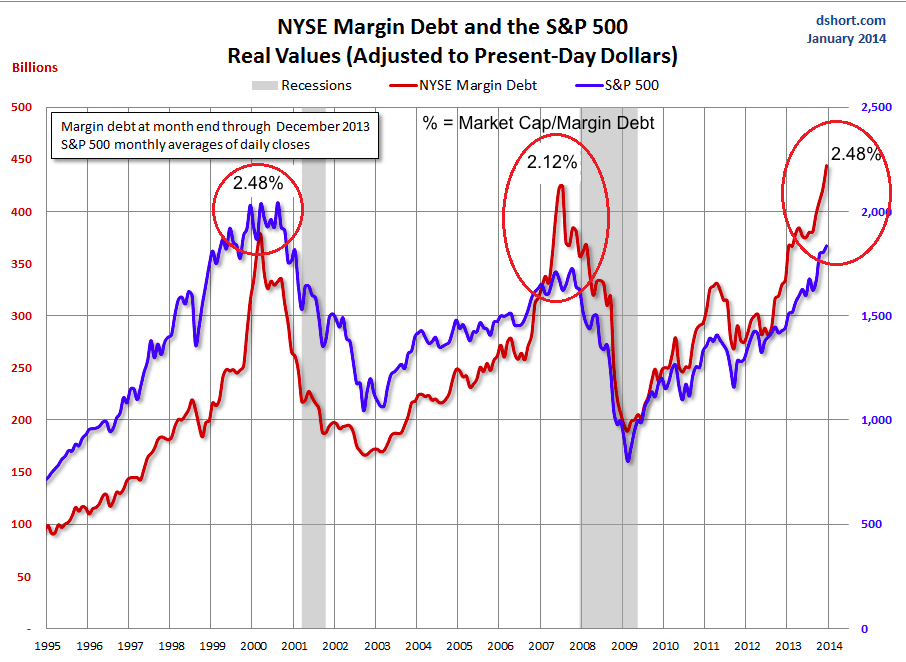
18. Margin debt (updated for Feb 2014) is at an all-time record, both in nominal and real terms, and as a percentage of market cap; Net investor credit balances are at an all time low

3ap4

Source: Dshort

19. IPOs with negative earnings at levels consistent with previous market peaks

20. Leveraged loan issuance at record, surge mirrors 2007 and 2011 important stock market peaks

21. High yield corporate bonds to 20+ year treasuries shows a divergence with the stock market that has previously marked tops

22. AAII equity allocations highest since June and Sep 2007 and Dec 2013
3ap5

 Source: UKarlewitz

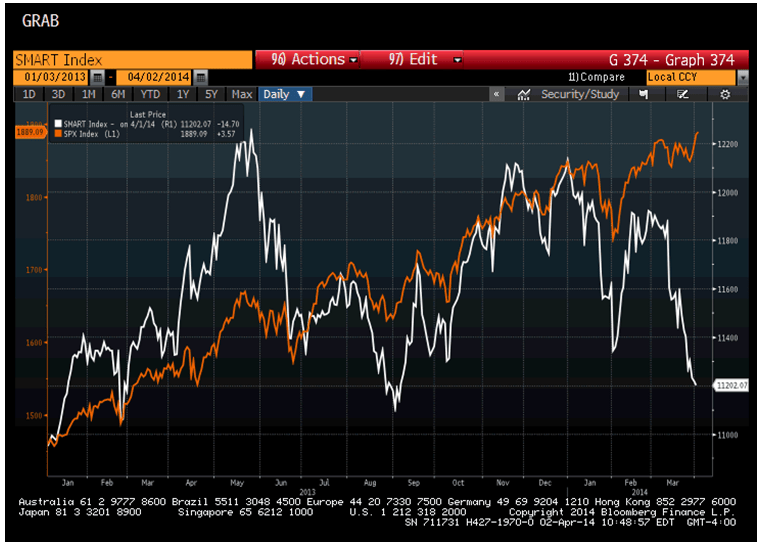
23. Smart Money Flow Index shows siginificant divergence in 2014
3ap6

Source: Todd Harrison

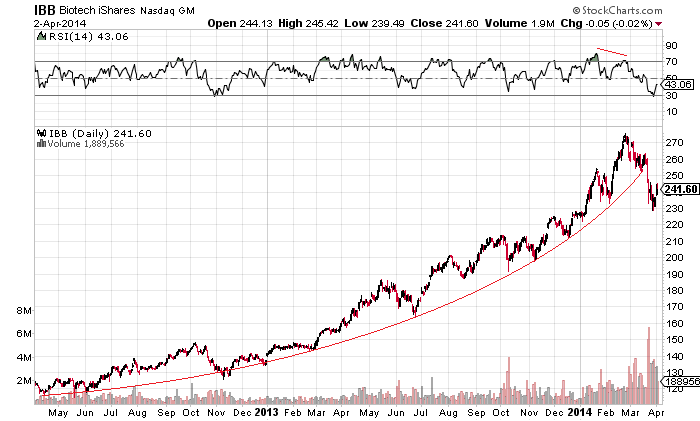
24. Biotech parabolic bubble breakdown

3ap7

Source: Stockcharts

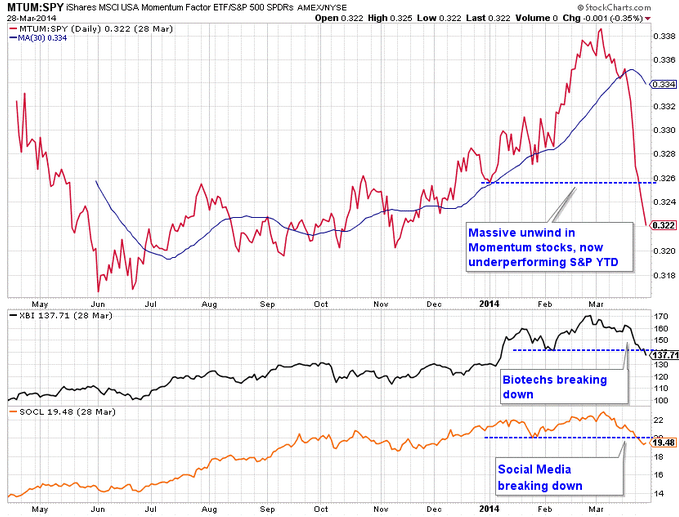
25. Wider momentum stocks breakdown
3ap14

Source: Charlie Bilello

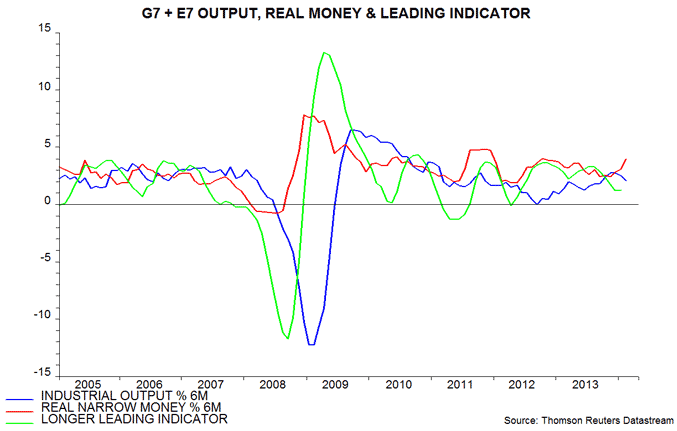
26. Leading indicators suggest global industrial output slowdown into a May trough, then a pick up into late summer

3ap15

Source: MoneyMovesMarkets

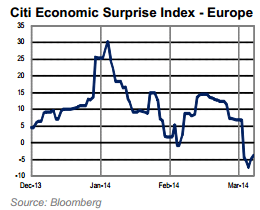
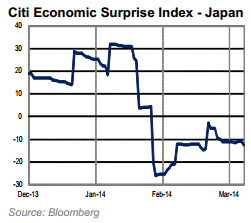
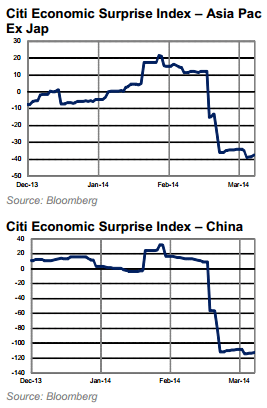
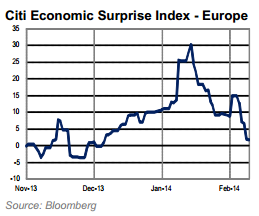
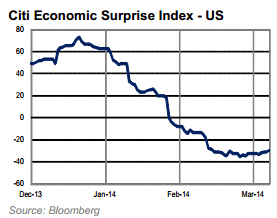
27. Citi Economic Surprise Indices for major global regions all negative
3ap17 3ap18 3ap19 3ap20Source: Citigroup

28. Fund manager allocation to global equities is at levels that previously led to a market peak or correction

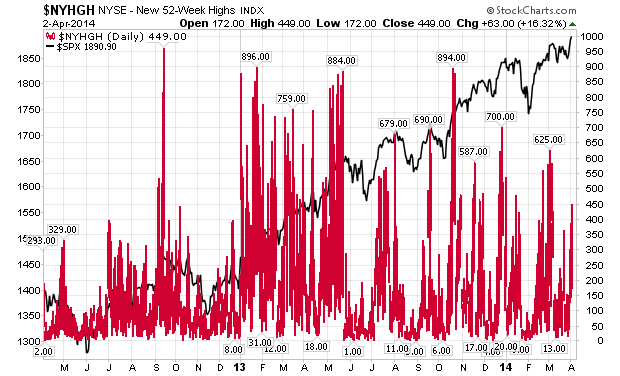
29. Percentage of stocks hitting new highs is thinning into current new SP500 highs
3ap10

Source: Stockcharts

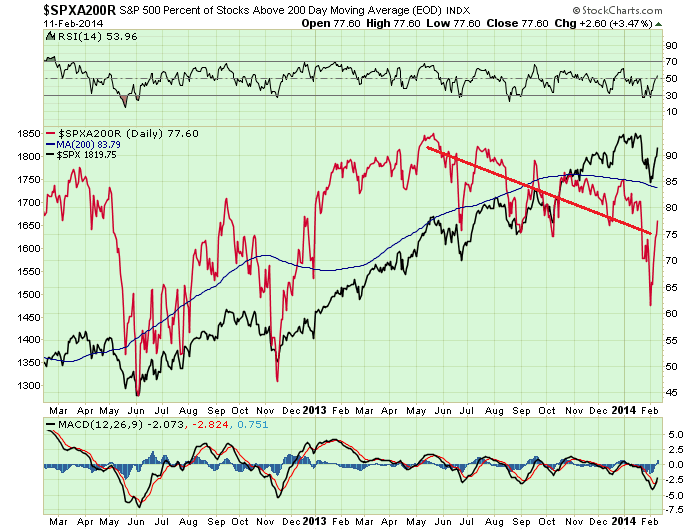
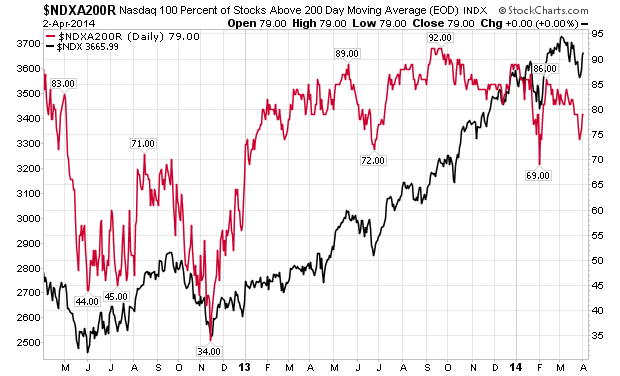
30. Six month breadth divergence in Nasdaq 100 in stocks above 200MA
3ap11

Source: Stockcharts

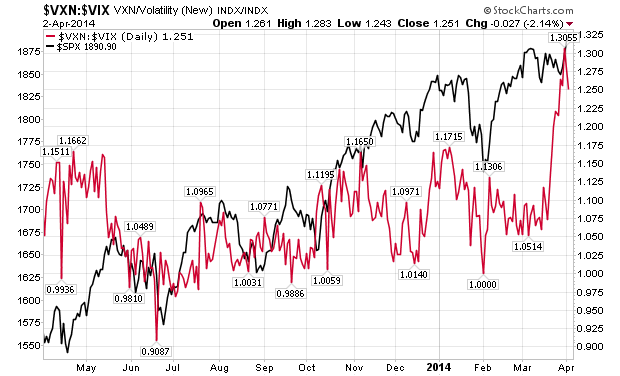
31. VXN/VIX ratio is a risk-off current flag

3ap22

Source: Stockcharts

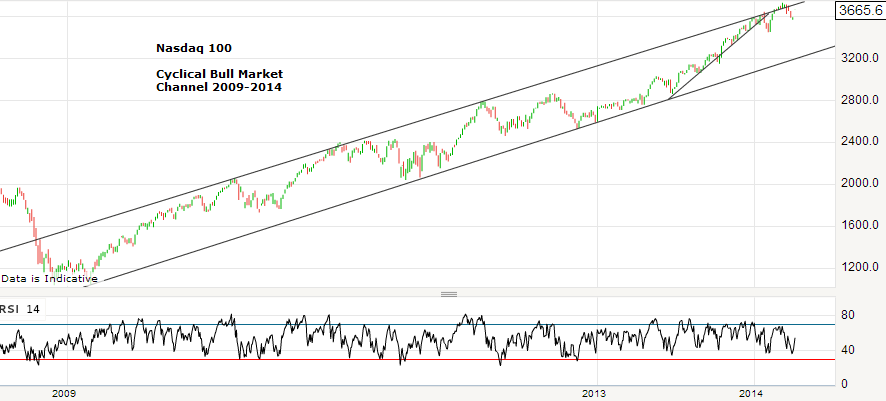
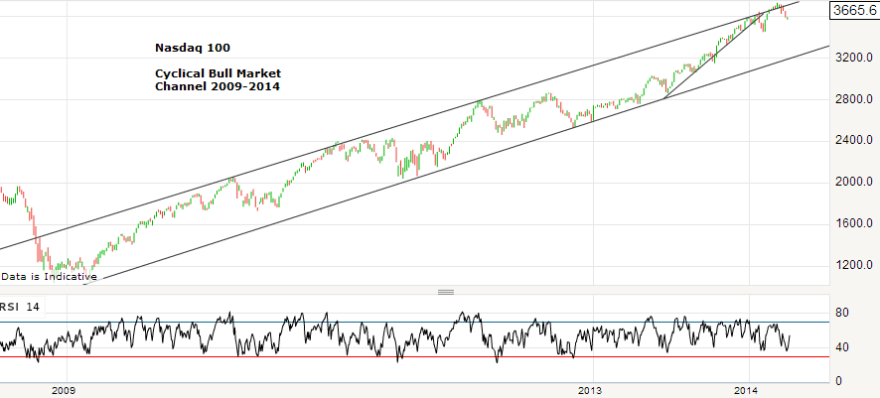
32. Nasdaq 100 made a fake-out from its cyclical bull channel in March
3ap24

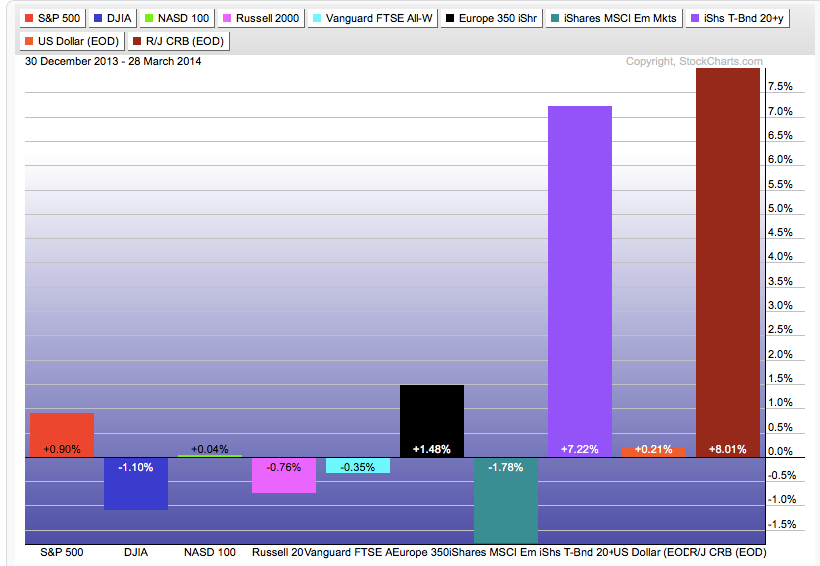
33. Best performing classes and sectors in Q1 2014 were commodities, treasuries and defensives

3ap30 3ap31

Source: Fat-Pitch

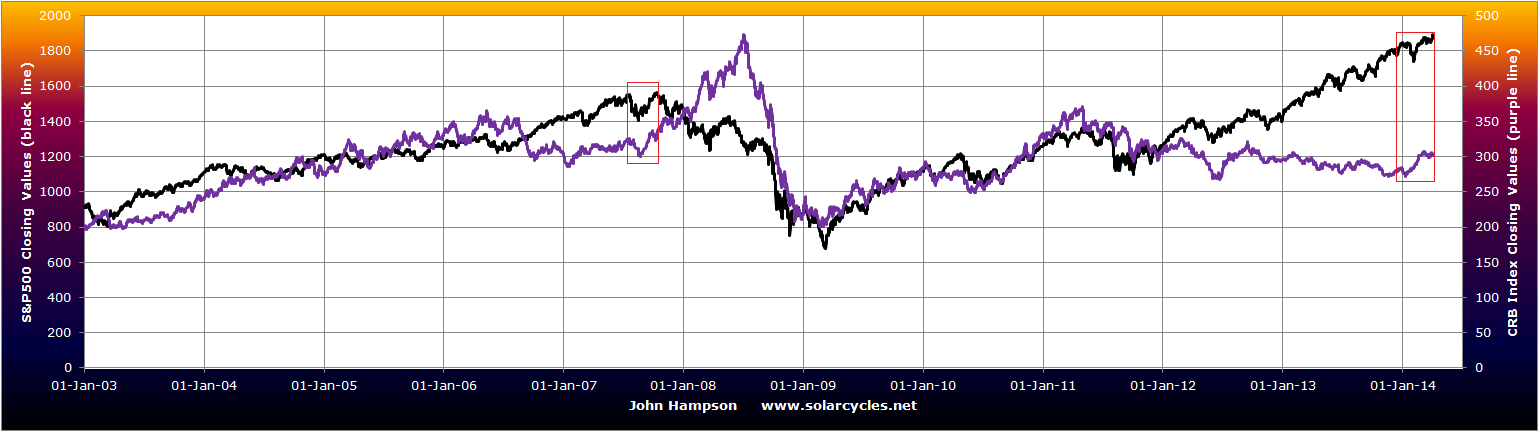
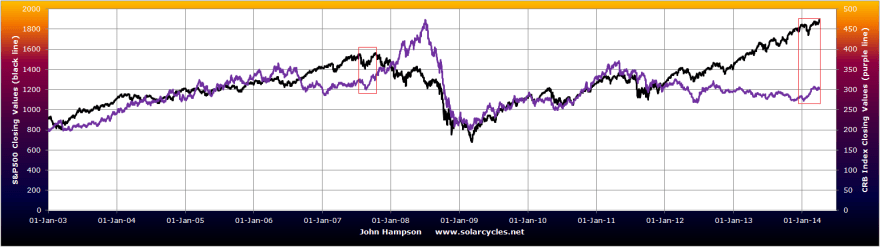
34. Late cyclical outperformance of commodities as equities top out consistent with 2000 and 2007 peaks
3ap32

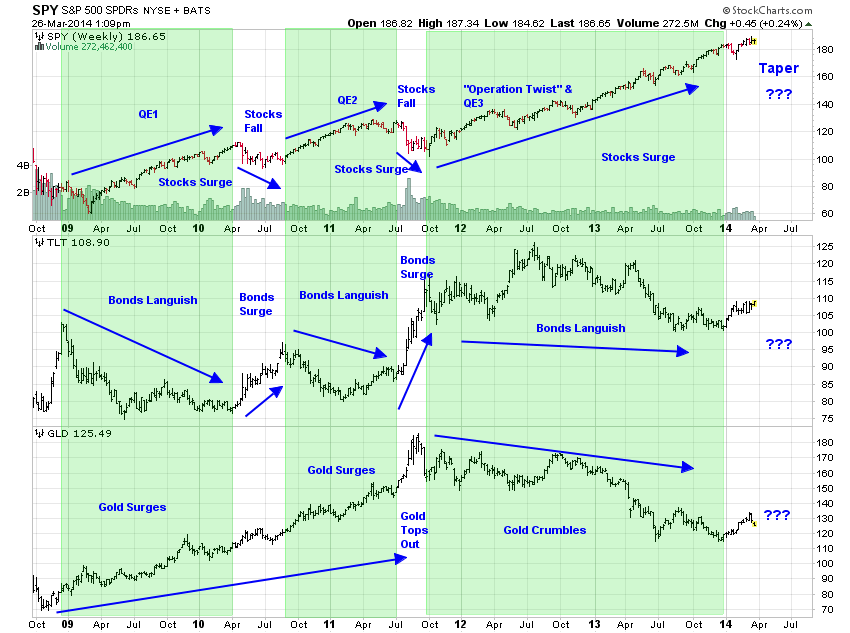
35. Winding down of QE historically negative for equities, positive for bonds and gold

3ap21

Source: Jesse Felder

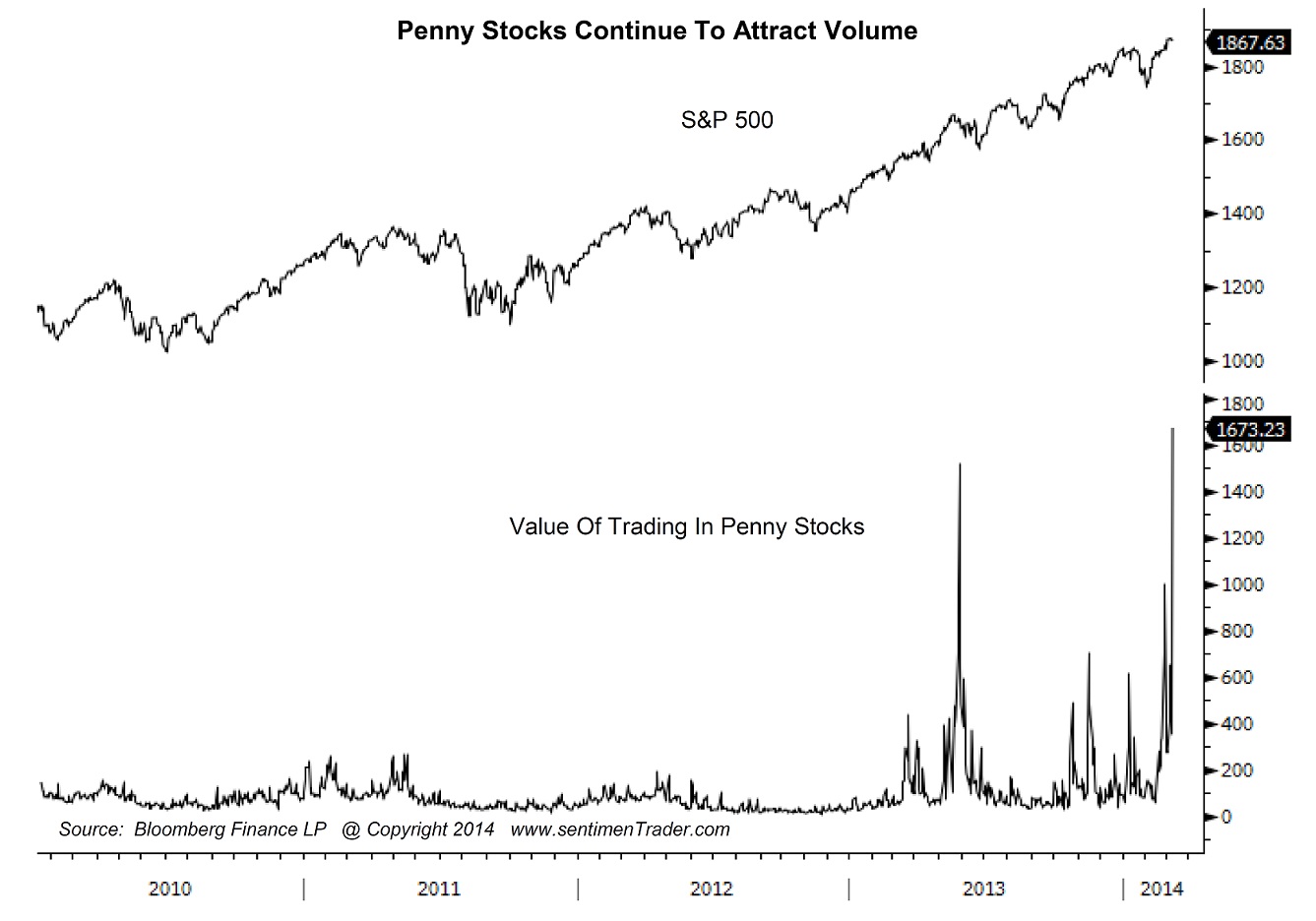
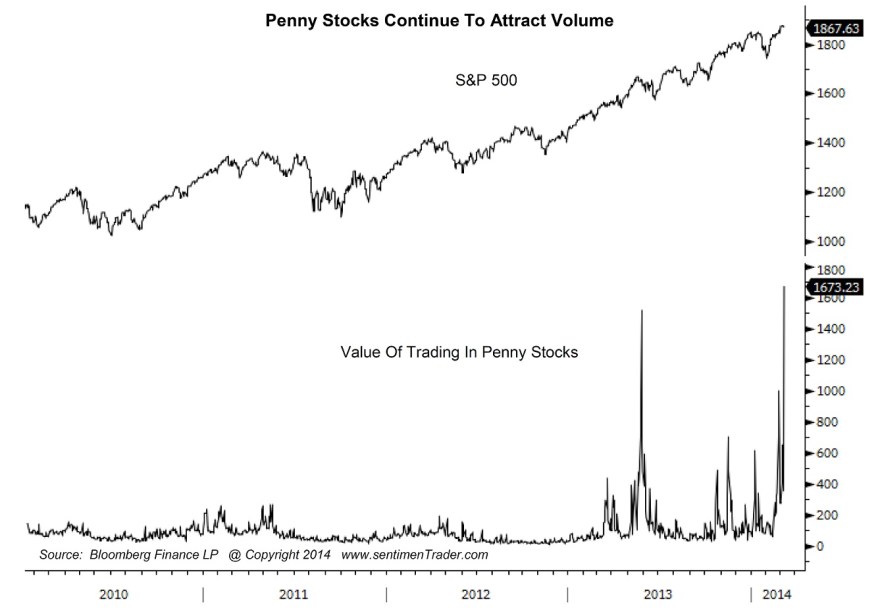
36. Trading in penny stocks signalling a peak
3ap36

Source: Sentimentrader

37.  Dow, FTSE and Nikkei are all at long term resistance levels (connecting 2000 and 2007 peaks)

38. Treasury Bond Yields Rate Of Change over last 12 months is at a level that previously led to market tops in 2000 and 2007

39. Rydex money market assets back to 1999 lows

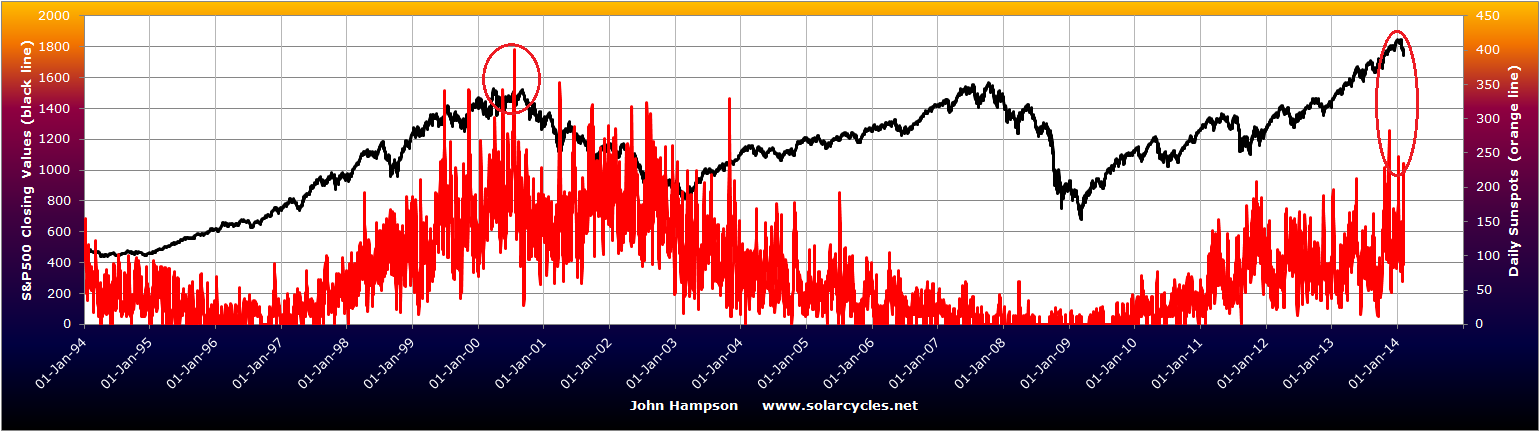
40. Equities topping out with the solar maximum, in line with history

3ap23

Underlying Source: Solen.info

A 40-indicator case is a fairly strong case to go short. But we need to balance with what’s supporting the bullish case.

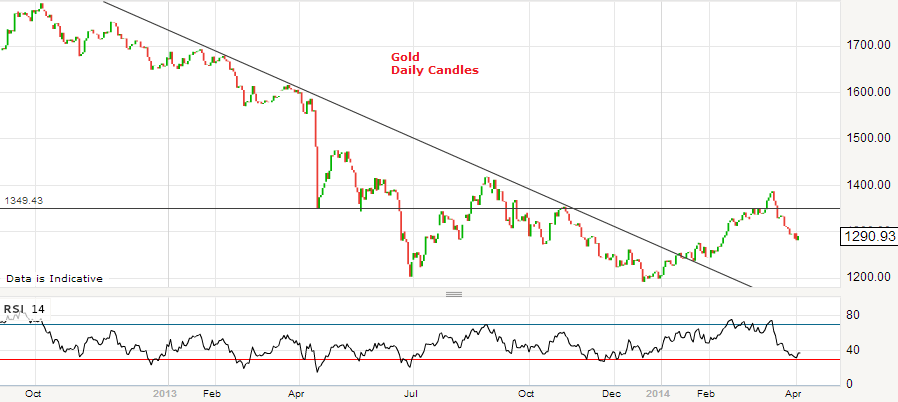
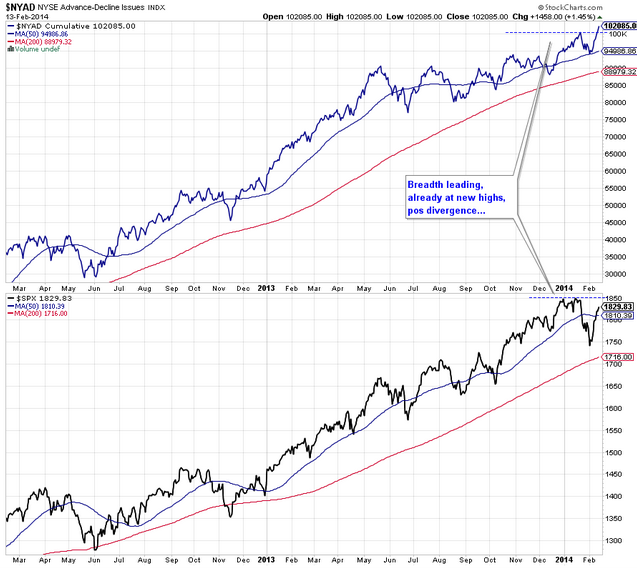
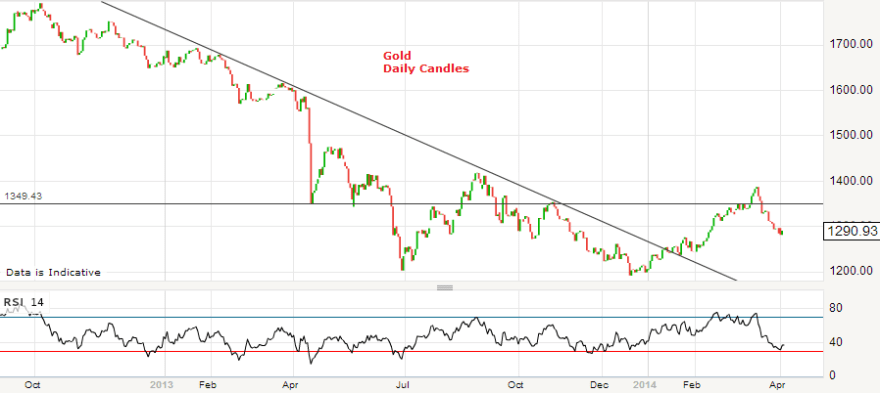
Cyclical stocks have broken out upwards over the last week. The cumulative advance-declines breadth measure remains in an uptrend, supporting the advance in equities. Euro Stoxx broke out to a new high. Gold and gold miners have pulled back in March, with gold having failed to hold a break out above the first meaningful resistance level:
3ap27

The question is whether a higher low can now be made in gold, to continue the bottoming process.

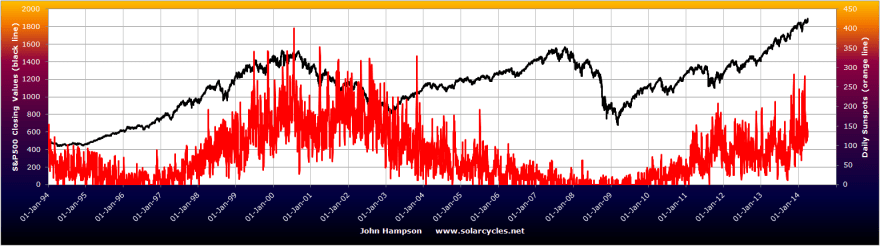
Margin debt, for which we have data up to the end of February, did not yet top out. I had initially expected margin debt to top out in December with an anticipated highest monthly sunspots spike at that time. However, a higher monthly sunspot spike in February suggests speculation could have topped out as we moved into March instead. We have thus far seen peaks in the Russell 2000, Nasdaq and Biotech in March, and we saw a lower monthly sunspot spike in March than in February. The consensus view is that the smoothed solar maximum for SC24 already passed at the turn of the year and that sunspots should decline from here. However, SIDC are still running a second alternative whereby a smoothed solar peak still lies ahead in H2 2014:

3ap34

 Source: SIDC

Playing to that possibility is the trend in leading indicators noted above. If stocks can hold up whilst economic data starts to improve again as of May then may be they can rally through to the Fall. On the flip side, we should have another month of disappointing data right ahead which could equally pull the rug from under equities. Were the second SIDC scenario to occur then I would expect speculation not to top out until the Fall, and a suitable technical mirror from history may be 1987 whereby sentiment reached record levels in Q1 1987 but stocks did not fall hard until Q3. But for now, the more probable scenario is of a smoothed solar maximum having passed and speculation declining from here, and for this to be confirmed I would be looking to see that the RUT and Nasdaq indices do not make a higher high from here, and that margin debt tops out. Sunspots should also notably trend down as we head into mid-year to confirm this.
3ap33

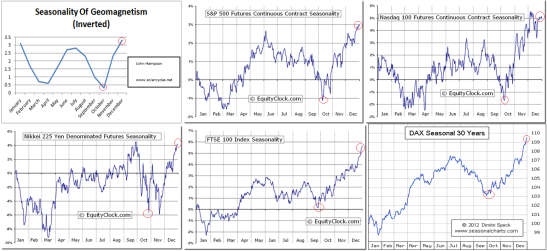
There have been a concentration of market falls occurring in the inverted geomagnetism seasonal lows of March-April and October. So again taking that primary scenario of sunspots now on the wane, I look to this new month of April to deliver major falls in equities, in line with the Nasdaq in 2000 (smoothed solar max and sunspot spike March 2000). Presidential cycles in the market suggest stocks could eek out further gains in the first part of April before falling for a period of weeks. DeMark also believes a top is within days but suggests the SP500 could reach 1931 before inverting.

The primary scenario of a smoothed solar maximum having occurred in December 2013 and a highest monthly sunspot spike in Feb 2014 is supported by a chain of events to date: Bitcoin peaked in Dec, Nikkei and Dow (very tentative at the time of writing) peaked and money flows switched into defensives at the turn of the year, the ‘theme’ stock indices and sectors of the cyclical bull exuberance phase peaked out Feb-Mar 2014. But this is all subject to confirmation or invalidation. So let’s see how April develops. I remain significantly short equities, and siginificantly long precious metals, with other smaller positions long commodities. My worst case scenario is the continuation of speculation into late summer before Q3 falls in equties, and I would hold my positioning until then if so. But for now this is the outside scenario, and I maintain good odds of April delivering significant falls in equities, and momentum returning to gold with a higher low.

Thank you for all your input whilst I was away.

Indicator Updates

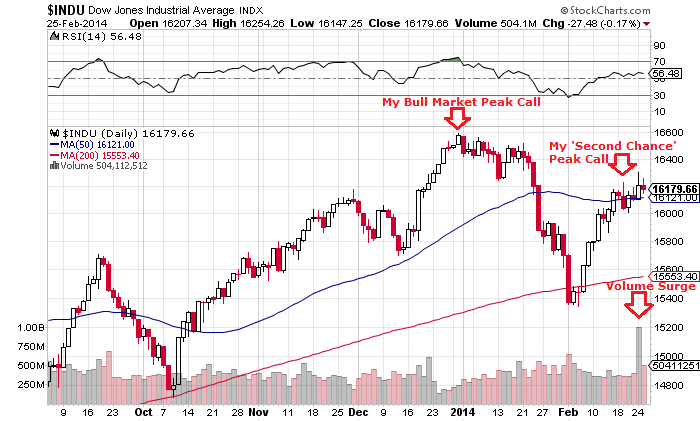
1. Dow daily candles and Monday’s volume print at high reversal:

26fe12. Nasdaq 100 and breadth divergence:

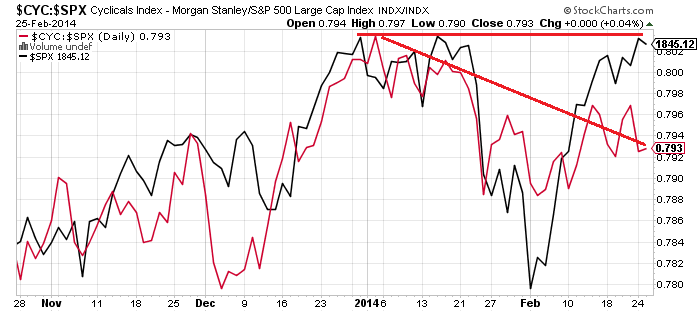
26fe43. SP500 and defensives outperforming cyclicals:

26fe2

4. Russell 2000 (my largest short) P/E:

26fe11

5. Gold outperforming stocks:

26fe96. Treasuries outperforming stocks:

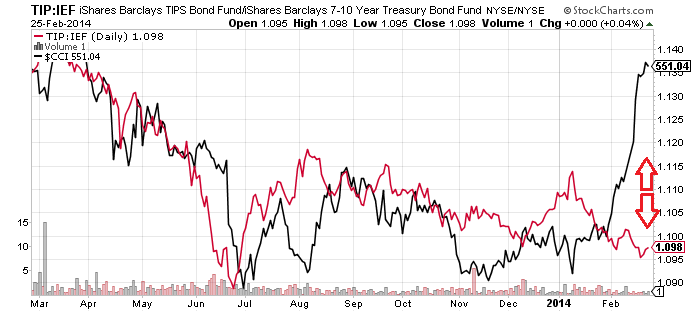
26fe107. Inflation expectations cast doubt on longevity of commodities (CCI index black line) rally:

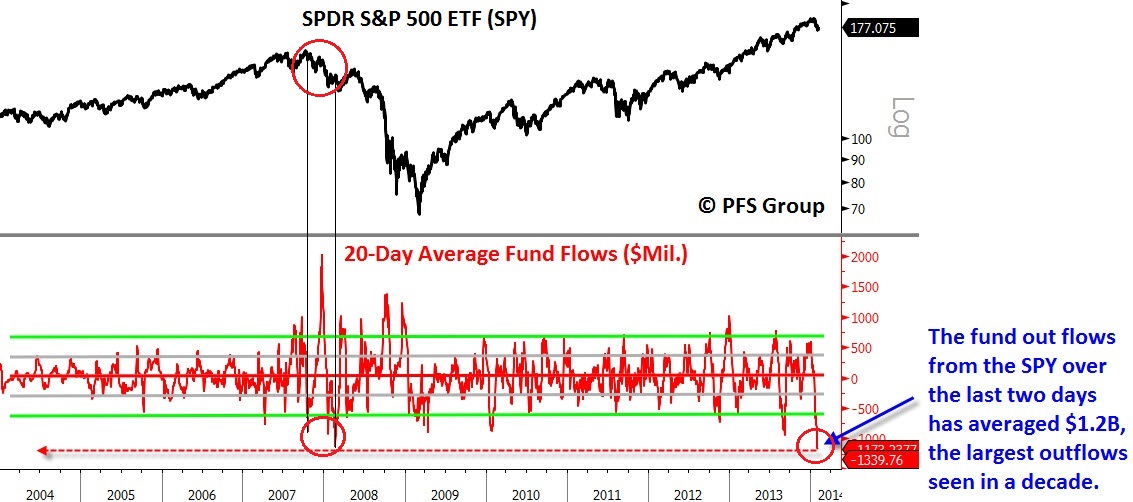
26fe138. Smart money sold into 2013’s equities rally and outflows accelerating into this month’s upleg:

26fe89. Rydex bull ratio exceeds levels previously associated with significant corrections and 2013’s anomalous levitation raises risk of sharp collapse:

26fe710. Put/Call ratio (21 day average) also exceeds levels of previous significant corrections, and at best suggests period of consolidation with downward bias ahead for equities:

26fe5

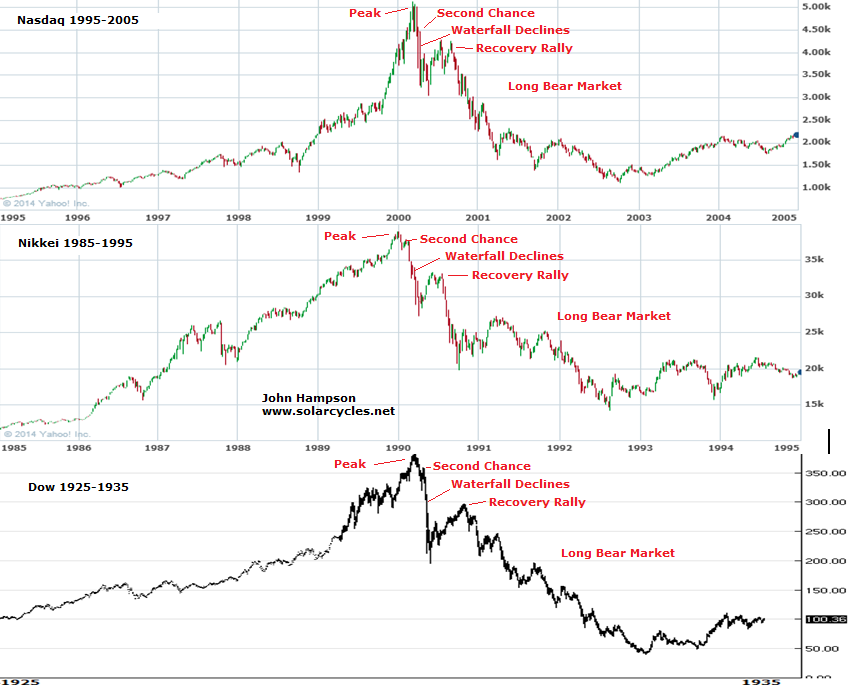
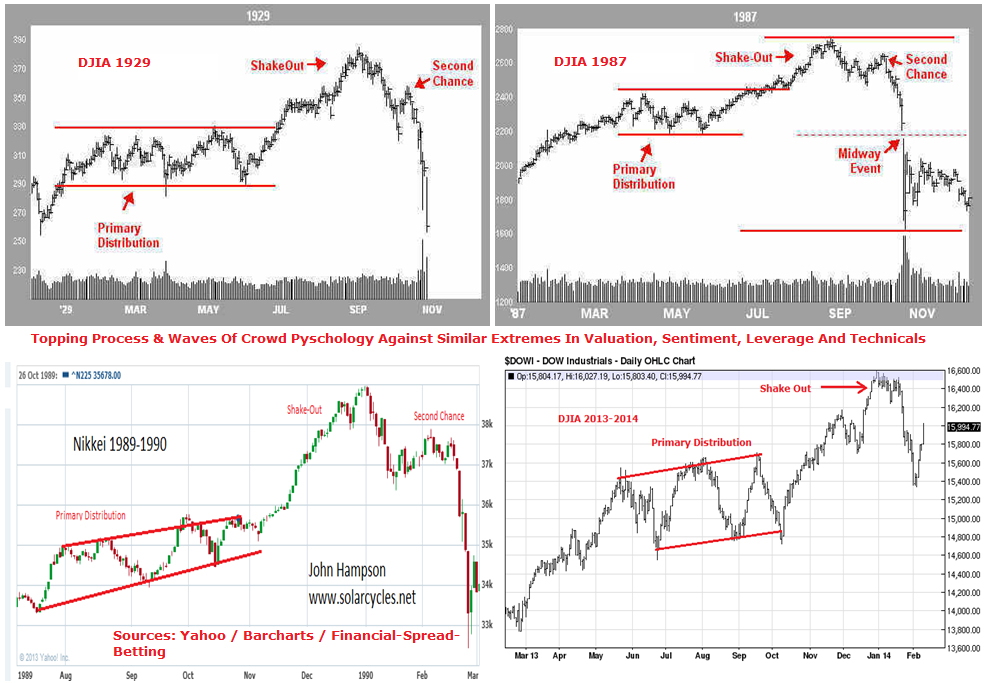
Dow 1929 vs Nikkei 1989 vs Nasdaq 2000 vs Today

Yesterday saw a failed breakout on the SP500 on high volume which suggests exhaustion. The Skew print came in still historically high and the put/call print historically low again, which continue to signal bullish complacency and high risk of an outsized move to the downside. Economic data disappointed again, and the latest economic surprise readings are below:

25fe10 25fe11 25fe12

Source: Citi

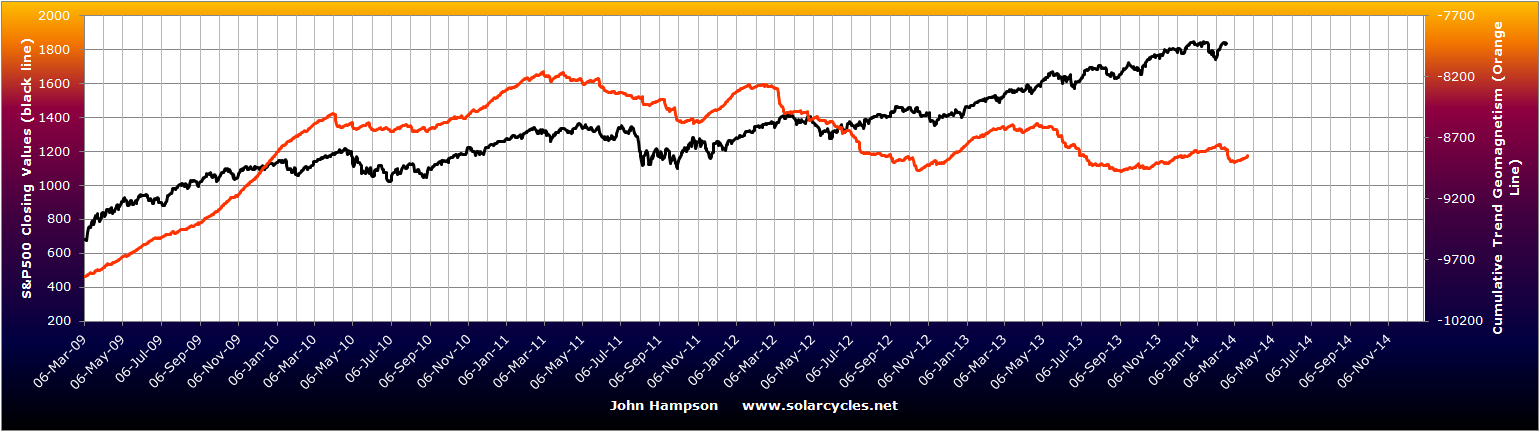
The geomagnetic storms over the last week broke the model’s multi-month uptrend (red line) and along with the NOAA forecast reveal downward pressure this week:

25fe13If you are new to the site my models are updated weekly.

The significant outstanding bubble in the markets remains the Nasdaq Biotech sector, but the unsustainable parabolic is ripe to pop:

25fe14

Source: Yahoo

Less than one third of this sector’s 122 companies earned any money in the last 12 months.
The last 2 years gains in the wider US markets were approximately 80% multiple expansion and 20% earnings growth. The justification for the multiple expansion was (1) ‘Fed policy trumps all’ and (2) stocks frontrunning a ‘normalisation’ in economic growth and earnings. Now: QE is being wound down, Q4 2013 GDP and Q1 2014 GDP estimates are being revised downwards, earnings estimates are being revised downwards and for Q1 2014 82% of companies so far have issued negative earnings guidance. Those justifications have largely evaporated.
The lesser known reason for the big run up in price into the end of 2013 is the speculation peak driven by the solar maximum, and this was shared in the superpeaks of Dow 1929, Nikkei 1989 and Nasdaq 2000. A reminder that there are 3 ingredients for a superpeak: (1) speculative mania by solar maximum (2) increasing number of buyers through demographic swell and (3) increasing use of leverage amongst buyers. Both (1) and (3) apply to the current US markets but (2) is absent. There is a shrinking rather than swelling demographic pool, and for that reason we do not have a supersized peak. Otherwise, the analogies are very much applicable.

In 2013 US markets ran up in a parabolic shaping, generating historic levitation above moving averages and producing an anomalous lack of a ‘proper’ correction. Sentiment reached levels not seen since previous major peaks, and euphoria only historically exceeded in the dot.com boom. We have reached valuation levels in the Q ratio equivalent to the TOP in 1929 and in stock market capitalisation to GDP equivalent to the TOP in 2000. Leverage levels equal the TOP in 2000 as measured by margin debt to GDP and beat the 2000 top in other measures. The blow-off topping process in the current Dow so far mirrors that shared by the 3 analogs, and the peak-to-date occurred at the solar maximum.

In short, the ‘size’ of the peak in current US markets does not compare to the analogs because of the key demographic difference, but in many other ways these analogs are particularly apt. What comes next in the analogs is waterfall declines, and we have a case for the same in the current US markets due to (1) historic levitation away from moving averages or parabolic rise on long term view (2) historic time since significant correction and historic compound gains and bull duration (3) 80% multiple expansion 3-pronged justification case shattered (4) ‘all-in’ measures of sentiment, leverage and fund flows ripe for unwinding. We are likely through the solar maximum peak and the speculative excess into the peak is now vulnerable to pop.

Here are the analogs on a 10 year view centered around the peak:

25fe7Alongside I’d like to remind you of the relevance of the (inverted) seasonality of geomagnetism for the timing of peaks and falls:

13fe4

Nikkei 1989: Waterfall declines from second chance lasted about 6 weeks, centered on March (geomagnetism (inverted) seasonal low), and took off 27% from peak; Recovery rally then lasted 3.5 months from April to July, back up 20% (through seasonal high); Then 2.5 months more waterfall declines, mid July to beginning of October down 40% (through seasonal low).

Dow 1929: Waterfall declines from second chance lasted 1 month, centered on October (seasonal low), and took 48% off from peak; Recovery rally then added back on 50%, lasted 5 months from November to april (through seasonal high); Then long period of declines lasting a couple of years.

Nasdaq 2000: Waterfall declines from second chance lasted about 6 weeks, March-April, and took 36% off (seasonal low); Recovery rally lasted about 3.5 months from May through to beginning of Sept, adding back on 34% (through seasonal high); Then long period of declines lasting a couple of years.

So, averaging them out and applying to the current US markets, we could expect waterfall declines of around 35% lasting around 5 weeks, and this should occur in the seasonal low of March-April. That would then be the time to take off short positions for a recovery rally of around 35% lasting around 4 months from April to August or so, through the seasonal high. A second set of steep declines should then unfold through the seasonal low of September-October.

25fe8By that model the initial waterfall declines should wipe out all of 2013’s gains in the space of a month. I refer you to the case for waterfall declines further up the page as to why this is reasonable, and I suggest the consensus view once this occurs will belatedly point to similar factors. However, once the recovery rally then erupts, as can be seen from the 3 analogs on the 10 year view, it will keep the ongoing bull market option in play. I suggest 1987 will likely be quoted as benchmark: a harsh correction that was a golden buying opportunity. But, once the recovery rally tops out short and rolls over into more steep declines, there will be broad acceptance of the new bear.

What will happen to commodities under waterfall declines? Understand that such unforgiving drops will bring about forced liquidations as leverage is unwound so there will be some blanket selling. In all 3 analog waterfall decline periods, commodities (including precious metals) fell too, whilst the US dollar largely rallied. The same occurred in October 2008’s sharp falls. That suggests it may be prudent to pull back on or even exit commodities long positions once we get a whiff of steep declines erupting.

Previous major commodities peaks have been speculative to a large degree, but also typically founded on a fundamental supply/demand case. For energy and industrial metals the latter is currently weak, and we see oil and copper in long term ranges rather than in major breakouts. Various soft commodities have enjoyed steep moves up as shorts have scrambled to cover, but whether there can be an enduring supporting story this year remains to be seen. I am skeptical as to whether commodities as a class can make a major rally to beyond 2011’s CCI peak this year, anticipating they may sell off under the waterfall declines and perhaps struggle for a case under deflationary recession fears. However, maybe they can outperform during the ‘recovery rally’ over mid-year and particularly if the US dollar is less seen as a safe haven this time, so I remain open to the possibility that maybe they can beat 2011’s peak, but currently see this as less likely. The case for previous metals differs from other commodities, and as I have outlined before I see gold’s 2011-2013 bear as a pause in a longer term secular bull market likely to terminate at the next solar maximum. My tactics will be to reduce all commodities long positions bar precious metals once it looks likely that equities are on the cusp of waterfalling, anticipating some blanket selling across all assets in that period, and then review again as we approach the end of that event.

Looking back to the Great Depression, banking panics began in 1930 and swapping dollars for gold in 1931. In other words, it took time for things to unfold, and I would expect similar this time around. Whilst I cannot be sure, I do not expect a sudden chain of bankruptcies under the first waterfall declines, but for the real ‘trouble’ to unfold gradually and likely after the recovery rally peaks out. First things first then: I expect a major short equities opportunity to unfold swiftly from here through March and into mid-April, and am positioned for that. I will be looking to exit all equities shorts as I try to time the end of that event.

Friday Morning Update

Yesterday was an up day for bonds, commodities, gold/miners, and equities, i.e. both pro-risk and anti-risk. Confused?

Retail sales came in weak, not just for last month, but for the revised previous month too. The string of poor economic data, in line with leading indicator forecasts of growth having peaked out, has resulted in progressive revisions to Q4 2013 GDP estimates – here is Barclays:

14fe7

Source: Business Insider

Q1 2014 GDP estimates have also been cut, with Credit Suisse reducing from 2.6% to 1.6%.

The latest picture for the Q4 earnings season shows blended revenue growth at just 0.8%, and of those companies who have given forward guidance for Q1 2014, 80% have given negative rather than positive guidance.

14fe3

Source: Ed Yardeni

Last year’s multiple-expansion rally in equities was justified on the stock market front-running a return to ‘normal’ economic growth and earnings growth, as well as the underpinning of ‘Fed policy trumps all’. With QE now being wound down, economic data worsening rather than improving, and earnings still disappointing both in terms of revenues and forward guidance, the case for anti-risk is strengthening, and the rally in stocks suspect.

Yesterday ahead of US stock market open, futures were down and equities around the world were struggling to attract buyers, then the retail sales data hit and the scene was set for a bearish US session. But the opposite occurred: a ‘stick save’ as short stops were run and bulls delivered a trend day up. We saw this occurring in January:

14fe8Eventually this gave way to the high volume decline days.

Yesterday’s volume was again weak, relative to the declines leading into the 6 day rally:

14fe6

Source: Stockcharts

Complacent put/call went lower, Skew remains elevated, and defensive rather than cyclical sectors continue to lead in 2014:

14fe1

Source: Charlie Bilello

From a bullish perspective, small caps outperformed yesterday and advance-declines continue to be strong:

14fe2

Source: Charlie Bilello

Today is the full moon, which could spell an inversion in equities. The Nasdaq 100 joined the Nasdaq Composite yesterday in making marginal new highs, but it did so on a divergence in breadth (as measured by % above 200MA). So I now watch to see whether the other US indices follow suit or all roll over from here. If the latter, then it could turn out to be the sweet spot of the top of the ‘second chance’, namely the optimal time to short, but if the former, it would open up the prospect of a longer topping process in equities. That makes it a fairly delicate position. If you have been reading my recent posts, then I have a multi-angled case for equities to roll over from here, and the developments behind the price action (volume, defensive asset flows, economic data, etc) have strengthened that case rather than weakening it. So I continue to gradually add shorts into this rally and rebuild towards my intended ‘full’ short position, until the ‘clues’ change.

The case for commodities making a late cyclical charge now looks more compelling, with new broad momentum in the class, and siginificant breakouts. Commodities typically top out after equities and once the economy has begun to weaken, sucking the remaining life out of it. On the chart below we can see the last two such occurrences. In 2007 commodities broke out of their consolidation and into a steep rally as equities topped, and I expect similar developments this time. We have been seeing the US dollar weaken on the down days for equities, which should accelerate commodities as equities fall.

14fe4

Wednesday Morning Update

Further rally in equities on Tuesday, here’s how things stand today:

1. Volume on the rally still weak:

12fe52. Trend in cyclical sectors still downward:

12fe43. Trend in breadth still downward:

12fe64. Skew still elevated:

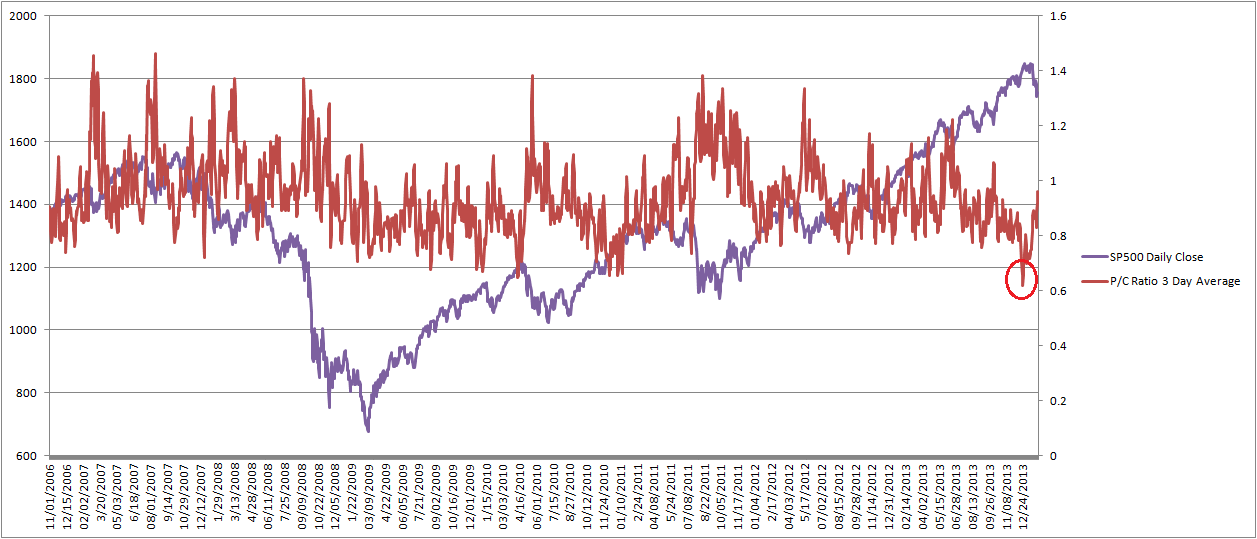
12fe35. Put/Call ratio still in complacency zone:

12fe16. Investors Intelligence % Bears spending a 16th week in the historic low extreme zone of sub 20:

12fe27. Further breakout in gold and gold miners:

12fe8

8. Topping process analogs still valid, and likewise if we substitute in the current SP500:

12fe10

In summary, looking under the hood, this rally still has the characteristics of a bull trap, as befitting the second chance. If so, a 5-day almost vertical rally, with superficial echoes of 2013, is the perfect bait to lure in as many as possible before the market tumbles in earnest.  Yes it feels bullish again, but stepping back I remind you that things indeed changed since 2013, that we have a fairly comprehensive cyclical bull topping checklist, that we have a set up for a stock market crash, and that there was a multi-angled case for a turn-of-the-year major market peak that remains in play. I have added to short stock index positions again this morning and I am out the rest of the day.


Something Happened At The Turn Of The Year…..

1. Treasury bonds bottomed / yields topped out:

7fe22. Gold bottomed and broke out:

7fe3

3. Bitcoin peaked:

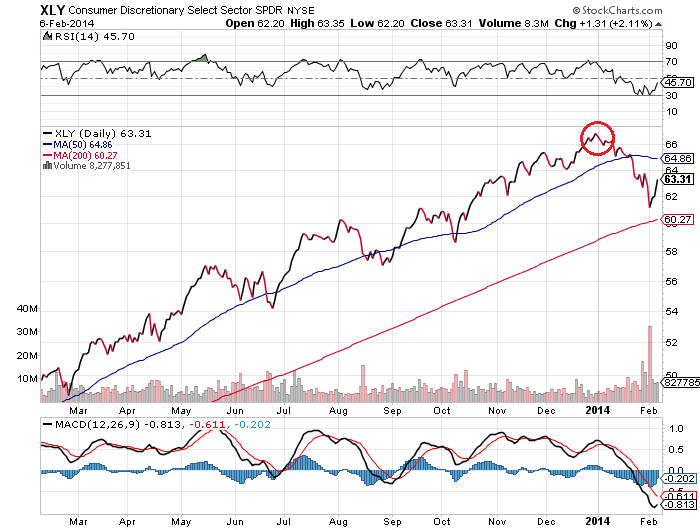
7fe44. US Consumer Discretionary and other cyclical stock market sectors peaked:

7fe55. US stock market sentiment made a historic high peak:

7fe66. The put/call ratio made a historic low bottom:

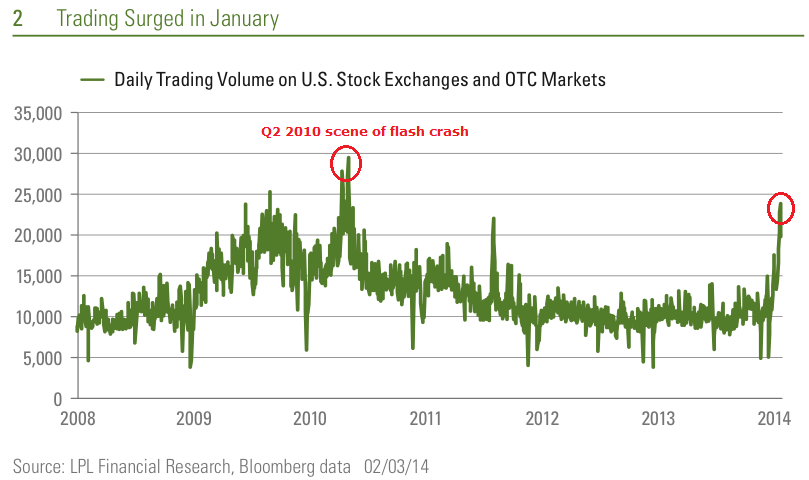
7fe87. Trading volumes surged:

7fe98.Equity funds had their largest ever weekly outflow (whilst bond funds had a record inflow):

7fe1

9. Investor leverage spiked to real and as a percentage of market cap records:

7fe1110. The solar maximum peaked and the stock market peaked (prediction):

7fe10Plus, leading indicators (narrow money and OECD derived) forecast that global economic growth peaked out around the turn of the year.

And why? This is the part that is unpalatable to many: because we are less intelligent creatures of free will and more dumb subjects of natural forces:

7fe12 7fe13 7fe14 7fe16Caveat: If NASA/NOAA/Solen projections are wrong and the smoothed solar maximum extends further into 2014 together with another larger monthly spike in sunspots then it is possible the stock market makes a higher peak with it, close to another future new moon. However, the collective evidence (united solar forecasts plus comprehensive cyclical stocks bull topping checklist (my last post)) suggests this is low probability.