Three Peaks

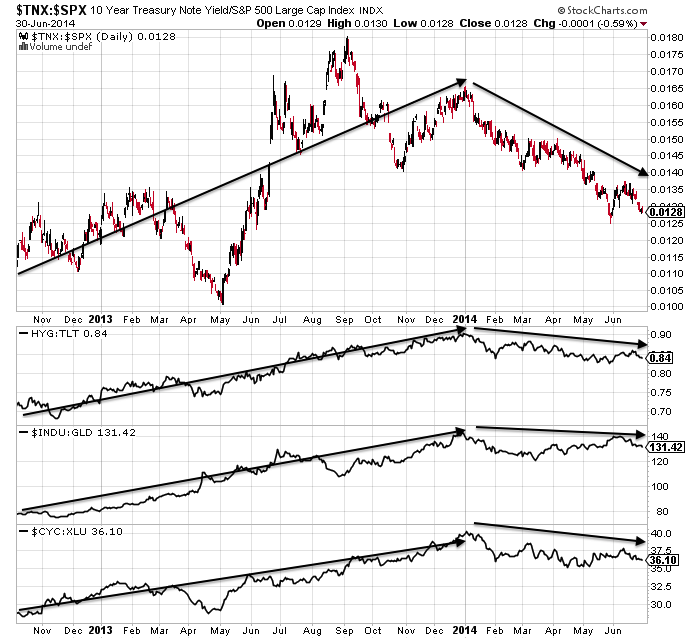
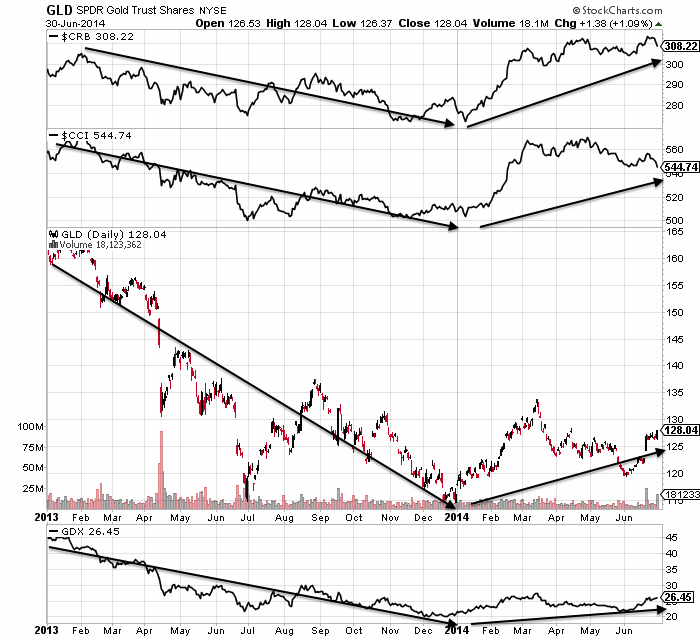
By the end of 2013 we saw various divergences emerge that warned of a potential trend change ahead, and still do:

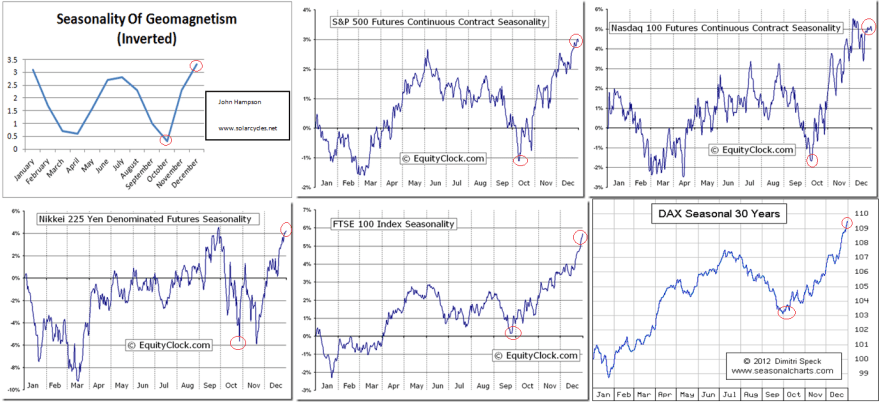
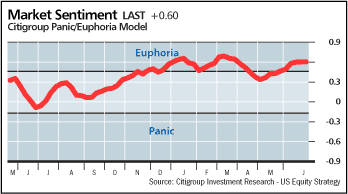
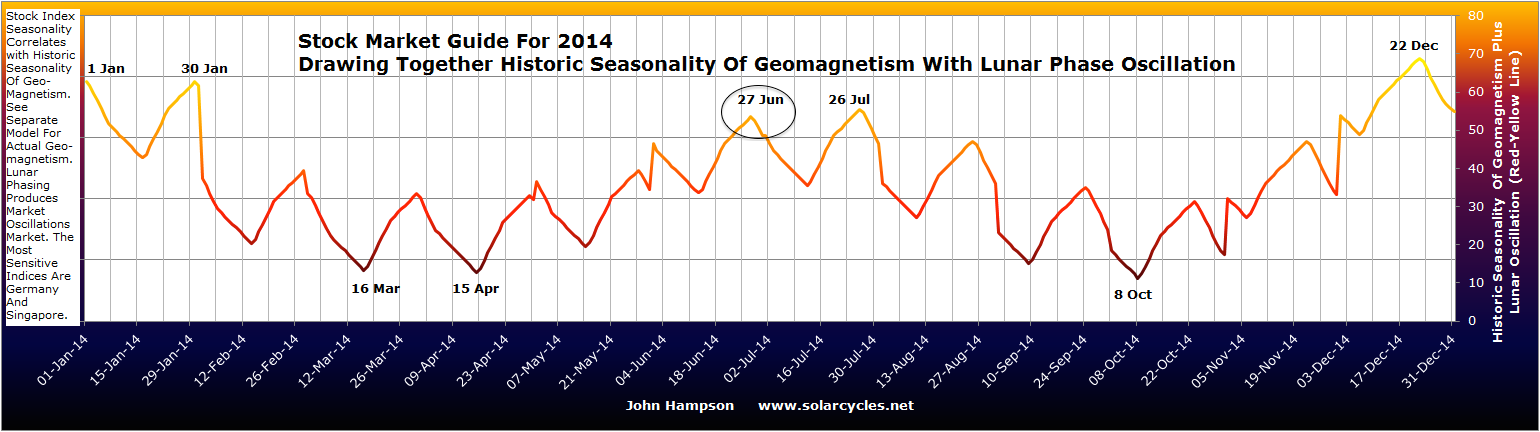
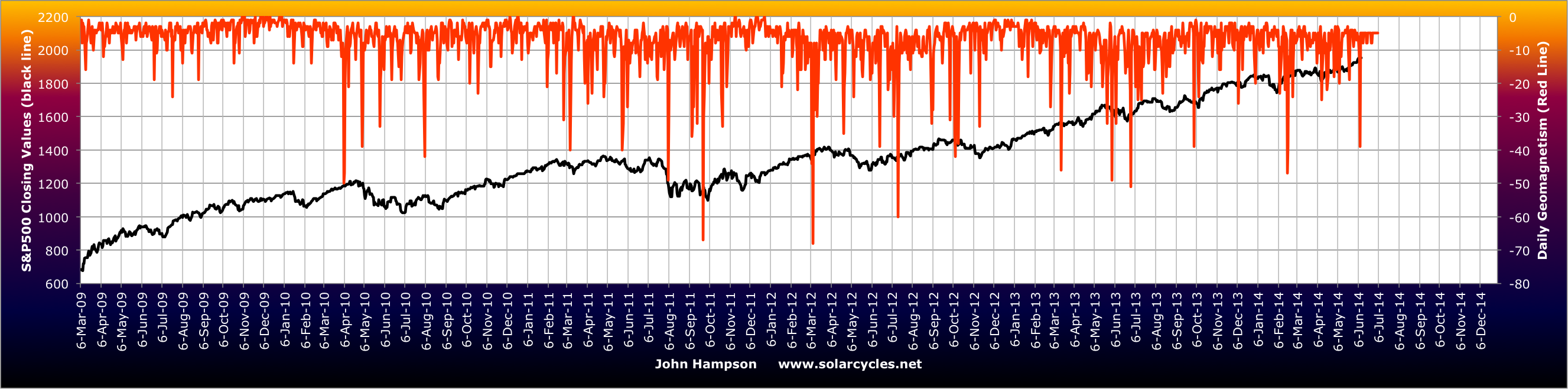
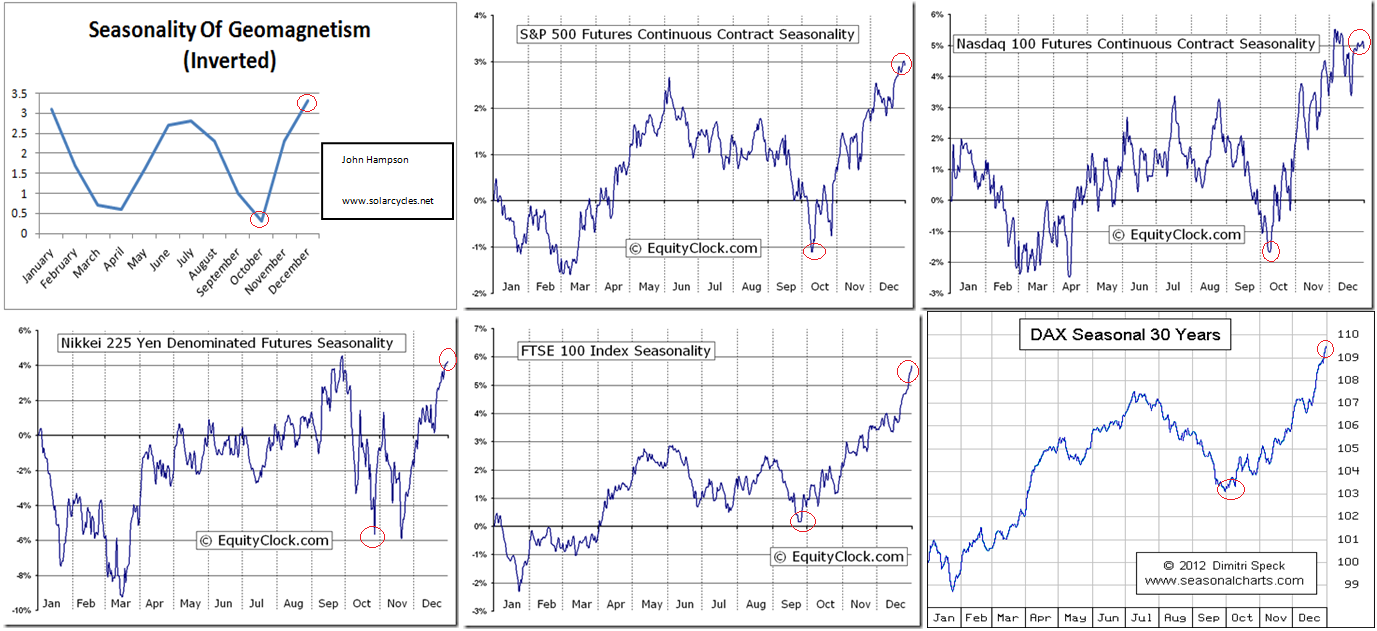
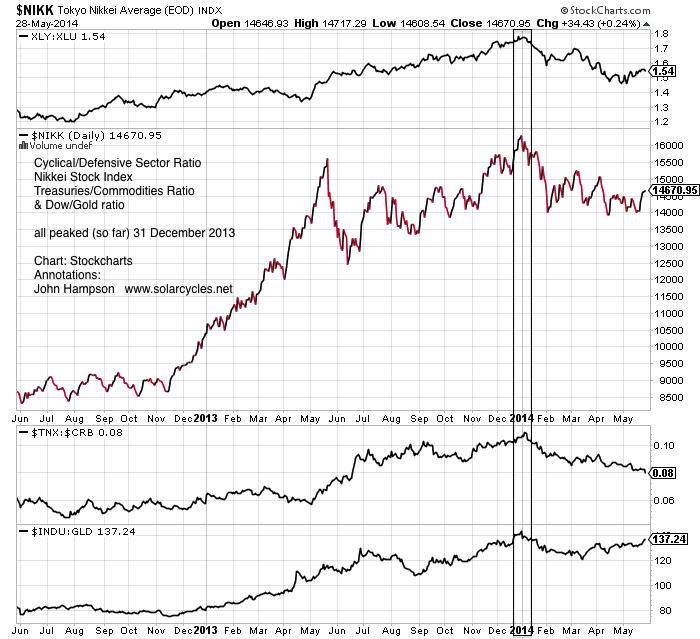
1jl1 1jl2The first major peak point occurred at the turn of the year, around the 2 Jan new moon and at the inverted seasonal geomagnetism peak (i.e twin optimism peaks), as these charts show:

1jl6 1j18There were inversions at this point in different assets and sectors, and the Nikkei peaked-to-date 31 Dec. Various risk-off, defensive and late cyclical assets and sectors have been the dominant money flow targets since then.

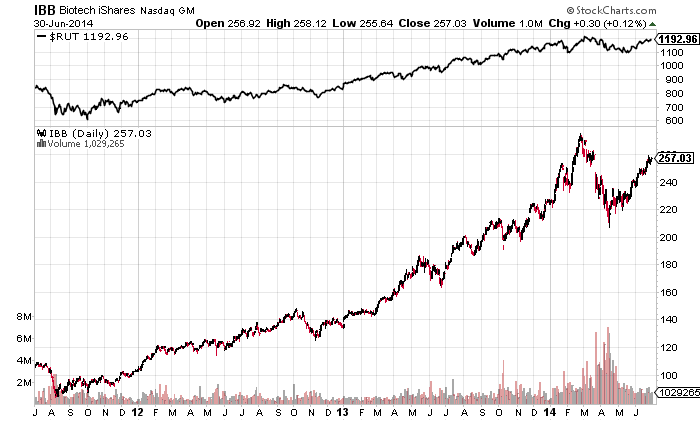
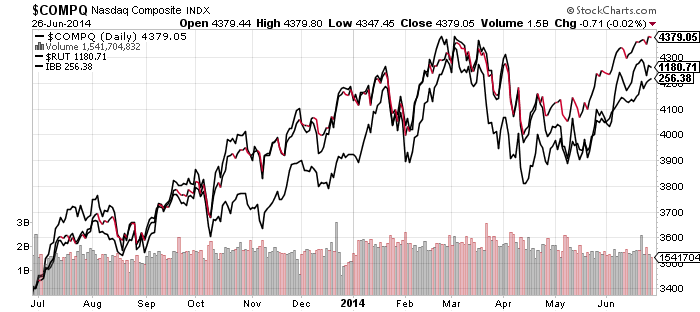
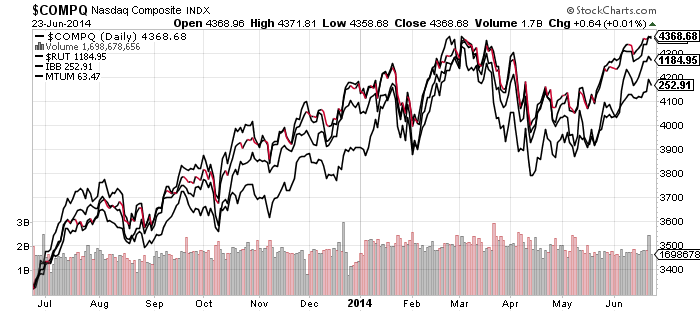
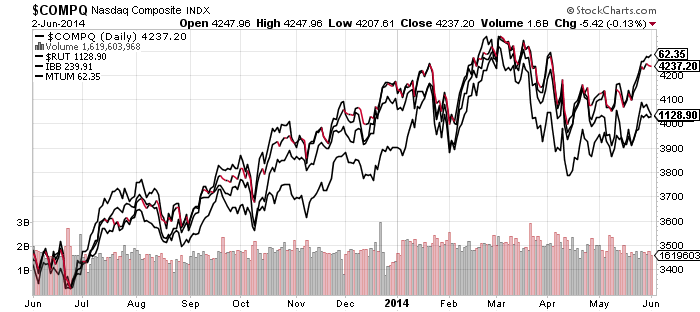
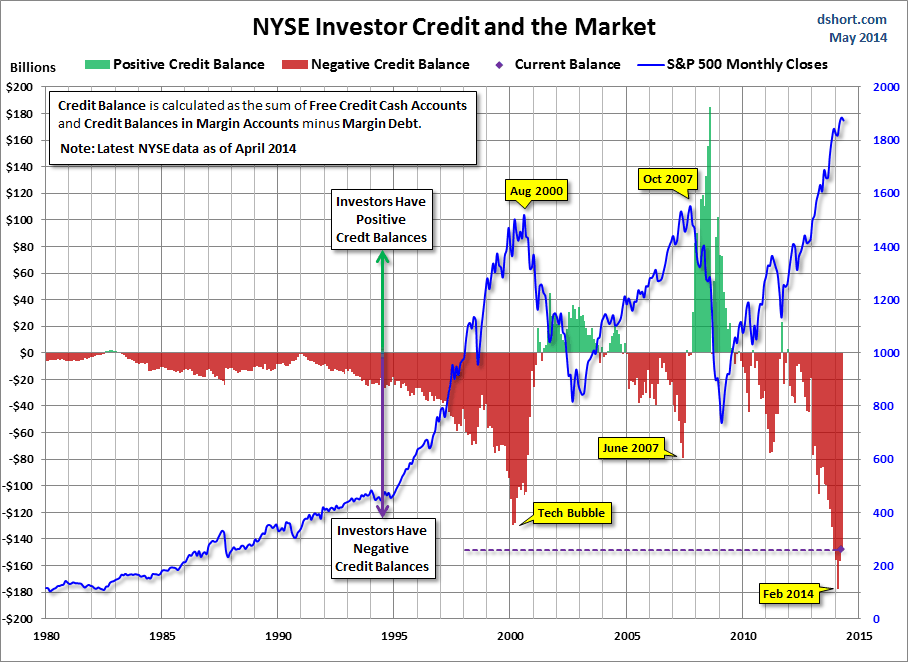
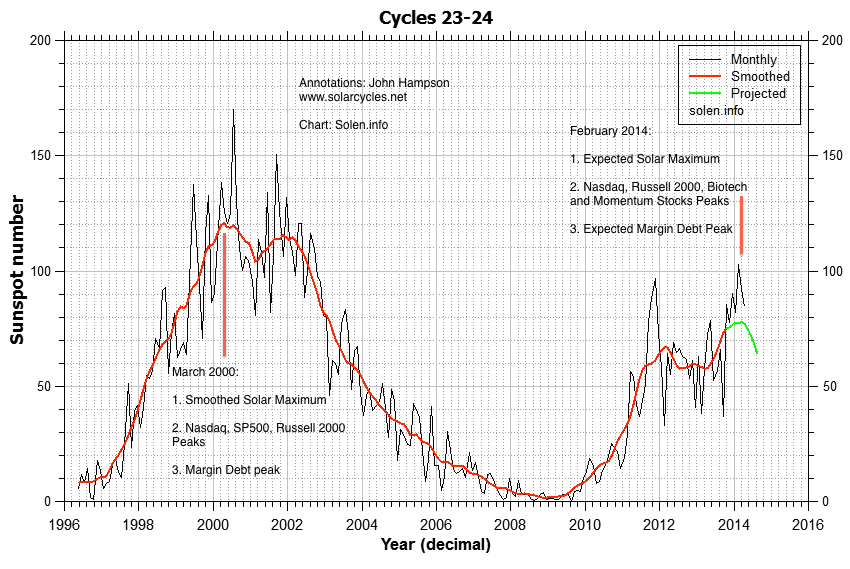
The second major peak was the central peak: where the solar maximum, margin debt and the speculative-targets of RUT, IBB and COMPQ likely made aligned tops, close to the 2 Mar new moon optimism peak:

1jl22

1jl10 1j12

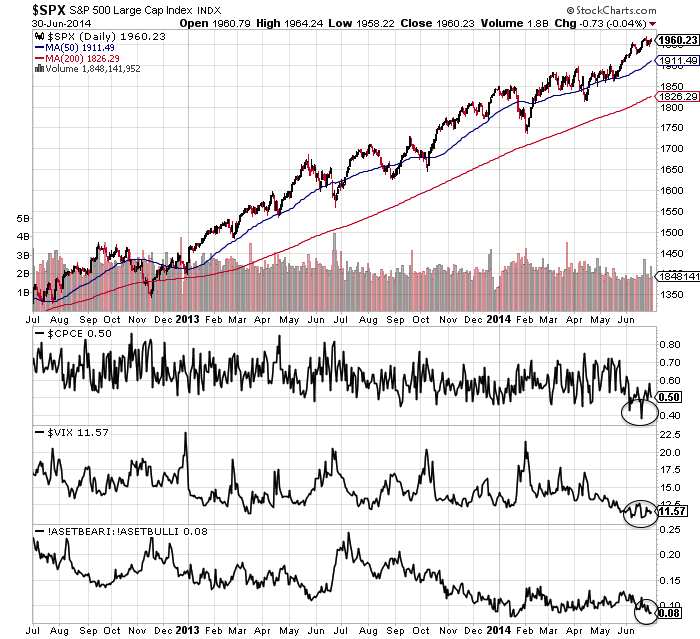
The third peak, I believe, occurred at the end of June, close to the 27 June new moon optimism peak and the mid-year inverted geomagnetism seasonal peak (again, twin optimism peaks), to complete the topping process:

Screen Shot 2014-07-01 at 08.16.14 1jl9

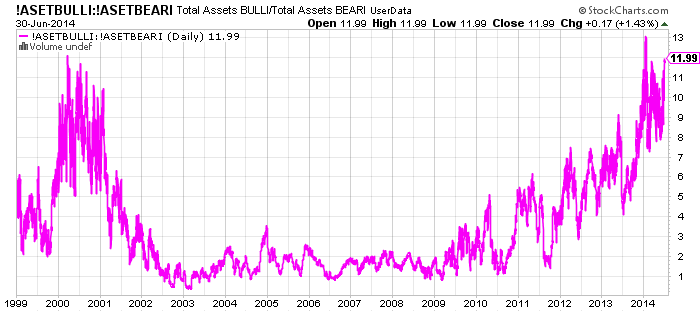
Indicators showing the three peaks:

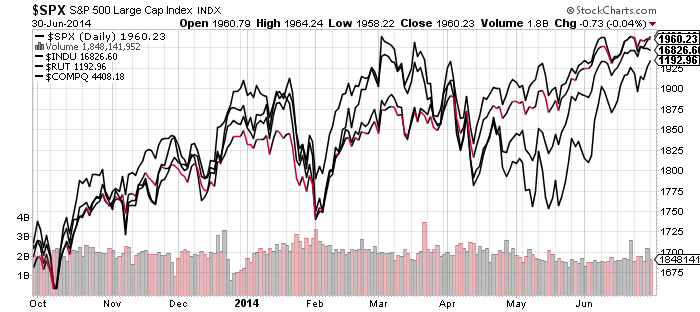
1jl15 1jl3 1jl5Screen Shot 2014-07-01 at 08.15.22The four main US indices aggregated also show the three peaks:

1jl20

And this echoes what happened in 2000, where there was a first peak around the turn of the year (real Dow, Nikkei and FTSE all peaked 31 Dec), a second central peak around March (hot sectors, margin debt and smoothed solar maximum), and a third and final peak around August:1jl19So could stocks then run higher yet and postpone the final peak until late summer or even further out? I can’t rule it out, and it is the main threat to my positions: greater drawdown before it swings definitively my way. However, the trend in leverage suggests further price gains from here are unlikely. The COMPQ is at a suitable double top, whilst the RUT and IBB should make lower highs here to honour the Feb/Mar central peak. Various indicators are stretched to levels that are suggestive of ‘all-in’ or imminent reversal. We have mature divergences seeking satisfaction and fundamental doubts through Q1 GDP, negative economic surprises and Q2 earnings warnings.

The bull case: low rates, benign leading indicators, cumulative-advance declines. But the rhyme with 1937 is still very applicable here in my view. Low rates and a/d breadth accompanied stocks to a high overvaluation peak, like today, front-running a return to normal growth and earnings that didn’t happen, and peaking out with the solar maximum. Q1 GDP has gone some way to puncturing that normalisation assumption again, adding to the other factors being in place. Earnings season could now add to that. Once stocks fall, the wealth effect from a rising equity market will evaporate, helping tip the fragile economy over, as it did in 1937.

Turning Point?

New moon today, and a seasonal geomagnetism (inverted) peak around now:

27ju1

Sunspots have been rapidly waning too.

Price action in US equities has been up and down this week, but there has been a more pronounced trend change in European indices. Meanwhile, precious metals have consolidated their breakout and treasuries have advanced again.

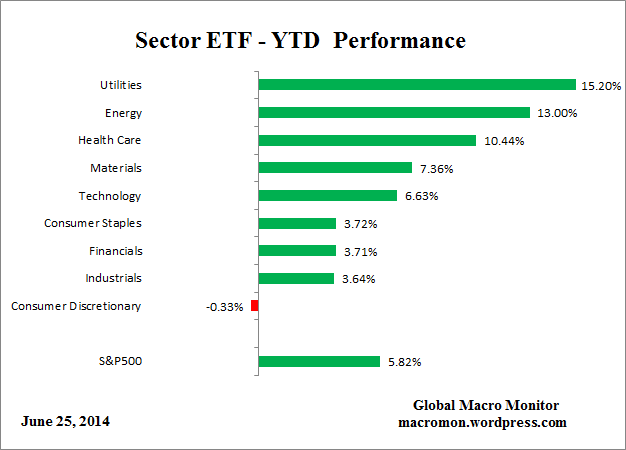
Utilities continue to outperform and at the end of Q2, YTD sector performance looks like this:

27ju9

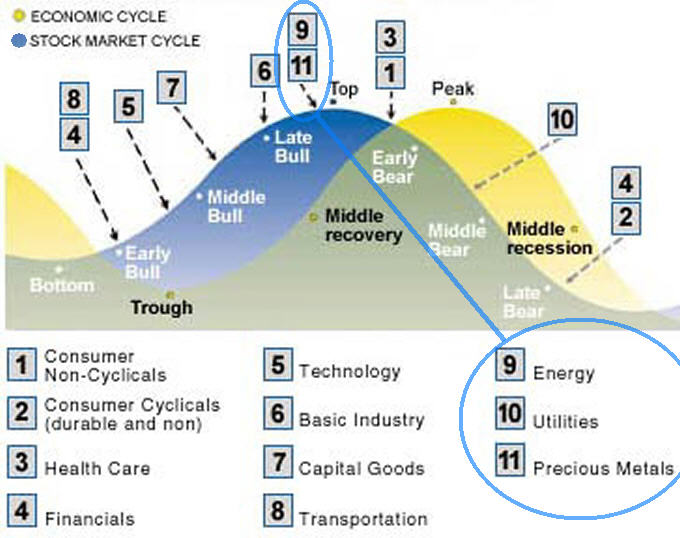
Which fits with this:

27ju13

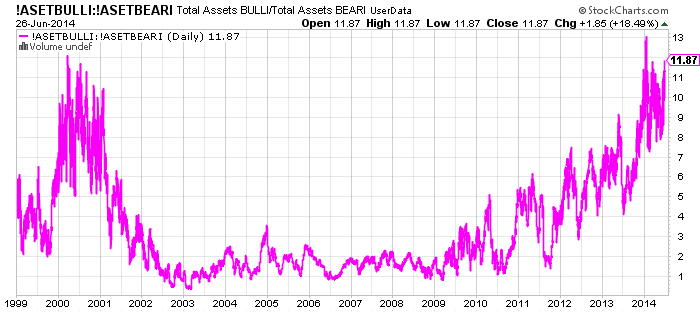
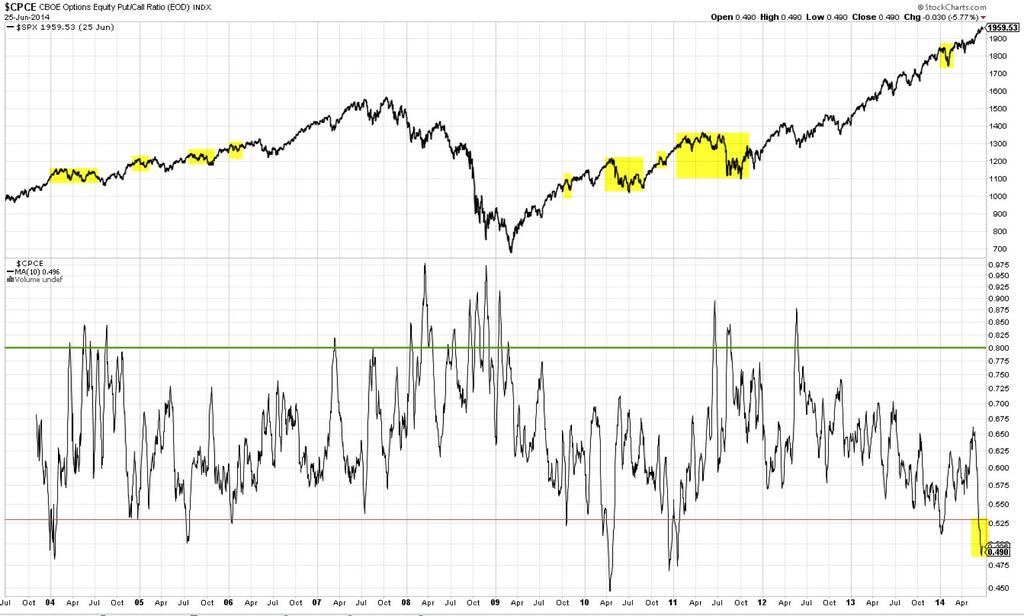
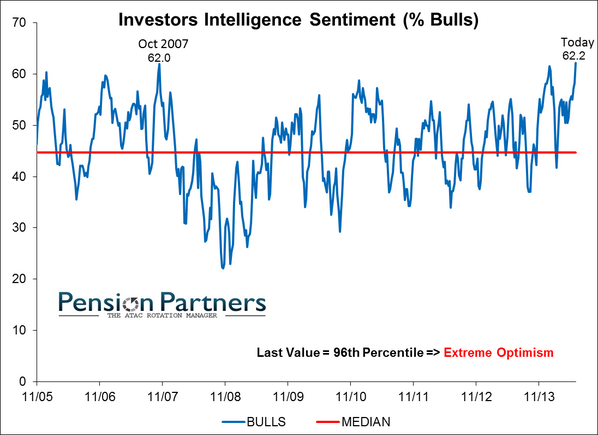
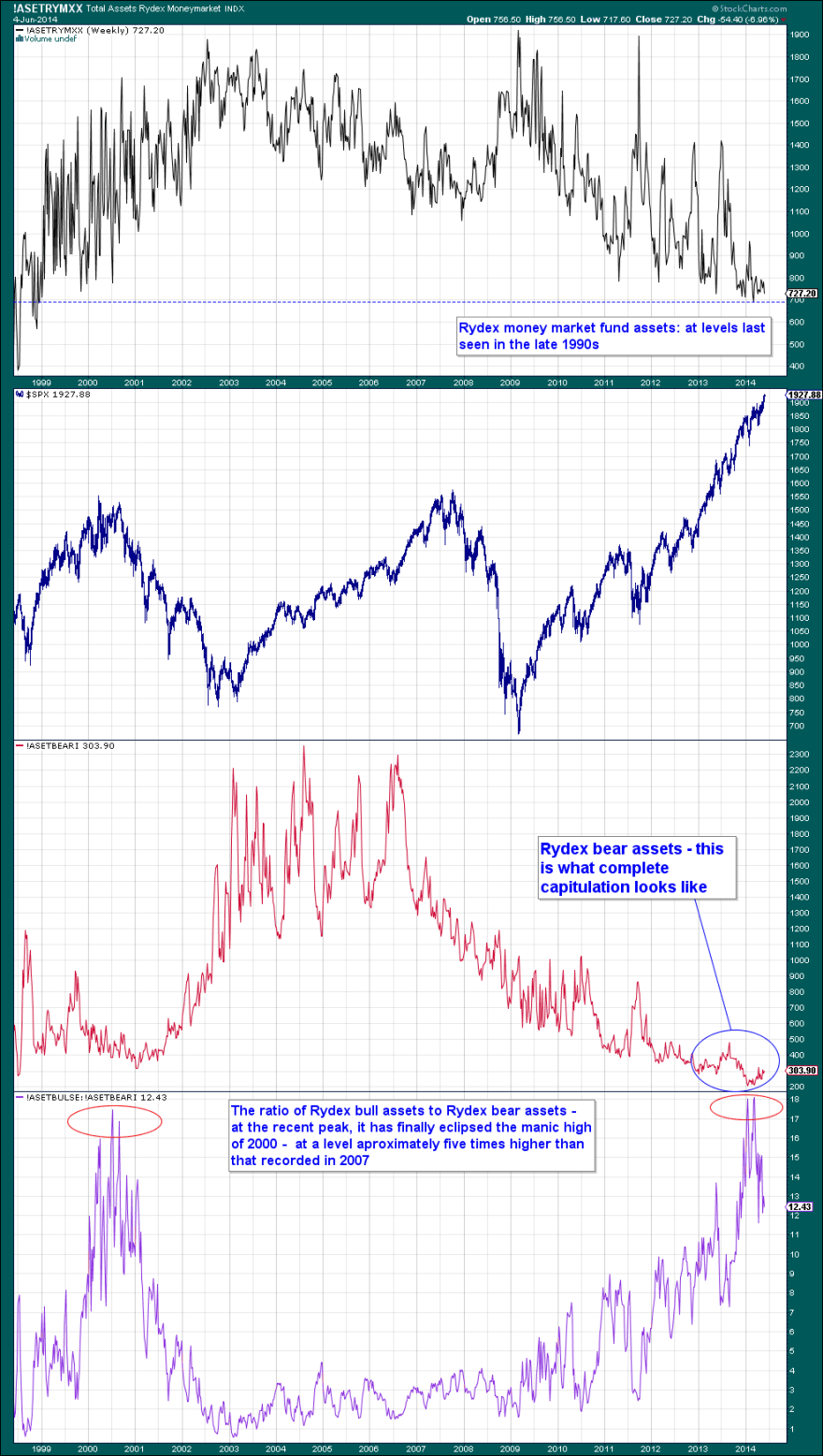
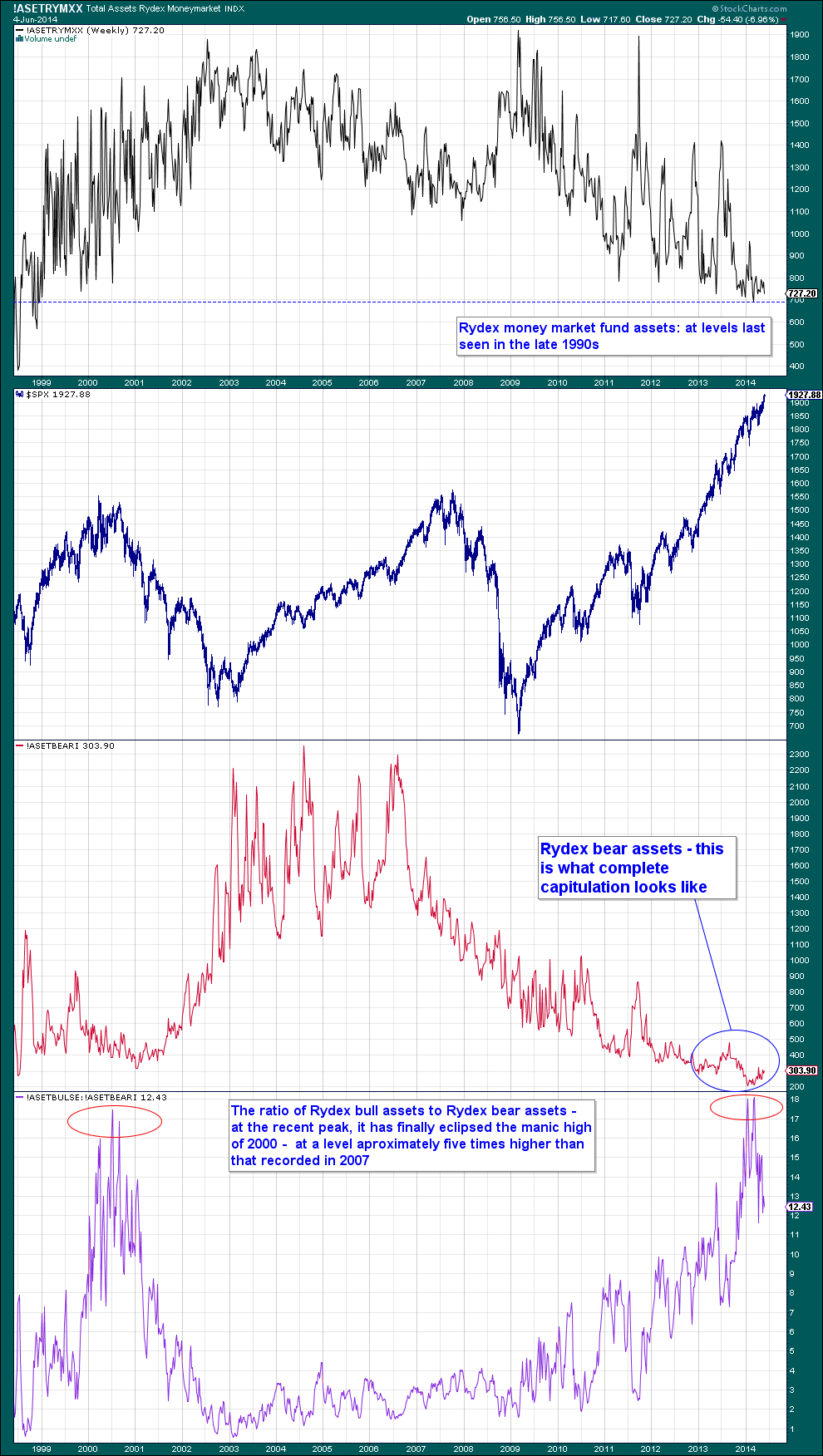
Bears have largely capitulated, as evidenced in readings in Investors Intelligence, NAAIM, Rydex, and more, whilst complacency is extreme, as evidenced by put/call ratios, Vix and more.

27ju5 27ju10

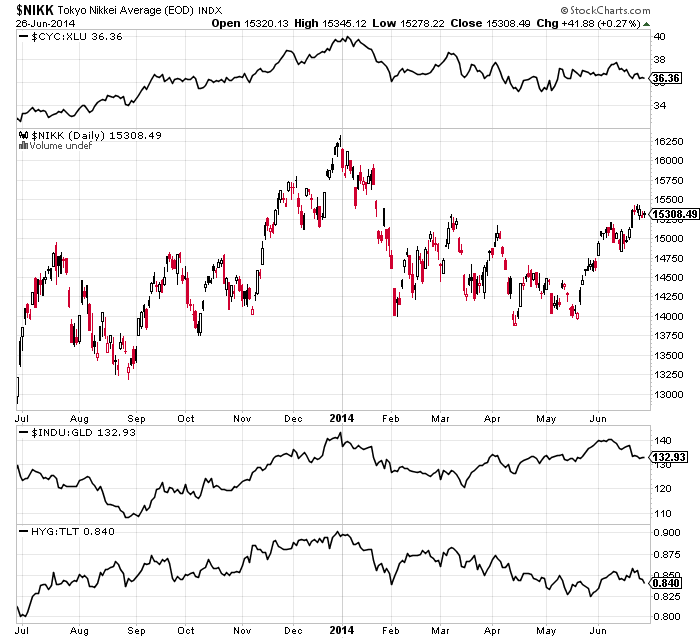
Cyclicals to utilities, high yield to treasuries and Dow-gold ratios have all turned down again, signalling risk off:

27ju8

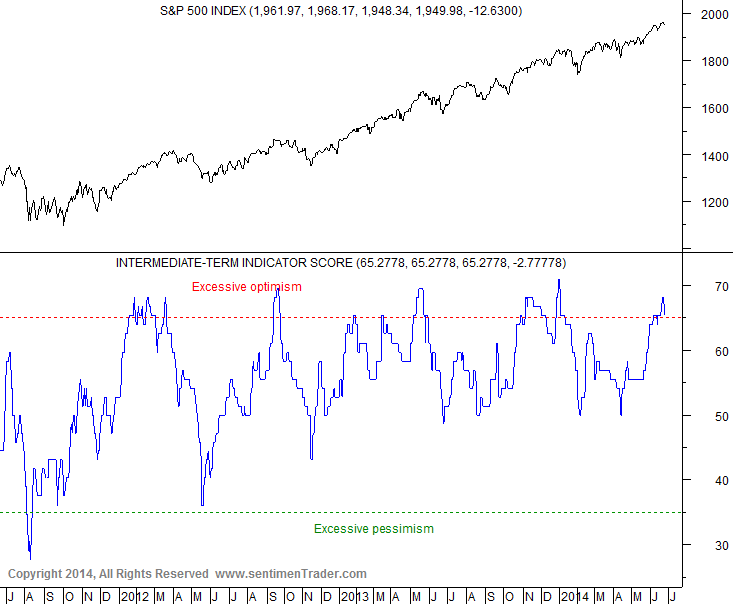
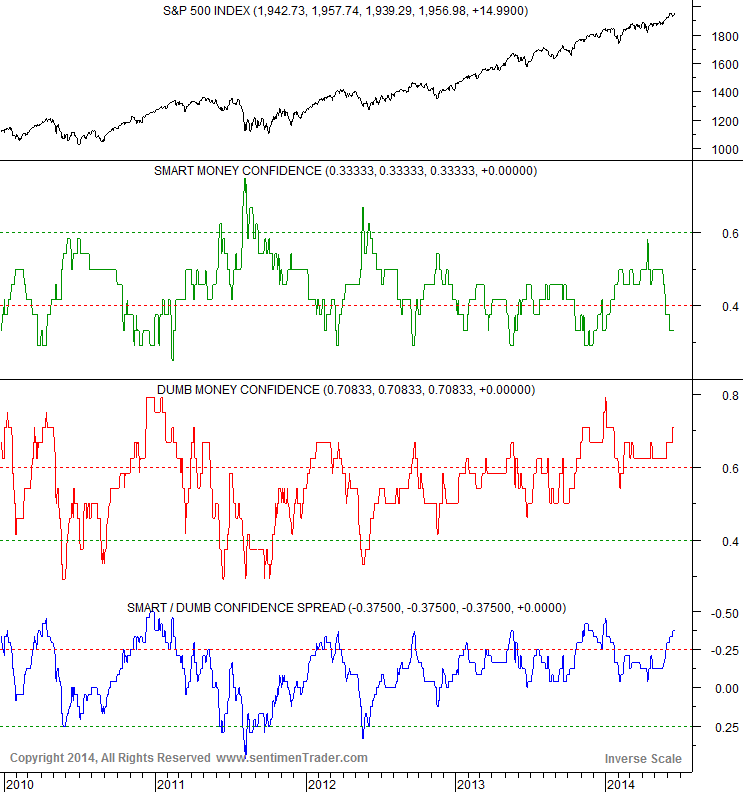
Several Sentimentrader charts are signalling a trend change:

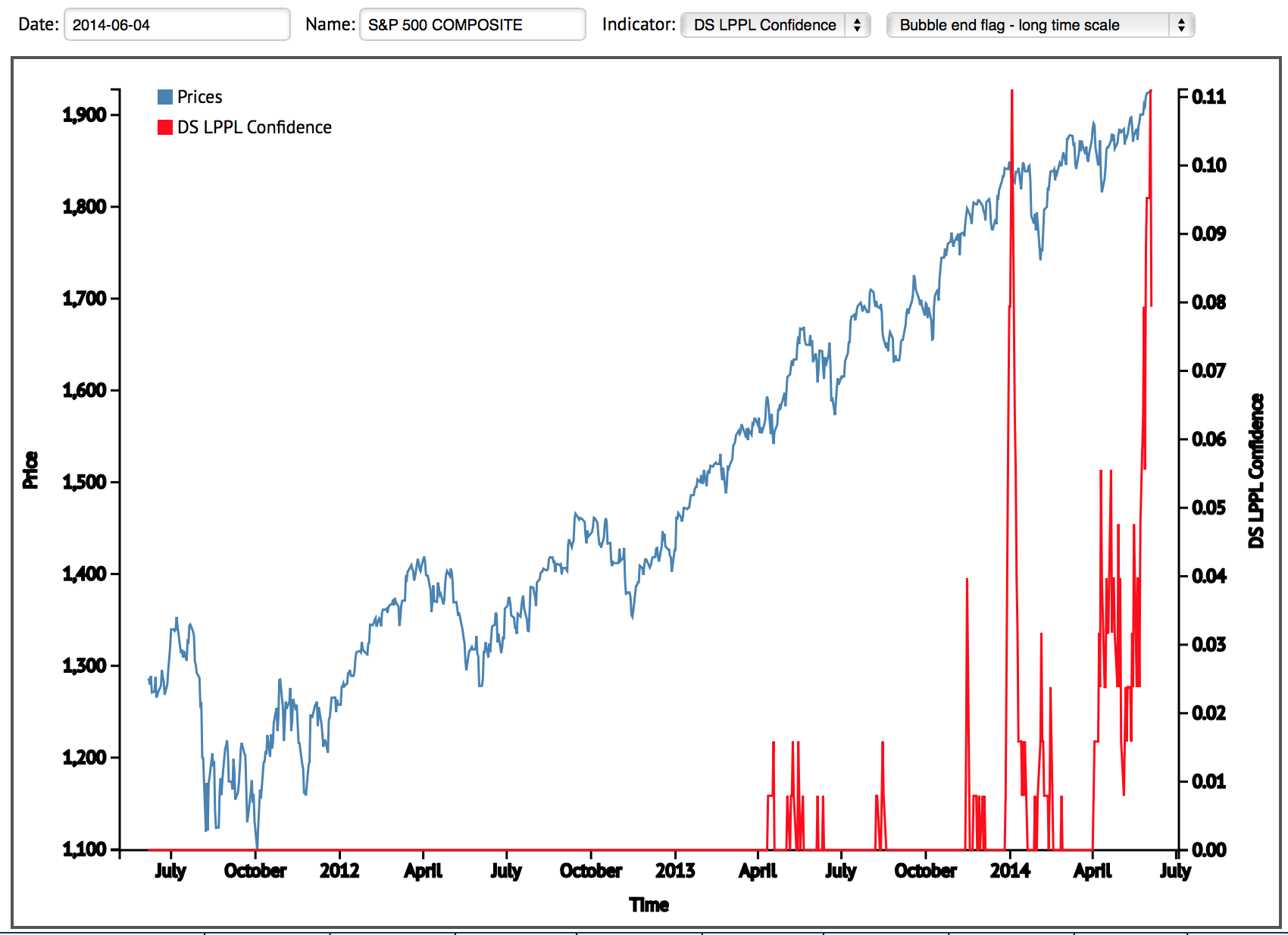
27ju2 27ju3 27ju12Whilst the Sornette bubble continues to flag as ripe to pop.

The US indices are ideally placed to turn, with the Nasdaq Composite at a double top, and RUT and IBB at potential lower high second chance peaks.

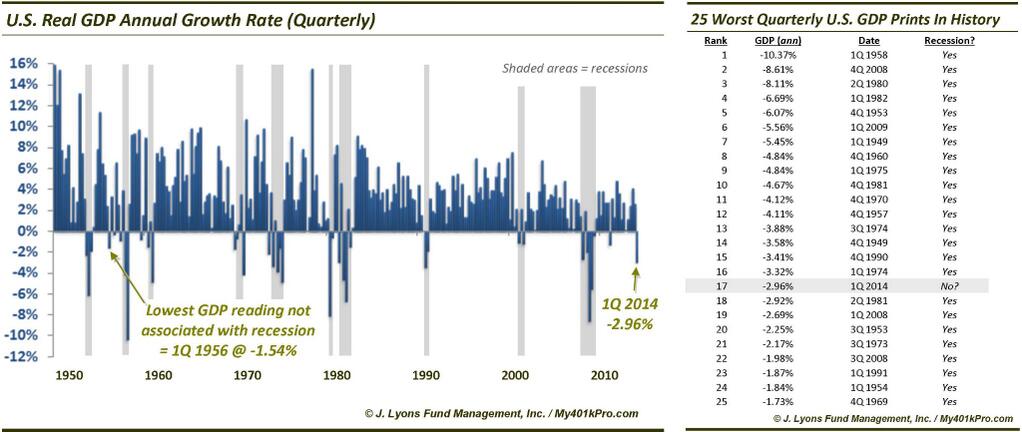
27ju6And we had a major bad economic data item this week in Q1 GDP:

27ju11

Equities have frontrun a return to ‘normal’ growth in both the economy and earnings, yet neither are occurring. Earnings season beginning early in July has the potential to add to the GDP disappointment and help cement the doubt and feed a downtrend.

To add to all the above, various divergences and indicator flags are mature. I maintain the reason for price advancing despite all these headwinds is the solar maximum driving speculation. If price continues to advance from here then I suggest the solar maximum isn’t done. However, evidence still points to the smoothed max likely being behind us, befitting peaks in markets spreading from December to June, around a Feb/Mar centre. If so, equities are ripe to fall here and deliver the potential of the combined above set-up.

As Things Stand

1. SP500: bulls still in charge, whilst put/call, vix and volume continue to warn of a likely pullback.

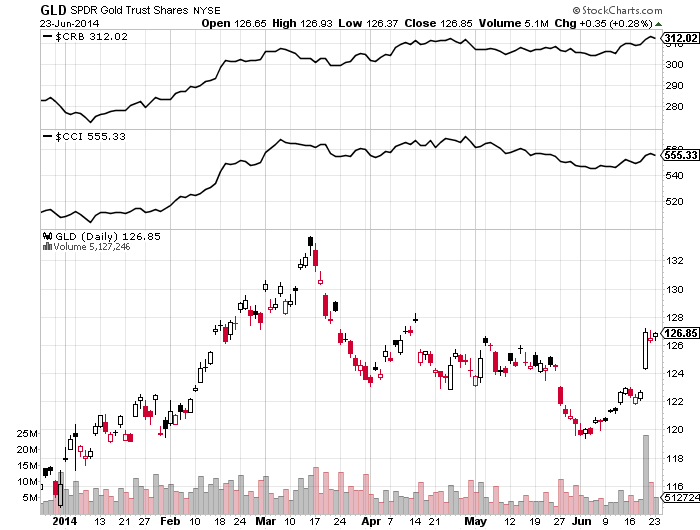
24ju62. The speculative-target sectors and indices are still able to print double tops or lower highs here, there has been no breakout as yet:24ju83. Gold, silver and miners got a burst higher last week. Needs follow through this week if not just a short covering rally.

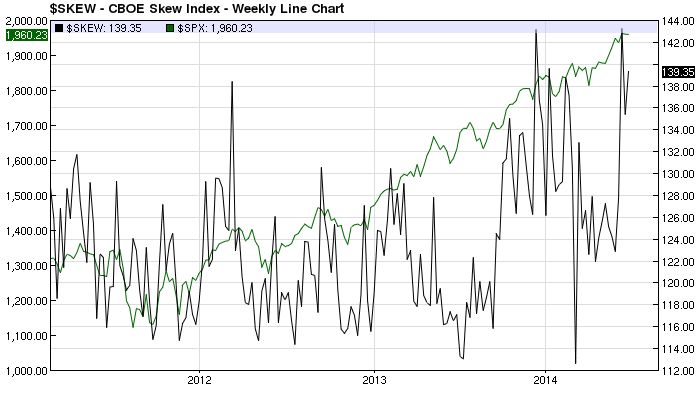
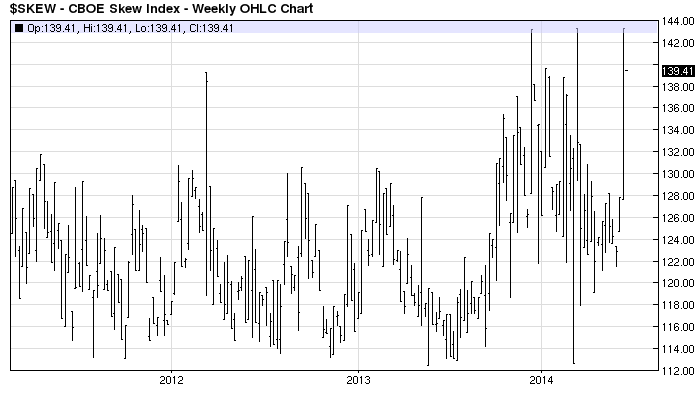
24ju94. Skew has leapt back up to historic extremes:

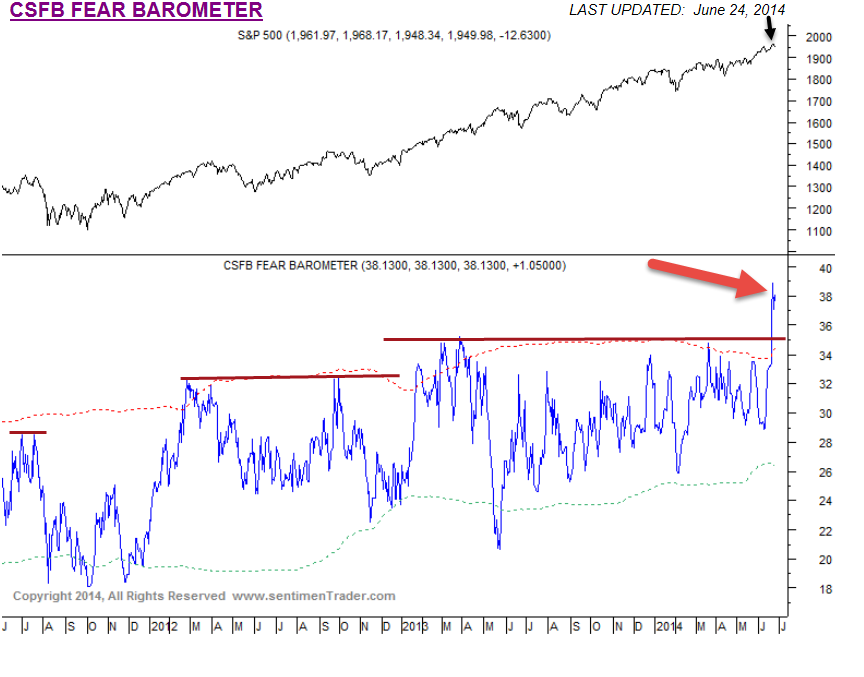
24ju25. Buying climaxes surged last week:

24ju16. Bubble-end still flagging:

Screen Shot 2014-06-24 at 07.24.14

Plus, various sentiment measures still at high froth levels.

Sp500 is within touching distance of 2000, so maybe it can tag that before reversing. This Friday is the new moon, which is another potential top marker. Various indicators are repeating in June what they did in December-January, which was before the deepest pullback of the year, so maybe we finally see exhaustion here. I am holding my positions and watching and waiting.

The End Is Nigh

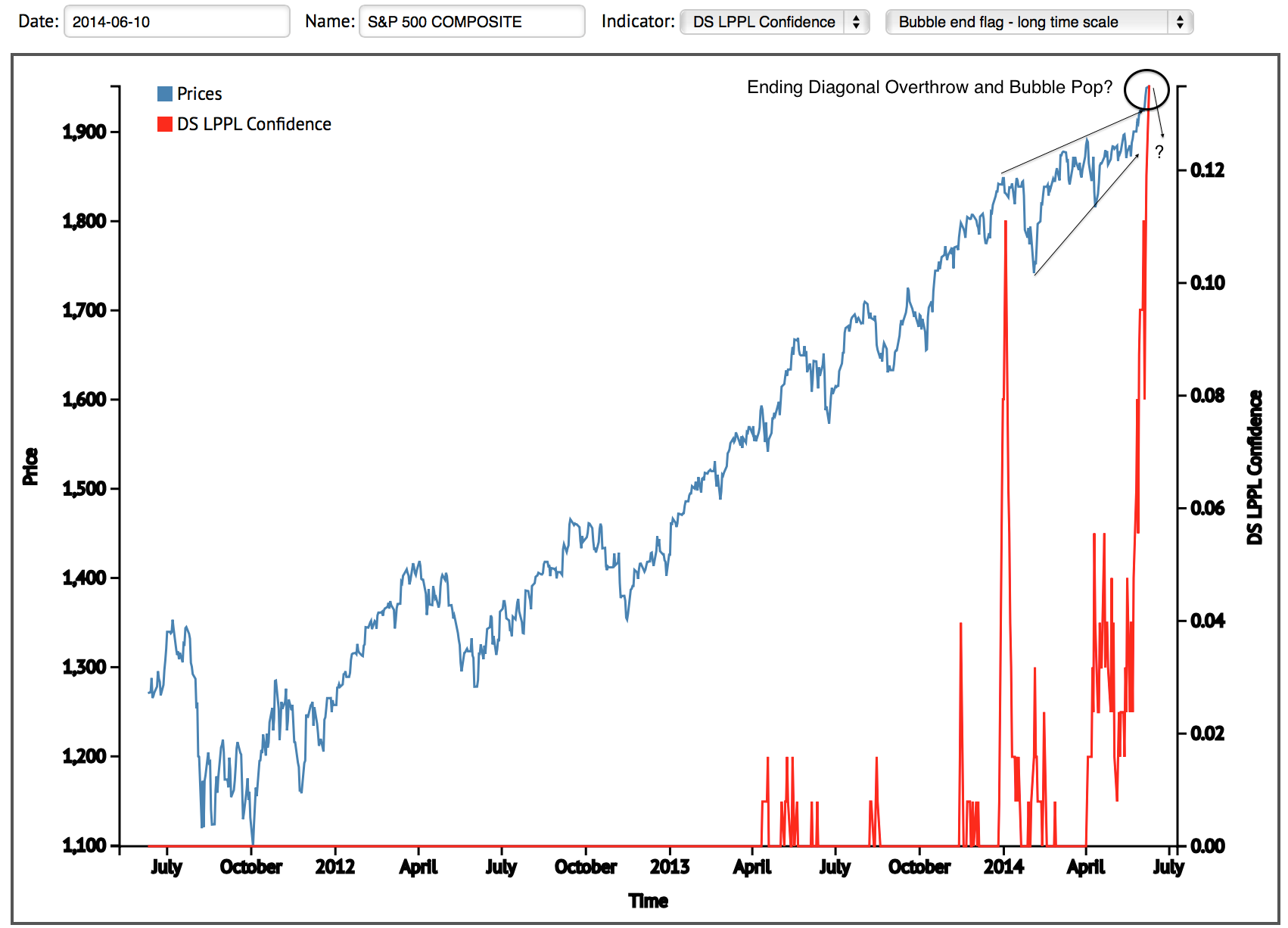
1. Sornette bubble end flagging and potential ending diagonal overthrow price pattern on SP500:

Screen Shot 2014-06-11 at 09.04.51

Source: Financial Crisis Observatory / my annotations

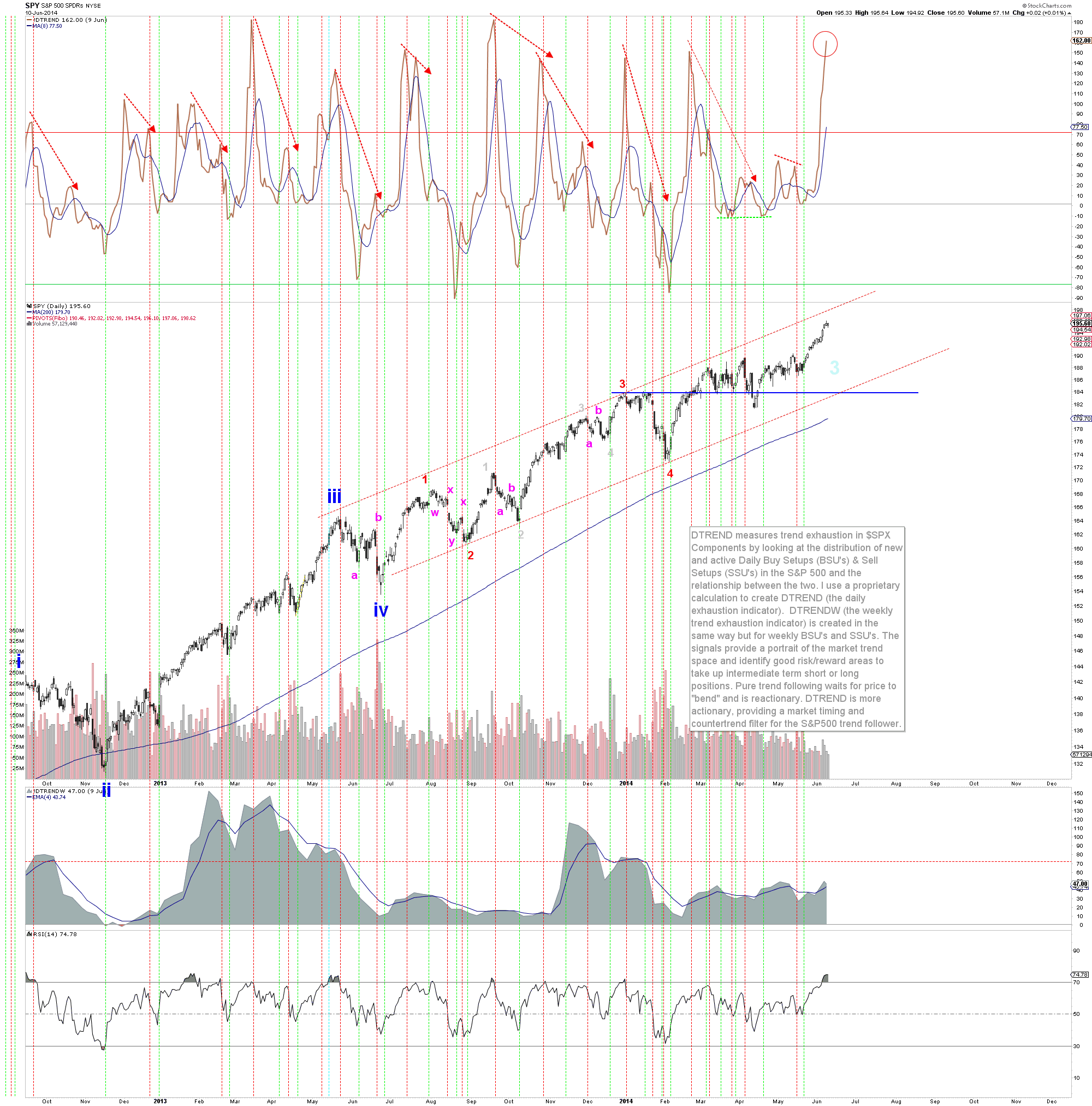
2. Dtrend flagging uptrend exhaustion:

11ju10Source: Rory Handyside

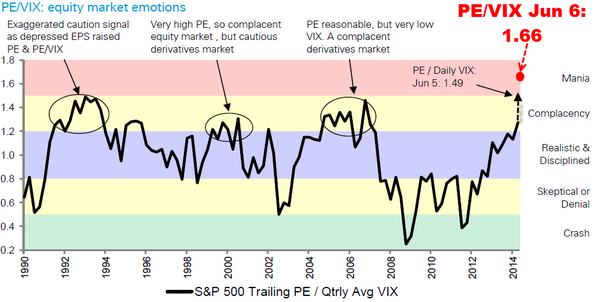
3. P/e over Vix ratio at peaking level:

11ju1Source: ZeroHedge

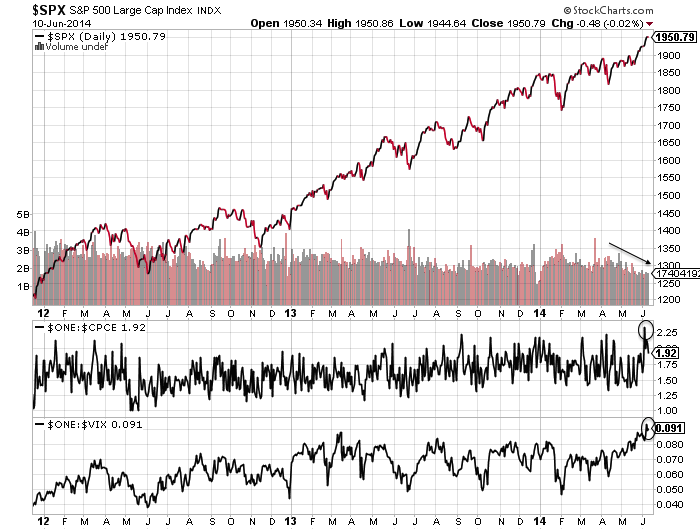
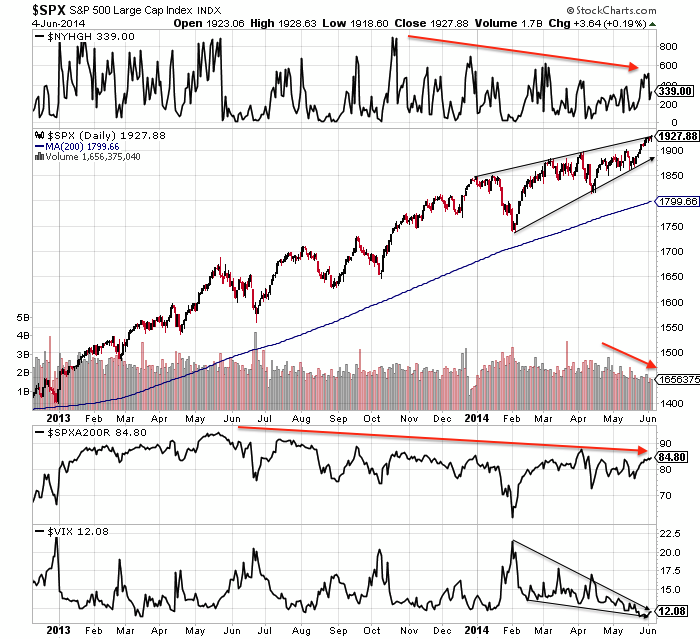
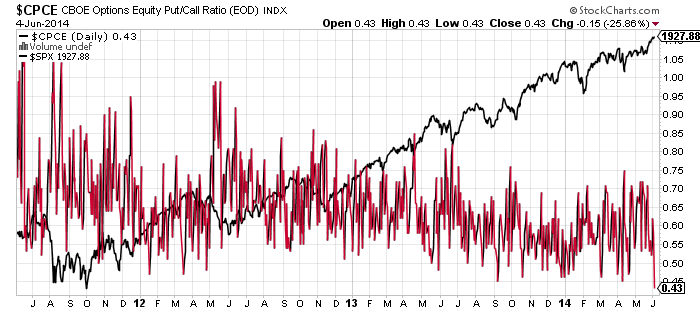
4. Put/call, volatility and volume collectively suggesting an inversion:11ju12

Source: Stockcharts

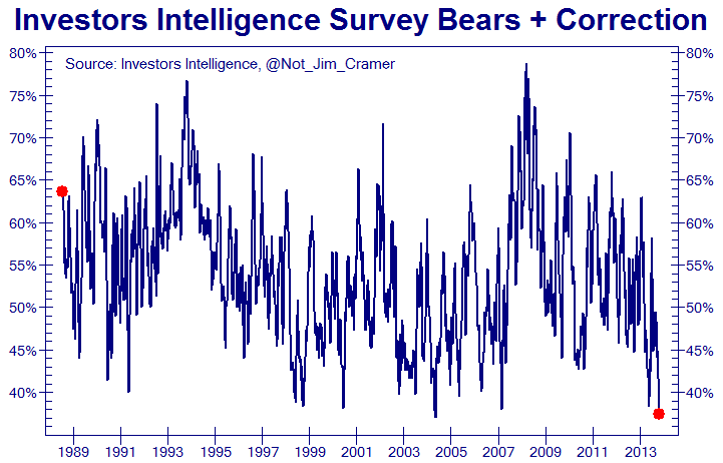
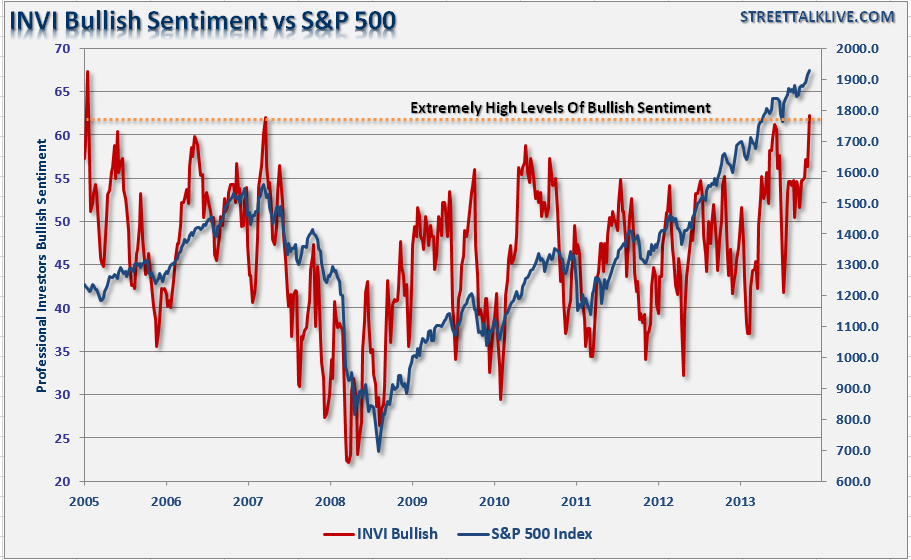
5. Sentiment at lop-sided extreme:11ju3

Source: Not_Jim_Cramer

11ju19Source: STA Wealth

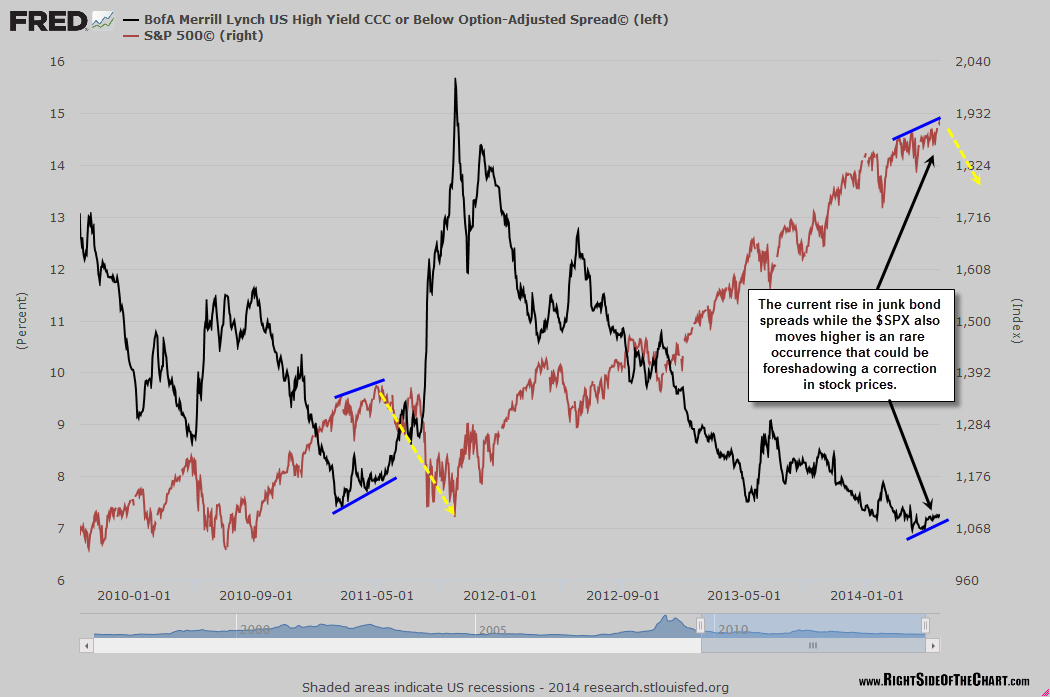
6. Junk bond spreads divergence as per the 2011 peak:

11ju4

Source: RightSideOfTheChart

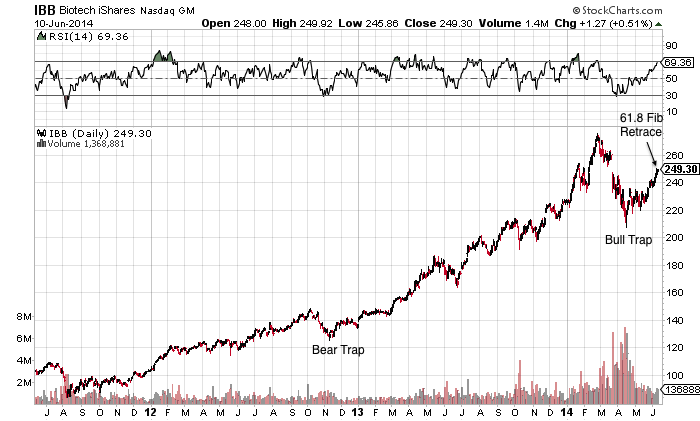
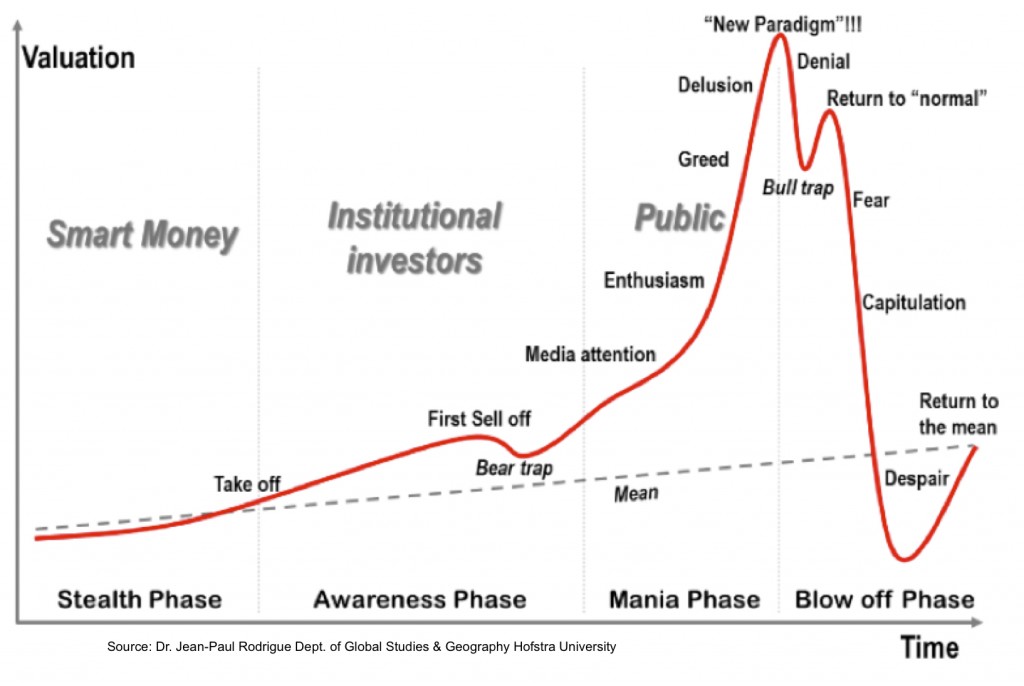
7. Biotech has made a 61.8 fib retrace of the decline from the parabolic peak, as a potential lower high per the bubble anatomy model:

11ju14 11ju15

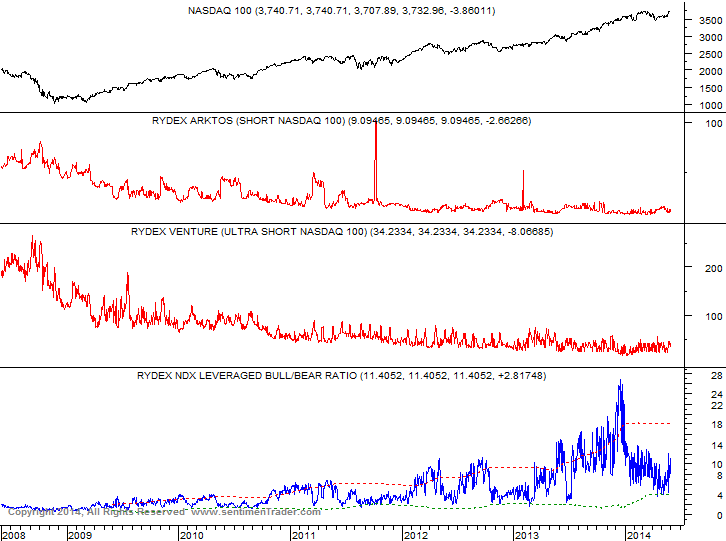
8. Rydex data provides another example of the peak in leverage now being in the past, which along with margin debt should mean the markets are on borrowed time:

5ju10Source: Sentimentrader

9. A geomagnetic storm hit at the weekend and we are heading into this coming Friday’s full moon: twin negative pressures on sentiment.

11ju17

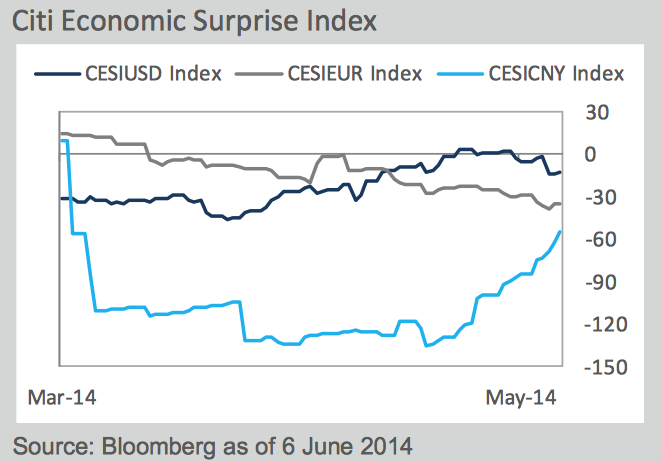
10. Economic surprises are negative in USA, Europe and China:

Screen Shot 2014-06-11 at 08.56.43

Source: Citigroup

11. 75% of companies in the US that have issued earnings guidance for Q2 2014 have issued negative guidance.

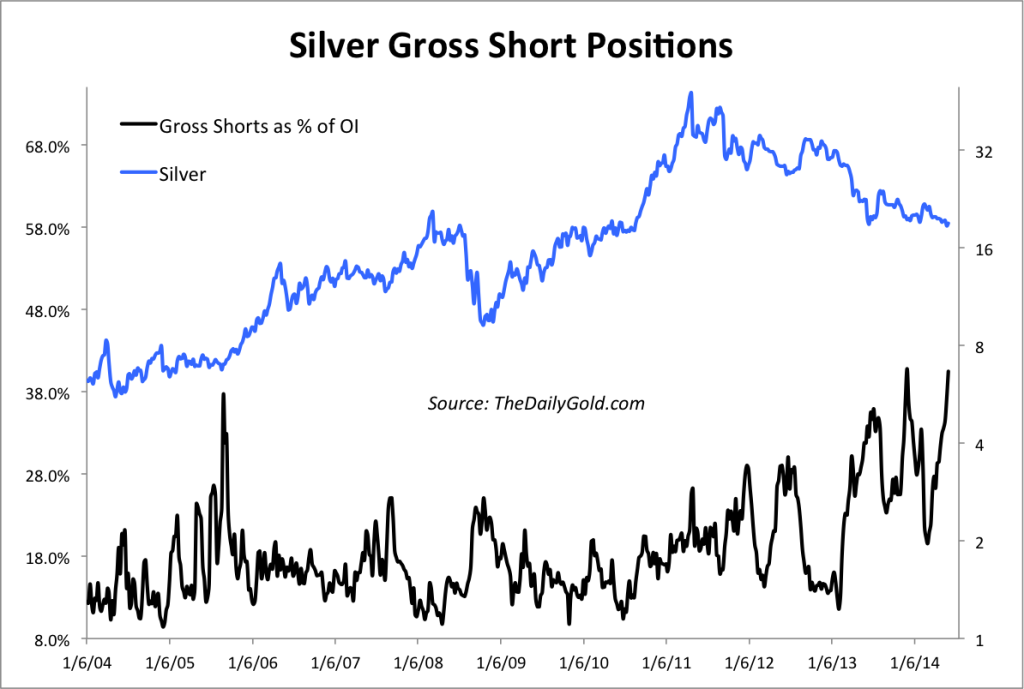
12. Gold and silver short interest at levels suggestive of a rally in precious metals, which would fit with a decline in stocks.

11ju21Source: TheDailyGold

In summary, it’s another compelling set-up. Whilst I cannot rule out stocks breaking higher and going crazier yet, I have to doubt whether sentiment, complacency and bubble/froth indicators really can get more extreme. As per my Sunday post, Piecing It All Together, my primary case is for this being the last piece of the topping process, particularly so in honouring the combined February peaks in the sun, in margin debt, and in RUT, IBB and COMPQ, i.e. lower highs here are important. If selling can initiate here, then exit will be through a keyhole due the lopsided all-in extremes.

Piecing It All Together

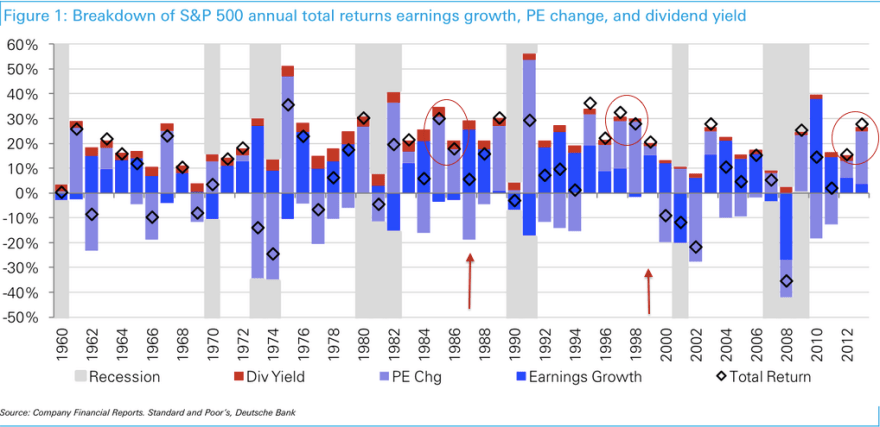
US equities have diverged from fundamentals, earnings and smart money flows for around 2 years now. In all three regards this echoes the couple of years prior to the 2000 peak. The run-up to steep valuations achieved by sharp increase in leverage also matches the run into 2000, and collectively these all indicate a speculative mania which has been historically induced into a solar maximum. Solar cycle 23 maximum = 2000, solar cycle 24 maximum = 2014.

Screen Shot 2014-06-08 at 13.55.13Source: Ed Yardeni

8ju1

Source: Fat-Pitch

8ju4

Source: DShort

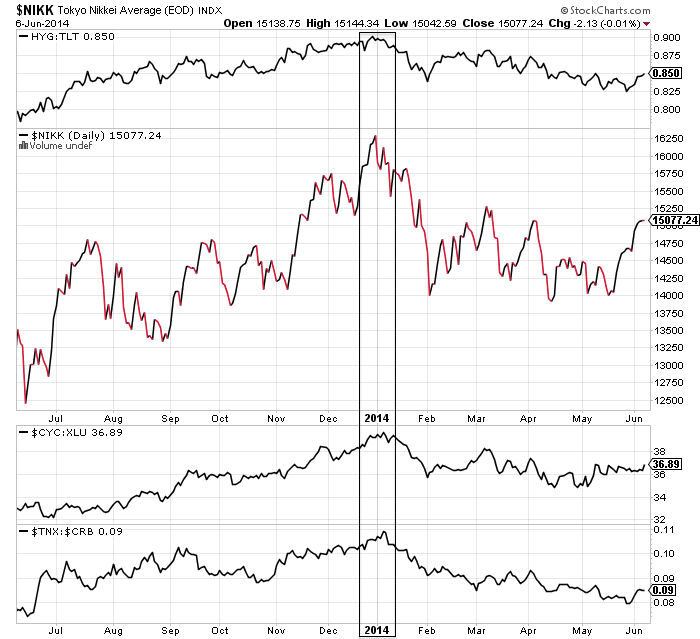
At the turn of the year into 2014, I believe we began the first phase of the topping process. Nikkei peaked, Bitcoin peaked, money switched into defensives in a trend that continues, with treasuries the best performing asset and utilities the best performing sector of 2014 thus far. Such a turn-of-the-year peak fits with a cluster from history and and I believe reflects peak inverted geomagnetism: a seasonal optimism peak.
8ju7

Source: Stockcharts

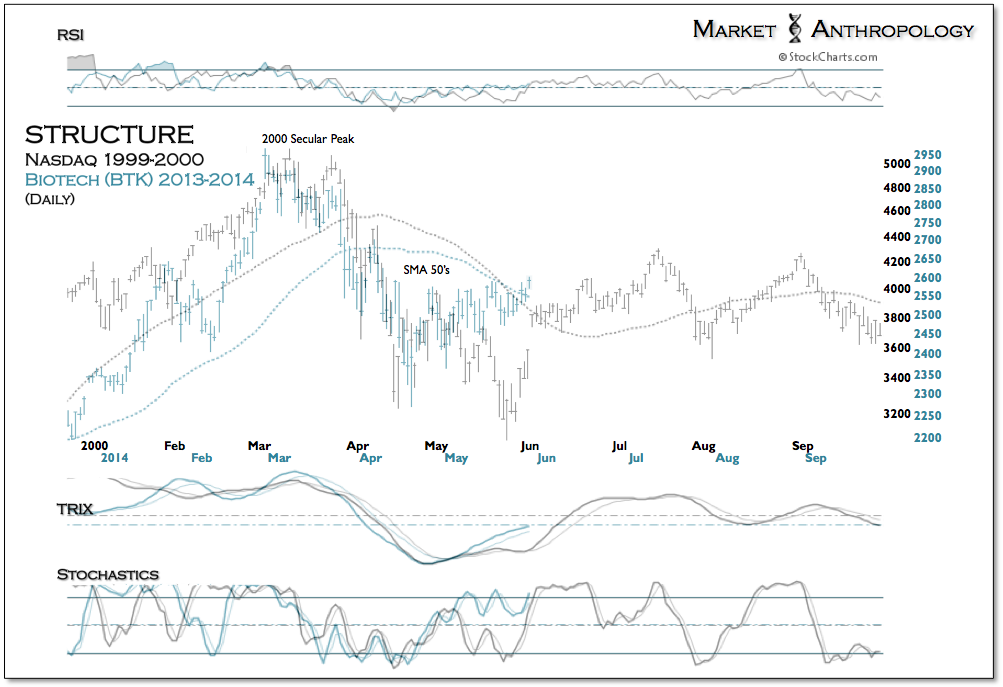
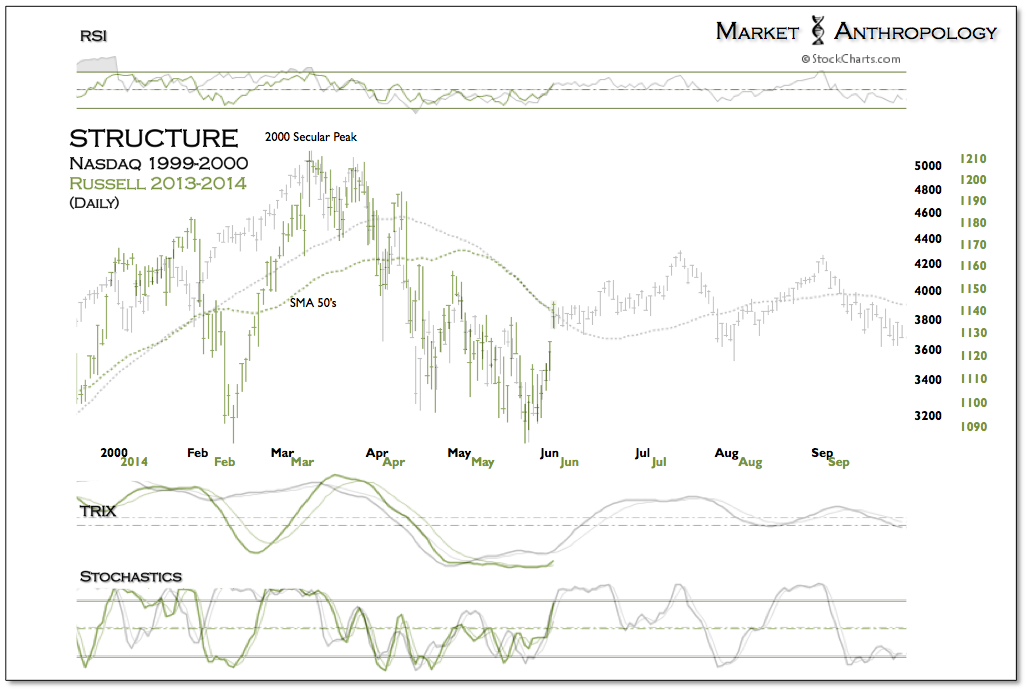
8ju8Then at the turn of February into March I believe we saw the second phase of the topping process, with margin debt, Russell 2000, Biotech and momentum stocks all peaking along with the solar maximum. Such a neat confluence would echo March 2000 in all regards, and the technical price action has developed similarly since, as shown by the analogs below. If this is valid, then we should expect Biotech and R2K not to exceed their Feb-Mar peaks, and the solar maximum to wane. Like the dot-com stocks of 2000, small caps were bid up to p/es over 100 into Feb/Mar, and so by valuation, leverage, asset allocation ratios and price analog we saw a mirror of 2000; just the super-sized peak and public interest were lacking due to demographics.
8ju10 8ju11 8ju12

Source: Market Anthropology

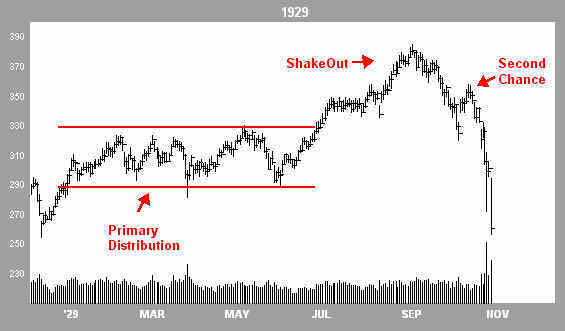
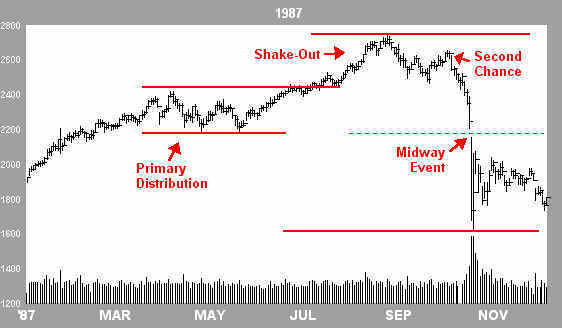
Whilst small caps are off their peaks, large caps have now broken upwards to new highs. To bring us right up to date they are trying to cement a break-out on 62% II bulls, 91% NAAIM equity exposure, some 9 month divergences in breadth, low volume, low protection and low volatility. Skew remains in a persistently elevated range, reflecting the risk of a large downside move due to the extreme lop-sidedness in the markets. 1987 and 1929 (similar backdrops in sentiment, valuation, leverage) both produced breakouts from ranges around May for a final 2-month overshoot higher, so there is historical precedent, but to achieve that here and now we would need to print anomalies in some historically reliable indicators and print some new all-time records in bull assets, sentiment and, likely, leverage.
8ju14

Source: Acting-Man
8ju17

Source: Not_Jim_Cramer8ju20 8ju21

Source: Financial-Spread-Betting

I believe that US equities are more likely capped on the upside, with a lack of fuel to propel higher, in an ongoing topping process that began at the start of the year. Looking ahead to this coming week, the overbought and overbullish indicators flagging make it more likely the markets will pull back, perhaps to retest the breakout. This likelihood is enhanced by the downward lunar pressure and geomagnetic storming over this weekend.

A final topping price in the June/July window for large caps would fit with the inverted geomagnetic seasonal model above, and as per that model, could then pave the way to ultimate hard falls in Sept/Oct time. A ceiling on large caps price rises here would then likely be compatible with R2K and Biotech not exceeding their Feb-Mar highs. This in turn would then fit with margin debt pausing its decline but not exceeding its high, as it did in 2000 and 2007, whilst stocks completed their overall topping process.

In short, the above analysis is the best fit as I see it. The cap on equities moving significantly higher is key. The big picture for that is demographic, and supporting that are the levels in sentiment, leverage, volume, and asset ratios. The picture is one of very lop-sided extreme bullishness, with naked unprotected longs on leverage. Markets have historically been unable to keep advancing when indicators have reached these levels and the mature divergences now in place ought also to resolve through downside price action, short of printing historic anomalies. Such a cap on price upside would then likely honour the existing peaks in small caps and margin debt and the turn-of-the-year cross-asset peaks that continue to be compelling in association with the solar cycle peak. Drawing on the historic analogs this may mean range-trading for some weeks more yet before a sharp correction erupts.

New highs in small caps, new highs in leverage, a reversal out of defensive sectors and assets, and/or repairs to volume and breadth would make me abandon that ‘best fit’ and conclude that the sun is not yet done with its speculation incitement. Whilst I can’t rule out a more definitive, crazy parabolic to erupt here, as has been typical at historic solar maxima, I just doubt it because of the lack of demographic support combined with the levels already reached in the likes of margin debt, rydex, valuations, investors intelligence and more. If a sharp terminal up-leg can actually occur from here on continued low volume, without the need for a stream of new buyers, then it would be a game of confidence in which the fear of losing out on stellar gains drives prices higher in a feedback loop despite participants knowing it is manic and unsustainable. If that were to occur then it would make the ultimate correction even bigger, but prior to that it would be a challenge to both bulls and bears: play the danger or suffer the drawdown. What seems clear though from history is that leverage would need to accompany such rises, and it appears that leverage already peaked out. However, there is a possible middle path, in which prices can eek out some more gains in June/July whilst not straying too far and honouring most of the above.

My strategy remains the same: I continue to look and attack on the short side for both short term profits and to add to my sell-and-hold big position. Only if it appears that we are entering some kind of terminal parabolic panic-buying upleg, would I then look to hedge by joining the danger game on the long side to some degree. Meanwhile, the risk to those still playing the long side is that the market is vulnerable to some surprise bad news due to the skewing of bulls, bullishness, leverage, complacency and lack of protection.

Thursday Morning Charts

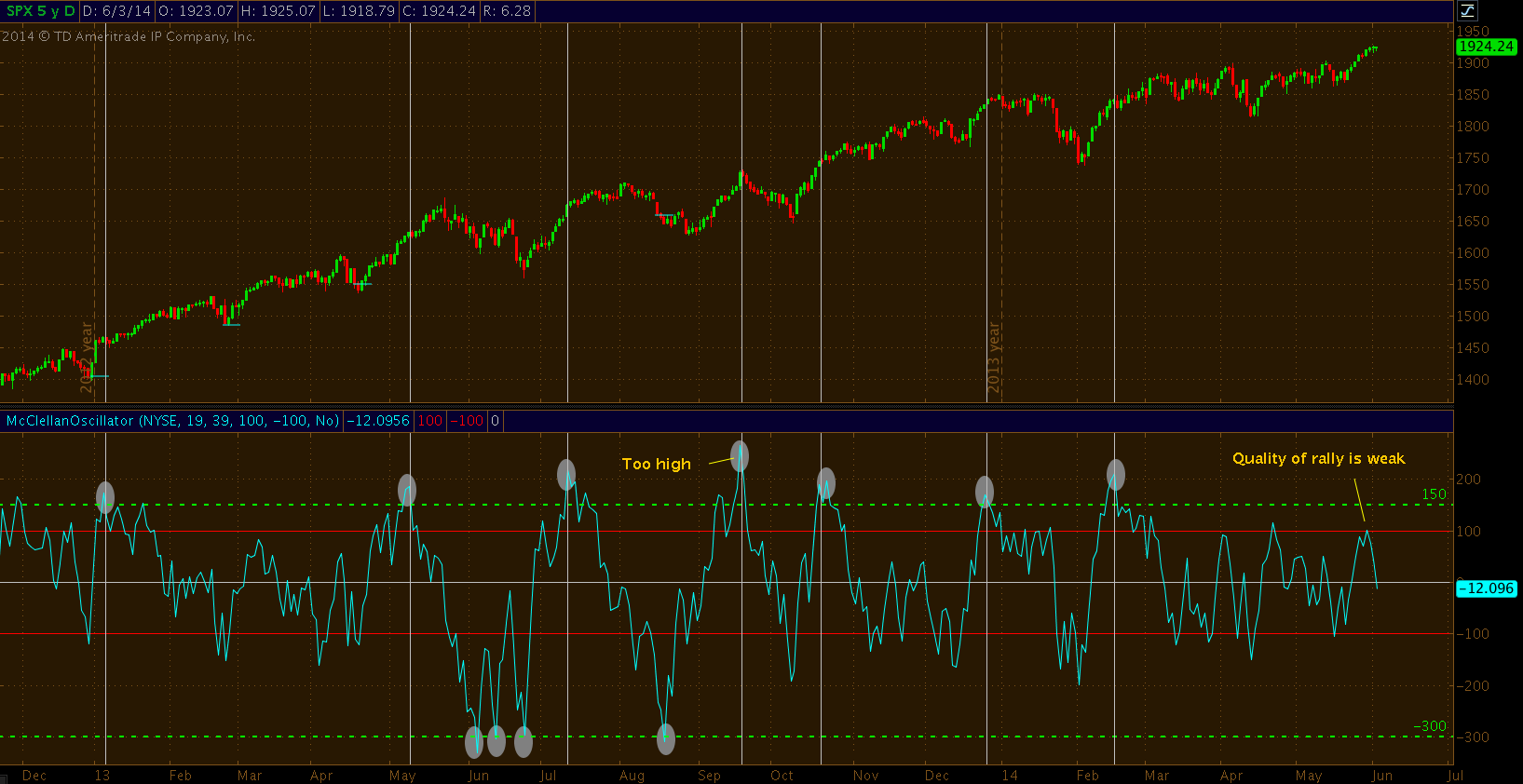
1. Bulls in control of price still, but the combined picture of this chart suggests an imminent handover to the bears:

5ju1Source: Stockcharts; Annotations: Mine

2. Plus, new high on negative Nymo breadth:

5ju6Source: Tradetrekker

3. Equity only put call ratio printed an extreme low yesterday:

5ju2

4. Investors Intelligence bullish sentiment last seen Oct 2007:

5ju3

Source: Charlie Bilello

5. Sornette bubble-end flagging a second time on SP500:

Screen Shot 2014-06-05 at 07.25.01Source: Financial Crisis Observatory

6. Euro short interest at level that suggests a rally ahead in the European currency:

5ju7Source: FX Street

So, ECB decision today and US employment report tomorrow. The Euro chart above potentially paves the way for ECB aggression disappointment (thus Euro rallying), which would fit with their conservative approach to date. Meanwhile yesterday’s ADP report paves the way for a potentially disappointing US jobs report tomorrow. However, if news exceeds on either release then more short covering could propel equities higher.

Pressure is downward from here into next Friday’s full moon. The combined picture, including the charts above, has set up another compelling chance here for the bears, so let’s see how the market reacts to the two news releases.
 

Fuel Spent

History in the making for the US stock market, updated:

1. Crestmont p/e valuation only exceeded in 1929 and 1998-2000
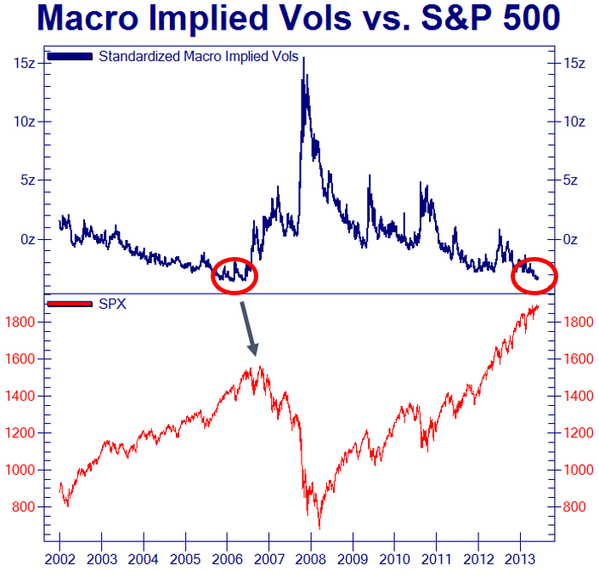
2. Q ratio valuation only exceeded in 1998-2000

3. Market cap to GDP valuation only exceeded in 1997-2002

4. US household exposure to equities only exceeded in 1997-2002

5. Euphoria and sentiment composite readings only exceeded in 1997-2000

6. Third longest bull market in history

7. Third longest duration above 200MA

8. Margin debt to GDP and net investor credit at all time extremes

9. Skew readings cluster highest ever

10. Complacency, negative divergences in breadth and negative divergences in defensive sectors/assets all resemble peaks of 2000 and 2007

These various measures collectively suggest that the bull market is mature, that stocks are expensive, that investors are all-in and that we are looking at a major top. The only bigger mania in history was 2000, which, in contrast to now, had a demographic tailwind.

3ju11

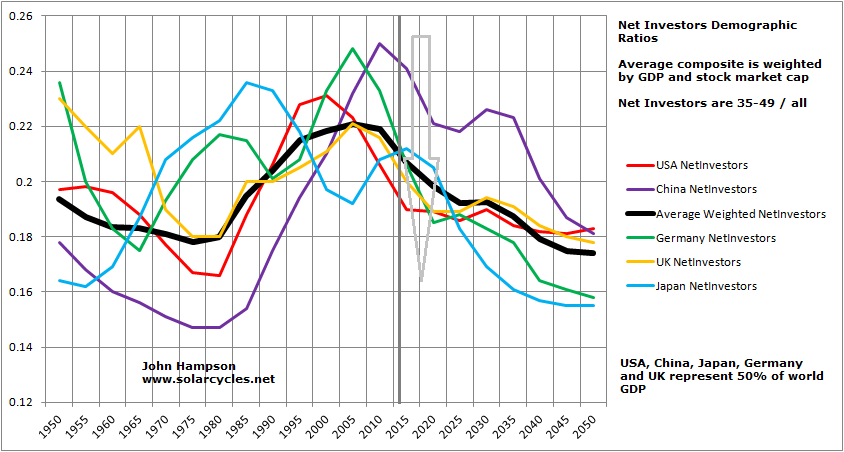
There are three ingredients for a super peak: a solar maximum inspired speculation peak, a demographic peak (new buyers buying), and a leverage peak (same buyers buying more). 2000 had all three, but 2014 lacks the demographic tailwind, and for that reason we should not expect to reprint 2000’s all-time extremes.

Over the last 18 months we have seen the requisite evidence of a speculation mania, inspired by the solar maximum. During that period we have seen the stock indices diverge from earnings, fundamentals (economic), and smart money flows, and we have seen sharp escalation in leverage (margin debt, Rydex leverage). We reached dizzy valuations in small caps, biotech and social media, and by various measures, major stock index valuations already exceeded 1929 and 1968 peaks.

On current evidence it would appear the solar maximum peaked out along with the main speculation targets around February 2014, which is also when margin debt and net investor credit balances reversed.

3ju3 3ju2

3ju7

If stocks were to move materially higher from here, then we would need to see an extending solar maximum, a further reversal in leverage to print new extremes, and/or a stream of new buyers.

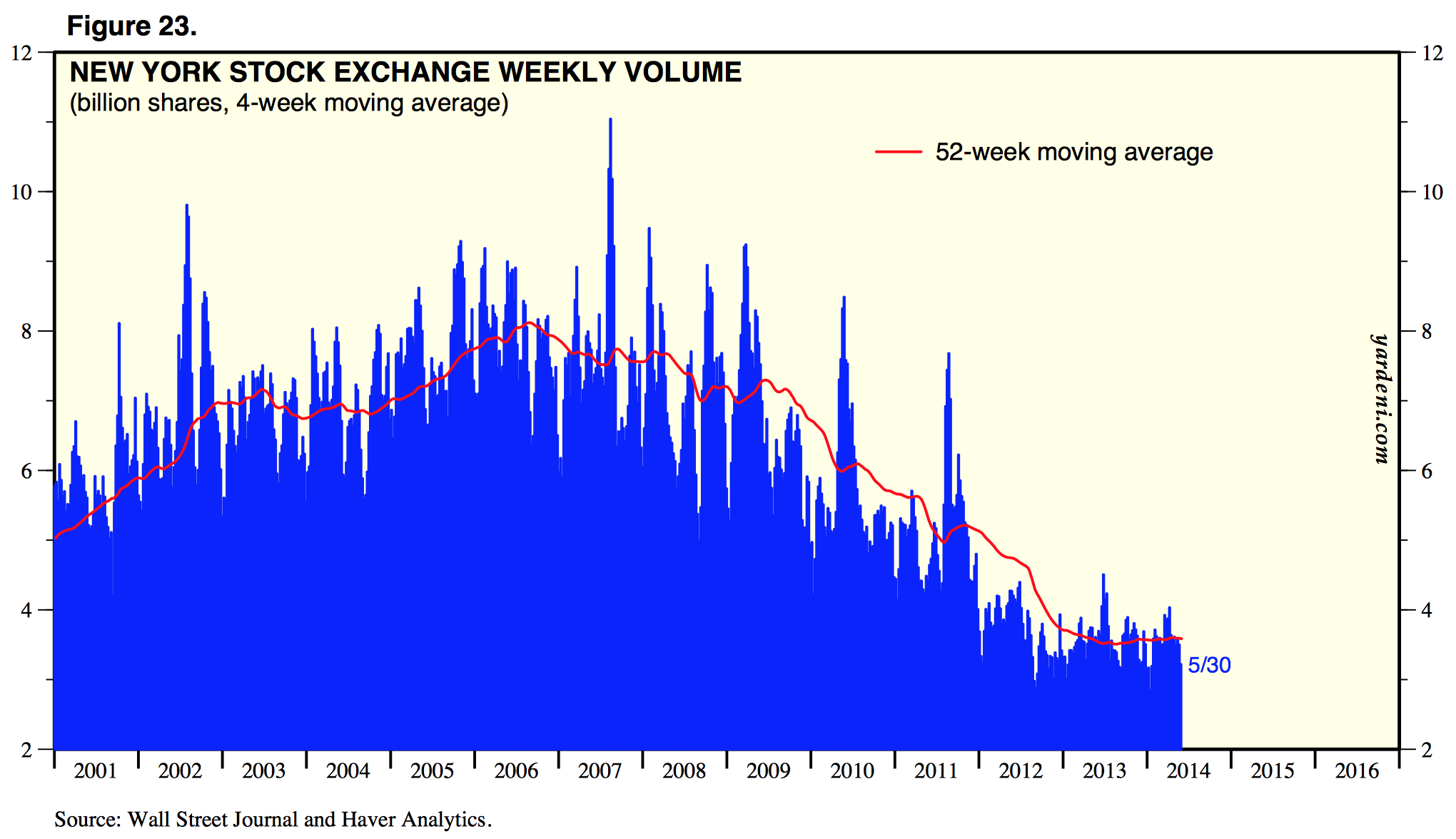
We see evidence for the demographic headwind in shrinking trading volumes, and if we couple that with the readings in household exposure to equities, fund manager allocations, and institutional versus private buying, which suggest saturation, I suggest it is unlikely that we have the fuel for another significant move higher in ‘new buyers’.

Screen Shot 2014-06-03 at 06.34.40

I then look at the extremes, spike and reversal in leverage and it is unlikely that increased ‘buying-on-credit’ can provide the fuel for another significant move higher from here. So even if the solar maximum were to extend beyond expectations then I suggest it is highly unlikely that equities would be bid up significantly higher from here, as if this were 1928, as both ‘more-buyers’ and ‘more-leverage’ look exhausted.

Since 2014 began, relative performance of utilities and treasuries, breadth loss in equities, and developments in sentiment have all echoed previous stock market peaks. These warning signals are now mature and add to the likelihood of stocks breaking lower from here, not higher. Not only that, but the combined settings of leverage, complacency, euphoria and levitation suggest that we are on a cliff-edge heading for a sharp crash.

I’ve added short again on US stock indices as I continue to see a historic opportunity at hand, and I believe the evidence suggests there is little fuel for a significant leg higher. Rather, the evidence suggests that we are in the last gasp of a topping process.

Dow Jones $INDU

The Dow Jones Industrials stock index so far continues to honour both the May 13 DeMark price exhaustion high and the December 31 inflation-adjusted high, set against a backdrop of deteriorating breadth (top and bottom indicators):

29m20Yesterday’s potential new moon reversal tantalisingly sets the scene for renewed declines, to keep all in tact.

The relevance of the last-trading-day-of-the-calendar-year high is shown in the next two charts:

29m30 29m31…and the Nikkei peaked again on 31 December 2013, as did various risk-on / risk-off ratios shown here:

29m21

Just the Dow-Gold ratio is a little in danger now, which adds to the scenario: if the Dow stumbles again here, that 31 Dec peak will likely be maintained.

Time is ticking on US large caps, as various divergences are now mature, and so I have my doubts that a summer rally can be mustered here:

29m15

Source: Oppenheimer / Annotation: John Hampson29m40Source: DecisionPoint / Annotations: John Hampson

In short, the Dow is within easy reach of taking out both the 31 Dec real high and the 13 May nominal high to invalidate the above, and yet those risk-on cross-asset peaks of 31 Dec have not been taken out some five months later. So are we seeing the last gasp of a topping process, or consolidation before an overthrow leg higher? The answer lies right ahead.

Key Time

Break out in stocks or new moon reversal back into the range?

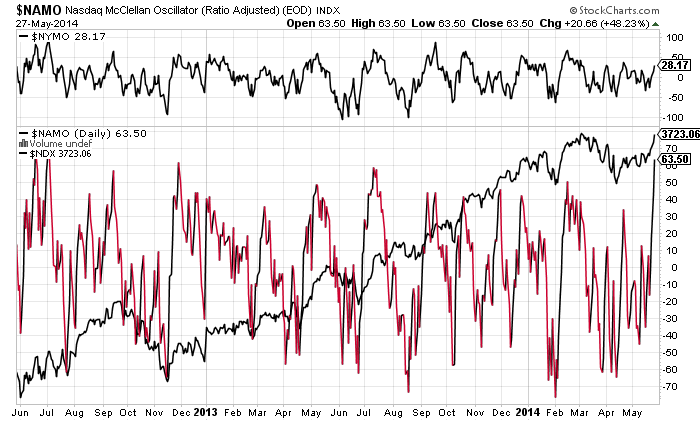
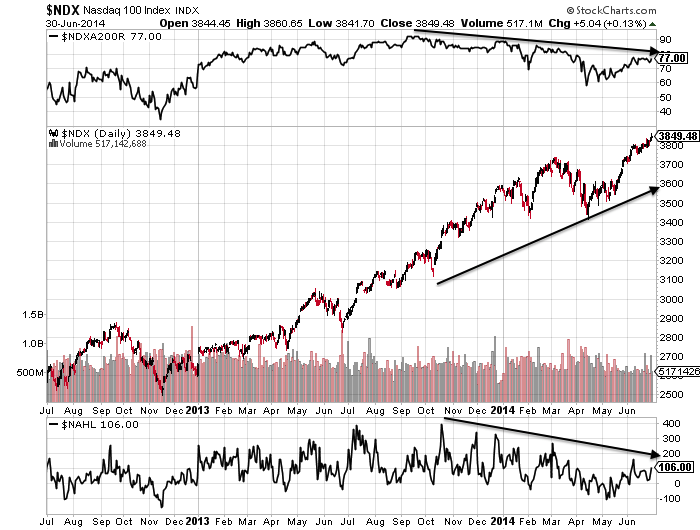
The Nasdaq 100 has climbed back up towards its previous high, and so is adding to the moment with the prospect of a double top or bull resumption. Namo is overbought, which could be a constraint on further upside in the near term.

28m7

 Source: Stockcharts

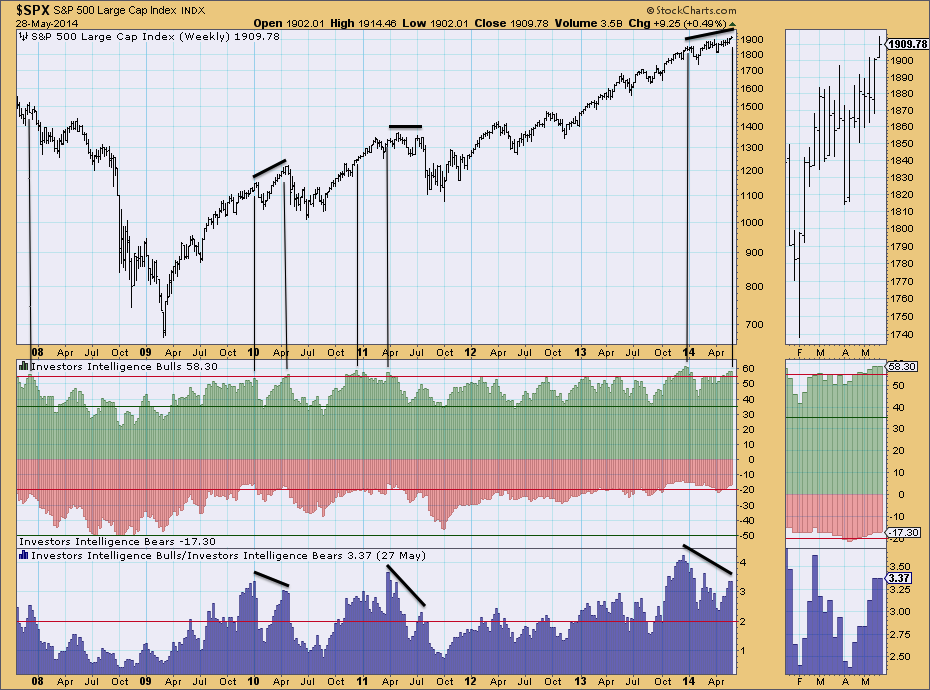
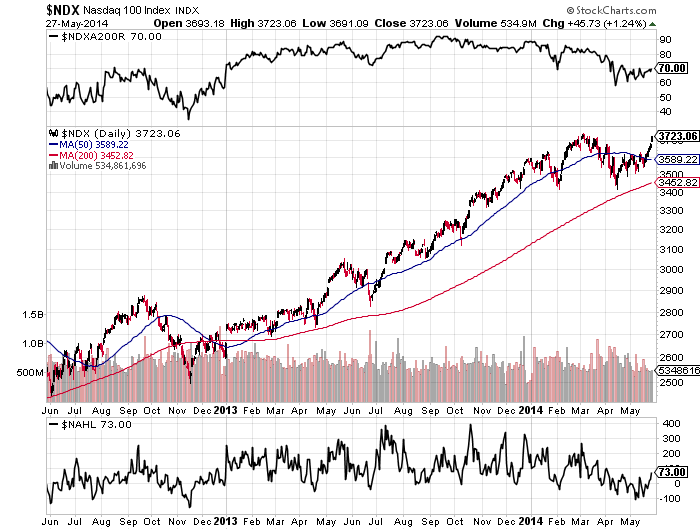
Breadth and volume are more bearish than bullish:

28m8

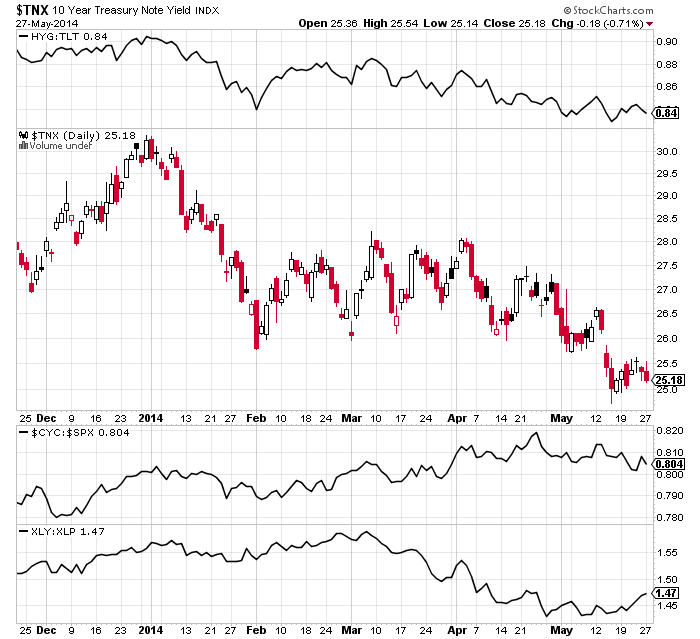
There is renewed momentum in small caps, biotech and consumer discretionary, which is bullish, but we continue to see money flows into treasuries, out of high yield and recently out of other cyclical sectors.

28m5Treasuries have been outperforming the SP500 all year, and despite new highs in that stock index yesterday, bonds still rallied. The money flows into defensives would rather fit with a stock market in decline, so who has got it wrong?

28m6

 Source: AThrasher

Either the short interest and money parked in cash, bonds and defensives provides the fuel for another leg higher, or the stock market is overdue an imminent correction. The stats show that large speculators are short, that smart money flows have negatively diverged and that a significant degree of the buying is by companies purchasing their own shares. But unless the market is swiftly pulled back into the range here, then short covering could propel it higher.

The Dax made new highs, but has the same weakness in breadth as the US indices. The contrast in volume to price in the SP500 is shown here as the prelude to a correction, historically:

28m4

Source: J Lyons

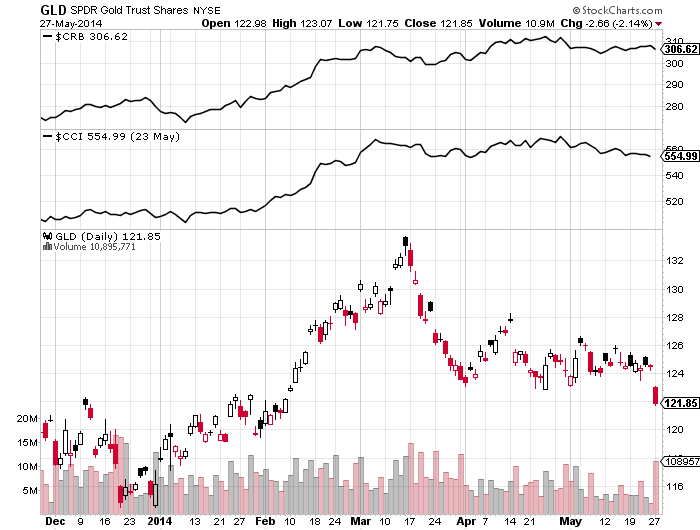
Gold broke down yesterday as stocks broke up, which is more supportive of equities mustering a rally here. The two commodity indices are also charted below and show a loss of momentum the last 3 months:
28m16

If stocks can break out here, then it’s going to sting. But all those bearish indicators remain in place, and we would likely be looking at a final overthrow move. As one example, in 1987, sentiment hit similar extreme readings around Feb/March time and price range-traded until May before an overthrow rally to a final market peak in August. But let’s first see how price behaves as we pass through today’s new moon, as internals are weak and a true breakout may again prove beyond reach.