State Of The Markets

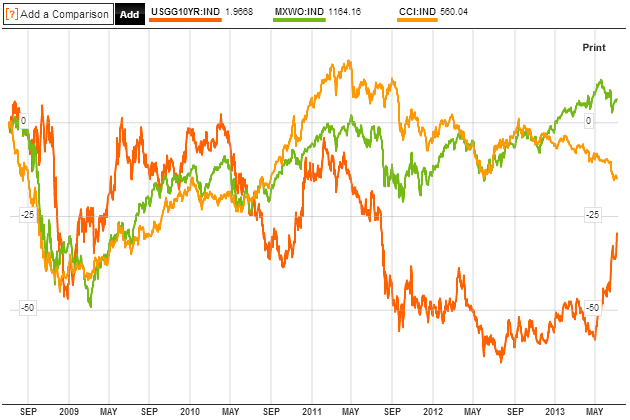
No collapse in the stock market, which makes the case stronger for a more regular multi-month topping process. It would be historically normal for equities to retest their May highs and even make a marginally new high, then complete a volatile trading range by around September time before falling in earnest.

Also historically normal would be if commodities outperform from here, with bonds having topped first, then stocks topping, and eventually commodities topping out, likely in 2014. The continued falls in bonds – and rise in yields – adds weight to bonds having topped – and yields bottomed – in 2012. Now are world equities in the process of making their top?:
7jul4Source: Bloomberg

The strong advance in crude oil of late has added more weight to commodities going on to outperform here, rather than the historically abnormal but deflationary case of commodities sinking. The combination of protest and unrest in Egypt together with speculation in crude oil are both historically normal for a solar maximum, so I am encouraged. Nonetheless, crude oil has yet to truly break out and some geopolitical dampening could pull it back:

7jul1Source: Stockcharts

If crude does continue to rise, then commodities as a whole should catch a bid, due to high historic correlation, with oil a a key input in the agri process and a key inflationary force, which brings us to gold. Gold has dropped around 30% from its 2011 high, which is similar to the percentage drop made in 2008. It has the potential to be making a bottom here with a higher low than in late June, and the longstanding overdue bounce based on extreme bearishness, but only if it can rise this coming week, which brings back to oil’s performance, plus also the US dollar.

The recent strength in the USD has taken the currency to back up to a key level. Below is the long term view and the potential for an important breakout:

7jul6Source: Rambus / Stockcharts

However, as per my demographic work, I believe leading indicators will weaken and gold will re-assert itself, and US stocks will top out here reducing demand for the dollar. Here is some evidence to support that view.

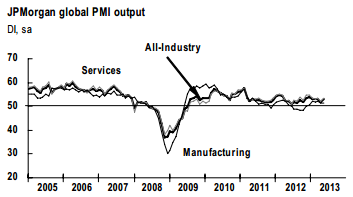
The latest global PMI combined services and manufacturing dropped to 51.4 from 52.9 and continues the overall weakening trend over the last few years. This is as I would expect under the combined deflationary demographics of USA, China and Europe since around 2010.

7jul7Source: Markit

The performance in corporate bonds suggests US housing may be about to turn down again also:

7jul5Source: Martin Pring

And margin debt continues to look an important pointer for the stock market. See below how a sharp run up in margin debt, a final parabolic rise, precedes the 2000 and 2007 tops in the SP500 by several months. We have seen a similar parabolic rise since mid-2012 to now and there is the possibility that margin debt peaked out in April which would suggest stocks should indeed be in a topping process now and over the next couple of months:

7jul8Source: Dshort

If stocks are topping out then normal clues would be found in negative divergences in stock market internals and leading indicators. For the former, we should look for breadth divergence once we see a retest of the highs. For the latter, we have the potential in the global PMI above, but also in this leading indicator of leading indicators, by RecessionAlert:

7jul2

Source: RecessionAlert

I have enquired with them what this MBS indicator is, but have no reply. If anyone knows, please share. But it would fit with my demographic-deflationary expectations.

We also see a potential divergence in geomagnetism, if equities can now rally again to a retest of the highs:

7jul9

The ideal combination by my work and research is for commodities to outperform again now into next year, and make a speculative peak near to the solar peak (the timing of the solar peak remains unknown, with the experts still diverging. Sunspots are currently back up over 100, which adds to the muddy trend), then deflationary demographics to mean the global economy fairly quickly tips into recession under that commodity price pressure, and then we should see the steep falls in nominal stocks. My alternative scenario is that the deflationary forces are too great and commodities in general sink with just gold, as the anti-demographic, eventually coming again alone.

In support of my primary scenario, the action in live cattle has been very much aligned with solar history, with what looks like a peak earlier this year:
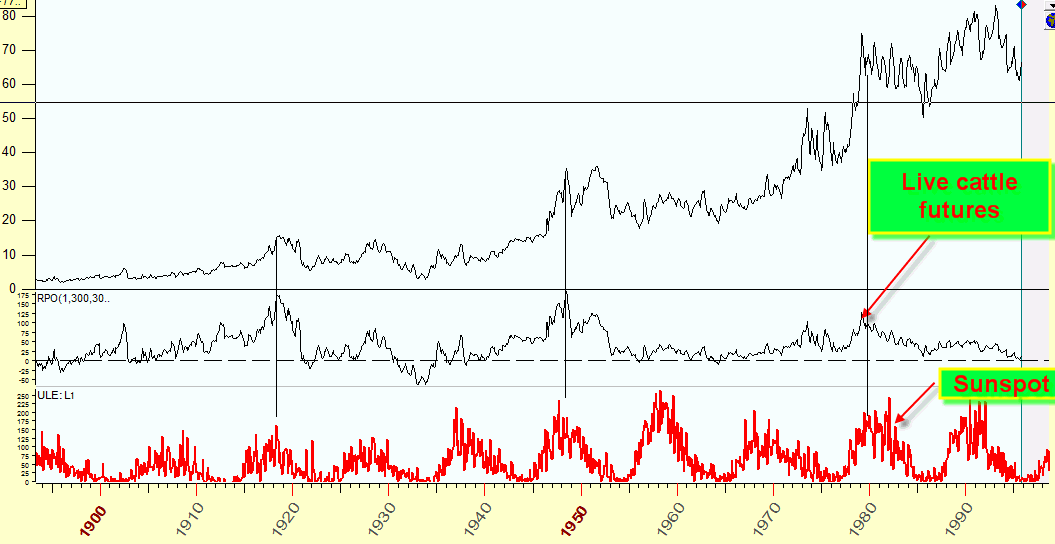
7jul10Source: Tarassov

7jul11Source: TradingCharts

Now we need to see other commodities make a fresh rally to new highs, assuming a solar peak is still ahead.

This week we have the new moon on Monday and the end of the lunar positive period by Thursday. So I am ideally looking for equities to rise further in the next couple of days and make that retest of the highs or marginally higher high, then retracing again in the negative lunar period ahead, to further the technical look of a topping process. If we get that retest of the highs then I will be looking to sell equities longs and add short. But for further support I would like to see oil break out, commodities to rise en masse and the US dollar to be turned down with gold catching a bid at last. Let’s see how the action unfolds.
Deflationary Demographics

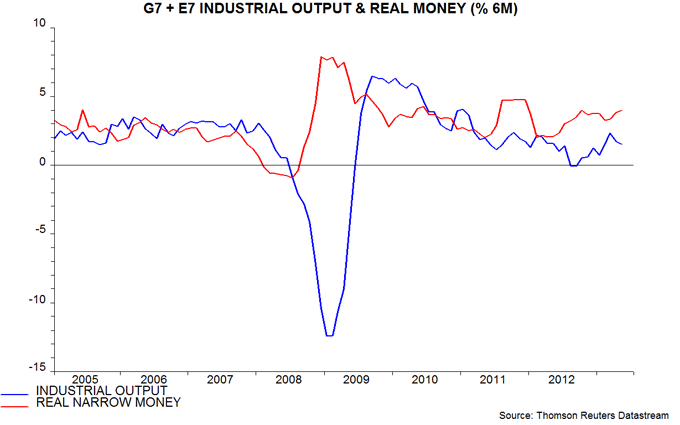
If the combined demographics of the major nations are exerting an overall deflationary pull on the global economy, then we ought to see clues in the data. Broadly-speaking, USA demographics began a downtrend around 2000, Europe around 2005 and China around 2010. Therefore, the biggest pull has been in place since 2010 or so.

G7 and E7 countries combined industrial output has been weakening over this period. The question is whether this measure is going to continue downwards and break beneath zero or pull upwards again from here:

27jun2Source: Moneymovesmarkets

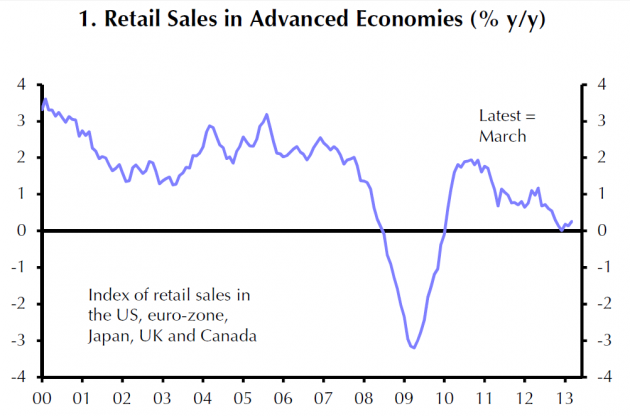
Retail sales in some of the key advanced economies have also shown a declining trend over this period, and are also at the point whereby they either pull up or drop into the negative:

27jun3Source: Capital Economics / IBtimes

The global PMI composite for services and manufacturing shows something similar: a weakening trend over the last several years and the same predicament going forward:

27jun4Source: Markit

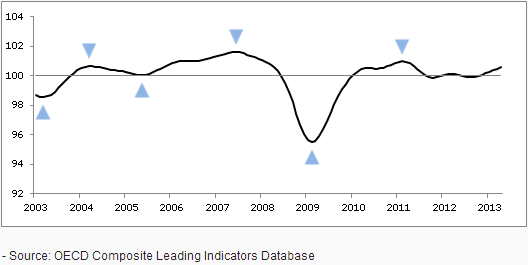
Combined leading indicators for the OECD nations have also shown weakness the last couple of years but are trying to pull up again:

27jun5

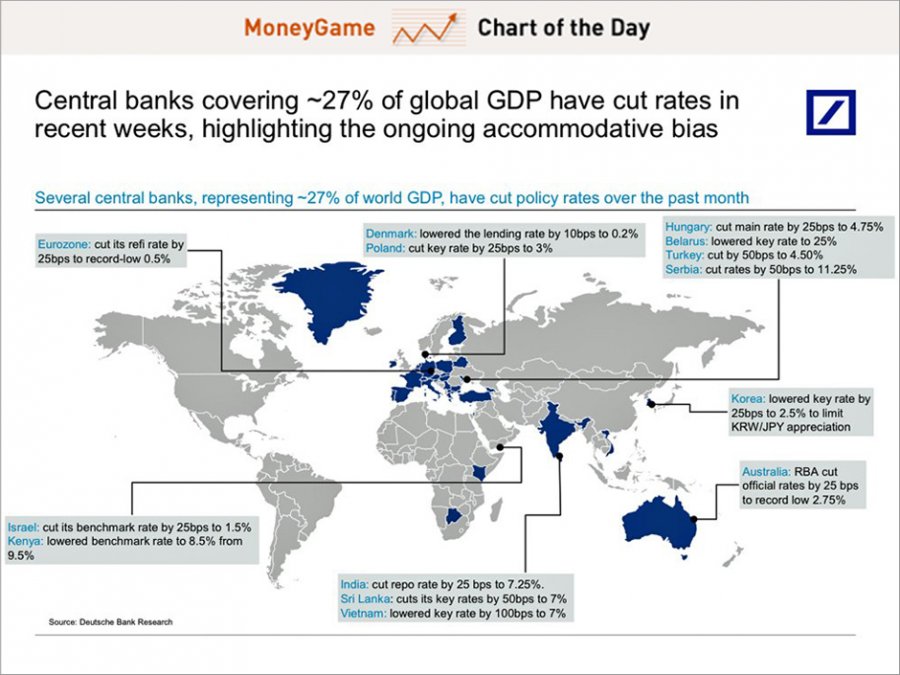
Furthermore, we have seen a renewed round of easing recently, with rate cuts across the globe in the last couple of months, as shown below, which should have a positive effect several months hence:

27jun6Source: Business Insider / Moneygame

Lastly a look at specific USA data on its own does appear to show trends being pulled down over time:

27jun1Source: Streettalklive

27jun7Source Dshort

Now let me outline two scenarios going forward. The first is that the world economy picks up in the second half of 2013. Positive effects from the round of further rate cuts, plus the drop in input prices through recent softer commodities push most of the above indicators upwards and away from danger. Demographics continue to exert their influence in keeping global growth weak and unimpressive, but growth is nonetheless maintained and improves, at least temporarily. Asset markets would be the primary beneficiary, with stocks most likely winners again, under low growth low rates. Commodities should also get a boost, in a mean reversion away from oversold and overbearish, and on improved global demand. If commodities then gained too much traction, the risk would be of oil and other key inputs tipping the world into recession given global growth is fragile due to demographics.

The second scenario is that the combined demographic trends of USA, China and Europe, that are now collectively at their most potent, drag those indicators above negative and the world economy tips into recession under deflationary momentum. So no spike in commodities, no excessive inflation or subsequent tightening, but rather like a global version of Japan in the 1990s, whereby no central bank action could prevent the demographic waves from cutting spending and investing. Such a deflationary shock is the scenario Russell Napier is predicting. QE has failed to produce either strong or self-sustaining growth, and growth in emerging market reserves has reversed, limiting their ability to deal with another deflationary shock. Inflation is the only real solution for the indebted developed country governments, to inflate the debt away, yet they cannot induce the necessary inflation, due to the combined demographic downtrends. If the world was to tip into a deflationary recession, then I expect a panic would ensue and stocks would sell off hard. The perception would be that despite the billions spent on propping up the economy, it had all failed and central banks were powerless. The massive debt that had been racked up in trying to stimulate and support was also now growing even bigger under deflation – a double failure. Of course, demographics would be the culprit, and eventually by around 2020 the trends would have improved in USA and China and others sufficiently to give the global economy traction again, but not before a massive sell-off in assets.

Stocks look to be rising again since the new lunar positive period, so I am hopeful my preferred scenario of a re-test of the highs will ensue. If this is a topping process in equities then we may then see the historically normal switch to outperformance in commodities. Certain indicators, such as Martin Pring’s, suggest commodities are about to gain traction again, and given they have been oversold and overbearish for some time now, a mean reversion would make sense. If commodities were to truly rally and then top out after stocks in the normal sequence, the whole momentum move for commodities would have to happen fairly quickly. This could happen through solar maximum inspired speculation, but until and unless commodities become the money target then this scenario remains theory for now.

If commodities do not take off, but rather leading indicators weaken and provide a negative divergence to the equities high retest, then the deflationary scenario could be unfolding. I would expect bonds and cash to be beneficiaries to some degree, whilst equities fall hard, and I believe gold would rally again, as the anti-demographic go-to. Once again I could see a solar maximum inspired speculative peak, this time in gold.

I have to end on the scenario not mentioned. Central banks continue to tease enough growth in the economy to keep stocks in favour. Not too much to inspire inflation and commodities momentum. Not too little to slip into deflation. Sustained weak growth in the economy and sustained easy money conditions, with the latter inspiring continued flows into equities, and perhaps a solar maximum inspired speculative peak happens in stocks. Under this scenario I would expect Japanese equities to outperform, under their belated demographic catch up, full-on central bank push, and as an energy importer benefiting from the subdued commodity prices. If this scenario were to be the theme of H2 2013 then I would expect renewed economic weakness in 2014 as the recent round of easing wears off again, and demographic forces continue to pull. Would we then slip into deflation at that point, or could yet another round of central bank interference once more have the required effects?

It comes down to whether central banks are really in control here. Are they successful in their ZIRP and QE efforts? The evidence suggests not, as they cannot induce inflation nor sustained growth. Japan’s central bank could do nothing to overcome their demographic downtrend in the 1990s. Central banks can only encourage or discourage through their tools, they cannot force. With US, Chinese and European demographics united down in this decade, I think that’s too potent a combination for central banks to overcome. It’s just whether they can keep it at bay for now. So let’s see how leading indicators develop, and whether commodities can attract a rally or not. Timing the solar peak remains troublesome as the experts cannot agree, but assuming it remains ahead, then I expect it still has a key role to play here. I expect a sunspot-associated speculative peak, and maintain the most likely asset to benefit is gold, as demographics are anti-equities, anti-t-bonds and deflationary. If it isn’t gold, then the combination of easy-bubble-making monetary conditions and solar inspired speculation should inspire a moon-shoot in another asset.