All Change At The Solar Max

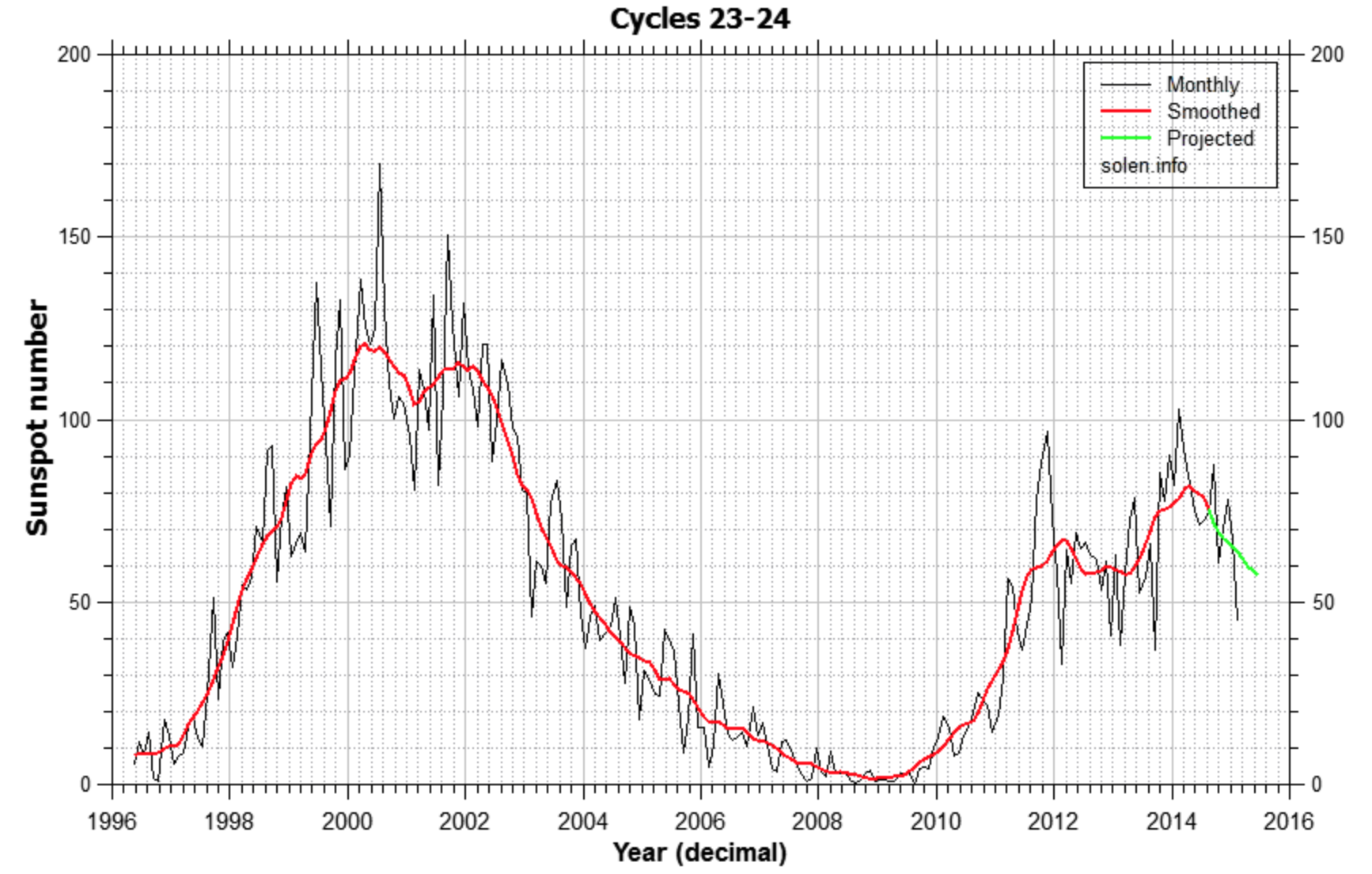
1. The solar maximum peaked out mid-2014

19apri30

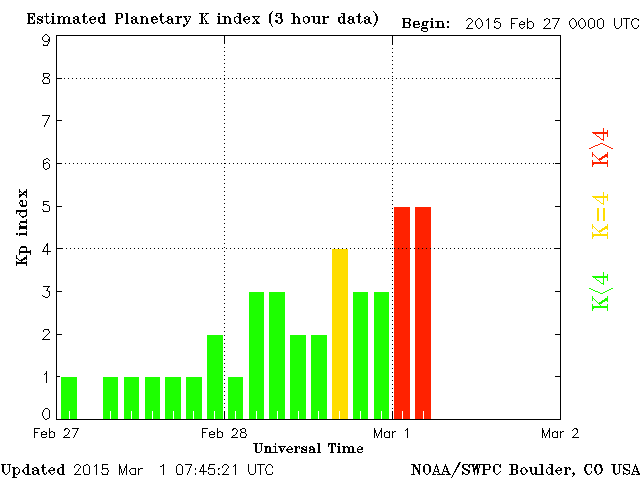
2. Geomagnetism intensified since then

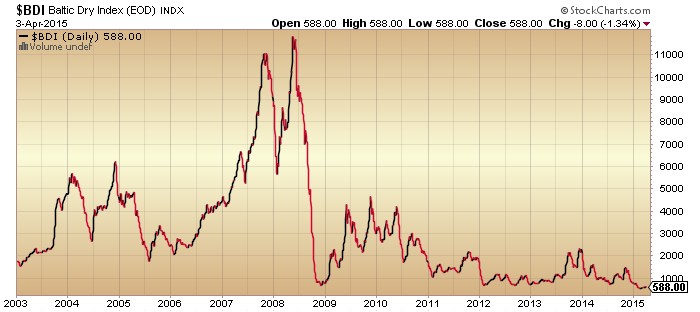
19apri313. That’s twin negatives for risk assets, reflected in the drop in commodities

19apri32

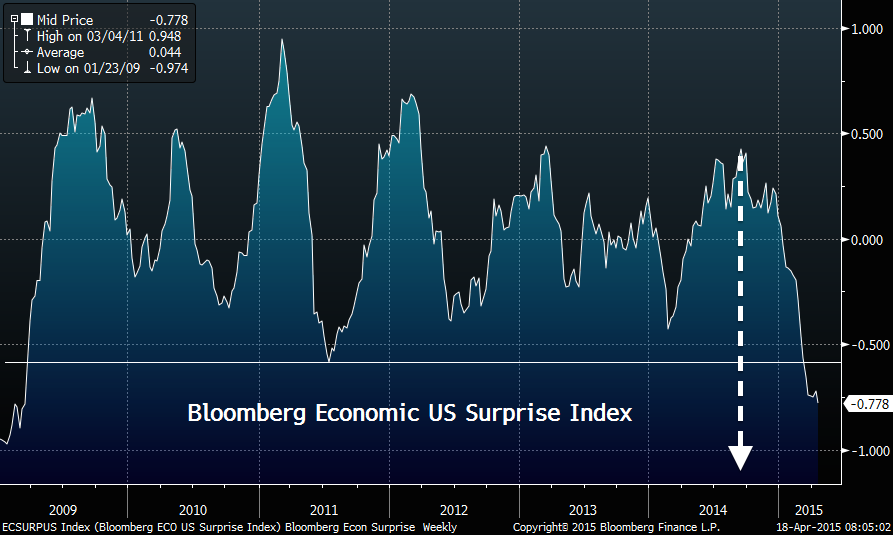
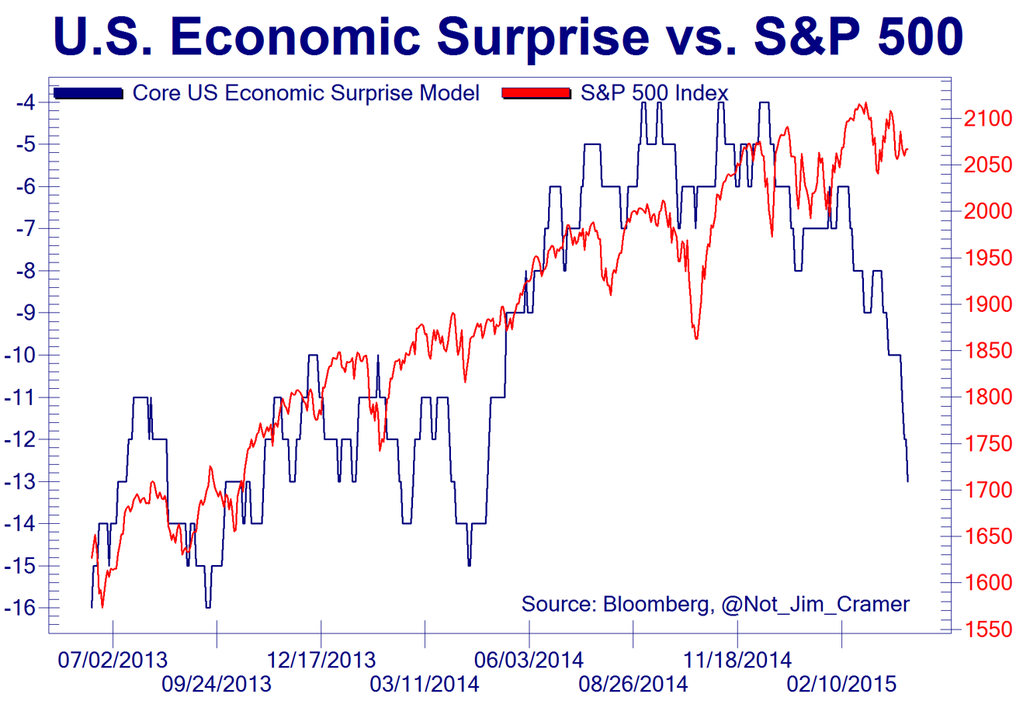
4. It’s also twin negatives for the economy, reflected in data surprises

19apri20

Source: Charlie Bilello

19apri10


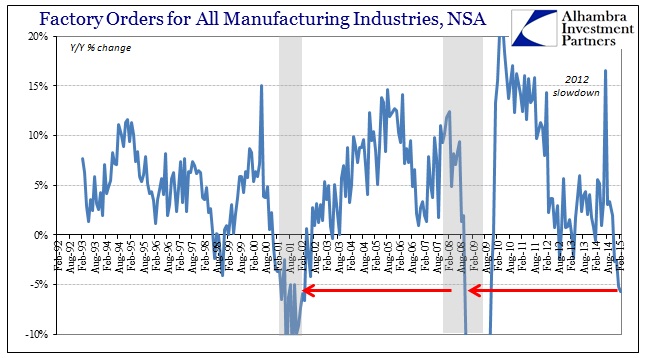
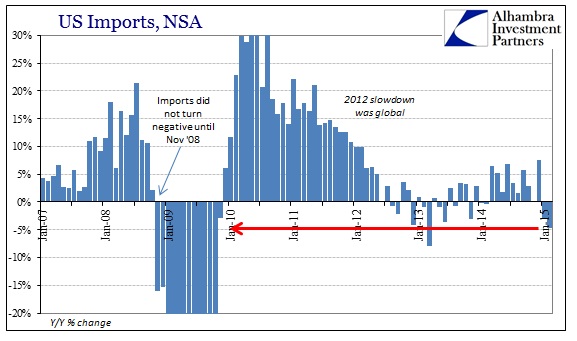
Source: Alhambra

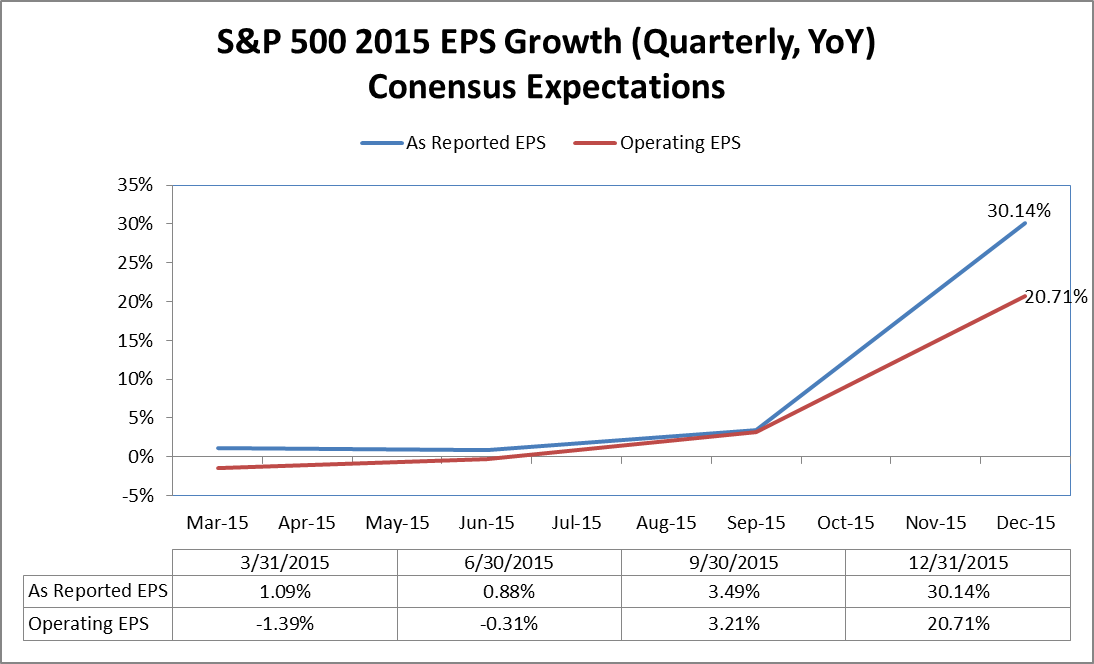
5. And in earnings

Screen Shot 2015-04-19 at 05.40.59

Source: Factset

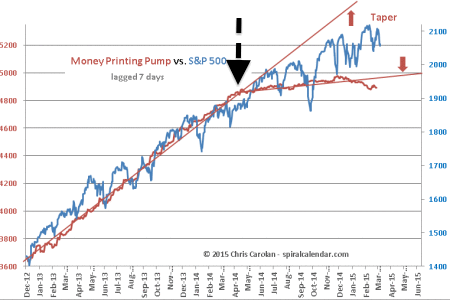
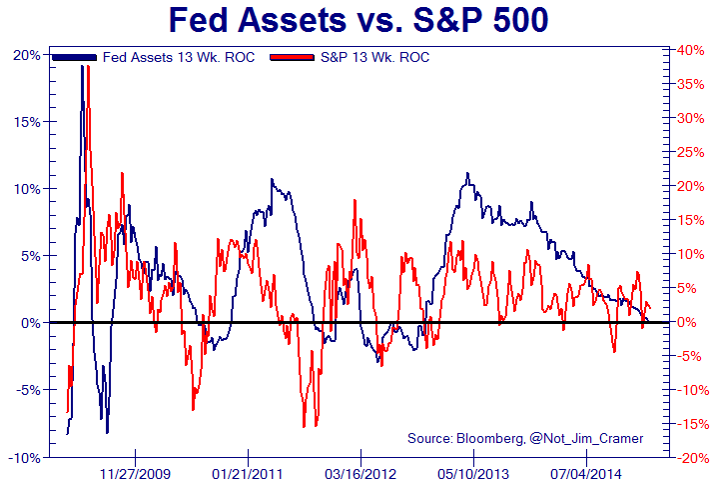
6. And in Fed money printing

19apri8


Source: Spiralcalendar

7. And deteriorating financial conditions

19apri1

Source: WSJScreen Shot 2015-04-19 at 05.19.44

Source: Bloomberg

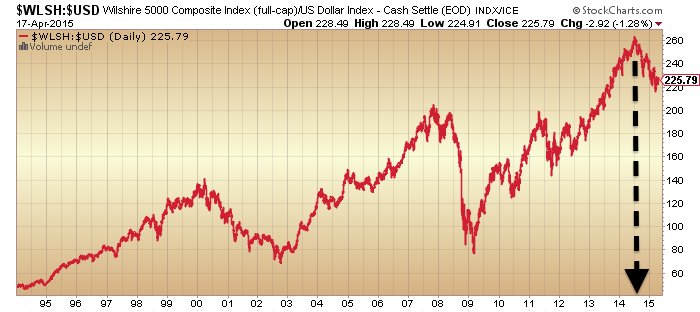
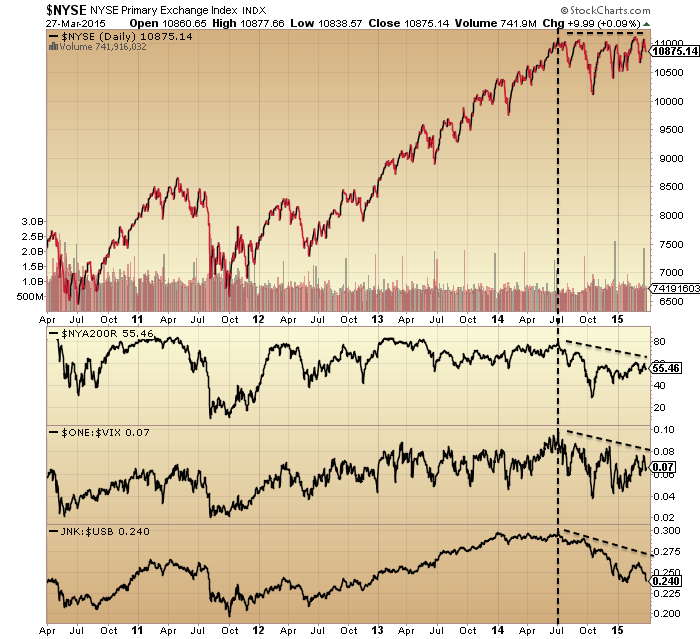
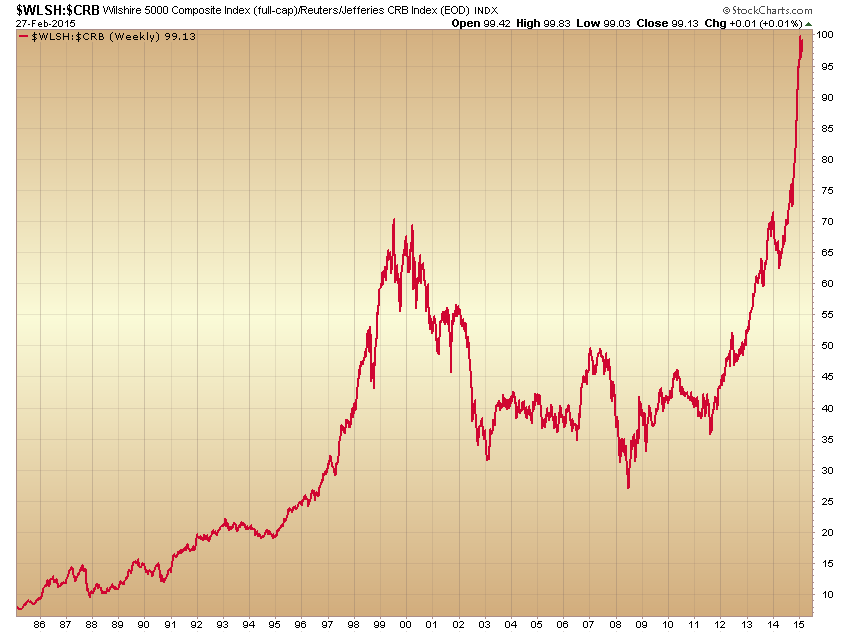
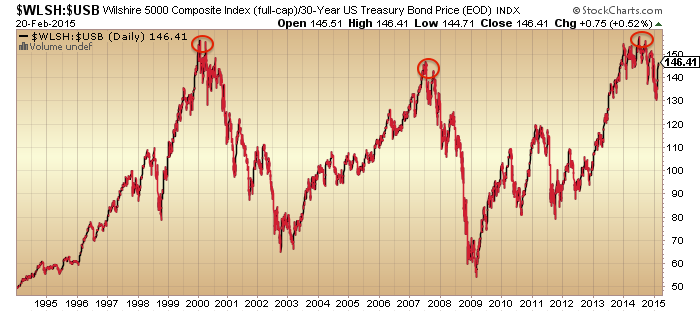
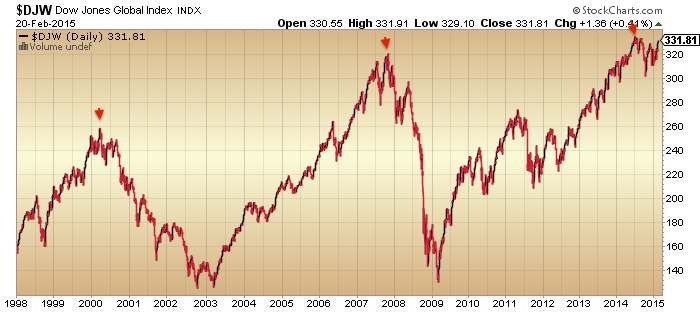
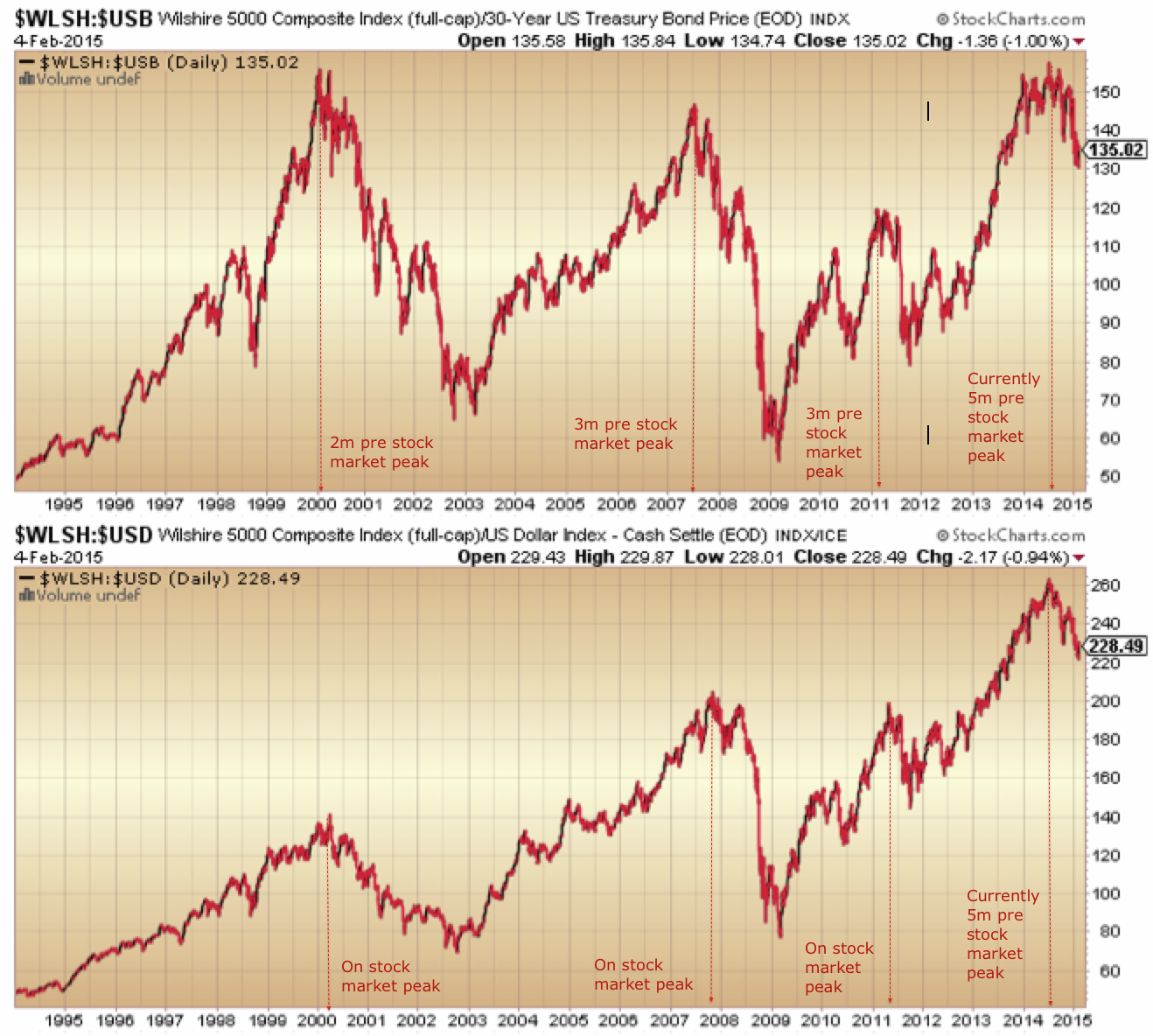
8. Although nominal stocks continue to appear to be in a bull market, measured versus bonds and dollar the top appears to have formed at the same time as all the above

19apri2 19apri3

Source: Stockcharts

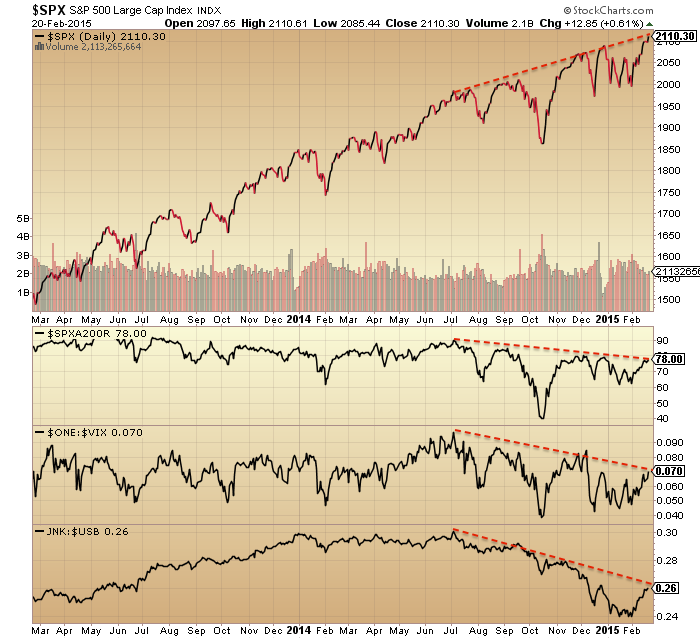
9. Plus a look at breadth, volatility and risk appetite also suggests a reversal has occurred

19apri6

10. European stocks appear to be making a blow-off top at high valuations

19apri15 19apri21

 Source: Gavekal

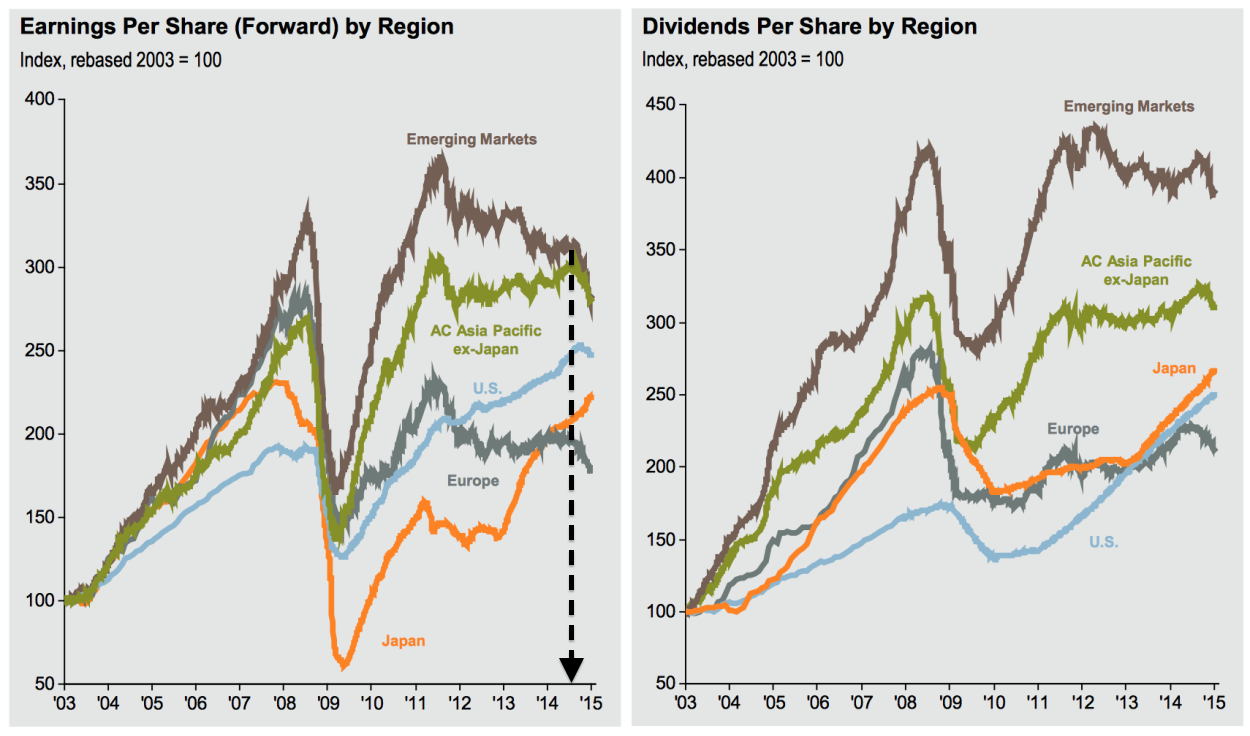
11. And forward earnings for all the main regions bar Japan (the only major that has a positive current demographic window) are negative

19apri23

Source: Shortsideoflong

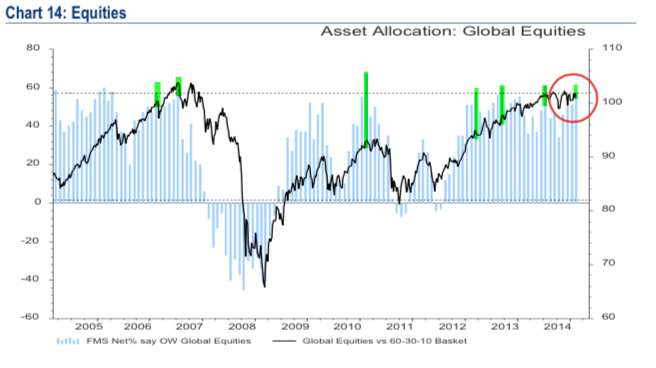
In short, I still see strong evidence for a reversal in financial markets and economy fitting with last year’s solar maximum, with the final piece of the puzzle being the missing sharp drop in nominal equities. Whilst Friday’s sharp down candle serves only to keep us in a sideways price range, it was another failure high attempt in US equities and I expect will form part of the final roll over in stocks, to fulfil what all the charts above are telling us. Sentiment and allocations remain maxed out:

19apri40

Source: Charlie Bilello

19apri5Source: Stockcharts

Big Picture USA

The solar maximum peaked out mid-2014:

Screen Shot 2015-04-05 at 07.15.14Source: Solen

Speculation should peak out with it, and that appears to have been the case with trend changes in stocks, commodities, dollar and treasury bonds:

5apri50Source: Stockcharts

The speculative target into the solar maximum was primarily equities, as evidenced in allocations, sentiment and (here) valuations:

5apri24

Source: DShort

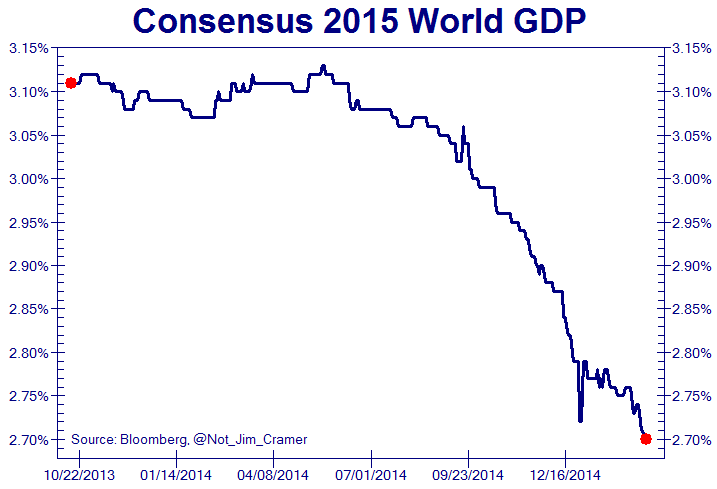
Stocks are now at risk of a sharp reversal, due to the twin supports for lofty valuations of earnings and (here) economic data having turned negative:

5apri10

Source: Not_Jim_Cramer

However, analysts are predicting both will improve as 2015 progresses. The first chart shows they have been downgrading Q1 GDP forecasts whilst slightly upgrading the next 3 quarters. The second chart shows they expect a significant recovery in earnings in H2 2015:

5apri15

Source: FT5apri16Source: Charlie Bilello

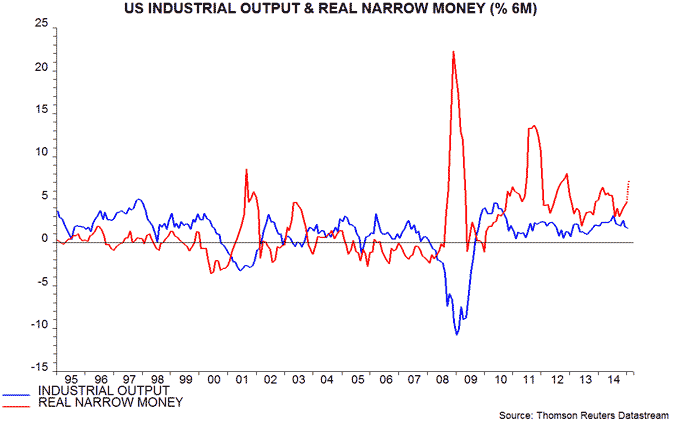
Narrow money trends are also predicting an economic recovery by H2 2015, in part due to the benefits of lower commodity prices.

5apri20

Source: Moneymovesmarkets

Counter to that, a range of economic data has already dropped into recessionary levels:

5apri1 5apri2 5apri3Source: Alhambra

The latter two charts play into the global picture, which is one of dwindling world trade:

5apri6

Source: ATimes5apri8Source: Stockcharts

Financial stress in the US is not yet apparent but has crept up in a way similar to 2011 pre stock market falls:

5apri11Source: Charlie Bilello

Supportive to the bull case still are cumulative advance-declines, outperformance of certain cyclical sectors and small caps in 2015, and a current rechallenging of 2014 highs in both leverage measures of margin debt and (here) leveraged loans:

5apri9Source: Stockcharts

However, most other indicators show continuing degradation and divergence.

5apri60Source: Stockcharts

So, piecing it together, I believe the key is whether earnings and the economy do recover again or whether we are in the early part of a negative spiral. Solar theory would argue the latter, whilst analyst opinion favours the former. Either the sharp falls in commodity prices are deflationary and recessionary, or they are to become a new form of easing as 2015 progresses, with positive benefits for the economy and most sector earnings.

I suggest it is unlikely stocks will advance whilst the reporting of Q1 earnings and economic data plays out. Rather, at such lofty valuations, we will need to see evidence of the anticipated improvement first. That sets the scene for either a meaningful correction here, or a sideways range trade in the weeks ahead.

My opinion remains the same: we are in the last gasps of a topping process in equities. We see ample evidence in both indicators and economic data of the shift in behaviour post-solar-max. The negative feedback looping is underway but needs a significant drop in equities to complete it. That should now come to pass, post Equinox and post-second-chance (last post). April is clearly a window for a meaningful drop, set against earnings reports beginning on Wed and anticipated further bad economic data.

If somehow stocks can hold up and range trade over the next several weeks whilst early evidence of a pick up in the US does start to trickle through then maybe this mania can continue for even longer. But I still find it extremely difficult to make a case for that.

The SP500 now needs to break down beneath the March lows. The divergences suggest this should occur.

5apri70Source: Stockcharts

Meanwhile, the commercial positioning on gold suggests a rally, which would fit with a drop in equities:

5apri5Source: Ispyetf


Post Equinox

Did the mania leader, Biotech, peak out on the Equinox, 20 March?

29marc7

 Source: Stockcharts

Too early to determine, but the relevance of the Equinox is here:

29marc9

Source: Stockcharts

Not just Biotech, but the wider US markets, the Dax, the Euro-USD and gold all appear to have made tentative reversals at this Equinox. Is it going to stick? I moved back in short US stocks and long gold.

This is a stock market on borrowed time since last year’s solar maximum:

29marc

Source: Stockcharts

Screen Shot 2015-03-29 at 08.35.47

Source: UBS29marc2Source: Not_Jim_Cramer

Geomagnetism has ramped up just like at the 2000 peak:

22marc41 22marc31Earnings season kicks off 8th April. Given the negative pre-announcements and forward estimates, can this reporting season really be a buy? Unlikely.

The NYSE looks to be at the end of a topping process that has seen declining breadth, rising volatility and a gradual increase in risk-off appetite:

29marc6Source: Stockcharts

Sentiment, allocations and valuations are all saturated. Economic surprises and leading indicators are negative. Fed balance sheet expansion has ceased, and central bank actions are being revealed to be fairly impotent….

29marc1Source: Jessie Felder

In short, why would stocks not have topped out here?

We have negative pressure into the full moon of April 4th. Then earnings season gets underway. Plus that familiar topping pattern may have formed:

29marc11

29marc12

Nothing repeats exactly, but a break beneath the existing March 2015 lows this coming week looks to be key. If instead the stalling of Thurs/Fri last week lets the bulls back in this week then a more complex topping pattern could unfold. But as things stand this all looks increasingly promising to me. A key week ahead.

End Of The Mania

The irrationality continues, but not for much longer.

After last year’s solar maximum, the cross-asset picture changed. Global stocks entered into a topping range whilst money flowed into the US dollar and treasuries, plus commodities (shown inverted) collapsed, all in a deflationary recessionary wave.

22marc20Source: Stockcharts

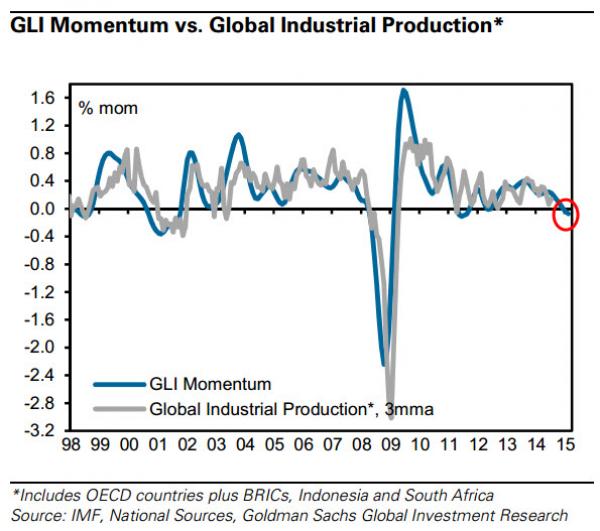
Global leading indicators turned down from that point and are now negative, like in 2000, 2008 and 2011.

22marc22Source: Goldman Sachs

China data turned sour.

22marc2Source: Sober Look

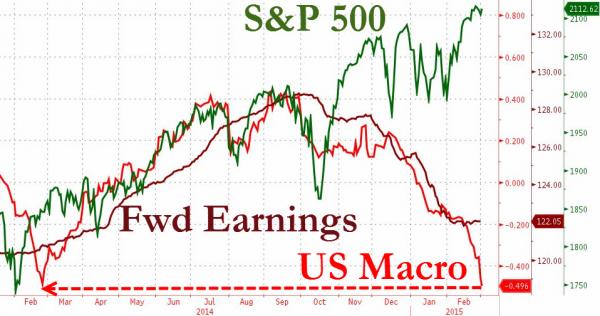
US earnings projections and economic data diverged sharply from the stock market.

22marc21Source: Zero Hedge

Also captured here in homebuilder stocks versus housing data.

22marc10Source: Not_Jim_Cramer

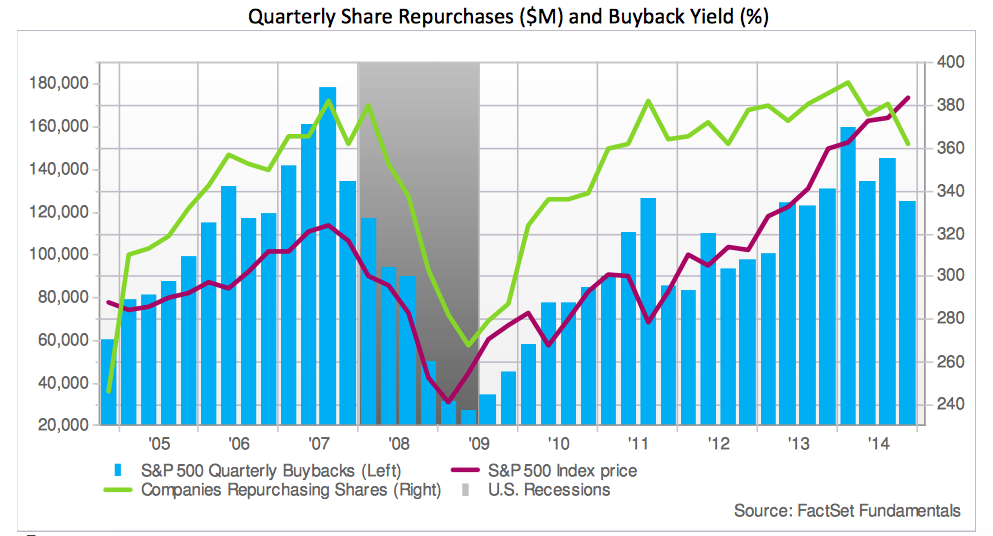
Buybacks fell away from their peak.

22marc5Source: Factset / Jessie Felder

And hedging moved contrarian.

22marc4Source: Sentimentrader / Sundial

In short, everywhere you look the footprint of the solar maximum can be seen: the subtle peaking in human excitement in terms of both economic activity and financial market speculation around mid-year 2014.

8marc13Source: Not_Jim_Cramer

15marc15

Source: SpiralCalendar

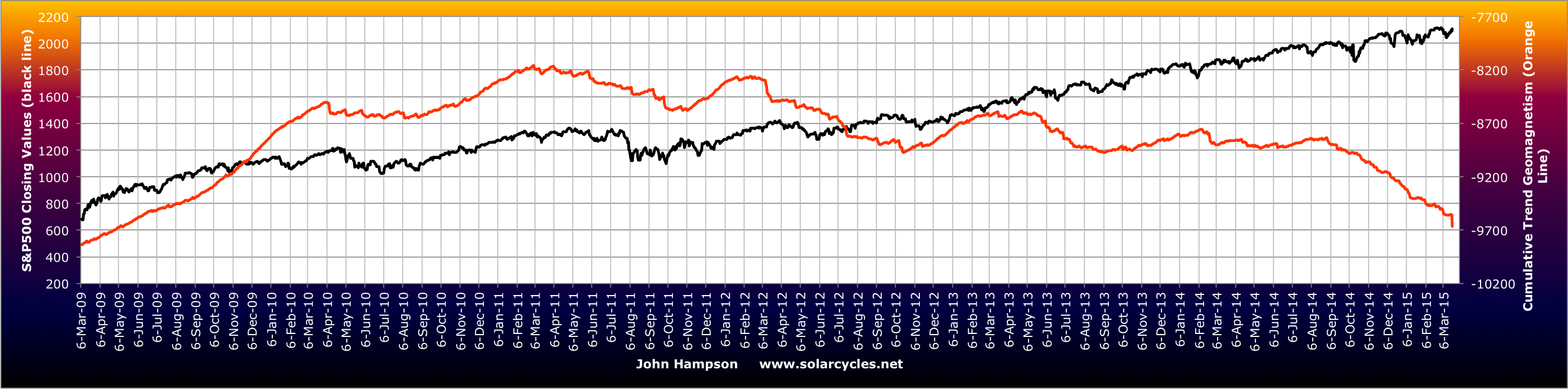
Following the solar maximum comes the peak in geomagnetic disturbance which adds to the negativity. See here the major storms (red downward spikes) of July and August 2000 which coincided with the SP500 reversal, all following the solar maximum of March 2000.

22marc31

This last week saw a similar occurence of a major geomagnetic storm, the massive red spike down on the right:

22marc41

Put into a trend, geomagnetism has been diverging from the stock market since mid-2014, like the rest, and that storming serves to steepen the trend.

22marc42

The TR-CRB commodities index has tracked the trend well. This is reality, whilst stocks are in a mania prone to a major reset.

22marc44

Back in 2000, the SP500 finally gave up its levitation on 1st September. We probably don’t want to focus too much on the timing of that lag, but instead note that we have the same comprehensive leading removal of supports: solar maximum peaked; geomagnetism intensified; divergent earnings and economic indicators; buybacks and combined central bank printing peaked; saturation in allocations, sentiment and valuations; commercials and hedgers short; money flows into bonds and dollar.

With hindsight we can look back on the first half of 2014 as too soon for a peak in the mania as the solar maximum wasn’t yet done, but with a host of warning flags present in allocations, sentiment, leverage, valuations and more. We can look back on the second half of 2014 and see a typical topping process in a whole range of indicators: negative divergences in breadth and volatility, declining forward earnings and leading indicators, a deflationary wave in other assets and economic data, all occurring whilst price continued to levitate. And, I believe, we can look back on Q1 2015 as the completion of the missing pieces of the puzzle: commercials go short, insiders press sell, geomagnetism ramps up, data surprises to the downside more than expected.

22marc40

Q2 2015 then should look like this: economic data doesn’t improve, realisation that earnings and leading indicators are staying divergent, geomagnetism continues to pester and turn the tanker of sentiment, stocks start to decline and in turn recession models start to wake up.

A host of leading indicators for the stock market suggest equities are overdue the major reversal, and it’s hard to find ‘fuel’ for prices to continue to rise into mid-year given the all-round picture from indicators, namely saturation and divergences. I therefore have not given up on the March-April seasonal low: a sharp leg down from here to kick off the bear market. Let’s see how this week unfolds: we need to see the telling price reversal, and until then patience needs to be maintained.

ZIRP vs Solar

US economic surprises are now at their worst level since 2009:
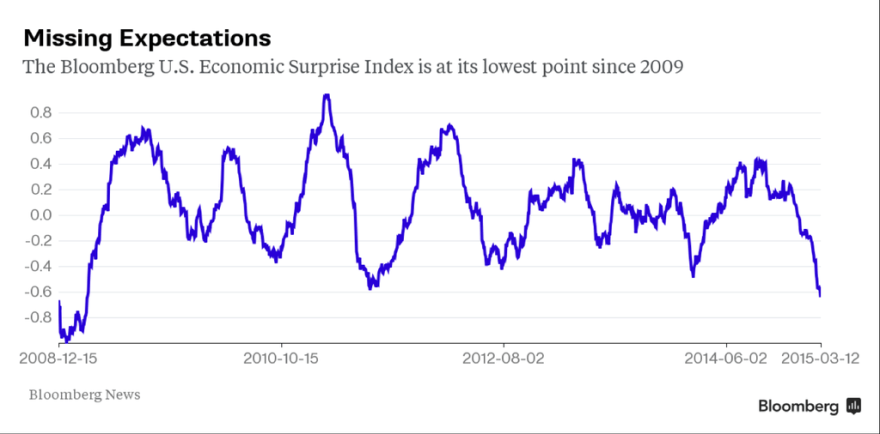
15marc8Source: Bloomberg / Jessie Felder

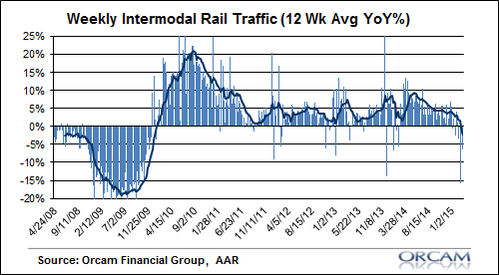
A trio of such bad data releases are charted here: retail sales, wholesale sales and rail traffic:

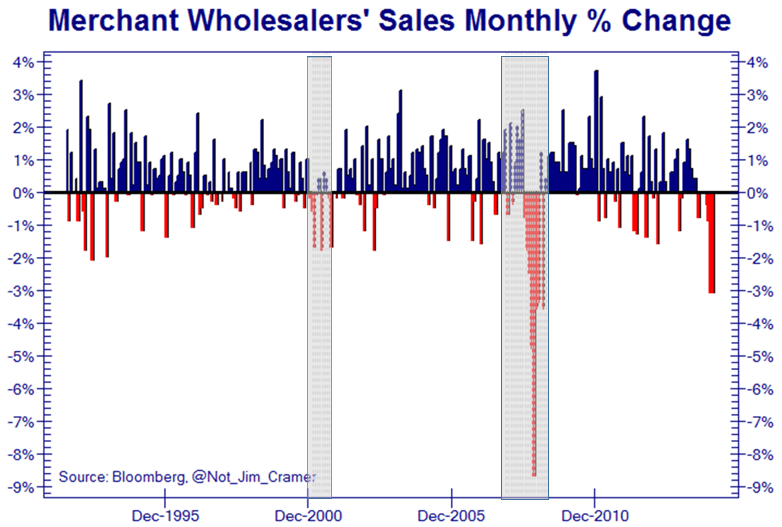
15marc3
14marc4Source: Not_Jim_Cramer

15marc11

Source: Callum Roche

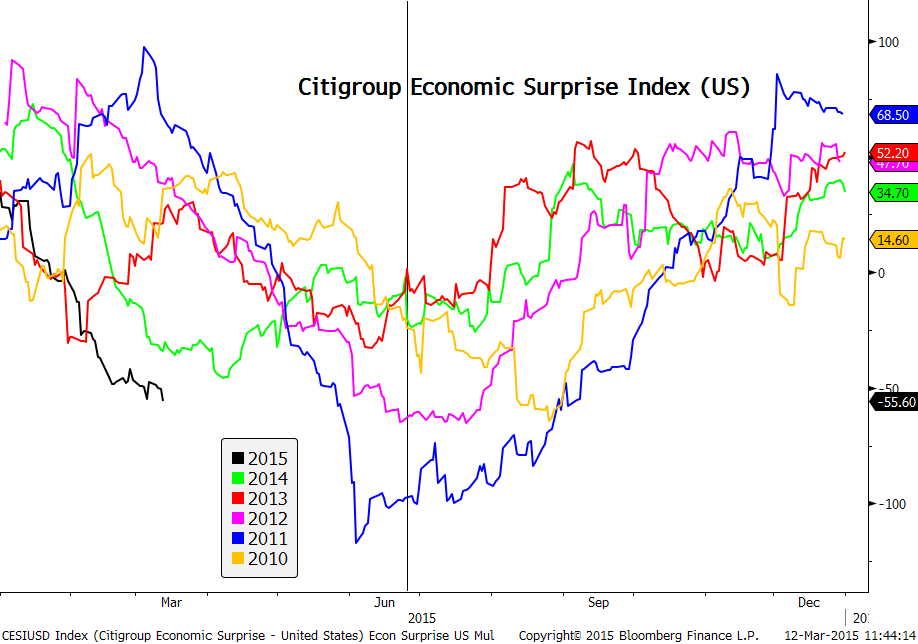
They are all recessionary. But Charlie Bilello hypothesises that the pattern in economic surprises over recent years could be inspiring stock market participants to hold through:

15marc1

Source: Charlie Bilello

That pattern is a bit of a mystery and could suggest problems with the Citigroup calculation. Regardless, our positioning post-solar maximum should spell recession, no recovery this time:

Screen Shot 2015-03-15 at 06.44.11

(my chart)

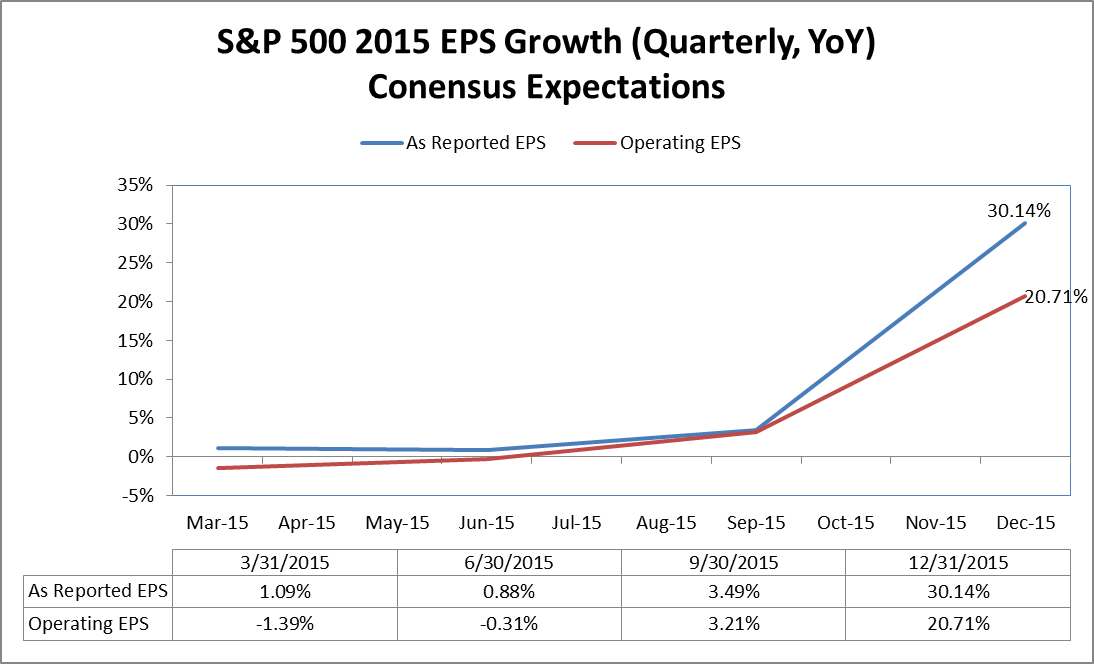
The picture is similar for earnings. Forecasts for the near future are negative, yet further out participants expect earnings to recover dramatically again:

15marc30

Source: Charlie Bilello

As things stand, the estimated earnings decline for Q1 is -4.9% which is the largest drop since 2009, and the bigger picture for declining EPS is shown here:

15marc2Again this would be consistent with a bear market and recession, unless that dramatic recovery later in the year is to take place.

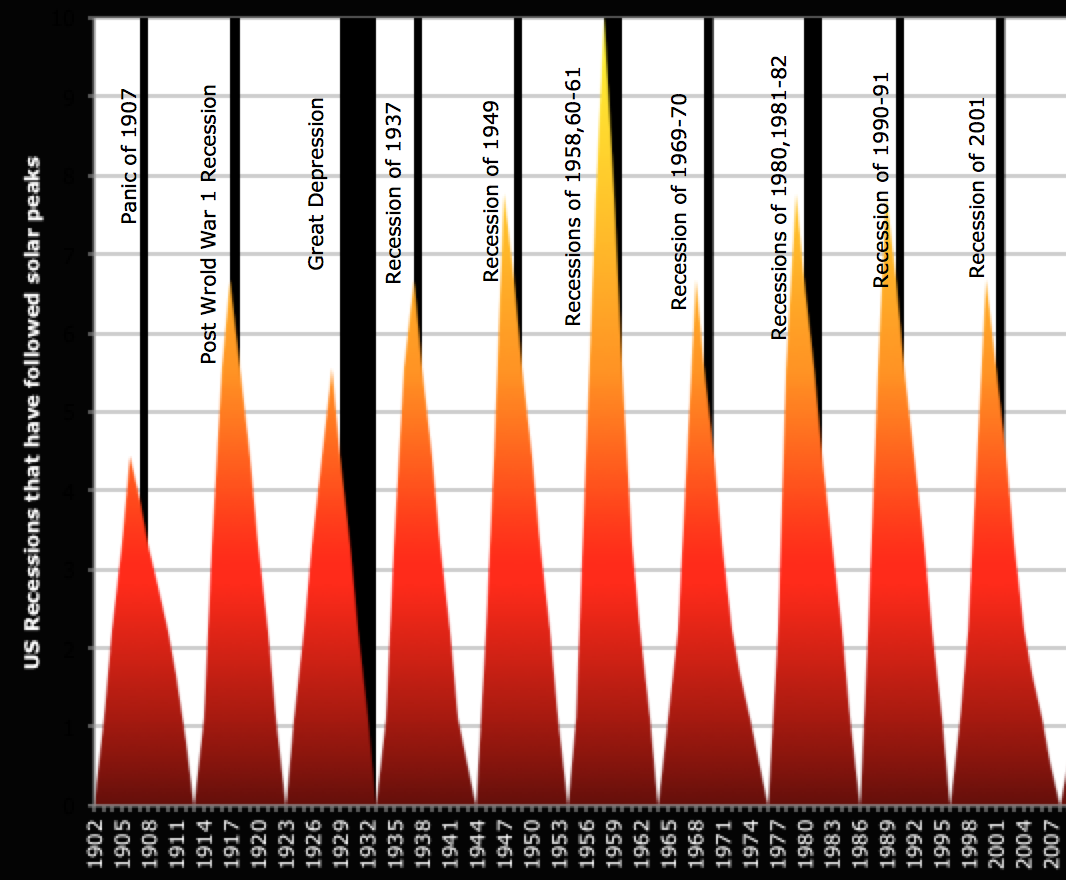
Solar theory argues that we see a speculative bubble into the sunspot maximum, which then pops post solar peak. People unwittingly buy and speculate both in the economy and financial markets into the smoothed solar maximum, and then do the opposite once the sun’s activity starts to wane.

There is some argument that government bonds are in a bubble, given their long bull market and ultra low yields. However, a look at household and fund manager allocations reveals the bubble to be in equities not bonds:

15marc21 15marc9 15marc61marc4Source: Fat-Pitch

And the bubble in stocks becomes clear when we consider valuations, sentiment, dumb money flows, leverage, and more.

Commodities may have undergone recent falls but they were not in a bubble leading into the solar peak.   Real estate has recovered some in the last several years, but does not show bubble characteristics. Sentiment and allocation to bonds has remain depressed throughout. Cash allocations are at low levels.

A common argument is that ZIRP encourages money into equities. Bonds and cash are returning nothing. At least some yield can be found in stocks.

Perhaps this explains why sentiment, allocations, valuations and leverage have remained at ‘saturation’ levels. Money has flowed in to maximum levels, producing common bubble characteristics, but money hasn’t flowed out the other way whilst ZIRP persists. The shallow corrections in equities have swiftly seen those measures topped back up to full.

Which brings us to this week’s FOMC. As things stand, analysts expect rate rises to start in several months time. Yet economic data of late has been fairly dire, which means the Fed may play safe and delay. If the Fed now resets expectations for rate rises (to start later) then will the correction of the last 2 weeks in equities be swiftly brought to an end and stocks rally to new highs on all-in measures again? I consider it a key test of whether ZIRP is the main driver.

It’s a test I expect to fail as I don’t believe it. I maintain the driver is the solar maximum, and that we see a range of evidence that speculation and the economy did indeed peak around the mid-year 2014 smoothed solar max. Even central bank balance sheet expansions topped out around then, as they too are subjects of the sun:

15marc15Source: Chris Carolan

Stocks:dollar continues to show a clear peak at that time:

15marc32

Source: Stockcharts

The negative divergences in volatility, junk bonds and breadth remain in place since then:

15marc40

Source: Stockcharts

All this should mean we are at the end of a topping process.

But how do we square this with action in the Dax and Eurozone indices? I suggest as a function of the sharply declining Euro:

15marc20

Remember the Euro was traditionally seen as risk-on? Hence the Dax and Euro largely moving in the same direction pre-mid-2014. But then, post solar max, things changed and remain changed.

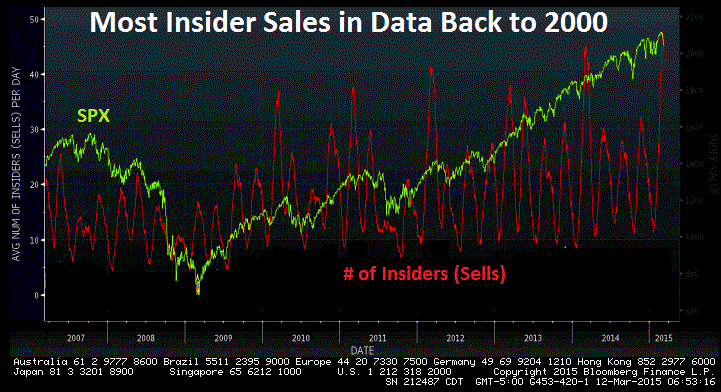
Flipping back to the US, insider selling has leapt to a major warning level:

15marc10

Source: Bloomberg / Nautilus 

If we combine that with the commercial positioning, maybe the market can finally roll over here.
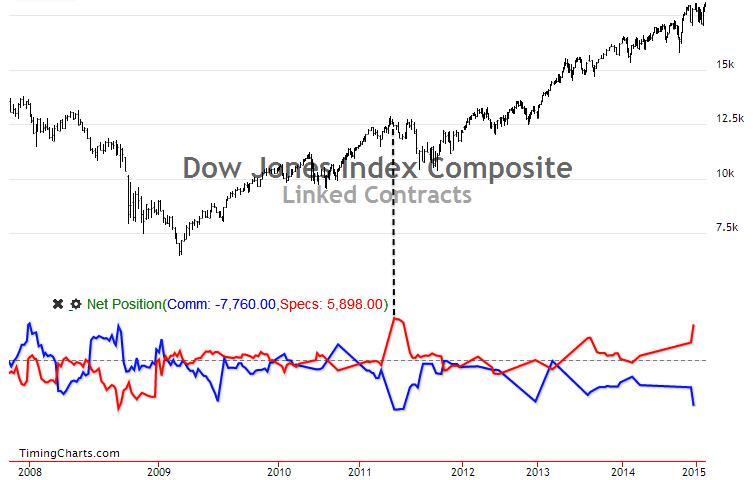
8marc5


Source: Timing Charts

The Euro-dollar remains set for a significant reversal (positioning, sentiment, oversold/bought). Maybe then we can see a sell-off in US stocks and out of the US dollar occurring together: a contra-US move reflective of the current relative economic and valuation divergences. Just a guess.

By geomagnetic seasonality I still have my eyes on a March/April bottom, but this would be a significant low. This would imply a sharp sell-off erupts out of the initial falls of the last two weeks. Should that not occur then the case would build for the markets not properly rolling over until mid-year, and that would still not be inconsistent with the insider/commercials charts above (markets peaked but then took some time to roll over).

Select indicators hit washout levels by the end of last week, but the majority not. However, that keeps options open into the FOMC.

In the bigger picture, this is what I see: valuations, sentiment, leverage and allocations have been flagging a top for some time. Insider selling and commercial positions now join them. Various measures and indicators show peaks mid-year 2014 at the solar max and remain in divergences since. Earnings and economic data (concurrent and leading) have turned negative and Fed balance sheet expansion drawn to a close. If the solar theory is correct then earnings and economic data won’t come back here, and the realisation of this will finally see the scramble for the exits. Based on history a crash is already written in the leverage and highly skewed exposure and sentiment. Set against all this, central banks largely still continue to ease and keep conditions favourable for speculation. The outcome will be extremely telling.

State Of The Markets

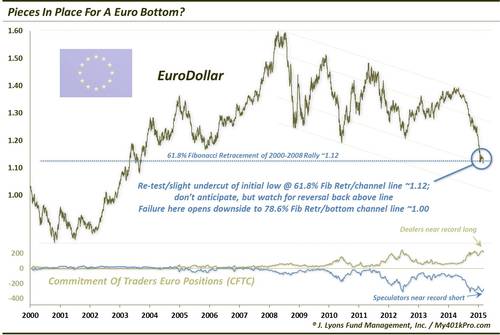
1. Commercial positioning in the EuroDollar is extreme, suggesting a significant reversal should be at hand:

8marc7Source: Dana Lyons

2. Gold positioning is not at the same extreme. The positioning of the various groups does not reflect other significant lows yet, so perhaps a little more washout may first come to pass.

8marc15Source: Pipsologie

3. Dow commercial positioning is extreme, echoing the 2011 peak:

8marc5

Source: AThrasher

4. The smart dumb money confidence spread is also now at an extreme matching the 2011 peak:

8marc3

Source: Sentimentrader

5. Note that both the above two charts show a lead time into the true market falls in 2011 of 2-7 months. Meanwhile, the divergence in ECRI leading indicators is now 8 months old, and compares with the previous lead times of 2-8 months before the true falls:

8marc1

Source: ShortSideOfLong + my dotted lines

6. Sunspots have fallen away, mirroring early 2001, and removing the support to speculate:

Screen Shot 2015-03-08 at 07.15.47

 Source: Solen

7. Valuations and price accelerations in the US line up with the two biggest ever: 1929 and 2000:

8marc11

Source: Nautilus8marc10Source: DShort

8. Meanwhile, earnings and economic data continue to be highly suspect, particularly in the US.

8marc14 8marc13Source: Not_Jim_Cramer

Drawing together with data from other recent posts, logic and history would argue that the correction that began last week ought to have legs and that we are at the end of a 12 month topping process. Failing that, then a sideways range into mid-year before a collapse in earnest.

Leading indicators and economic data for Europe are more promising than the US, adding to the case for the Euro to reverse fortunes. The rising dollar continues to add to the deteriorating earnings picture in the US. Looking further out, the leading indicator picture for the US improves again. But recall that evidence reveals that the stock market leads the economy, not the other way round. As long as stocks hold up, the weath effect prevents major economic problems. However, we are seeing all-round fragility in the economic data, meaning sharp falls in stocks would likely to tip us both into recession and deflation. Therefore, it comes down to the stock market. Those pointing to benign recession models as supports for the stock market have it the wrong way round: when the stock market begins to fall, the recession models spurt upwards.

With a focus on the US, the scene is set for such sharp declines. Sentiment, allocations, leverage, valuations, money flows and positing are all flagging a major top. The dollar and oil have severely dented the earnings picture. Economic surprises and leading indicators have both moved sharply negative. The speculation thrust from the sun has ebbed away and Fed balance sheet expansion has drawn to an end:

8marc19


Source: Not_Jim_Cramer

Conventional analysis would argue there is nothing missing. If conventional analysis is lacking then ZIRP-enabled large player leverage could defy. But at some point, that has to reverse hard as the ponzi scheme collapses and surely now the case is comprehensive for one or more such parties, if applicable, to pull the plug in self-interest.

Saturation Again

We have many historically reliable indicators of a major stock market peak in place: valuations, sentiment, allocations, leverage, negative divergences, risk-off money flows, all clustering around the smoothed solar maximum of April 2014. IMO, a compelling, cross-referenced real time test of the theory with too many angles all united as one, to question whether we are considering the wrong dominant cycle. If some other king cycle were at work with some peak in the future, then we would not have seen all those topping indicators and topping process characteristics coming to fruition in 2014. Rather, they would have only begun to form at at a later date. Therefore, there are only two possibilities in my eyes: either we are indeed seeing the last gasps of a topping process, or there is some other agent at work keeping price rising that is anomalous to historical peaks, namely the manipulation by a few big players fuelled by ZIRP-enabled leverage. With those two options in mind, here’s the latest picture:

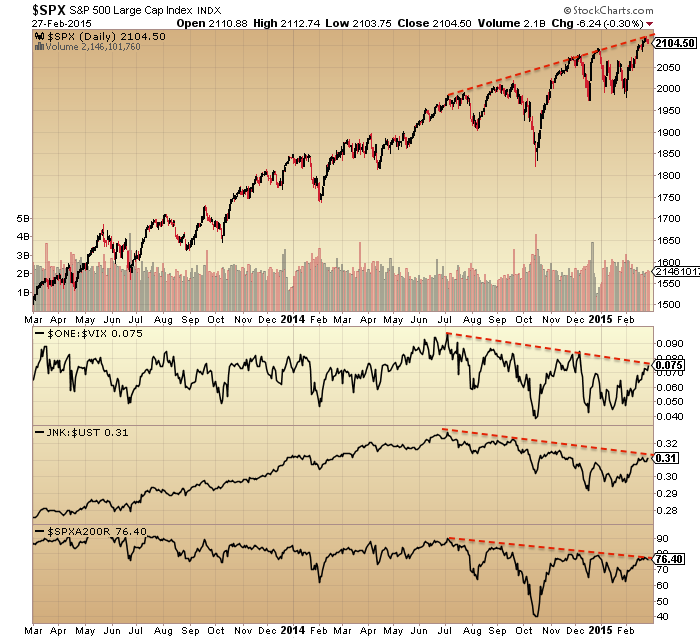
1. US stocks to bonds and stocks to dollar ratios have tentatively turned down again, maintaining the downtrend since, and real peak at, mid-2014:

1marc21Source: Stockcharts
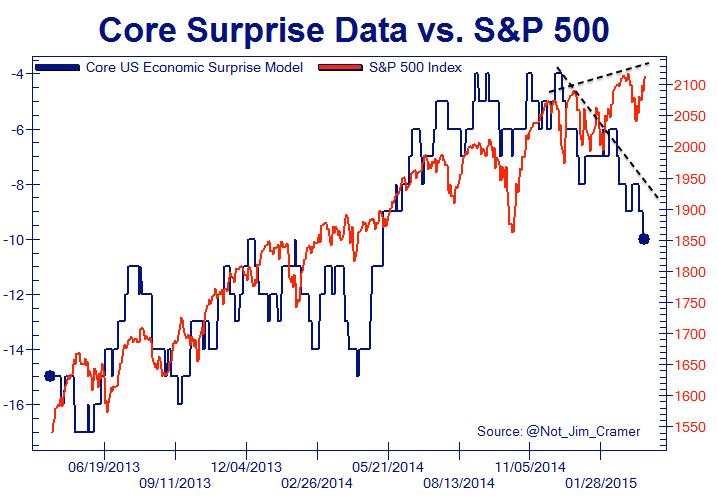
2. SP500 is at rising resistance, whilst volatility, breadth and risk-off divergent indicators are at downward resistance. An appropriate point for a turn if it is to occur.

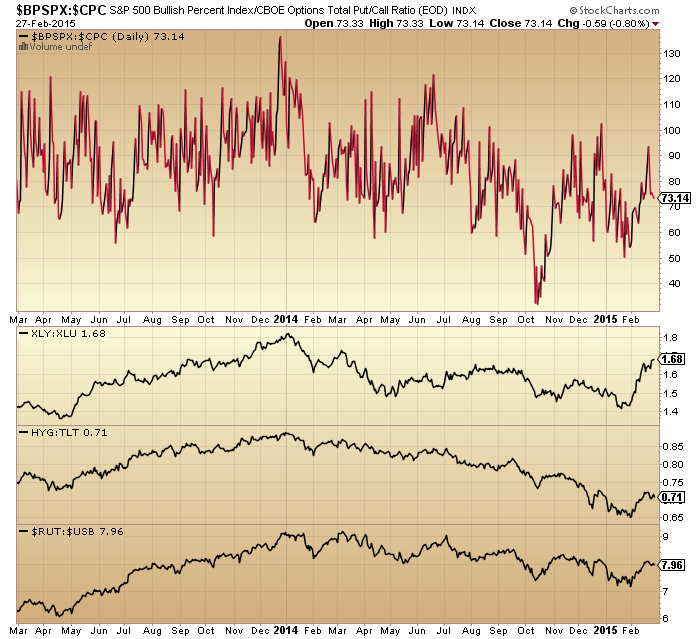
1marc133. Four more risk-off measures below are in downtrends since the turn of 2014. Other than XLY:XLU they also give the appearance of turning down again at resistance now, keeping those downtrends in tact.

1marc20

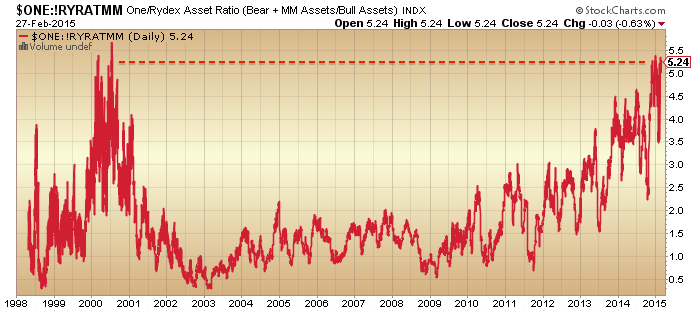
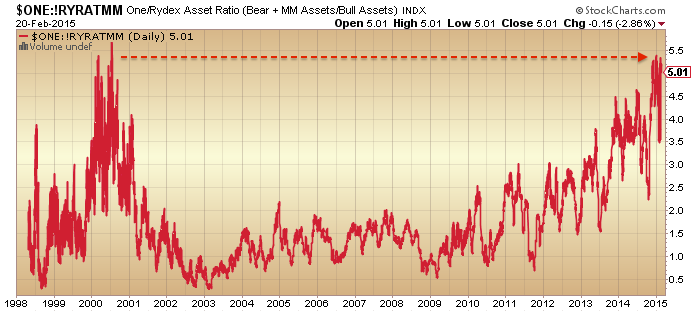
4. At the same time, Rydex allocations are back at their peak:

1marc85. Plus, investors intelligence sentiment is also back at its peak:

1marc10

 Source: Not_Jim_Cramer

1marc2

Source: KingWorldNews

5. Fund manager allocations are back at their peak too:

1marc4Source: Fat-Pitch

6. And NAAIM exposure is also back testing all-time highs, with 99% long exposure currently.

1marc1All four of those sentiment/allocation angles suggest a correction should now come to pass, even if only short-lived or shallow. I’ve highlighted on the NAAIM chart that we previously saw NAAIM diverge before we saw a more significant correction – something to bear in mind.

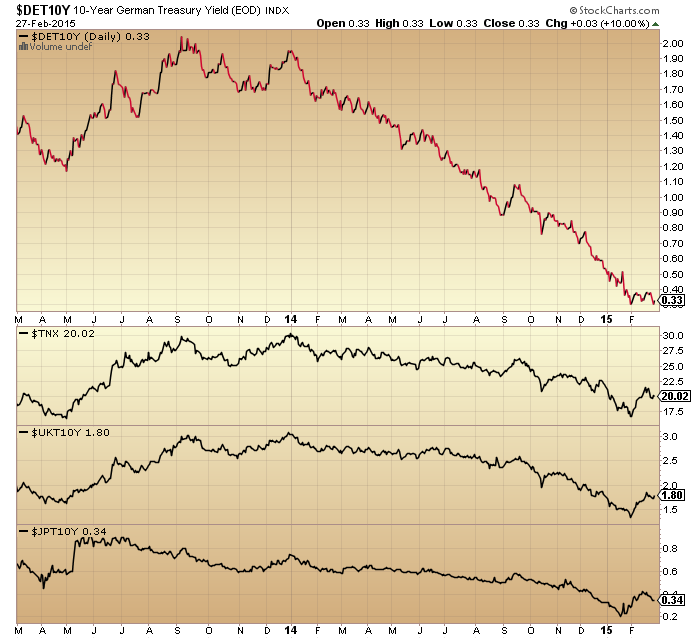
7. Bonds yields appear to be rolling over again, which would also fit with a stocks pullback.

1marc128. Stocks to commodities, suggested by Simo, looks exhaustive and ripe for reversal.

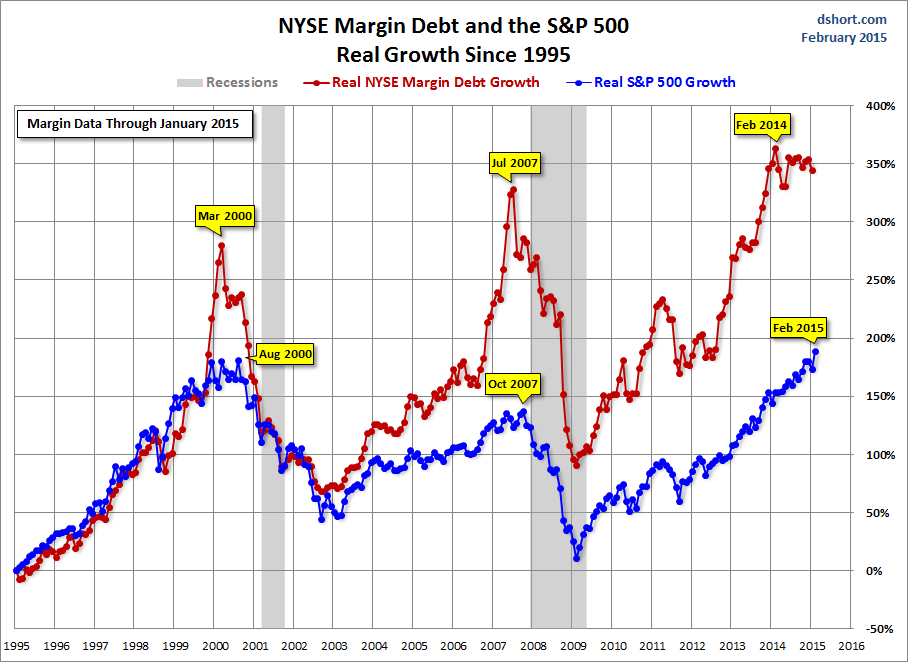
1marc159. Margin debt declined in January, keeping the peak to date as February 2014. Meanwhile, leveraged loans have risen again and are well correlated to the Dow Jones World stock index, namely either at the end of a topping process or heading for new highs.

1marc9

 Source: DShort

1marc40

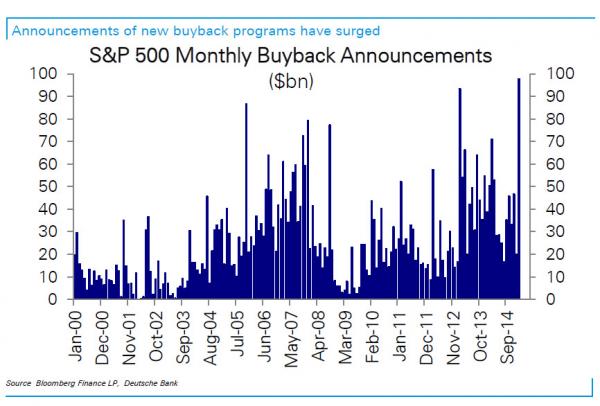
10. Buyback announcements, indicated by Allan, hit a new record. The previous spikes of start-2006 and mid-2013 corresponded to consolidation periods in the SP500, whilst the 2008 ones were contrarian.

1marc13

Source: ZeroHedge

11. The negative divergence in earnings projections is shown in two ways here: arguing for a sharp correction in SP500 prices and the ushering in of a recession:

1marc9 1marc11

Source: Not_Jim_Cramer

12. There is downward pressure into the full moon of March 5 and we have geomagnetic storming in progress:

1marc30

 Source: NOAA

In summary, the current saturation in sentiment, allocations and exposure, together with what appears to be a renewed roll-over in various risk-off, breadth and volatility measures, sets the scene for a price correction in stocks, assisted by the twin negative pressures of lunar phase and geomagnetism. The triple fundamental negatives of earnings, economic surprises and leading indicators provide the justification, and the potential short term basing in gold and exhaustion in the dollar both cross-reference.

A price correction in stocks may or may not be ‘significant’. Cumulative advance-declines and NAAIM trend would both argue that prices need yet to continue higher whilst both make renewed divergences. On the other hand, a host of other indicators continue to pin us at the very end of a topping process that is 12 months old.

I’m going to start a short position again tomorrow morning playing for this correction. I opened long gold again already. We’ll then see how it develops: short and/or shallow, or increasing in momentum and more significant. If there is no correction and stock prices march higher, then by a process of elimination we can increasingly point to the historically abnormal: the dark pools and primary dealers. However, even if we assume an abnormally large influence on their part, they are still logical and self-interested. The case is strong for a near term correction or consolidation.

Weekend Updates

1. US stocks to bonds and to dollar ratios continue to show a clear top mid-2014:

21febu9 21febu11Source: Stockcharts

2. Dow Jones World stock index shows a peak the same as the above, but that peak may be under threat:

21febu43. The SP500 has broken upwards to new highs but breadth, volatility and junk bonds continue to show divergences. The resistance levels in all four are now being tested.

21febu6

4. Various risk measures remain in downtrends since the turn of 2014, though the cyclical to defensive sector ratio has repaired the most in recent weeks.

21febu55. Sentiment and allocations remain at extremes like previous major peaks. Here fund managers and Rydex:

21febu21

Source: Fat-Pitch

21febu13

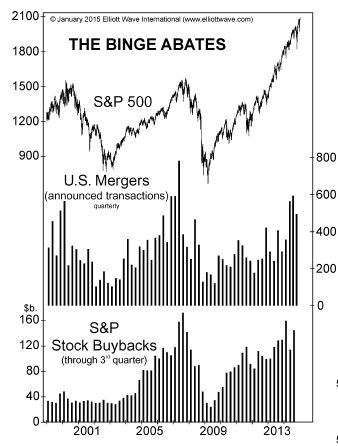
6. Buybacks and mergers have pulled back from their peaks:

21febu25

 Source: Elliott Wave

7. Bloomberg financial conditions remain in a downtrend since mid-2014:

Screen Shot 2015-02-21 at 16.08.18

Source: Bloomberg

8. Earnings growth forecasts have turned down, mirroring the 2007 peak, but price has yet to conform:

Screen Shot 2015-02-21 at 16.13.53Source: Factset

9. The rise in share prices contrasts sharply with current trends in earnings and economic surprises, captured here:

Screen Shot 2015-02-21 at 15.41.10

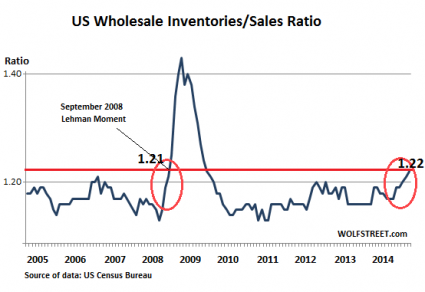
10. The economy is showing signs of recession as evidenced here in wholesale inventories versus sales:

21febu25

Source: TheEconomicCollapseBlog

11. And leading indicators remain in negative growth and in the big picture continue to show a secular bear market:

21febu1

Source: Dshort / Ecri

12. Money has been pouring steadily into bonds, with the stocks:bonds ratio in decline since mid-2014.

22febu8

In summary, we see a hallmark, typical, run-of-the-mill major topping process, that fits with the smoothed solar maximum of April 2014. Firstly, the mania and excess is evident in valuations, sentiment and allocations. Secondly, between the start of 2014 and mid-2014 various indices, ratios and indicators made their telltale breakdowns and divergences. Thirdly, leading indicators, economic surprises and earnings have all turned down. Fourthly, buybacks, mergers, margin debt and leveraged loans have all stalled or declined. YET, despite all this, price has not conformed, so there is something missing from the analysis.

I don’t subscribe to the view that the solar maximum is producing an extended mania like in 1929. We see in the charts above that a typical underlying topping process has occurred centred around last April’s smoothed solar maximum. It all fits as expected. But something is keeping nominal prices rising. So what’s different this time? By a process of elimination we do get to the influence of dark pools and primary dealers against the backdrop of QE and ZIRP.

The dominance of the dark pools over the main exchanges the last couple of years is shown here:

21febu28Plus the leakage from the primary dealers (from who the central banks buy bonds with their QE money) into the stock market. 80% of QE money may be parked as excess reserves but correlations and reports suggest some of the rest finds its way into the stock market.
21febu30

It’s not easy to quantify either influence accurately. However, all historic manias saw leverage rising right into the peak. ZIRP enables the leverage here, but it’s not increasing through margin debt or leveraged loans. Speculation, as measured traditionally, peaked out with the solar maximum mid-2014. All things considered, it would make a lot of sense if, as BC said, several of these major players are driving price and using increasing leverage to do so, as that then explains the anomaly. It would mean the stock market has gone from being fair game governed by natural forces, to one in which – temporarily at least – a few large hands are controlling price to some degree.

If so, it doesn’t change the situation with earnings or economy which are moving the opposite way. It doesn’t stop the bulk of market players behaving as normally post solar/speculation peak, as shown in the charts. I don’t believe it changes the outcome, only delays, the crash. If the bull market has become highly concentrated in a few major hands using dark pools and leverage, playing a game of chicken in the face of valuations, earnings, concurrent and leading indicators, then it would take a broad improvement in all those to sustain it, otherwise the risk is the market collapses at any time as one or more players reverse, in self-interest.

We ended the week cementing the breakout in stocks, and I keep my options the same. Either stocks reverse down from the current marginal new highs, heading for seasonal March/April lows and maintaining the real stock market peak as July 2014 – or – stocks move higher in a final mania that extends to the summer. If the latter looks to be transpiring I won’t be playing the long side. I consider it far too dangerous as a collapse could occur any moment. Rather I would bide my time and short again when the pop looks to be occurring. I continue to watch gold for evidence of a renewed (and associated) move to safety, plus the extremes in sentiment and positioning pro-dollar and anti-euro look set for reversal at any time, which would likely fit with reversals in stocks and gold.

For the time being I will only be posting at the weekend. I have engaged in new projects during the week whilst the irrationality of the markets persist. But I remain poised to attack once they finally break, continuing to monitor each day and read your contributions on the board.

Behold

New highs in US equities despite…

1. Valuations on a par with the 1929 peak

2. Sentiment extreme lopsided (II 3.5x bulls vs bears, NAAIM 84% bulls)

3. Allocations to equities on a par with 2000 peak (household, fund manager, Rydex)

4. The solar maximum speculation peak being behind us in April 2014

5. Leverage having peaked out around then (margin debt Feb 2014, leveraged loans July 2014)

6. Multiple negative divergences in place 6-12 months (shift to defensives, breadth, financial conditions)

7. Economic surprises negative

8. Leading indicators negative

9. Earnings growth forecasts for H1 2015 negative

10. Buybacks peaked in Q1 2014

This is already so anomalous that I can’t offer much more by way of analysis. If there is a blow-off top about to unfold, then what is the fuel, given the extremes in allocations and sentiment and the stall in leverage and buybacks, plus the demographic headwind making for a shrinking investor pool? I believe it would have to come from leverage breaking its 12m ceiling and going to all-new extremes. But why would that occur, given the state of economic and earnings indicators versus valuations? And given we are approaching 12 months post solar maximum? It makes no sense.

I can still only side with logic, which says the real peak was mid-2014 and that this still represents last gasps of a topping process. That would mean nominal stock indices make marginal new highs here but then break down.

Screen Shot 2015-02-05 at 07.09.06

On the bullish side, there have been a couple of supportive developments. Cumulative advance-declines have broken upwards decisively, as they did in February 2014. Plus, cyclical sectors have taken over outperformance from defensive sectors now in 2015. These two developments alone certainly don’t overcome the list above, but, if stocks can now hold up whilst we go through the seasonal lows of March and April then we could perhaps again see economic surprises and earnings start to turn up again. In short, we could continue to see the market advancing in positive economic and earnings periods but not falling in negative periods despite the record lopsidedness, negative divergences and so on. Go figure.

That would in turn likely postpone the bear kick-off until the Autumn/Fall. I can’t compute that, but we have to consider the majorly anomalous here. Of course this can’t continue indefinitely. If stocks do somehow take off again here, then valuations, leverage, allocations and divergences will become yet more extreme, perhaps all-time extreme, making the subsequent crash even bigger and even more pressing.

But survival is key. So I have stepped aside and taken off my positions whilst we see how price action now unfolds. If we see a blow-off mania now somehow take hold, then I don’t want to hold short through that. If, instead, logic reigns, then stocks should only make marginal highs here on negative divergences and then be dragged down to new 2015 lows. We have the new moon on the 18th Feb into which I expect stocks to rise. Then we have the seasonally weak window into March and April. So either stocks make marginal new highs and then fall post 18 Feb into Mar/Apr to new 2015 lows, or they hold up and lift off through those seasonal lows heading for even higher highs in the summer. I will be looking to add back positions on evidence of the former unfolding.

Cross-market, gold’s behaviour will be another tell. If the bottom is in then gold should start to take off again here, making for a compelling higher low. Continued weakness and even a new low would postpone the whole process.

I still can’t regret my analysis, because it is as comprehensive and multi-angled as I could make it, and I still think the only logical outcome is that we do indeed look back on a topping process that kicked off at the start of 2014 but took a long time to play out. I can’t compute anything else, because I bring together such a wide range of angles and draw heavily on ‘fact’. However, it’s been a humbling 12 months and there is not yet sufficient clarity or hindsight to really diagnose it.

I host the website but you guys have created an excellent board, which is always a great read. Different opinions and approaches but there is a good balance and a lot of quality input. So thank you to all who comment.

So, let’s see now whether stocks break out decisively or fail at marginal new highs, whilst watching how gold performs.