One Week Later

As expected, we saw a reversal at the start of last week. Capitulative Breadth hit the 7-10 capitulation zone on Monday (and has since dropped back to zero due to the rallying). Monday began with more sellling then made an intraday reversal and daily hammer candle – another bottom signal. We printed the missing positive Nymo divergence between the lows of 18th May and 4th June, and positive RSI divergence between the two also. The week then progressed bullishly but Friday’s action in pro-risk, particularly in commodities and the Euro, looked weak for a while but by the close had reversed strongly. The media assigned rumours of a Spain banks bailout coming at the weekend to the reversal. This duly occurred on Saturday and we will see market reaction this coming week (Spanish CDSs had pulled back a little last week, we shall see if this can be sustained this week). Technically we were due an enduring rally in pro-risk, as per the many indicator extremes I posted in my last few entries. Central bank fuel for such a rally was mixed however. China and Australia cut rates. The Bank of England stayed put. The ECB did not cut rates. Bernanke did not telegraph further QE, as some had also speculated, but left the door open to do ‘something’ – or nothing – at the June 20 FOMC, subject to the latest economic developments. And now Spanish banks bailed out by the EU.

ECRI leading indicators for the US dropped to -2. Chinese data disappointed again this weekend (Chinese stocks made bearish technical action last week, contrary to most pro-risk, and despite the rate cut). Citigroup Economic Surprises languish and haven’t made a turn-up ahead of stocks bottoming, if that was a bottom, as they did in 2011 and 2009. So the economic picture remains weak and the question is whether central banks have begun another round of easing and aiding and stimulating, with last week’s announcements just the beginning, or whether they feel they can largely stay put and see how things develop. Well, suffice it to say that if the picture does not improve they will likely intervene more, but what we need to know is whether we will see more downside for pro-risk ahead if they don’t do more currently.

Let’s return to the techincal picture. Look back in my previous handful of posts to see the extremes reached in terms of overbullish/overbought treasuries and dollar and oversold/overbearish commodities, Euro and stocks. One thing missing for equities was an Investors Intelligence sentiment washout (whereas AAII had made such an extreme). Last week percentage II bulls finally dropped into the historic extreme low zone, but percentage bears did not, i.e. still quite a few neutrals. Accordingly, the bulls minus bears chart still doesn’t show a historic extreme:

Source: Shaeffer / Investors Intelligence 

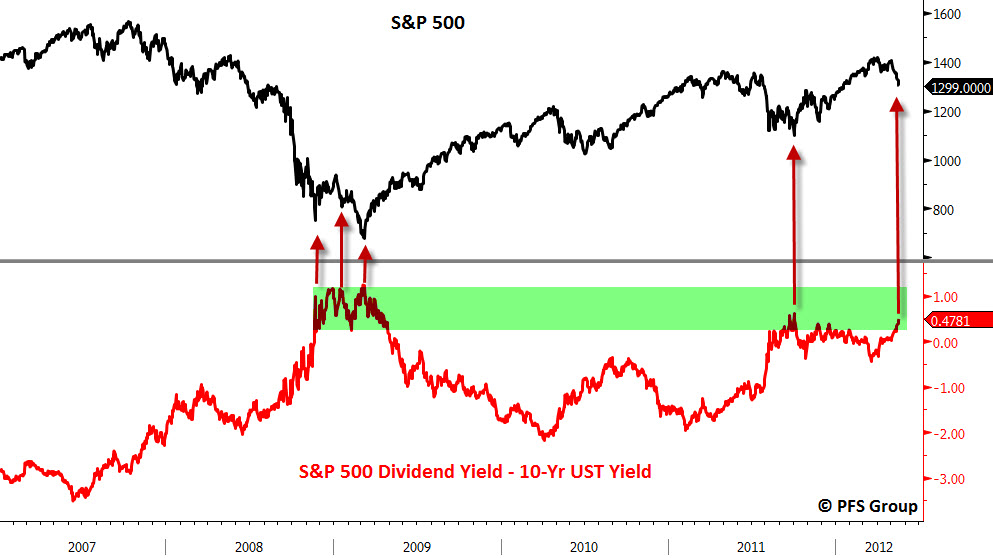
Also, Chris Puplava notes the lack of panic selling compared to 2009, 2010 and 2011 major bottoms.

Source: PFS Group

On the other side of the ledger, equity fund flows have hit historic pessimistic extremes, matching real investor action with the sentiment shown in AAII. Also, treasury yields made an inverse parabolic move into the beginning of Monday that resembles other historic blow-off parabolic moves that normally don’t come again for some time. The action as of Monday was a v-bounce that could mark the reversal, and if so, that could spell an enduring move into pro-risk from here.
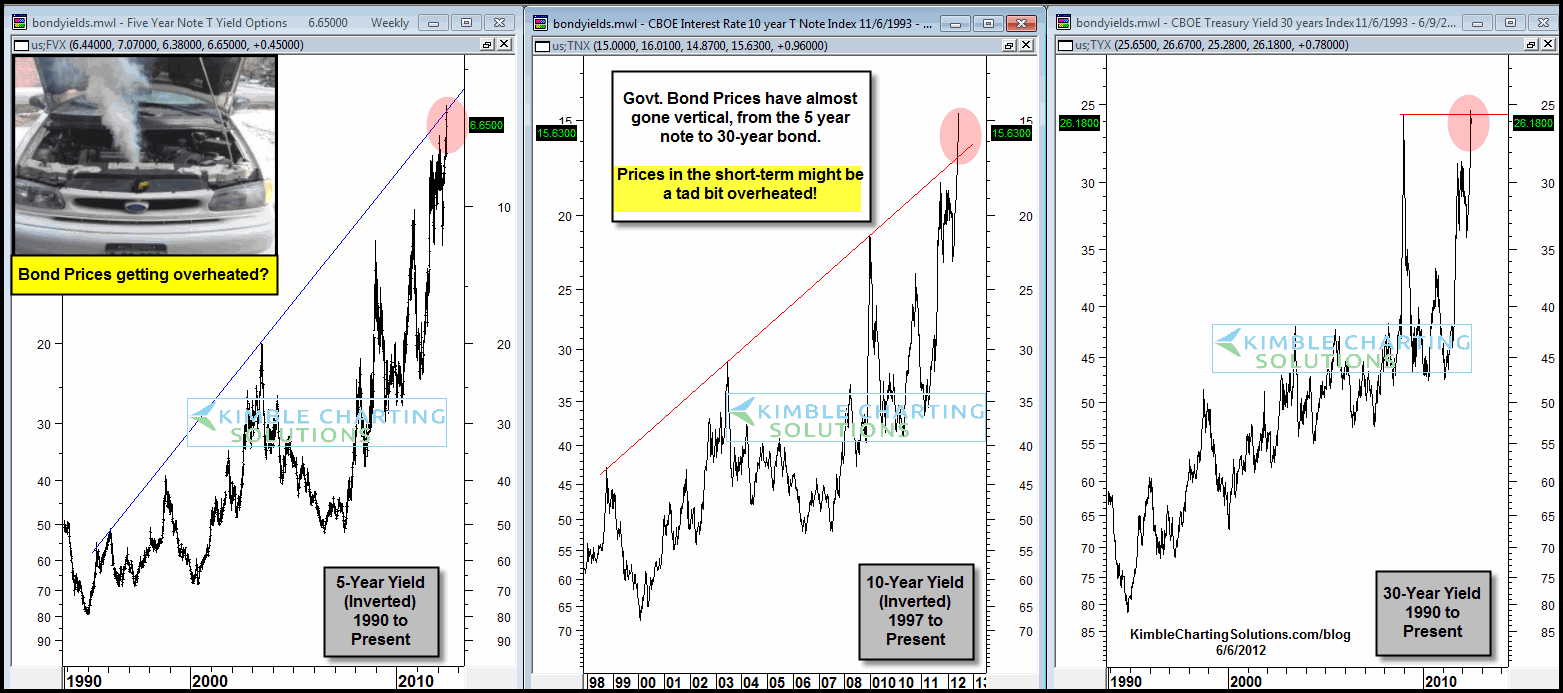
Source: Chris Kimble

The S&P500 looks pretty bullish. As per Chris Ciovacco’s chart below, we appear to have broken out and backtested important resistance. The question is whether stocks can go on to make a higher high than the end of May at the start of this coming week. If they can’t, then an inverse Head and Shoulders pattern could be in the making as long as stocks don’t exceed last Monday’s lows.
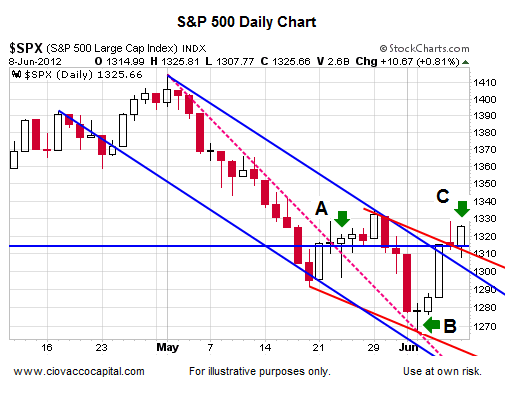
Source: Chris Ciovacco

NASA’s updated solar prediction still forecasts Spring 2013 for the solar peak, and still forecasts it to be a weak solar maximum historically. The sun is fairly active currently, which is bullish, and this should continue into next year. Some geomagnetism early-mid last week has pushed down a little on my short term model, but the message remains of a likely bottoming here, with seasonal upward pressure into July. Near term, there is the scope for upward pressure this coming week into the new moon of 19 June. I will update all models on Tuesday, with the extended NOAA forecasts, but here is the up to date Dax:
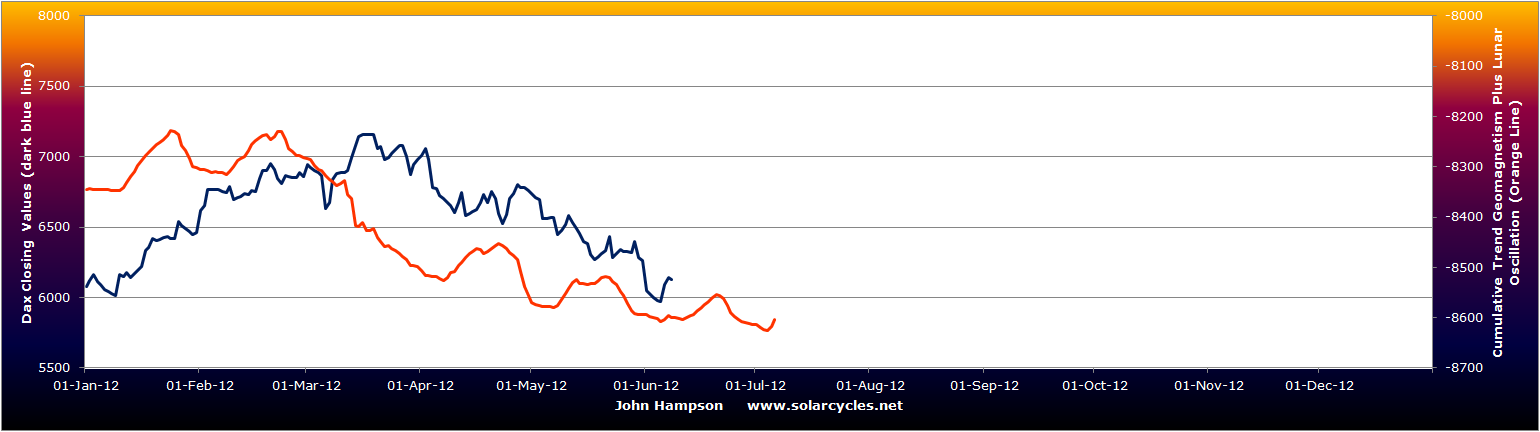
Expecting upward pressure into the new moon, I don’t plan to take profits on any of my pro-risk longs yet. The next couple of weeks give us the BofJ meeting, the Greek elections, the FOMC and other Euro meetings. Between them there is the potential to really give this rally some momentum and start to fulfil the historic positive seasonality in an election year from June to November. Or there is the potential to disappoint the markets and leave the focus on weak data and Eurozone issues.

Here is what I think. Pro-risk is overdue a counter trend rally here, a sustained upmove that provides some mean reversion for the stretched oversold/overbearish extremes. I expect us to to make that rally now. If pro-risk is heading for another lunge lower, to perhaps give us the missing II sentiment and panic selling extremes then I expect that to occur after we have made a decent retrace upwards for a few weeks. The clues will be in the health of that up move and the developments in economic surprises and leading indicators – i.e. if we rally up but all that deteriorates further then I’d be looking to take profits. However, rising sunspots, seasonally less geomagnetism, presidential seasonality all support mid-year upside. The blow-off move in treasuries suggests an enduring flow into pro-risk from here also. Extremes in US dollar COT and bullish sentiment, and the reverse in key commodities also support an enduring flow the other way. The secular position is closely linked to the solar cycle position, and we should expect a speculative push into pro-risk, with commodities accelerating into a final upmove. I consider us in a different position to 2010 and 2011 as we reach up into the solar peak less than a year away. I think it is more likely we print a strong mid-year this year, rather than a repeat of the last two years. I continue to expect a natural turn up in growth, as per the growthflation of historical rhymes, and a central bank invervention inspired turn up in growth also, at this point. Clearly though, I am frontrunning, and we need to see the evidence build to support that view. For now, we are tentatively trying to start a pro-risk mean reversion rally, and no more.

One last chart. An alternative view of secular cycling using consumer confidence readings, with my notes added. Consumer confidence topped out just before the secular stocks / solar peaks of 1968 and 2000, and bottomed out just before the 1980 secular commodities /solar peak. It made twin lows then, like it has in the current secular commodities bull, as shown by the circles. In keeping, consumer confidence should have made its secular bottom, and supporting this the nominal levels reached reflect the last secular lows. A pullback in confidence should be ahead into the secular commodities peak of 2013 and subsequent bear market, but within a new longer term uptrend.
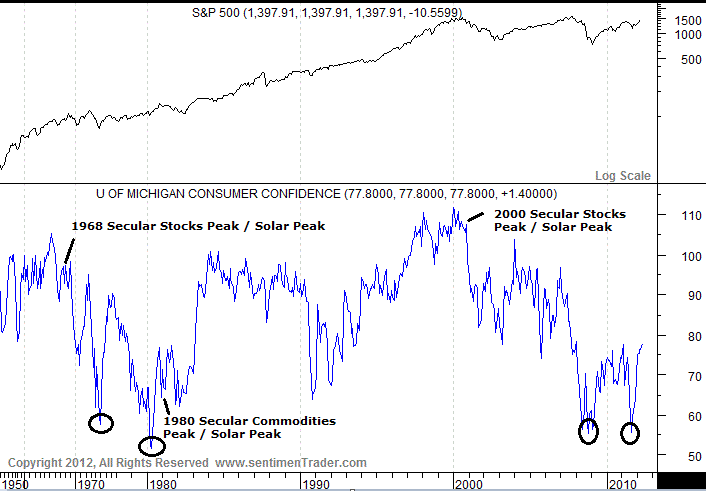
Underling Source: Daneric / Sentimentrader

Weekend Update

As I’m not here next week, here is an additional update following Friday’s falls.

Economic data really disappointed again. The only positive is that Surprises are reaching towards a level of historic reversion. As data worsens, analysts move the bar lower, and eventually the data starts to positively surprise.

Source: Bloomberg

Jobs data was particularly poor, perhaps boosting the chances of Fed action given their dual mandate includes maximisng employment. US ECRI leading indicators came in at -0.6, still fairly neutral but echoing the weakening trend.

Euro CDSs continue to climb. Spanish at new record highs. Policy response expected soon.

Source: Bloomberg

The June calendar looks like this:

6 June: EU meeting to resolve failed banks

7 June: ECB rate meeting – expected 50bp cut – and Bernanke Testimony to Congress – Danske Bank expect Bernanke to already state his QE intentions at this testimony

13 June: Germany growth pact meeting

17 June: Greek elections

18/19 June: G20 summit

20 June: FOMC

I believe the markets are going to get satisfaction in June through policy response, both in the US and Europe, but also China could help stimulate too. The recent commodity price falls and weak jobs data give the Fed the legroom and reason to stimulate again in some way. Obama’s chances of re-election will only improve if the markets and economy turn up again.

Policy response aside, I believe we may also see a natural turn up in growth ahead enabled by lower oil prices and lower commodity input prices on the whole, a cheaper Euro enabling more export led growth in the Eurozone, plus the natural turn up in activity historically occurring as sunspots ramp up into the solar maximum. So I continue to expect a combination of central bank intervention together with a natural turn up to provide the growthflationary finale into next year.

Turning to the market action. Dax stocks above the 50MA are now at zero.

Source: Underlying Dax

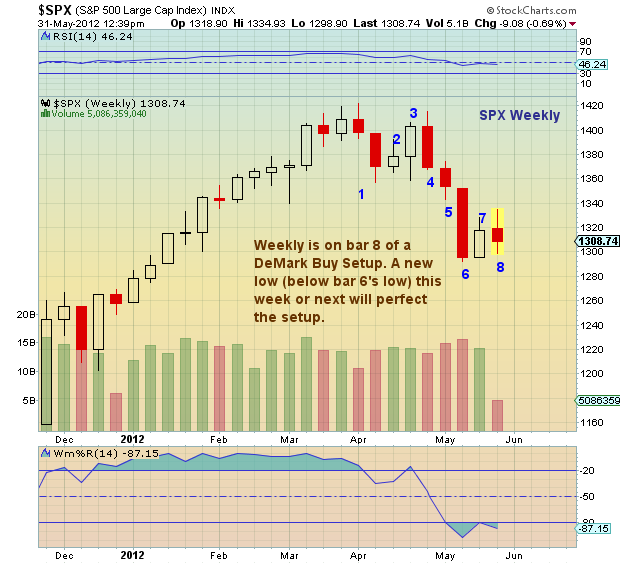
A Demark weekly buy set up is in place following Friday’s falls to new lows. The chart below was taken on Thursday.

Source: Andrew Nyquist

We now have the positive Nymo divergence that was missing at the last low.

Treasury yields have made a blow off bottom.

Source: Stockcharts

Thanks to Tiho for this summary of other extremes:

Dow Jones is down 18 out of 22 days and DSI just hit 10% bulls – US equity market experienced a “90% down day” yesterday – Crude Oil is down 21 out of 22 days and DSI just hit 8% bulls – US Dollar is up 21 out of 25 days and Euro DSI just hit 7% bulls – US Treasury 10 / 30 Yr yields are at 220 year record with DSI hitting 95% bulls.

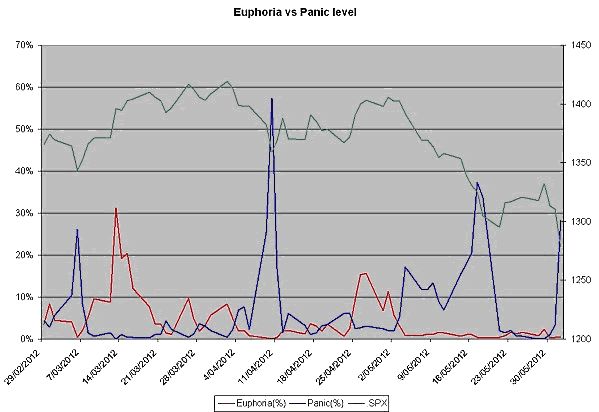
Capitulative Breadth hit 5 on Friday but is expected to reach true capitulation levels on Monday. Panic has reached towards the extreme but could also top out higher on Monday.

Source: SigmaTradingOscillator

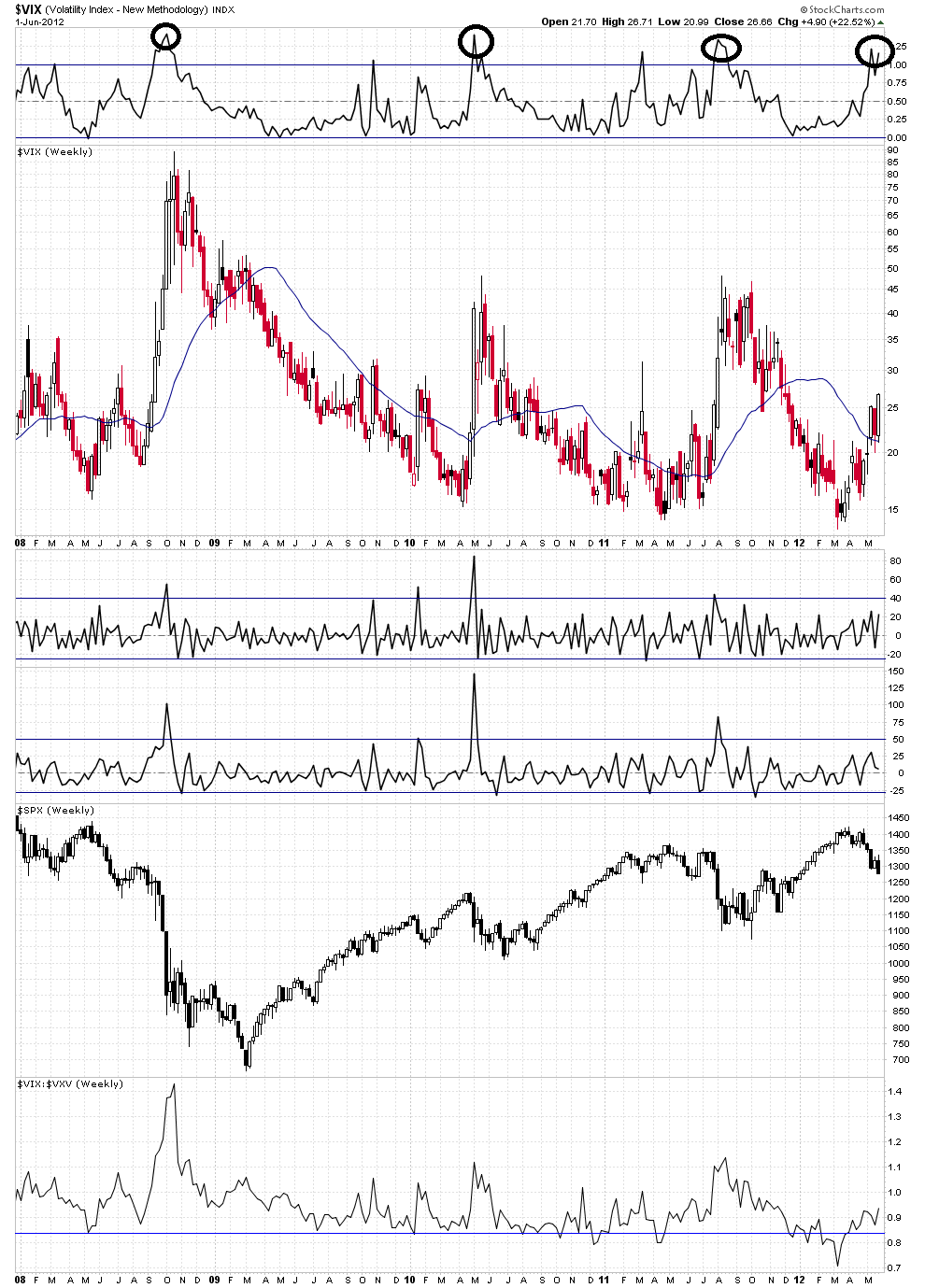
Vix has also reached the kind of overbought level associated with stock bottoms, but could also nominally jump higher on Monday.

Underlying Source: Cobra / Stockcharts

With Monday being the full moon and peak downward pressure, I believe the evidence is pretty compelling that we may bottom out on Monday. Capitulation is close at hand, and further falls on Monday could bring about an intraday reversal and hammer candle. If not, then Tuesday for the snapback rally to begin.

The alternative scenario of a Puetz crash window beginning on Monday and lasting a couple of weeks I believe is now remote due to the extremes and capitulation-at-hand evidence. I am therefore looking to make my last additional pro-risk buys on Monday, unless some surprise good news at the weekend means we break upwards from the outset on Monday.

I have updated my short and medium term models. Commodities are well below. The SP500 remains above but the Dax below. As the Dax is cheaper by p/e and the cheaper Euro should help German exports, maybe we will see a period of outperformance in the Dax. Seasonal geomagnetism should be less into July, which means the models should start to turn upwards.

Update, P/Es and Website

Global Economic Surprises resume downwards, Euro CDS continue upwards, pressure on pro-risk continues in the absence of any notable policy responses. At the time of writing, Europe Friday morning, US stock indices have yet to take out their low of my ‘Capitulation’ post two weeks ago, but the low is at risk as the Dax has broken it.

I maintain two scenarios, that share similarities with Jan’s. The one is that we fall into Monday’s full moon and thereafter a true rally emerges. Supporting that are the extremes that we currently see, such as RSIs sub 20 on crude oil and Euro-USD, insider buying and AAII sentiment at historic market bottom levels, public opinion the US dollar at a new record since 1999. A snapback rally is overdue. We also have potential basing patterns in US stock indices and gold. The second scenario is that the full moon, forecast geomagnetism and Puetz crash window keep the fear in overwheming mode and that we fall further over the next week or two, until we get to the more concrete action in terms of Greek elections, FOMC and Euro conferences later this month. I would be looking for a positive divergence in the Nymo on further falls. If we do fall further, in this second scenario, then some of the indicators are going to be at crazy extremes. Needless to say, I will be attacking any further downside, and maintain that these are glorious pro-risk opportunities here.

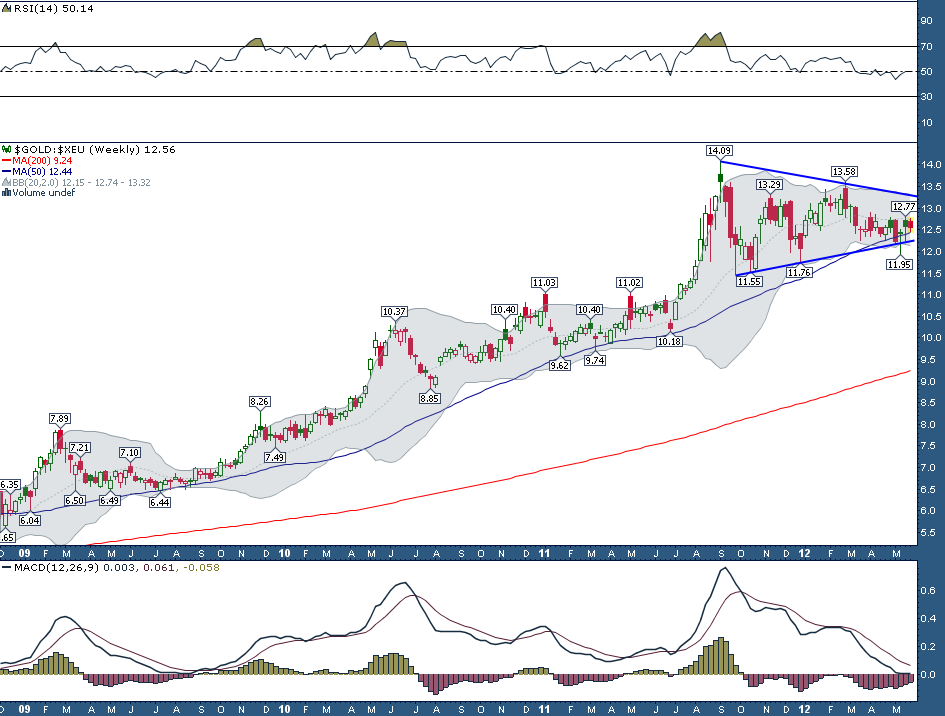
First a chart on gold. Here is gold priced in Euros. A more bullish chart than in US dollars, as it shows a pennant forming in an uptrend. The US dollar strength perhaps therefore accounts for why gold in its usual pricing looks technically dubious.

Source: Stock Sage

Next, moving to equities. Kent referred to p/es and his expectation to see us end in single digits, with which I concur. Here is the p/e flow in the last secular bear market of the 1970s:

Source: Zealllc

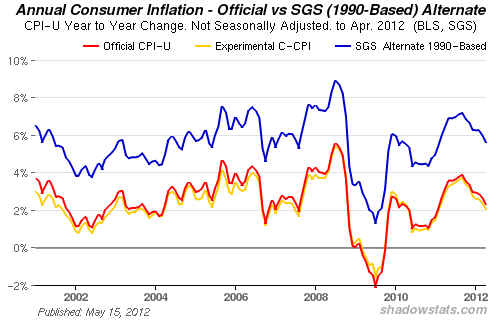
As can be seen, p/es came down whilst stocks moved up and down – inflation ate away at the p/es whilst supporting stocks nominally. The inflation situation is comparable today – see the Shadowstats, real undoctored data, below:

Source: Dshort

I remind you that we have historic paralells in the 1940s – inflation spike in 1942, then 5 years later higher inflation spike coinciding with solar and secular commodities peak – and in the 1970s – inflation spike in 1975 and then 5 years later a higher inflation spike coinciding with solar and secular commodities peak. In the current period we saw an inflation spike in 2008 and next year is 5 years later and the expected solar peak, and in my expectation, the secular commodities peak. So inflation should eat away at the p/es whilst stocks do OK in nominal terms.

Yesterday I showed the German stocks were already back at their last secular low p/e valuations. Scott Grannis recommends that NIPA profits should be used to assess p/e and this is the picture for US stocks:

Source: Scott Grannis

You can read more about that here, but the message, like with the Dax, is that stocks are back to historically low valuations. It doesn’t mean they can’t go lower, but it again supports my suggestion that we should be looking upwards for equities, not downwards. And one more: Japan:

Source: Japan Stock Exchange / Vector Grader

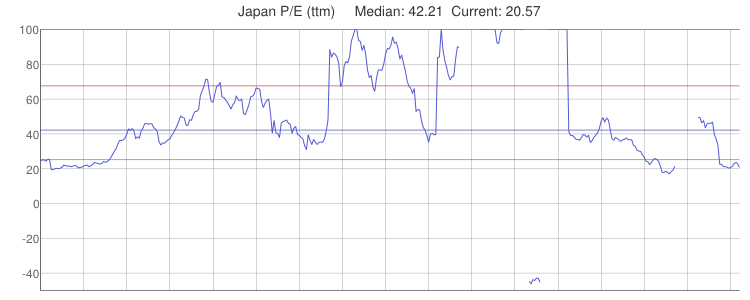
 Japan by p/e is also back to its last secular bear market ending low.

And lastly a little on my website. I launched Solarcycles.net in mid-February 2012 and now have my first 100,000 hits, so thank you to all who visit and read my analysis. These are the top visitor sources:

United States 35,608

United Kingdom 13,721

Canada 5,725

Ireland 4,267

Australia 2,873

Hong Kong 2,220

Italy 2,081

Czech 1,884

Spain 1,774

Switzerland 1,341

India 1,198

Germany 1,036

Most corners of the globe are represented further down the list, and it’s fulfilling, for me, to see the global reach.

My most popular pages/posts, bar the obvious Home page, have been the Short and Medium Term Models and the Timetables, followed by the post on Solar Cycles and Astro Trading (I believe a principal reason for that is that Googling astro trading returns my page) and the Opportunities / More Opportunities posts of two weeks ago (I have noticed previously that when market action becomes panicky, more people stop by, no doubt looking deeper and wider than they normally would, to make sense of the falls and shore up their strategies).

My old site, Amalgamator, has now been removed from the web. If there is anything from the old site that you miss or would like to see again, let me know, as I have a record of most entries and charts.

I am not here next week. I am on holidays and will only have my phone to keep abreast of the markets. There will be no posts or model updates next week.

Opportunities Part III

Some glorious opportunities for those with patience.

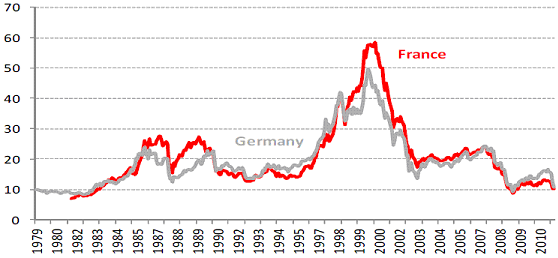
First, European equities. There are potential opportunities here for the brave in the Polish stock index (only European nation to avoid recession in the last 5 years, p/e 7.7, dividend 4.9) or Russia (oil price dependent, but if oil holds up, p/e 5.3 cheapest on the continent), but if we play it safe, then Germany remains an economic powerhouse, but has been held back by PIIGS worries. Germany’s p/e is at 11 currently, back at the levels where the last secular bull market began.

Source: Pragmatic Capitalism

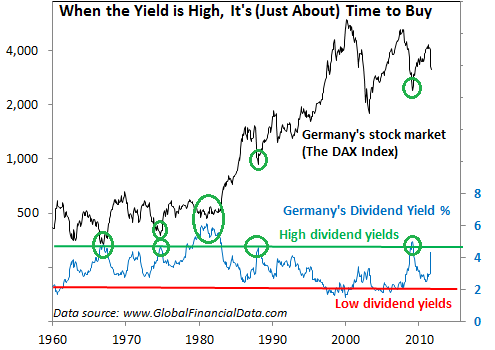
German equity yields are currently 3.6, having reached even higher toward the end of 2011, giving us readings that have also marked great long term buying opportunities.

Source: Profitimes / GlobalFinancialData

The UK FTSE has a p/e of 9.8, into the single digit p/es that have historically marked secular bottoms, and is paying dividend yield of 3.7 – another attractive combination. If we look back at the history of equity dividends versus gilts yields, then UK shares are relative to UK government bonds as attractive as they were at the start of the 1950s, which was when the 1950s secular stocks bull market really got going.

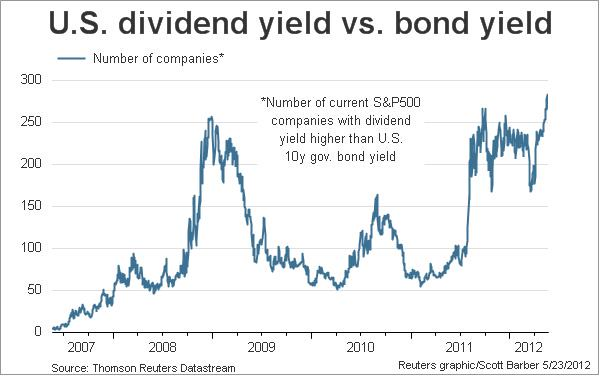
The US stock market dividend yield also makes US equities very attractive to treasury yields, historically.

Source: Scott Barber / Thomson Reuters

Plus, treasury yields are at all time record lows, paying negative real returns. Treasury yields have historically made long term waves lasting around 30 years alternating up and down. The current down wave in yields is due to come to an end, giving rise to a long bear market in treasury bonds. This should occur as money flows back into equities and real estate in new secular bull markets, and as China gradually withdraws from its excessive treasury purchase programme.

Source: Scott Grannis / Fed Reserve

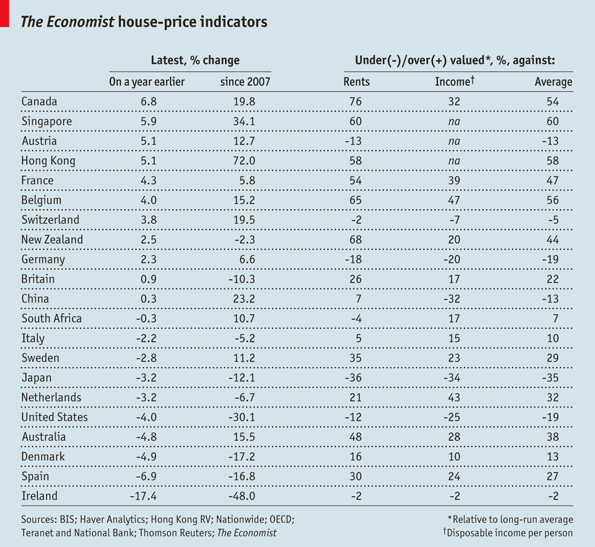
The global real estate bust since around 2007 has largely completed its course, with house prices historically tending to rise around 12 years and fall around 4 years. The table below reveals that US and Ireland, which both had major housing bulls, are now undervalued.

Source: The Economist

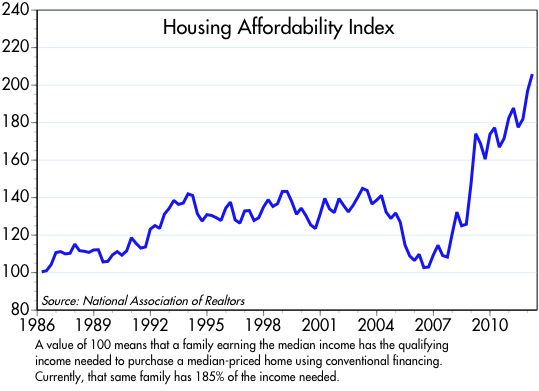
Affordibility for US housing has never been better. Coupled with the significant undervaluation shown above, US real estate looks a great longer term buy here.

Source: Scott Grannis / National Assoc Realtors

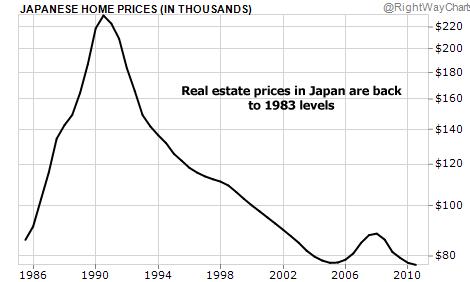
UK real estate is still somewhat overvalued, but topped out about a year after the US, so perhaps needs a little more time to bottom out. Japan stands out in the above table as the most undervalued, and in fact, Japanese real estate gradually lost around 70% of its value since deflation took hold 2 decades ago. An opportunity for the brave, but one that should again pay off handsomely in the longer term.

Source: Brain Cramps

To sum up, there are some great buy and hold opportunities for the longer term – high reward, low labour trades. The Dax and FTSE valuations and dividends versus bonds echo what I suggested in my secular position analysis that we should be looking upwards not downwards for stocks. The record extremes in treasuries, bond yields versus stocks yields and real negative returns equally reflect that we should be looking short government bonds not long. And finally, real estate in some countries, particularly in the US, now looks historically a buy again. Drawing all together I believe the future it clear – that we will see money flowing out of government bonds and into equities and real estate. For now though, echoing Scott Grannis’s thoughts, the markets are pricing in a Lehman style event in Europe, and hence the extremes. Anything not as bad as that is likely to encourage money flows the other way. That’s in a similar vein to my secular positioning historical analysis, namely that around this point in previous secular stocks bears, things also looked a mess and fear reigned, and yet equities barely made new nominal lows after that. As Russell Napier says, there comes a point whereby equities are so historically cheap that just slightly less bad news will propel them higher. With the German Dax back at its last secular lows in valuation, that makes it, to me, a compelling buy.

Bear And Recession Ahead?

We can assess the odds of a bear market and recession ahead (with the former leading the latter), by amalgamating mutliple indicators. If you followed me on Amalgamator then you may recognise this as an exercise I’ve done before. I will mark in green those indicating no bear/recession ahead, red those that do, and leave black those in neutral territory.

1. Ten year treasury yields (over 6% is a historical marker of the end of cyclical stocks bulls) – currently less than 2%.

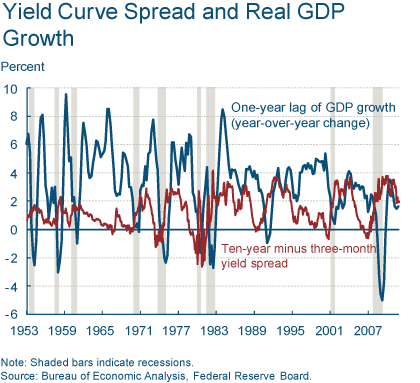
2. Yield curve / spread (if abnormal or inverted, may signal bear/recession ahead) – currently flattening but normal. Yield curve suggest negligible probability of recession.

Source: Fed Reserve Bank of Cleveland 

3. Inflation rate (over 4% is a historical marker of the end of cyclical stocks bulls) – currently 2% official in the US but 5.5% by Shadowstats, so taking something inbetween as the reality, let’s mark that neutral. In Europe, official rates generally are between 2-3% and China 3.5%. Overall neutral.

4. Interest rate (overtightening of interest rates is a historical market of the end of cyclical stocks bulls and imminent recessions) – currently ZIRP in the US and negligible in the major economies.

5. Money supply and Velocity of money (both rising and positive for the most positive outlook) – in the US money supply is still in a rising trend but velocity is still falling; in the Eurozone the situation is the same; between them neutral.

6. Solar Cycles (predict secular asset peaks, growth/recessions and inflation) – one year from the solar peak we should see growthflation and pro-risk speculation as sunspots rise. A bear and recession here would be a historic anomaly.

7. Leading Economic Indicator composites of Conference Board, OECD and ECRI (trending positive or negative?) – Conference Board global LIs are mixed but weakening, OECD overall positive, ECRI for US neutral and close to zero. Overall neutral.

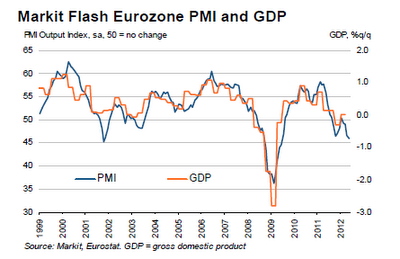
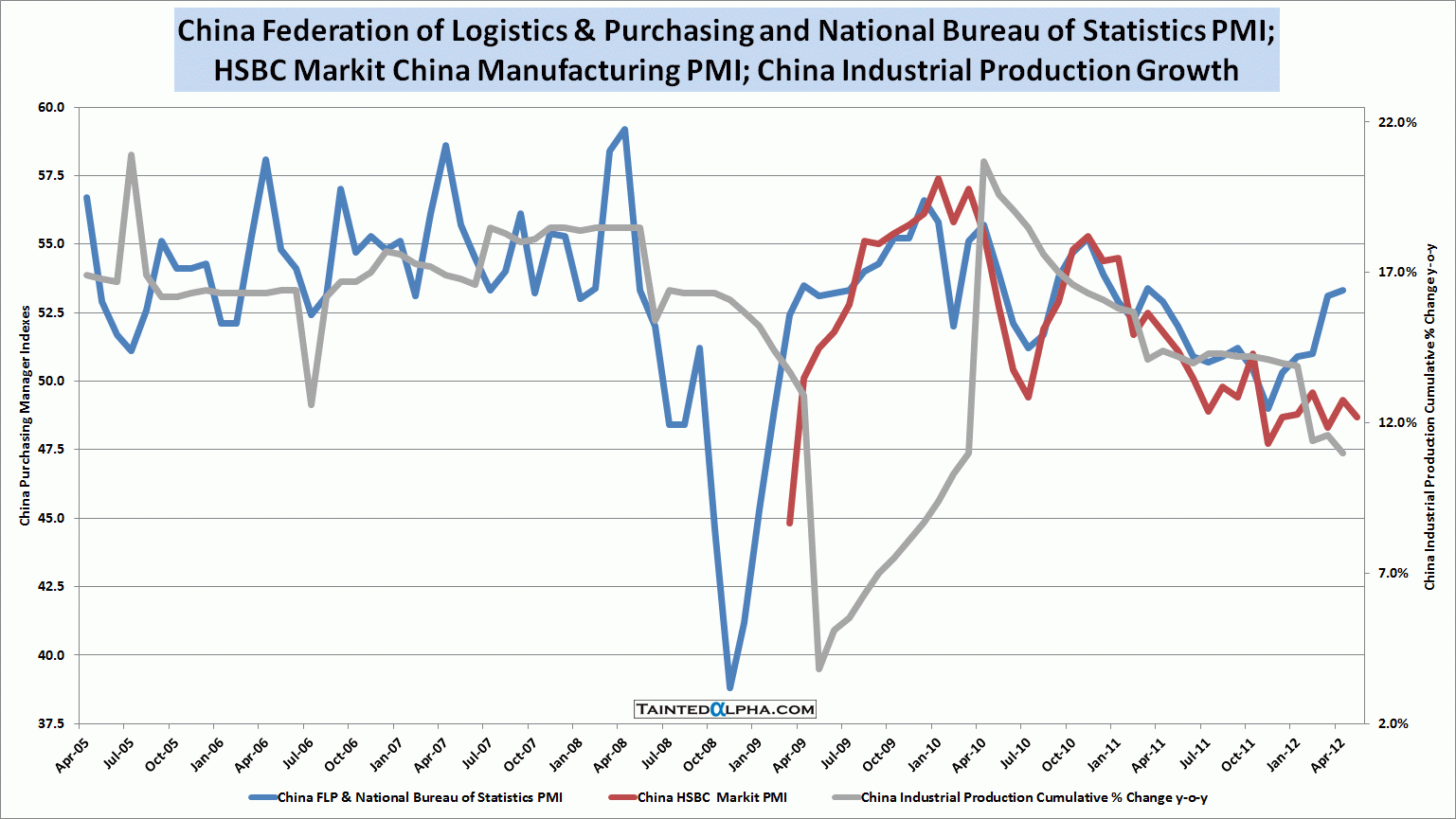
8. Manufacturing (this is a lead indicator, whereas GDP, income, employment and CPI are coincident or laggard) – US is weakening but still positive, Eurozone has turned negative, China still strong above 10%. Overall neutral.

Source: Calculated Risk

Source: Markit/Eurostat

Source: Taintedalpha 

9. Dr. Copper (copper is a bell weather for the economy and markets) – in recent weeks copper has drooped and looks technically weak. Although the longer term trend is still in tact from around the start of the secular bull market in 2000, the near term prognosis from this Doctor is negative.

Source: TradingCharts 

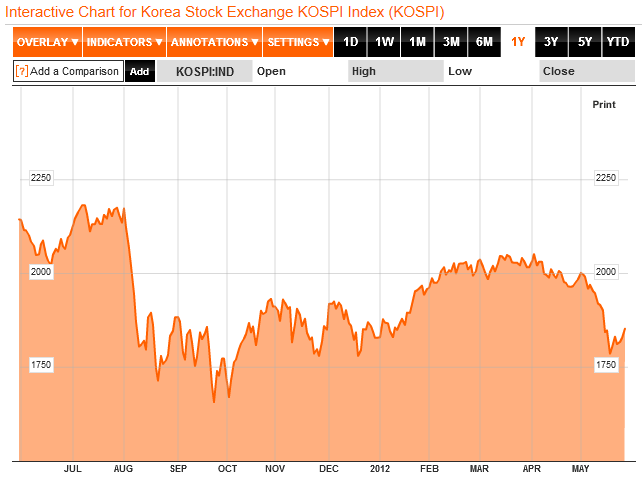
10. Dr. Kospi (the Kospi index is also a bellweather) – the Kospi has rallied the last couple of weeks but so far only a partial retrace of deeper falls. The 12-monthly picture is sideways. Overall a negative. 

Source: Bloomberg 

11. Stock Market Breadth (usually deteriorates and diverges from price into a stock market top). At the March 2012 top-to-date, we did not see the typical negative divergence in breadth that accompanies a major top, plus cyclical sectors displayed relative strength, unlike ahead of other previous major tops whereby they weakend some weeks or months ahead of the top.

12. Economic Surprises Index (is a lead indicator and also a mean reverting indicator – is it at a historic extreme, is it leading counter trend?) – Economic Surprises have typically oscillated between +50 and -50, and currently Surprises for the major economies are at -31, for the US alone -30. In the last couple of weeks they have attempted to flatten out somewhat, but until an upward trend develops, this is a negative.

Source: Bloomberg

13. Earnings (solid beat rates in both earnings and revenues, and future guidance) – in this last US earnings season quarter, the overall earnings beat rate came in around 62%, which is weaker than the historical average but better than achieved throughout 2011, whilst the spread between companies raising rather than lowering guidance was positive. Eurozone earnings upgrades versus downgrades are at neutral. Overall neutral.

Source: Thomson Reuters / Scott Barber

14. Seasonality (monthly seasonality, 4 year presidential cycle) – May to July has historically been positive, a period of lower seasonal geomagnetism. Specifically though in a US election year, a major bottom has been carved out in May-June, from which the market then rallied into the (November) election. That makes it a positive from here.

Source: Seasonalcharts

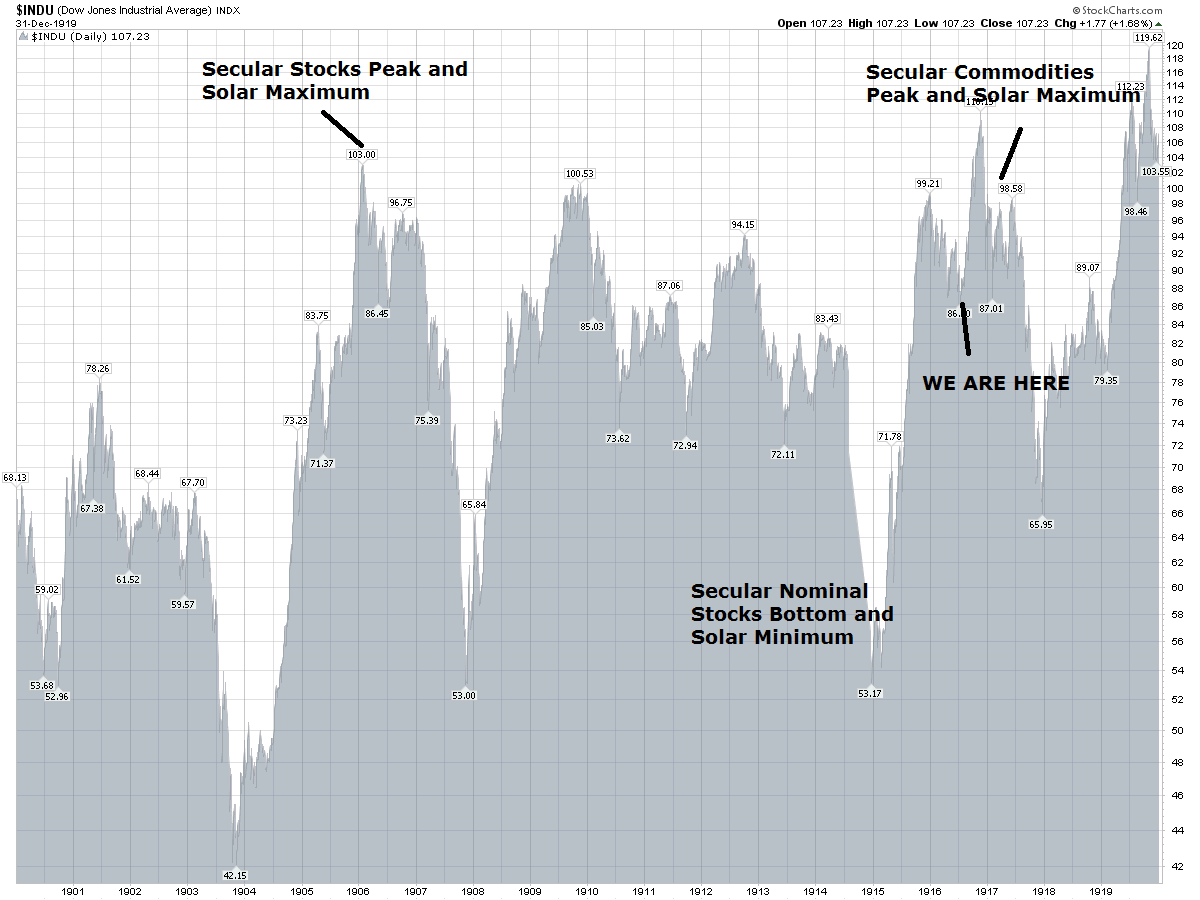
15. Bull Market Historic Internals and Historical rhymes (compare and overlay with historical precedents) – in my recent post ‘The Secular Position’ I showed that in the last 2 secular stocks bears / secular commodities bulls there were clear parallels to the current one, and that in the 1970s and 1940s our current position showed that we should be looking upwards for stocks, not downwards, in the bigger picture. Here is one more, showing the 1910s secular stocks bear / secular commodities bull – a similar picture, with some upside ahead in the next 12 months, and then some downside as the post-solar peak, post-commodity peak recession occurs. All 3 historic parallels show a positive picture for equities and commodities for the next 12 months.

Underlying Source: Stockcharts 

16. Oil Price (the stock market was historically killed by a doubling of the oil price in a 12 month period) – the oil price has dropped by 10% in the last 12 months as measured at today’s price – that is a positive.

17. Real GDP growth YoY (dropping beneath 2% has invariably led to a recession) – currently just above 2% in the US, delicately poised. As the latest data marked a push up, this is neutral for now, but will be resolved one way or the other in the months ahead.

Source: Dshort 

18. Stocks and commodities relative cheapness to bonds (compared to history) – currently stocks are in the historic neutral range in pricing versus bonds, whilst commodities are at extreme cheapness versus bonds. That’s overall postive for pro-risk.

19. Bond yields versus stock yields (long term government bonds yields should not exceed stocks yields by more than 6%). This has in fact inverted, with bond yields paying negative real returns.

20. Stock valuations (stocks p/es should be historically reasonable (historic US average 17)) – US currently 14, Germany 11, UK just under 10, China 7 – all historically reasonable.

21. Investor sentiment (II, AAII, Market Vane, etc, sentiment survey readings should not be overly bullish). AAII is at high bearish, which is contrarian bullish, whilst II is neutral to bearish. Overall positive for equities.

Overall, roughly half of the indicators are positive and do not support a bear and recession ahead. The remainder are mostly neutral with just three true negatives currently. Those kind of odds I will take.

To sum it up, the evironment is positive for pro-risk in terms of negligible interest rates, bonds pricing and dividends (compared to commodities and stocks respectively), and central bank supportive intervention. However, the weakening of leading indicators and economic surprises and the esclation of Euro debt has driven money again to safe havens, pending a natural improvement or central bank assitance. Should neither occur/work, then we would likely see a deterioration in the above picture and a greater likelihood of bear and recession ahead. This, however, would be anomalous to historic analogues, Presidential and solar cycles. Regardless, due to oversold/overbearish extremes in pro-risk (Euro, stocks, commodities), a period of mean reversion should come to pass. As we rally again upwards, we should print the divergences that were missing in March, if this is to be a major top. If we are not topping out here, then that mean reversion rally should be healthy in internals and accompanied by an upturn in leading indicators and surprises. 

This Week

Global economic surprises remain flat to down. Leading indicators for Euro-land fell to minus 0.8. Globally, some countries have slipped negative, others remain positive. ECRI US leading indicators came in at 0.1. Draw it all together and the picture is one of weakening but mixed leading indicators and current data disappointment. Add to this fear over Greece, with impending elections in June, and Euro CDSs still on the rise, and it is perhaps not surprising that we sold off and moved down to oversold and overbearish in pro-risk in a variety of indicators. However, now that we have hit those levels, a snapback rally should occur. Regardless of outlook, a period of mean reversion should come to pass.

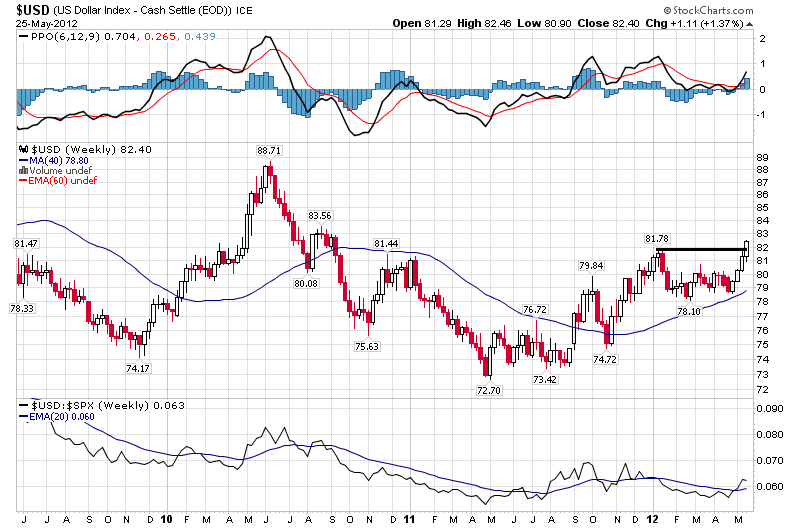
I consider two possibilities for how this will arise. The first is that we bottomed with the Capitulation point I wrote about a week ago and that the tentative pull-up from there that took place is cemented as the low. The second is that we need to make a lower low, with a positive Nymo divergence, before we rally. In doing so we would perhaps hit oversold/overbearish extremes in those indicators that haven’t yet delivered, such as Investors Intelligence sentiment and Rydex market timers. The full moon occurs a week today and we normally see downward pressure into it, which would support the lower low option. Supporting the rally-from-here option, we are particularly stretched in the Euro-Dollar, with its pro/anti-risk implications. MACD positive divergence, excessive Euro shorts, extreme Dollar bullishness. Here is the USD index chart:

Source: Stockcharts

The US dollar is trying to break out on those extreme contrary readings, which suggests it could reverse here and make that little break to the upside a fake out. If it is to do so though, it needs to occur right away, which would support the rally-from-here option. Clearly, newsflow has the power to trigger here. Since capitulation a week ago, stocks rallied without any real positive developments on the macro front. For this reason I suggest the rally was thus far fairly weak. But should some positive news come to light, then the mean reversion should accelerate.

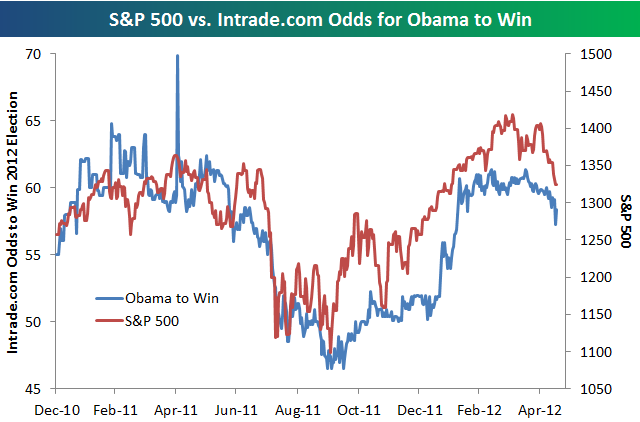
So let’s see how this week pans out. No position changes for now. If we make a lower low with positive divergence into June, I will attack on the long side again. If we rise up from here I will alternatively be looking for negative divergences and weak internals if I am to take profits on longs. I believe the macro picture make it likely the ECB will cut rates in June and China will ease/stimulate in some way. The FOMC is just 3 weeks away and Twist expires then. I suggest the Fed will also deliver ‘something’, as nothing would amount to tightening (given Twist will expire). The President may also be keen on something to juice the markets, as the chart below makes clear:

Source: Big Picture / Bianco Research

Several technical indicators that I have previously referred to (such as nominal Nymo, insider buying) point to this being an important bottom, suggesting we can rally into mid-year. By solar cycles, we should see a natural turn up in growth and inflation and speculation. I expect that to occur, but boosted by central banks intervention in this soft period. The secular position that I wrote about supports upside too. So, I remain a bull, with longs. But the acid test will come as we make the mean-reversion rally ahead. If this is supported by central bank actions and improving leading indicators and economic surprises, then I expect to be proven correct. If however the picture remains weak and negative divergences abound, then I would alter stance and sell into the rally.

Update

Leading indicators released this week for France, Australia, Germany and China all came in positive. China manufacturing data underwhelmed. Global economic surprises data has been neutral the last 2 weeks – the downtrend has been arrested but no uptrend has emerged. The Euro continues to decline, but under extremes of overbearishness and oversold readings (elastic stretching). Commodities have been accordingly pressured, but with the exception of oil most remain above last week’s lows, and the same applies for most stock indices. So the question is whether pro-risk will follow oil and the Euro to new lows.

The Nymo positive divergence that I last mentioned 16th May was removed by the subsequent two days deeper selling. That leaves us without the typical divergence that we see at a bottom. However, the extreme reading the Nymo reached suggests an important bottom will be forthcoming in the next few weeks, if this isn’t it.

Source: Alphahorn

Capitulative Breadth (Rob Hanna’s CBI) hit on Thursday and Friday of last week. In the chart below for 2011 the lower blue line shows where this happened last year. The first occasion was in March, which produced a kind of V-bounce in stocks. The second was in June, where a more rounded bottom was reqired with some volatility around the basing, and the third was the Sept-Oct much longer, messier bottoming. That Sept-Oct period was a double bottoming, however, and buying the first CBI did lead to a v-bounce, only shorter lived.

Source: Quantifiable Edges

Percentage of stocks above the 50MA shows how extreme oversold we just reached, but again from that kind of level we have previously seen v-bounces or more extended basing, lasting from a couple of weeks to a couple of months.

Source: IndexIndicators

But there is an overarching message: from such extreme readings in Nymo, % stocks above 50MA and CBI (which hit 11 on Friday), the nominal bottom was close, and buy-side attack was the appropriate strategy.

My models show downward pressure into the end of next week. What happens the last couple of days of this week I therefore consider to be key. If stocks can rally further away from their lows then I would expect Euro and oil to reverse and join them and for a v-bounce low to be happening, with some consolidation only into the end of next week. If pro-risk alternatively falls and takes out last week’s lows then I will be looking to attack on the buy side again once we see the Nymo divergence and that would most likely after the end of next week once positive pressure emerges. My leaning is for Friday’s bottom to hold, but we will see.

Cycle Inversion

We did not see the usual upside into the new moon of this last weekend. Instead we fell all the way into the close of Friday and then rallied on Monday, making for a cycle inversion. I still do not know why cycle inversions occur, and won’t be happy until I do. If full moons have hardwired negativity and fear into humans over evolution due to nocturnal hunting and sleep deprivation, then we can follow why suicides and depressions admissions are higher around full moons, and stock market returns lower. Why then, might this reverse just occasionally, and we rally right into a full moon, and the opposite into the new moon like the one of this last weekend?

Solar trader Jan and I have discussed and maybe it could be as follows. Into this last weekend, bears were in control of the market, bulls had stepped aside. The positivity and optimism of the new moon did not inspire bulls to join due the increasing severity of the declines, but rather cemented bears in their conviction: i.e. the bears became more positive and optimistic about their positions. Just a hypothesis, but maybe it could be something along those lines.
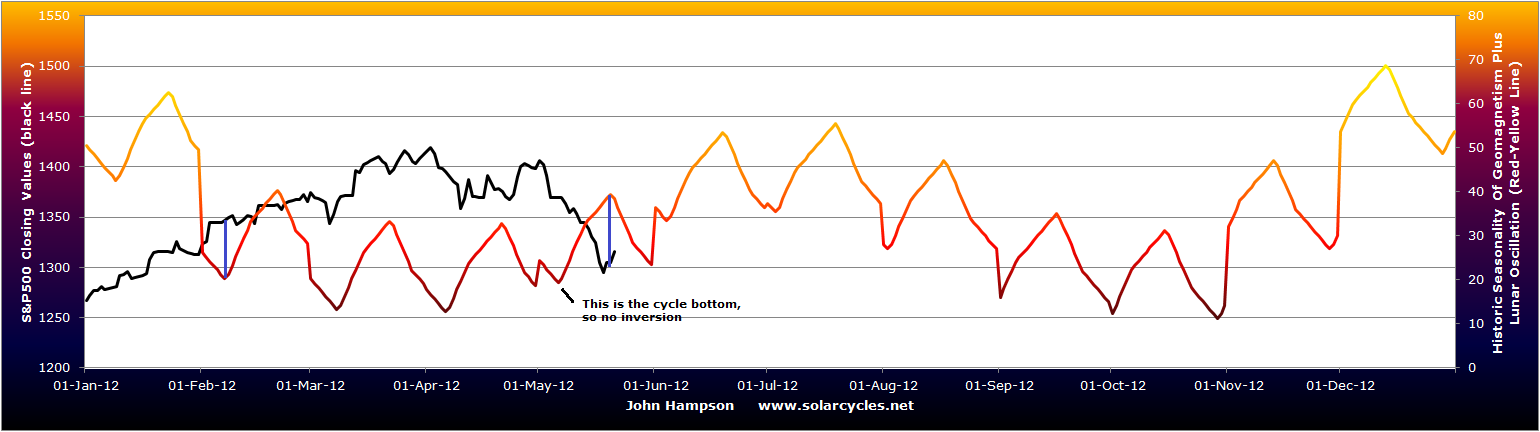
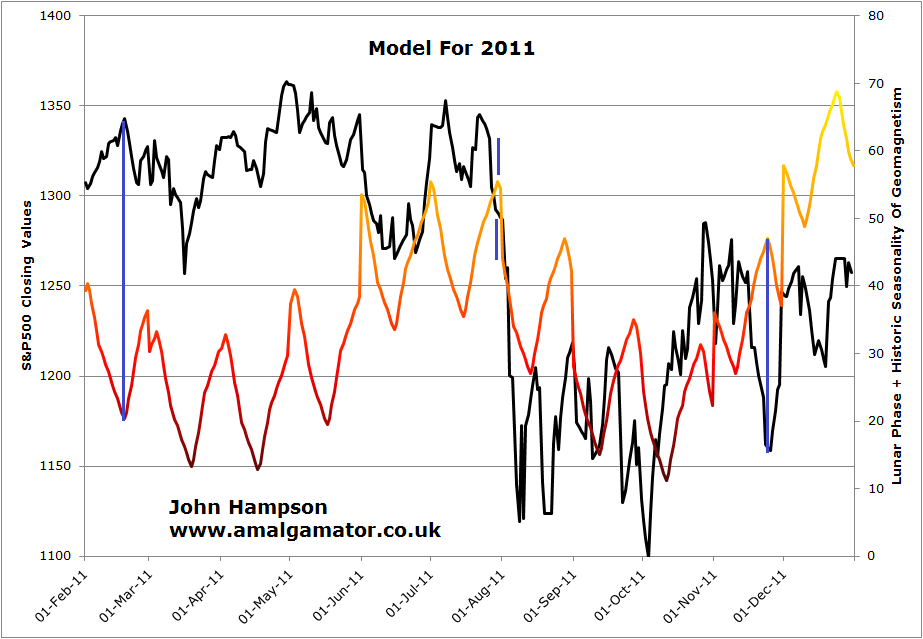
What’s interesting is that in 2011, my 3 lunar cycle inversions appeared to be significant – see chart below. The first marked an end to the uptrend out of 2010. The second marked the end of the sideways consolidation and start of the sharp correction, and the third marked the end of the of the sharp correction.

Again, this is just a hypothesis that maybe they are significant. But the rest of 2011, the market fairly well tracked the lunar phase oscillation as we would expect.

In 2012 we already saw one occur in February, which perhaps marked the end of the up-move out of 2011, as oil and gold topped in February and indices as a whole started to track overall sideways. Then this last weekend’s inversion could spell the end of the sideways consolidation or the end of the correction. The seasonality of geomagnetism would support the market beginning to rally again here. As would the secular position, posted yesterday. As would the major washout readings in sentiment, CBI and oversold indicators. If you are of a different persuasion, it could mark the end of overall sideways correction and the beginning of massive falls.

Just a hypothesis, guys, on cycle inversions. I post it for interest, and we’ll look back later in the year on whether it was a major turning point.

I have updated the short and medium term model pages. I am not around much today and tomorrow.

The Secular Position

What if I said the prices stock indices are at currently may never be seen again? I’ve not gone crazily bullish, but it is possible. Let me explain.

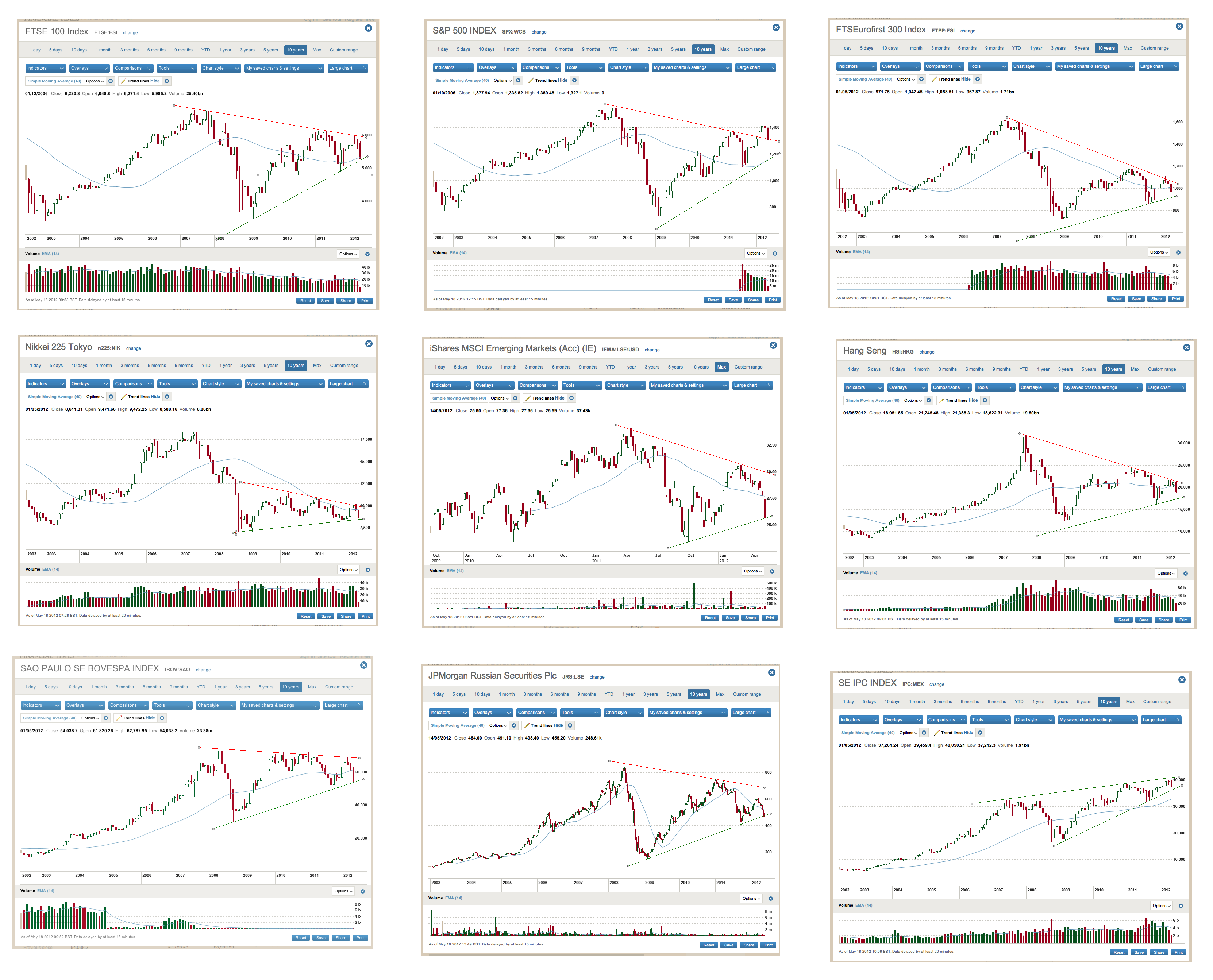
This is a compilation of global stock indices, provided by commenter John. They are all in large triangle formations. Symmetrical triangles following sideways action since 2000 is very much in keeping with previous secular stocks bears under permanent policies of inflation, namely sideways coiling.

Source: R Bowden 

So which way are they going to break? A symmetrical triangle forming following a sideways range gives no edge technically – it can go either way. But note that the S&P500 has broken out upwards and is backtesting the triangle, whilst the Nasdaq, not shown, is even more bullish than that.

Below is the last secular stocks bear market. The secular/solar stocks peak of 1968 corresponds to the secular/solar stocks peak of 2000. The secular nominal / solar bottom of 74/75 to 2008/9. A large triangle formed (in red) and broke out to the upside. One year away from the solar/secular commodities peak of 1980 (like now, 1 year away from the Spring 2013 solar peak), stocks had also broken out and were backtesting the triangle – the We Are Here point. Now note that although stocks didn’t gain real new secular bull market traction until mid 1982 after the post-solar peak recession, they never got as low as that ‘We Are Here’ point again.
Underlying Source: Stockcharts

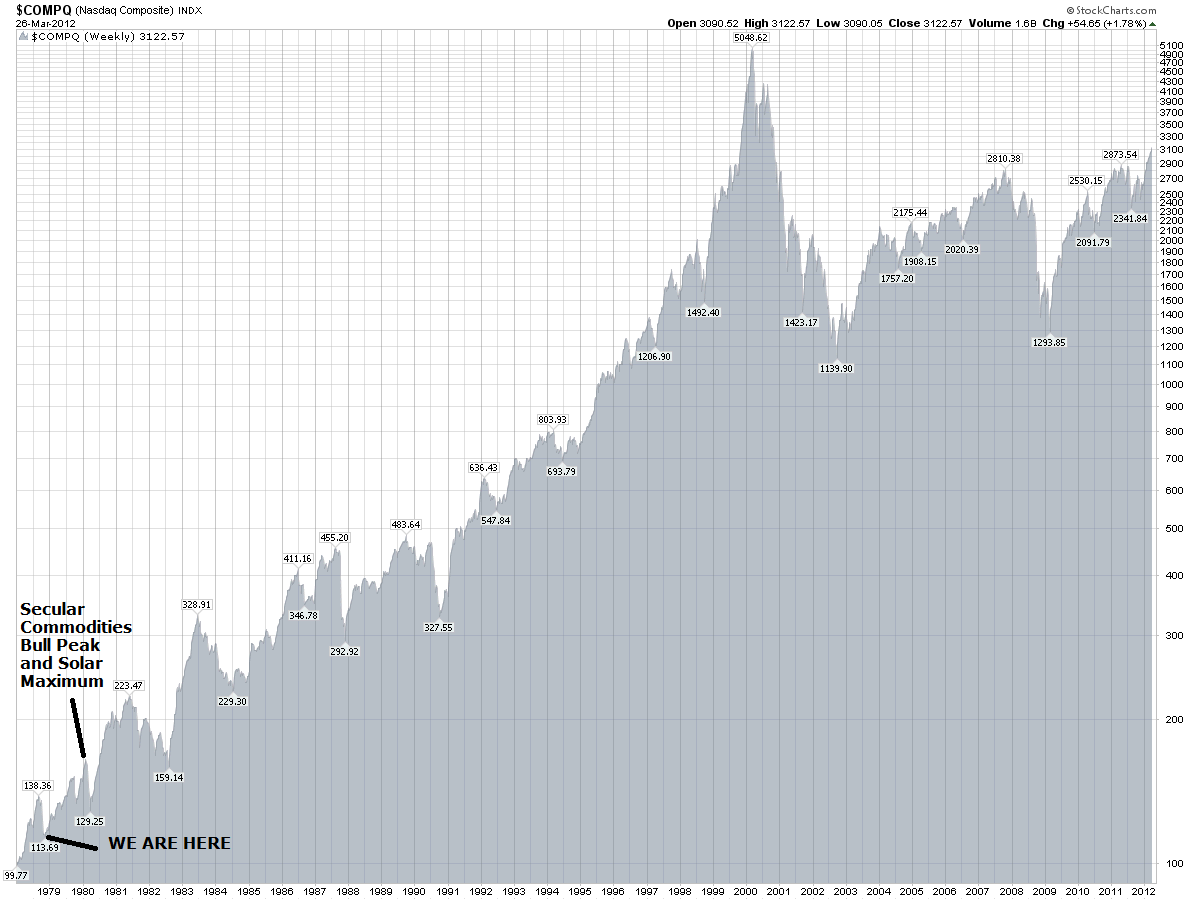
Now take a look at the Nasdaq at the same point. Even more bullish, much like today’s Nasdaq.

Underlying Source: Stockcharts

Cross over the pond, and the FTSE 100 did make slightly lower lows after the current equivalent point, but only marginally.

Underlying Source: Sharelynx

A look at the FTSE All Share paints the same picture: barely new lows after this point.

Underlying Source: Thomson Reuters

Looking at the secular bear market of the 1940s and the Dow Jones, stocks did not take off in earnest until 2 years after the equivalent current point, but again barely reached lower than the lows made 1 year before the solar peak.

Underlying Source: Stockcharts

So, using secular bear market history as our guide and combining with the timing and influence of solar cycles, we have fairly bullish roadmap for equities from here forwards. Into a solar peak we see a speculative maximum, making for secular tops. It therefore follows that stocks do not decline into a solar peak even when it is a secular commodities solar peak (and this is reflected in my historical analysis of stocks returns into solar maximums), as the pro-risk sentiment prevails. But what’s interesting is that the post-solar peak recession and bear market didn’t do much damage. It reflects what I previously said about redefining secular stocks bulls as beginning at the nominal lows of 1942, 1975 and, I argue, 2009.

In past secular bears, the low point has come in the middle of what’s commonly understood to be the secular bear range, followed by a gradual process of repair. It therefore follows that the nominal lows for equities are successively higher after that point – e.g. between 1975 and 1980, between March 2009 and 2013. Right now, things look bleak. It seems that global growth struggles to sustain without central bank stimulus. Euro debt keeps returning to the fore despite government actions. Large companies are still going under as weak economies prevail. Yet, this is how secular stocks bulls begin – a huge wall of worry, which is dismantled piece by piece. They don’t start from everything being fixed, they start from a mess, but a mess where equities are historically cheap and a lot of excess has been purged from the system. All the last 3 secular bears have had more in common than differences: problematic inflation combined with sluggish growth, geopolitical disturbance, debt crises and the loss of companies and jobs. If it seems like problems are major this time round, it was no different back then. In 1979, the equivalent point to now, there were debt crises in Latin America and Korea and the USA had to raise its debt ceiling, much like today. In 1946, again the equivalent point, excessive war debts meant that interest rates had to be kept low, despite inflation, much like today.

At the turn of 2009, the talk was of total system melt down. Consider that the start of the huge wall of worry, the very messiest point. Now we are no longer facing total system meltdown but facing Euro debt contagion and economies seemingly dependent on central bank stimulus. That is an improvement on 2009, and the stock market (the US stock market) has doubled since then. There has also been significant cleansing and repair since then: bloated companies purged, house prices deflated to historical normal ranges, household debt burdens back to the levels where the last secular stocks bull market began:

Source: Scott Grannis 

Fund flows in equities have been negative the last 5 years and continue to be outflows. Retail participation in stocks still isn’t happening. Yet participation in treasuries continues to increase despite real treasury returns being negative. In other words, the fear of stock declines is so great that people would rather be parked in something paying a guaranteed small real net loss.

Source both: Scott Grannis

Stock dividends are highly attractive compared to treasury yields, back at levels compared to 2009. As it slowly dawns that stocks are going up, not down, money still start to flow the other way. Once that occurs the secular stocks bull will truly gain traction.

Source: Chris Puplava

Secular bear markets in stocks typically end with p/es in single digits. Current country p/e ratios that have reached single digits right now include China 7.2; Hong Kong 9.2; Norway 9.6; Russia 5.2; Singapore 8.9 and UK 9.7. Others aren’t there yet, such as US 14, Brazil 10, Germany 11, Australia 13 and Japan 14, but after the next bear and recession, circa 2014 by solar cycles, I expect them all to be there. Consider that US stocks topped around p/e 40 in 2000 – again, that’s quite a process of repair.

Once the natural cleansing cycle is close to completion, genuine global growth will get going again, without central bank support. Technological evolution will be the engine. Excess debt may have been transferred to government balance sheets, but the major economy debt to GDP levels aren’t at crisis points. Once revenues pick up and central bank support diminishes, the rate of balance sheet expansion will slow. Euro debt and the Greece situation needs further counter action currently, but governments have made it clear, both in words and actions, that they will step in to prevent worst case scenarios.

In short, I acknowledge the seriousness of the issues we face right now, but also the intent of global leadership. Most importantly though, history reveals that it is normal at this point in the secular bear to still be facing such challenges and that despite the challenges (or even thanks to them: wall of worry) we should be looking up, not down for equities. I’m not implying that all-in on equities right now is the way to go. Commodities should make their final blow-off move into next year, making them more attractive than stocks over the next 12 months, and thereafter a bear and recession should eventually provide the final great opportunity to get into equities. But there is a chance, even a likelihood, that the low in equities at that point will be higher nominally than now, which makes me reflect on all the long positions I took last week in equities.

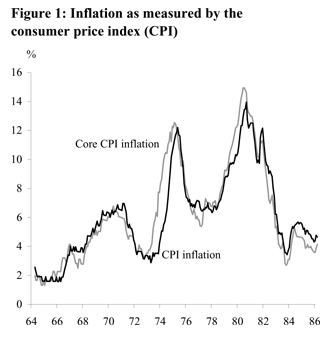
Turning to commodities then, and using history as our guide again, there was a peak in inflation in 1942 and a higher peak in inflation in 1947, the solar / secular commodities peak. There was a peak in inflation in 1975, and a higher peak in inflation in 1980, the solar / secular commodities peak:

Source:  FRBSF

2013 is the forecasted solar peak, inflation peak and secular commodities peak by solar cycles. We saw the first inflation peak in 2008 – which would be 5 years prior, just like in the 1940s and 1970s. The chart below shows the 2008 peak and our trending upwards since then again, despite the ‘deflation’ chatter.

Source: Shadowstats

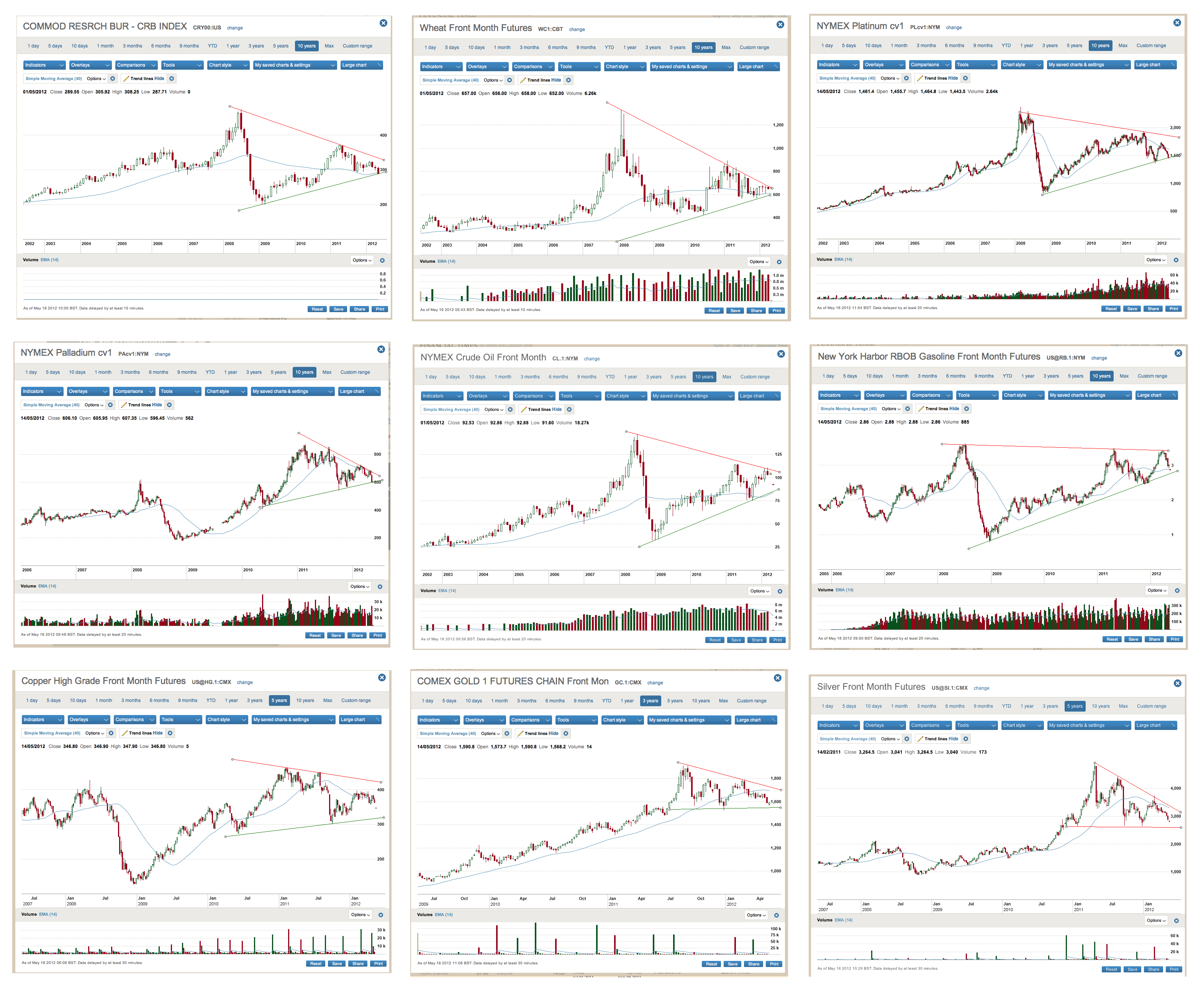
Now look at the commodities charts, courtesy of John again. Large symmetrical triangles, like stock indices, but the difference is that these formed in upward rising trends in place since 1998/2000. By the book, that makes them more likely to be continuation patterns. I believe they will break out upwards, and when they do, they should make the acceleration into the secular /solar peak, fulfilling the inflation prediction at the same time.

Source: R Bowden