Opportunities Part III

Some glorious opportunities for those with patience.

First, European equities. There are potential opportunities here for the brave in the Polish stock index (only European nation to avoid recession in the last 5 years, p/e 7.7, dividend 4.9) or Russia (oil price dependent, but if oil holds up, p/e 5.3 cheapest on the continent), but if we play it safe, then Germany remains an economic powerhouse, but has been held back by PIIGS worries. Germany’s p/e is at 11 currently, back at the levels where the last secular bull market began.
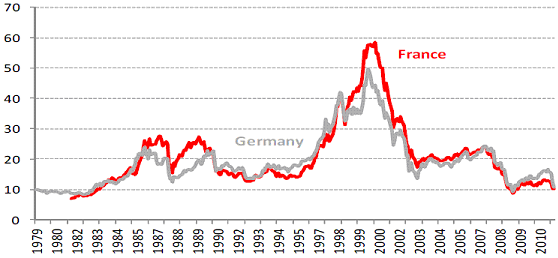
Source: Pragmatic Capitalism

German equity yields are currently 3.6, having reached even higher toward the end of 2011, giving us readings that have also marked great long term buying opportunities.
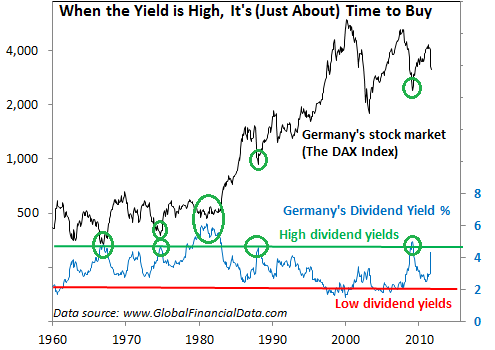
Source: Profitimes / GlobalFinancialData

The UK FTSE has a p/e of 9.8, into the single digit p/es that have historically marked secular bottoms, and is paying dividend yield of 3.7 – another attractive combination. If we look back at the history of equity dividends versus gilts yields, then UK shares are relative to UK government bonds as attractive as they were at the start of the 1950s, which was when the 1950s secular stocks bull market really got going.

The US stock market dividend yield also makes US equities very attractive to treasury yields, historically.
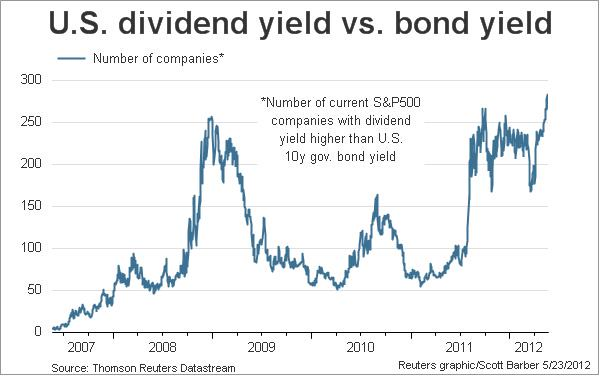
Source: Scott Barber / Thomson Reuters

Plus, treasury yields are at all time record lows, paying negative real returns. Treasury yields have historically made long term waves lasting around 30 years alternating up and down. The current down wave in yields is due to come to an end, giving rise to a long bear market in treasury bonds. This should occur as money flows back into equities and real estate in new secular bull markets, and as China gradually withdraws from its excessive treasury purchase programme.

Source: Scott Grannis / Fed Reserve

The global real estate bust since around 2007 has largely completed its course, with house prices historically tending to rise around 12 years and fall around 4 years. The table below reveals that US and Ireland, which both had major housing bulls, are now undervalued.
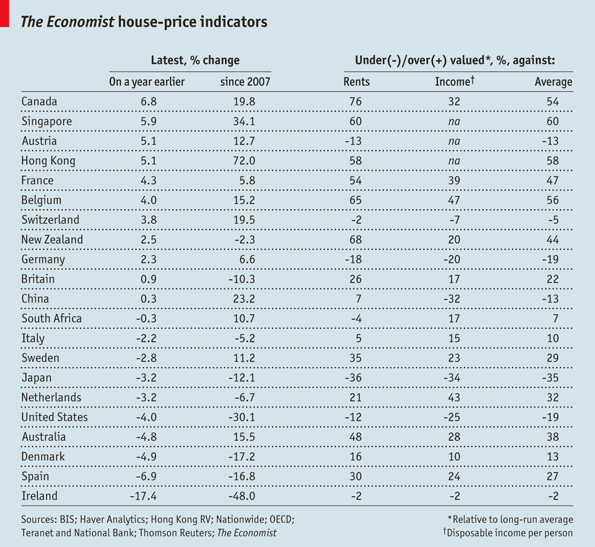
Source: The Economist

Affordibility for US housing has never been better. Coupled with the significant undervaluation shown above, US real estate looks a great longer term buy here.
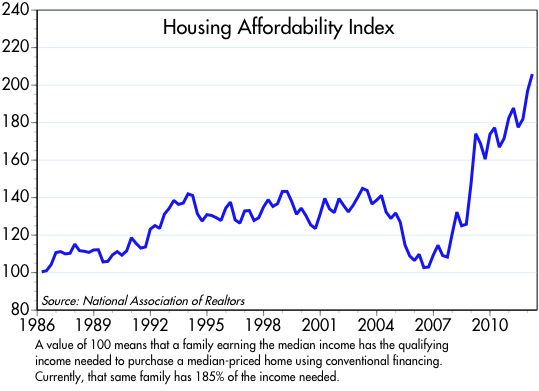
Source: Scott Grannis / National Assoc Realtors

UK real estate is still somewhat overvalued, but topped out about a year after the US, so perhaps needs a little more time to bottom out. Japan stands out in the above table as the most undervalued, and in fact, Japanese real estate gradually lost around 70% of its value since deflation took hold 2 decades ago. An opportunity for the brave, but one that should again pay off handsomely in the longer term.
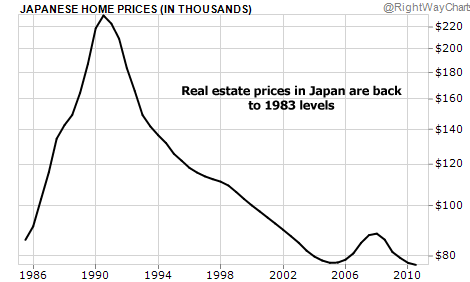
Source: Brain Cramps

To sum up, there are some great buy and hold opportunities for the longer term – high reward, low labour trades. The Dax and FTSE valuations and dividends versus bonds echo what I suggested in my secular position analysis that we should be looking upwards not downwards for stocks. The record extremes in treasuries, bond yields versus stocks yields and real negative returns equally reflect that we should be looking short government bonds not long. And finally, real estate in some countries, particularly in the US, now looks historically a buy again. Drawing all together I believe the future it clear – that we will see money flowing out of government bonds and into equities and real estate. For now though, echoing Scott Grannis’s thoughts, the markets are pricing in a Lehman style event in Europe, and hence the extremes. Anything not as bad as that is likely to encourage money flows the other way. That’s in a similar vein to my secular positioning historical analysis, namely that around this point in previous secular stocks bears, things also looked a mess and fear reigned, and yet equities barely made new nominal lows after that. As Russell Napier says, there comes a point whereby equities are so historically cheap that just slightly less bad news will propel them higher. With the German Dax back at its last secular lows in valuation, that makes it, to me, a compelling buy.

Bear And Recession Ahead?

We can assess the odds of a bear market and recession ahead (with the former leading the latter), by amalgamating mutliple indicators. If you followed me on Amalgamator then you may recognise this as an exercise I’ve done before. I will mark in green those indicating no bear/recession ahead, red those that do, and leave black those in neutral territory.
1. Ten year treasury yields (over 6% is a historical marker of the end of cyclical stocks bulls) – currently less than 2%.

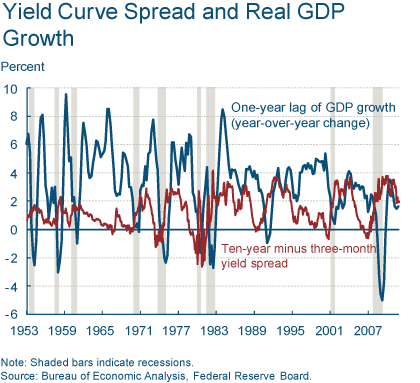
2. Yield curve / spread (if abnormal or inverted, may signal bear/recession ahead) – currently flattening but normal. Yield curve suggest negligible probability of recession.

Source: Fed Reserve Bank of Cleveland 

3. Inflation rate (over 4% is a historical marker of the end of cyclical stocks bulls) – currently 2% official in the US but 5.5% by Shadowstats, so taking something inbetween as the reality, let’s mark that neutral. In Europe, official rates generally are between 2-3% and China 3.5%. Overall neutral.

4. Interest rate (overtightening of interest rates is a historical market of the end of cyclical stocks bulls and imminent recessions) – currently ZIRP in the US and negligible in the major economies.

5. Money supply and Velocity of money (both rising and positive for the most positive outlook) – in the US money supply is still in a rising trend but velocity is still falling; in the Eurozone the situation is the same; between them neutral.

6. Solar Cycles (predict secular asset peaks, growth/recessions and inflation) – one year from the solar peak we should see growthflation and pro-risk speculation as sunspots rise. A bear and recession here would be a historic anomaly.

7. Leading Economic Indicator composites of Conference Board, OECD and ECRI (trending positive or negative?) – Conference Board global LIs are mixed but weakening, OECD overall positive, ECRI for US neutral and close to zero. Overall neutral.

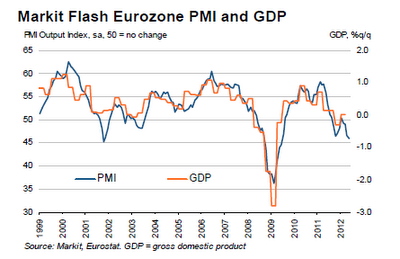
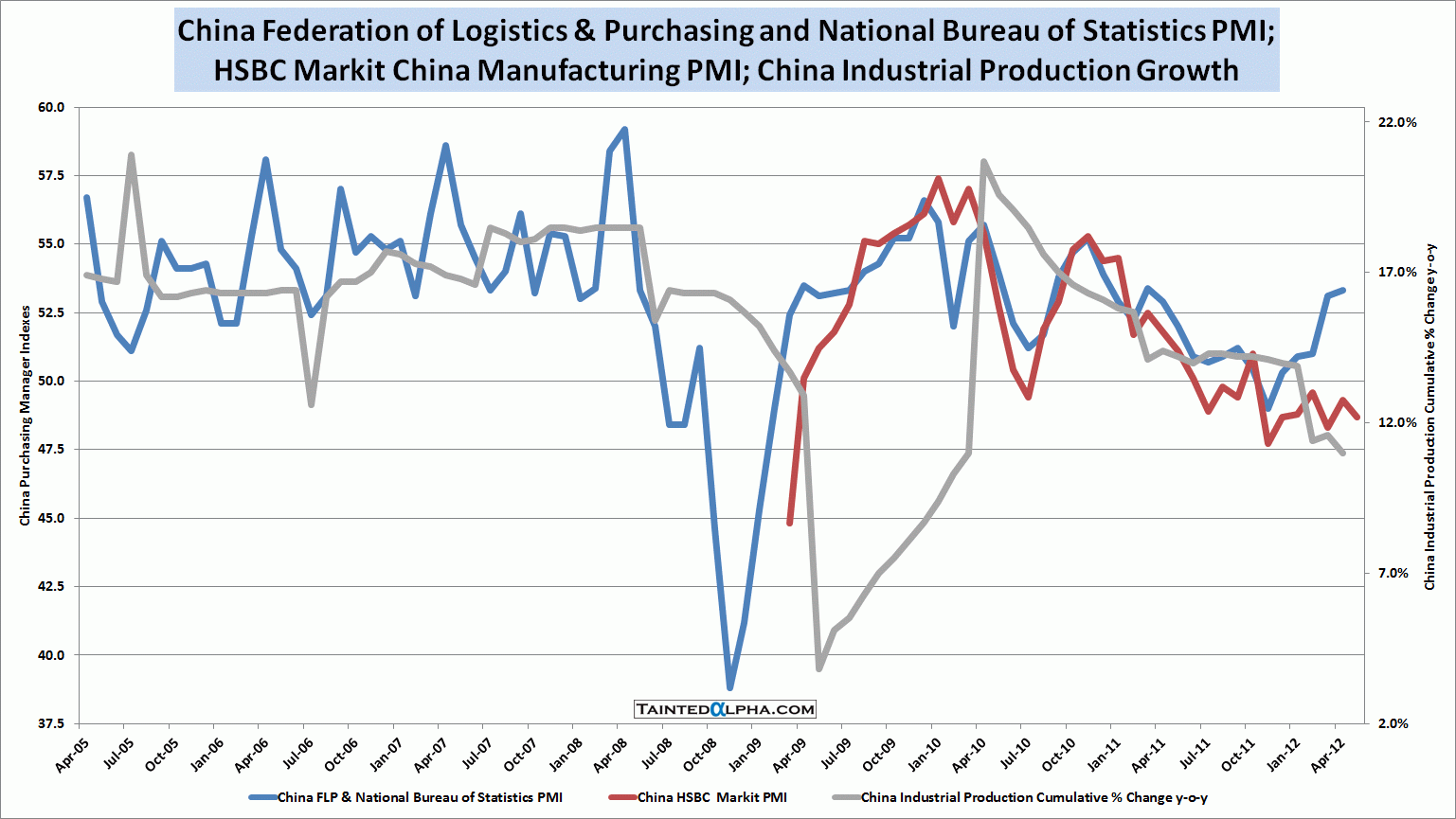
8. Manufacturing (this is a lead indicator, whereas GDP, income, employment and CPI are coincident or laggard) – US is weakening but still positive, Eurozone has turned negative, China still strong above 10%. Overall neutral.

Source: Calculated Risk

Source: Markit/Eurostat

Source: Taintedalpha 

9. Dr. Copper (copper is a bell weather for the economy and markets) – in recent weeks copper has drooped and looks technically weak. Although the longer term trend is still in tact from around the start of the secular bull market in 2000, the near term prognosis from this Doctor is negative.

Source: TradingCharts 

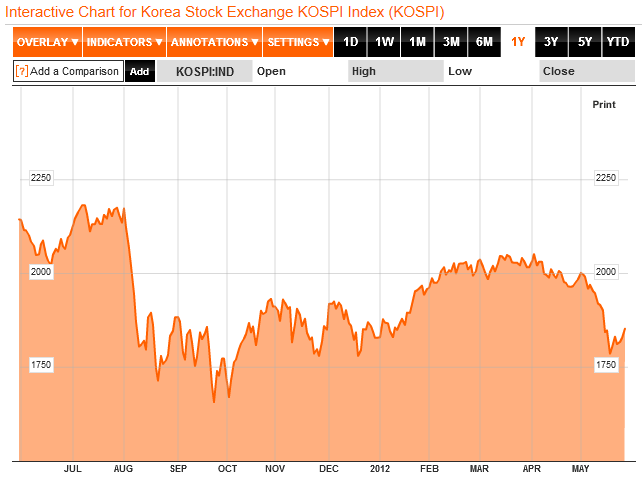
10. Dr. Kospi (the Kospi index is also a bellweather) – the Kospi has rallied the last couple of weeks but so far only a partial retrace of deeper falls. The 12-monthly picture is sideways. Overall a negative. 

Source: Bloomberg 

11. Stock Market Breadth (usually deteriorates and diverges from price into a stock market top). At the March 2012 top-to-date, we did not see the typical negative divergence in breadth that accompanies a major top, plus cyclical sectors displayed relative strength, unlike ahead of other previous major tops whereby they weakend some weeks or months ahead of the top.

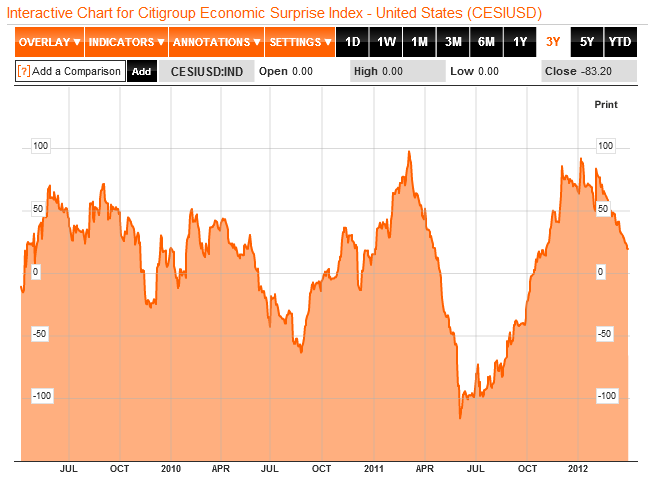
12. Economic Surprises Index (is a lead indicator and also a mean reverting indicator – is it at a historic extreme, is it leading counter trend?) – Economic Surprises have typically oscillated between +50 and -50, and currently Surprises for the major economies are at -31, for the US alone -30. In the last couple of weeks they have attempted to flatten out somewhat, but until an upward trend develops, this is a negative.

Source: Bloomberg

13. Earnings (solid beat rates in both earnings and revenues, and future guidance) – in this last US earnings season quarter, the overall earnings beat rate came in around 62%, which is weaker than the historical average but better than achieved throughout 2011, whilst the spread between companies raising rather than lowering guidance was positive. Eurozone earnings upgrades versus downgrades are at neutral. Overall neutral.

Source: Thomson Reuters / Scott Barber

14. Seasonality (monthly seasonality, 4 year presidential cycle) – May to July has historically been positive, a period of lower seasonal geomagnetism. Specifically though in a US election year, a major bottom has been carved out in May-June, from which the market then rallied into the (November) election. That makes it a positive from here.

Source: Seasonalcharts

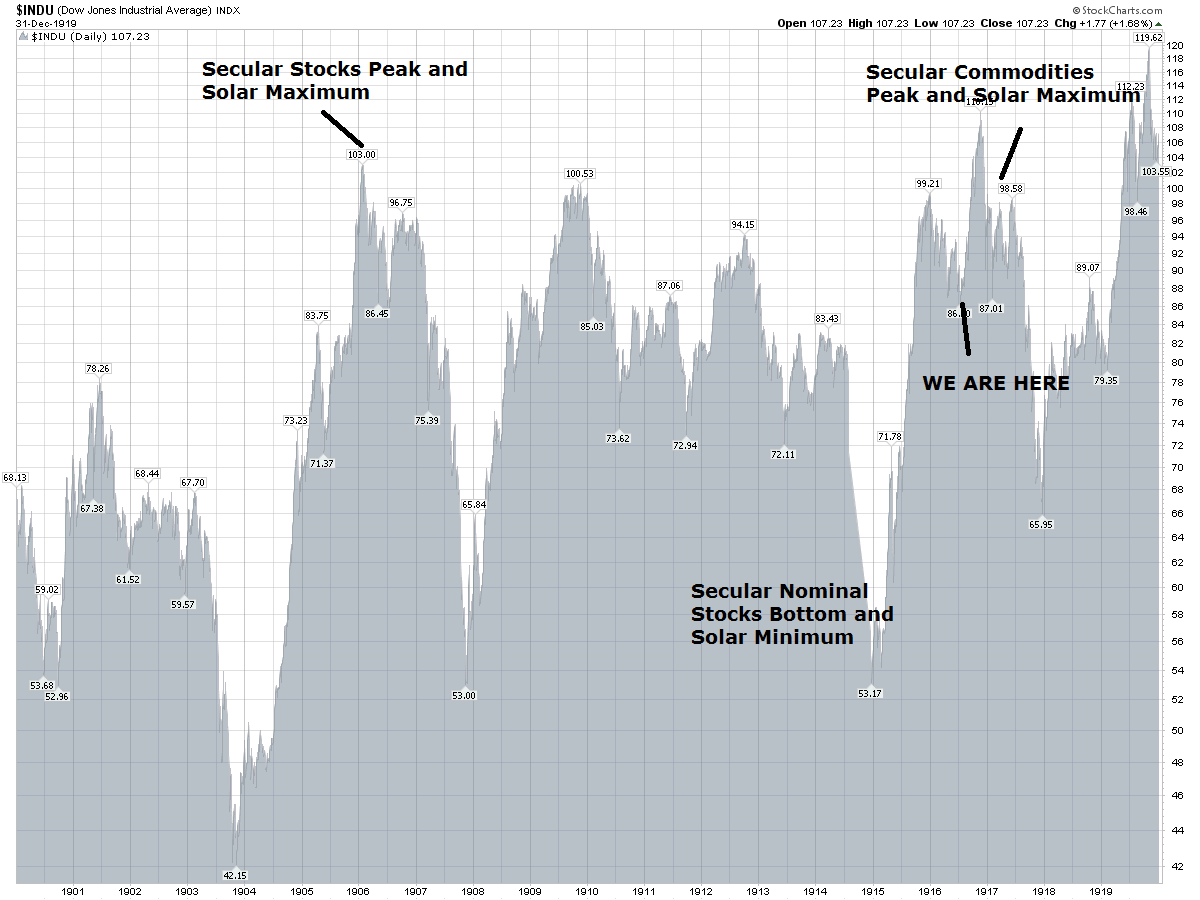
15. Bull Market Historic Internals and Historical rhymes (compare and overlay with historical precedents) – in my recent post ‘The Secular Position’ I showed that in the last 2 secular stocks bears / secular commodities bulls there were clear parallels to the current one, and that in the 1970s and 1940s our current position showed that we should be looking upwards for stocks, not downwards, in the bigger picture. Here is one more, showing the 1910s secular stocks bear / secular commodities bull – a similar picture, with some upside ahead in the next 12 months, and then some downside as the post-solar peak, post-commodity peak recession occurs. All 3 historic parallels show a positive picture for equities and commodities for the next 12 months.

Underlying Source: Stockcharts 

16. Oil Price (the stock market was historically killed by a doubling of the oil price in a 12 month period) – the oil price has dropped by 10% in the last 12 months as measured at today’s price – that is a positive.

17. Real GDP growth YoY (dropping beneath 2% has invariably led to a recession) – currently just above 2% in the US, delicately poised. As the latest data marked a push up, this is neutral for now, but will be resolved one way or the other in the months ahead.

Source: Dshort 

18. Stocks and commodities relative cheapness to bonds (compared to history) – currently stocks are in the historic neutral range in pricing versus bonds, whilst commodities are at extreme cheapness versus bonds. That’s overall postive for pro-risk.

19. Bond yields versus stock yields (long term government bonds yields should not exceed stocks yields by more than 6%). This has in fact inverted, with bond yields paying negative real returns.

20. Stock valuations (stocks p/es should be historically reasonable (historic US average 17)) – US currently 14, Germany 11, UK just under 10, China 7 – all historically reasonable.

21. Investor sentiment (II, AAII, Market Vane, etc, sentiment survey readings should not be overly bullish). AAII is at high bearish, which is contrarian bullish, whilst II is neutral to bearish. Overall positive for equities.

Overall, roughly half of the indicators are positive and do not support a bear and recession ahead. The remainder are mostly neutral with just three true negatives currently. Those kind of odds I will take.

To sum it up, the evironment is positive for pro-risk in terms of negligible interest rates, bonds pricing and dividends (compared to commodities and stocks respectively), and central bank supportive intervention. However, the weakening of leading indicators and economic surprises and the esclation of Euro debt has driven money again to safe havens, pending a natural improvement or central bank assitance. Should neither occur/work, then we would likely see a deterioration in the above picture and a greater likelihood of bear and recession ahead. This, however, would be anomalous to historic analogues, Presidential and solar cycles. Regardless, due to oversold/overbearish extremes in pro-risk (Euro, stocks, commodities), a period of mean reversion should come to pass. As we rally again upwards, we should print the divergences that were missing in March, if this is to be a major top. If we are not topping out here, then that mean reversion rally should be healthy in internals and accompanied by an upturn in leading indicators and surprises. 

On The Attack

It is a contrarian’s dream, right here right now. These are the opportunities that make me lick my lips: oversold and overbearish extremes. This morning I have added long Hang Seng, FTSE 100, silver, oil.

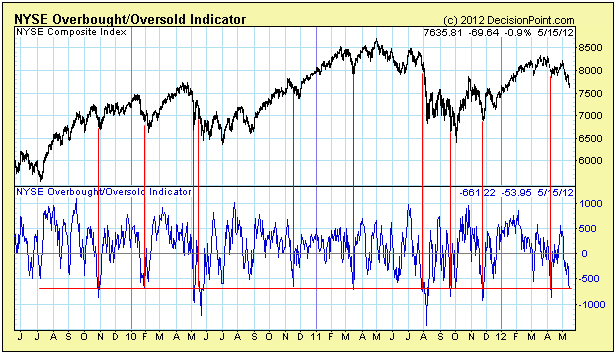
Starting with equities, NYSE oversold extreme has historically marked bottoms:

Source: DecisionPoint

Put/call ratios at levels that have historically marked bottoms:

Source: Decision Point

Source: Cobra / Stockcharts

AAII sentiment at bearish extreme, plus high percentage of II sentiment neutrals which has historically siginified a trend change. UBS here highlight the lack of high volume capitulation. Yesterday gave us a voluminous daily candle, but capitulative breadth only reached 3. It is possible today we could see that capitulation, followed by a hammer v-bounce. Let’s see.

Source: UBS

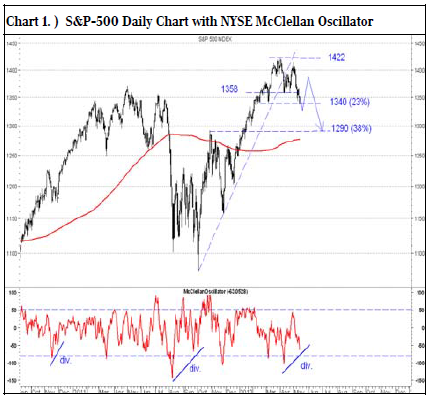
Nymo positive divergence. Again, UBS’s chart, with their interpretation that we will see a significant bounce then further downside. I repeat my point that whether you side with my longer term projections or not, a period of mean reversion will follow when pro-risk hits oversold and overbearish extremes.

Source: UBS

Sentiment is at bullish extreme for the US dollar. Euro-dollar RSI is in the extreme oversold zone.

Source: Profitimes / Sentimentrader

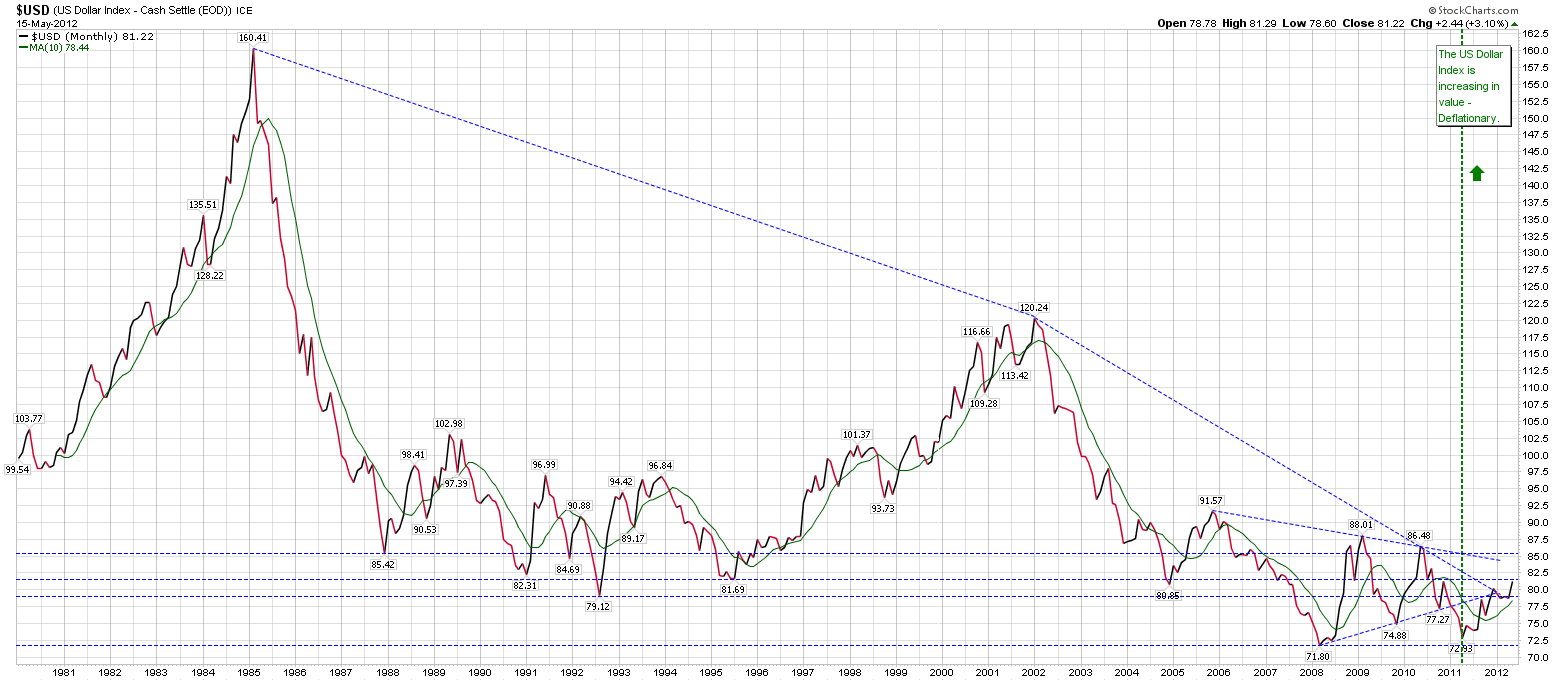
The USD longer term is now at horizontal resistance.

Source: James Craig / Stockcharts

Gold sentiment is extreme bearish.

Source: Profitimes / Sentimentrader

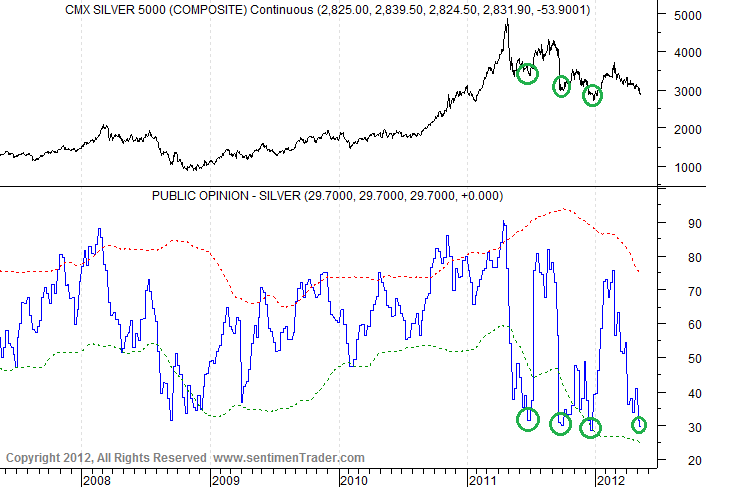
Silver sentiment also, levels that histrorically marked bottoms.

Source: Sentimentrader / Profitimes

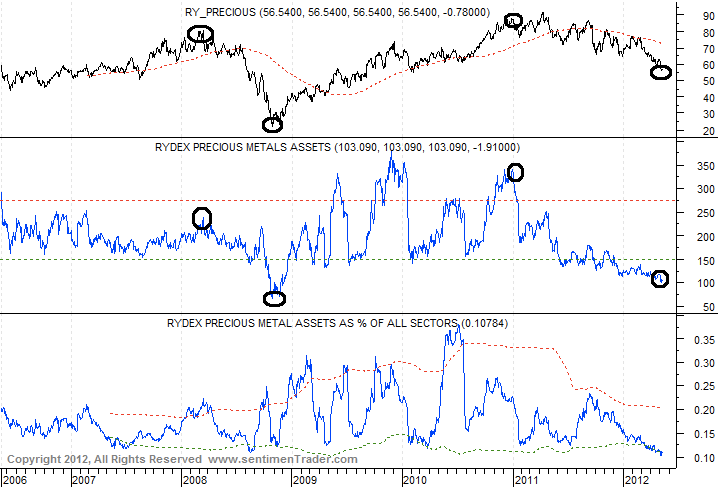
Rydex precious metal allocations are at extreme lows.

Source: Jordan Byrne / Sentimentrader

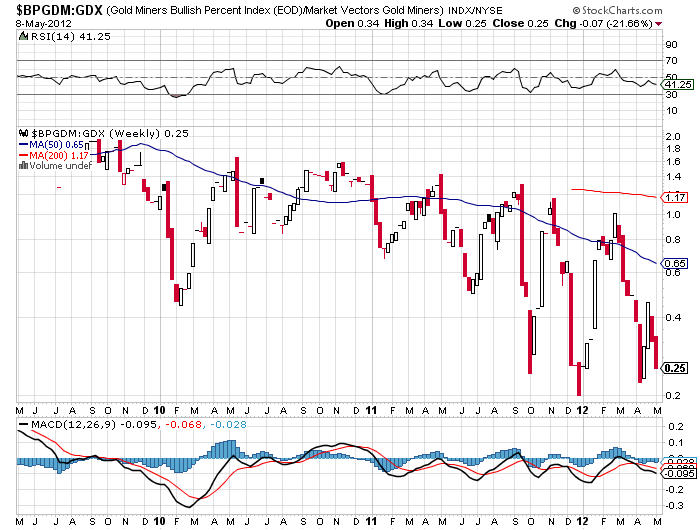
Gold miners are at oversold and overbearish extremes.

Source: Jordan Byrne / Sentimentrader

Gold commercial and open interest is at contrarian extreme.

Source: Jordan Byrne

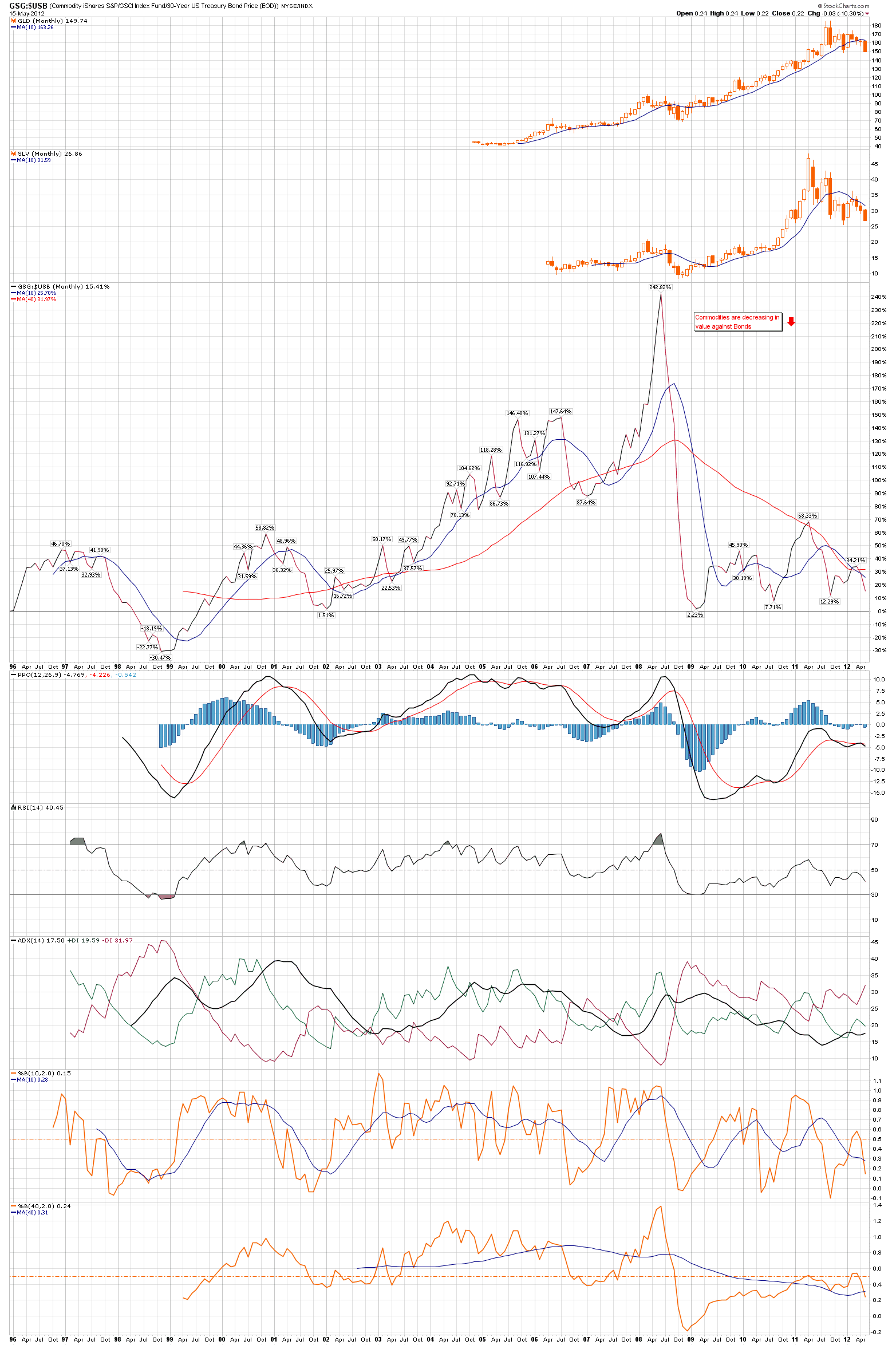
Commodities are at long term historic low valuations compared to treasury bonds.

Source: James Craig / Stockcharts

Treasury bonds are at all time highs, paying negative real returns.

Source: James Craig / Stockcharts

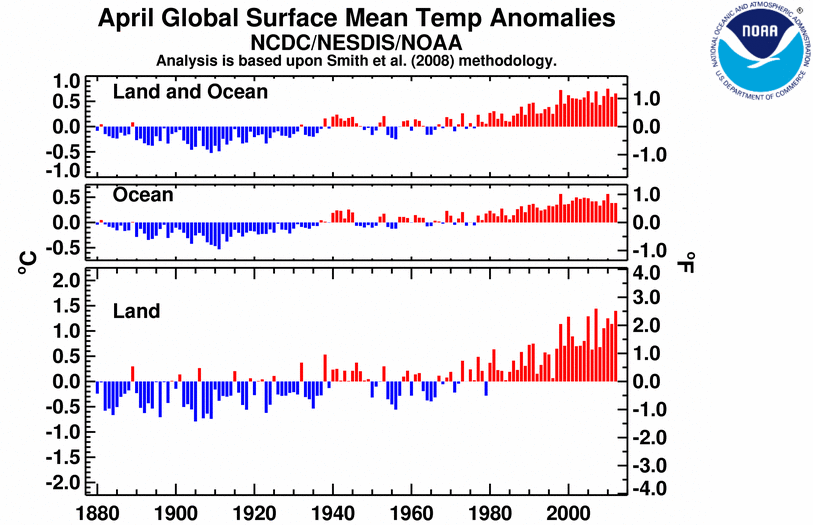
Various agri commodities are in the overbearish extreme sentiment zones, including orange juice, coffee, wheat and cocoa. The global temperature figures for April came in at the second warmest on land since records began. Dry weather gave agri commodities a push up yesterday, counter to the pro-risk sellling, as harvests are likely to be affected.

Source: NOAA

Lastly, the macro front. Leading indicators point to growth ahead, with the exception of Euroland.

Source: Conference Board

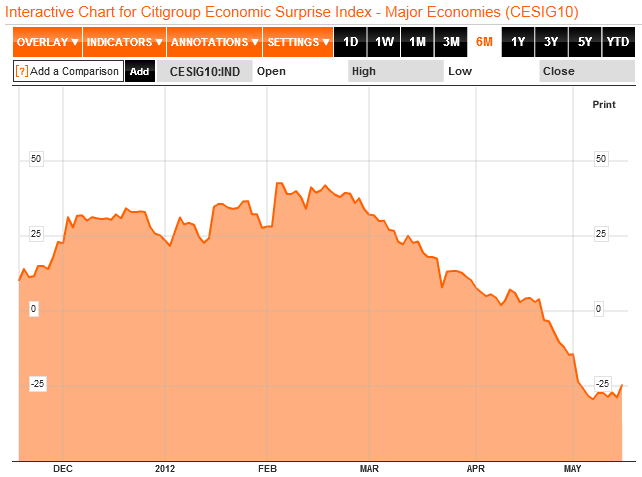
Economic Surprises have stablised in the last couple of weeks for the major economies. Leading indicators suggest we may see them turn up ahead.

Source: Bloomberg

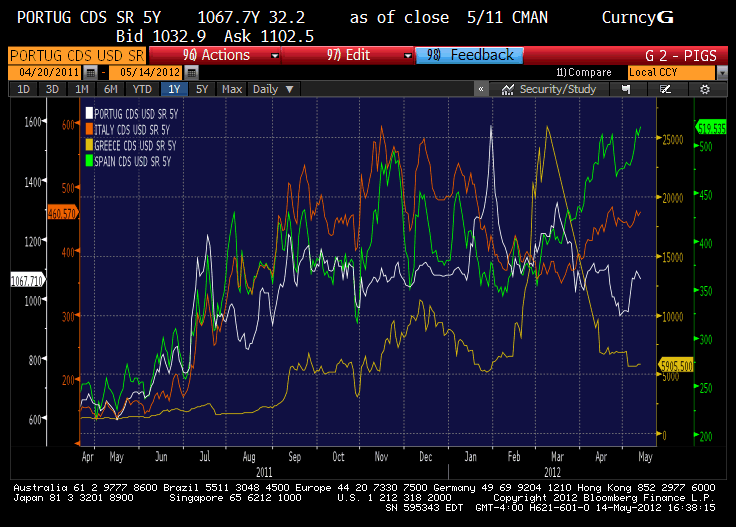
But the overarching issue currently is Greece and Euro debt. Spanish CDSs are at a record and still climbing, plus Greece is going back to the polls with a probability of installing a government that does not agree to the bailout terms from the ECB. The fear is that Greece is expelled, makes a hard default and brings down major European banks.

Source: Acting Man / Bloomberg

I am not belittling the Greece and Euro debt issues. But we have been here before, the last 2 years. Politicians will take action, central banks will take action. The oversold/overbearish extremes scream opportunity, to me. If the Greece/Euroland saga rapidly spirals into the worst case scenario, and pro-risk plunges much further before reviving, then I will take some account pain. But I always keep powder dry. If we do plunge much more overbearish and oversold I will attack again lower down. But I believe the bottom is close at hand.

Opportunities

More selling yesterday, but then intraday reversals that produced hammer candles (stocks, oil). Hammer candles often mark bottoms, but capitulative breadth still didn’t trigger. Ryan Puplava compiles some oversold indicators and divergences that are suggestive of an imminent rally, but he also notes that market breadth has weakened.

This is how the SP500 stands. There is a trio of supports coming together around 1341, if we head lower, and that would potentially put us sub RSI 30.

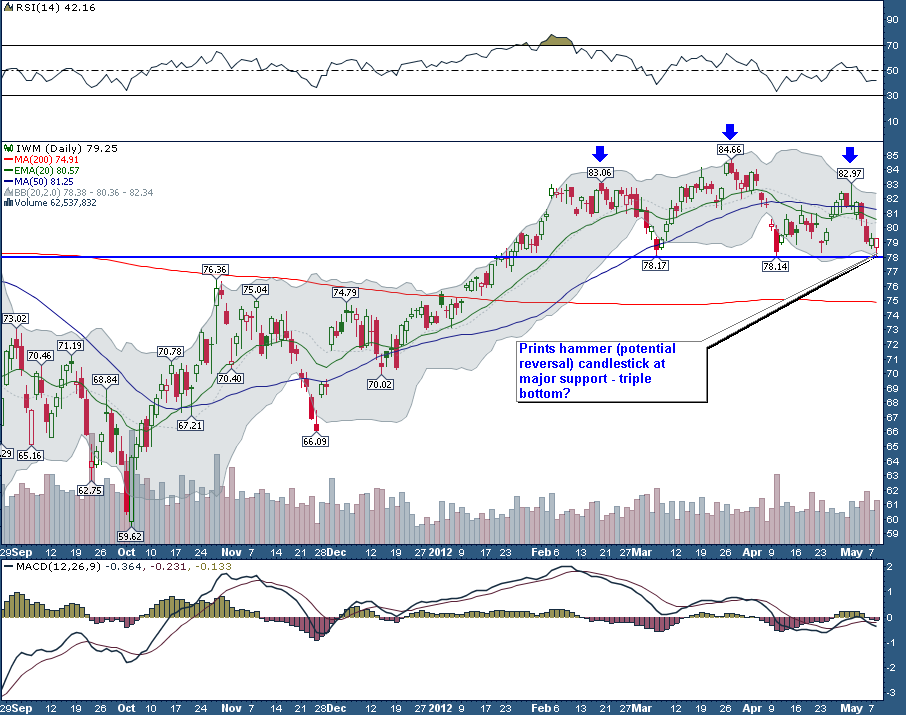
The Russell 2000 has either made a triple bottom or is playing out a large head and shoulders to a considerably lower target.

Source: StockSage

Stocks are reaching towards overbearish but sentiment could drop lower yet before a reversal.

Source: Stockcharts

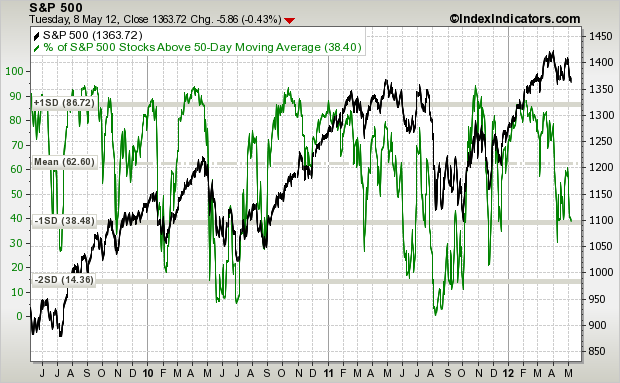
Stocks are heading towards oversold, but could also drop further yet to reach extreme.

Source: Indexindicators

The Chinese stock index needed to make a higher high to confirm a new bull trend since the start of 2012 but has pulled back at a double top, shown. If it can break out, it will be suggestive of China growth and associations with commodities.

Source: Bloomberg

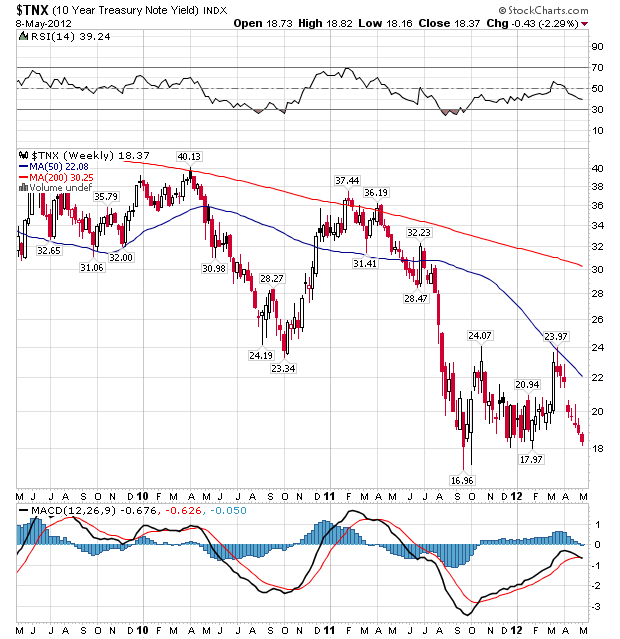
10 year treasury yields are back to all time lows.

Source: Stockcharts

30 year treasuries back to all time highs.

Source: Stockcharts

I have added to short treasury positions. Doug Kass is bearish on treasuries here (hat tip Juan), calling it the trade of the decade.

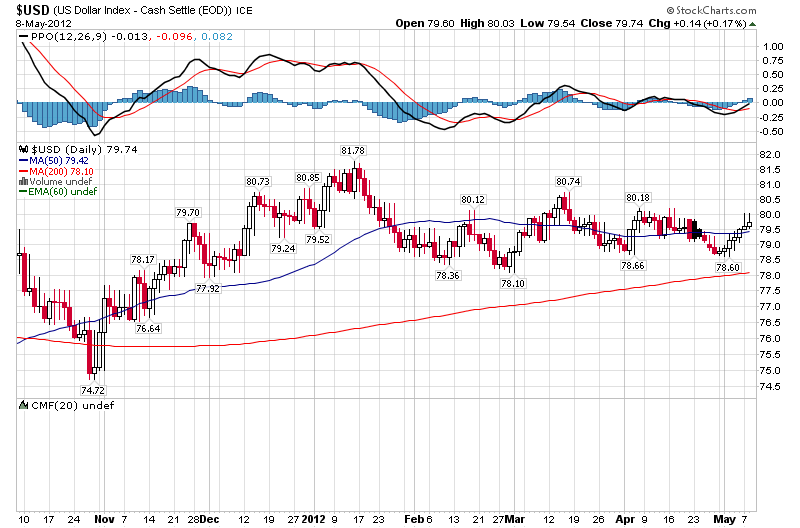
The US dollar remains in a range, despite the Euroland troubles. As yet this is not resolved.

Source: Stockcharts

Spanish CDSs have nudged back up, but other than Greece CDSs, Euro debt hasn’t catapulted up again in this fresh round of fear.

Source: Bloomberg

Right now, it looks like 2010 and 2011 again – mid year pro-risk retreat with Euro debt back to the fore and slowing growth. I find it hard to believe we will see the same again, as the market always likes to surprise. So what if not that? Well, the run up into the solar peak is typically one of growthflation. The mid year should be lower geomagnetism, by seasonality, which is supportive. Sunspots should continue upwards, which is supportive. And stocks generally fair well mid year in US election years. I suggest therefore that we need either a natural pick up in growth here (economic surprises ticked up for all regions yesterday but we need to break the downward trend; China and emerging markets could take over as the driver) or we need central bank assistance, such as ECB action to deflate Euroland issues again, and the Fed to replace Twist in June. But either way, I rather expect we will see a more pro-risk friendly mid-year.

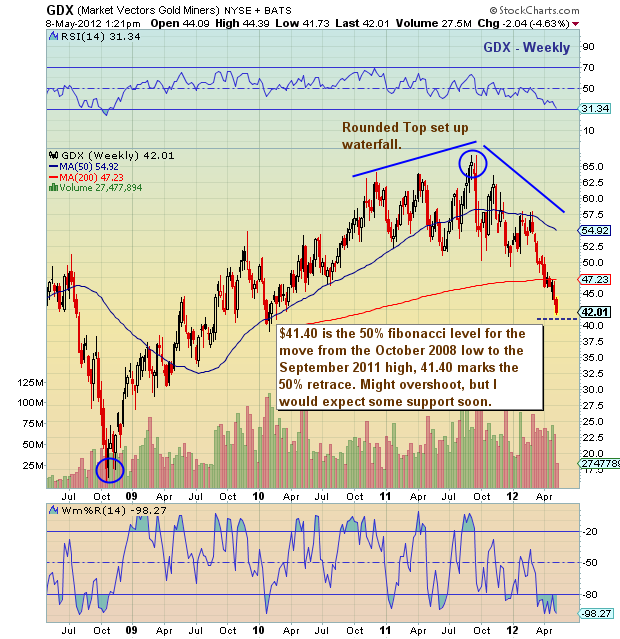
Gold miners’ cheapness relative to the gold price, overbearish sentiment and oversold RSI sub 30 make them still a great opportunity here, I believe. I added to long gold miners.

Source: Stockcharts

Source: Andrew Nyquist

Silver is sub RSI 30 and overbearish sentiment. I added to silver longs.

Crude oil is also oversold. I added to oil longs.

Orange juice has halved in price since the turn of the year due to ample supplies, but is now oversold and extreme overbearish. I opened a long OJ position.

Source: TradingCharts

Nothing (so far) has shifted me from my view of how things will play out into 2013, namely a commodities surge, and even if I were wrong, oversold AND overbearish assets eventually mean-revert. If we move further to extremes in commodities, treasuries pricing and sentiment in the sessions ahead I will add again. These are great opportunities, in my view. The picture for equities is more in the balance, with some indicators of a bottom but some reasons to expect further selling. Developments in the macro picture need close monitoring, as evidence of a pick up in data or government intervention could cause a surge, or equally, continued deterioration could cause a big sell-off.

Sunday Update

Quite strong selling on Friday, but Rob Hanna’s Capitulative Breadth indicator stayed at zero, suggesting the selling in stocks is not likely over.

Source: Andrew Nyquist

Commodities took a hit as well, particularly oil, as attention turns to slowing growth. The economic surprises for the developed economies continue to tumble at an alarming rate.

Source: Bloomberg

Compensating to some degree we see China is overall looking positive ahead (though still tentative in some areas).

Source: Yardeni

US earnings finished last week with 3 bad days of results, taking the overall beat rate from 69% down to 61%, quite a drop. No longer a very impressive beat rate. ECRI US leading indicators came in at zero this last week, a further drop back and now threatening to turn negative again.

Money has poured back into US treasuries, taking the yield back down towards the previous lows. But Spain and Europe CDSs have paused, not contuning their climb for now.

In Zeal LLC’s latest essay they suggest stocks will make another push up before rolling over properly, and this echoes the lack of major topping indicators at the 2012 highs to date. My own historical comparisons suggest an overall sideways range for stocks into next year’s solar peak, so I’m on the look out for opportunities short or long, when indicators align one way or the other. Short term then, I am expecting some more selling to take out the April low, in the early part of this coming week, and will be looking for bottoming indicators to reveal themselves. Upward pressure should emerge again as we move towards 21 May, around the new moon. If we do make another push up to highs in stocks, perhaps after that, then I will be looking for negative divergences and topping indicators.

Gold did its best to defy the selling on Friday. We still have those contrarian buy signals in precious metals, miners and certain agricultural commodities. It’s possible that we could see commodities outperfom stocks here if China data continues to improve whilst Western economic data languishes. However, if selling gains momentum it is more likely all will fall together. Gold could potentially rise alone as a safe haven, particularly if participants become more expectant of QE based on poorer data. The next FOMC is June 20. That gives them 6-7 weeks to assess further trending in data. It is also when Twist expires. If data continues to decline, and the Fed does deliver a stimulus programme of some kind, then maybe that would set up the final commodities launch that I am expecting into 2013. Well, let’s see how data trends develop into June.

This Week

On the macro front, a persistent dropping in Economic Surprises (echoing last year) makes it likely the stock market rally will soon pause or end, if it hasn’t already begun that process. However, we still don’t see a general set of extreme overbought/overbullish indicators in equities. If stocks continue to go up and surprises continue to decline, then a short will become more attractive, but I would be looking to other factors in assessing how attractive.

Source: Bloomberg

One such factor would be the potential resumption of debt worries to the fore. Spain is the only country looking likely to do this currently, with Portugal, Italy and Japan CDSs going the other way. But as can be seen from the Spain chart, previous highs are not that far off again. If this upward trend continues then it is likely to scrape at global bullish investor sentiment.

Source: Bloomberg

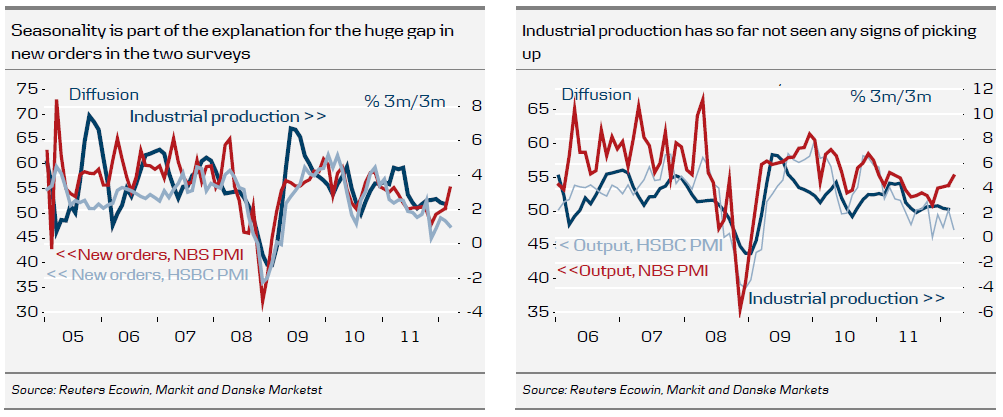
Another factor is China. Concerns over a slowdown are playing on commodities, and new orders surveys have produced mixed results. China doesn’t want to cut interest rates whilst maintaining that property needs cooling, but is more likely to cut bank reserve requirements again in April. Until evidence becomes more persuasive of China easing and/or China growth improving, this is another potential dampener on US equities sentiment.

Source: Danske Bank

For now then, investors, particularly in US stocks, remain unconcerned about economic surprises, Spanish debt and China slowing, but this is often how it works. The bull extends as negatives grow, only for a sudden collective shift in sentiment, with participants becoming of the view that the market has moved too far, too fast. Of course, if surprises start to improve again, Spain does something to ease CDS pressures or news from China gets better, then equities and pro-risk in general could yet advance further.

One other macro factor to mention is that the latest POMO schedule has been released and net sales begin April 9th. That may be another downward pressure factor, as per McClellan’s relationship chart between the two, that I previously posted. Countering this, the Bank of Japan added to stimulus last week.

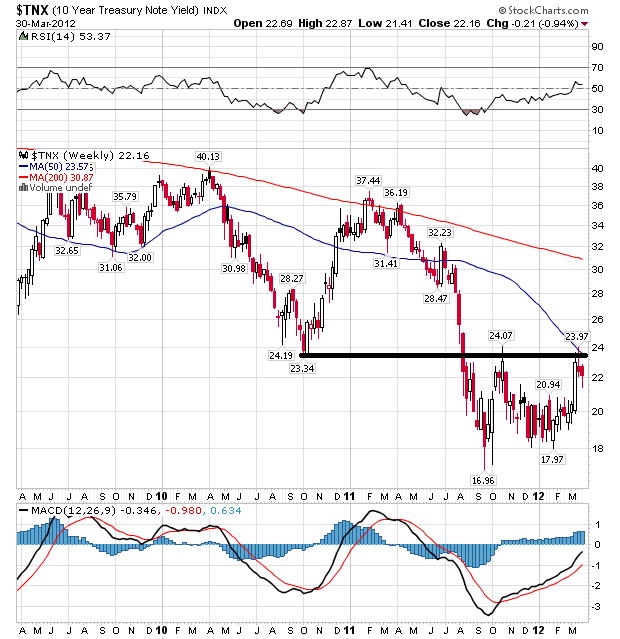
A look at treasury yields and the dollar reveals a delicate position in both. 10 year yields completed their obvious move up to the s/r line shown, and now the question is whether they can penetrate and rise above that line, or whether that was just a counter trend rally. The Fed’s actions and words may have some influence in this, and the next FOMC is April 24/25.

Source: Stockcharts

The US dollar index is likely to break one way or the other soon. As per with treasuries, dovish or hawkish words or actions from the Fed are likely to play into this, but also the general macro factors listed above, and their pro/anti risk connotations.

Source: Stockcharts

Gold and miners remain overbearish and should therefore likely soon take off. Soft commodities rallied on Friday as inventory reports revealed steeper drops than expected for corn and others, but broadly speaking commodities are languishing versus equities, so we likely need a confluence of factors to bring about sustained strong gains.

There will be no posts or model updates now until 11 April, as I am away on holidays, and taking a proper break from the markets. I will respond to mails/comments on my return.

Trading Update

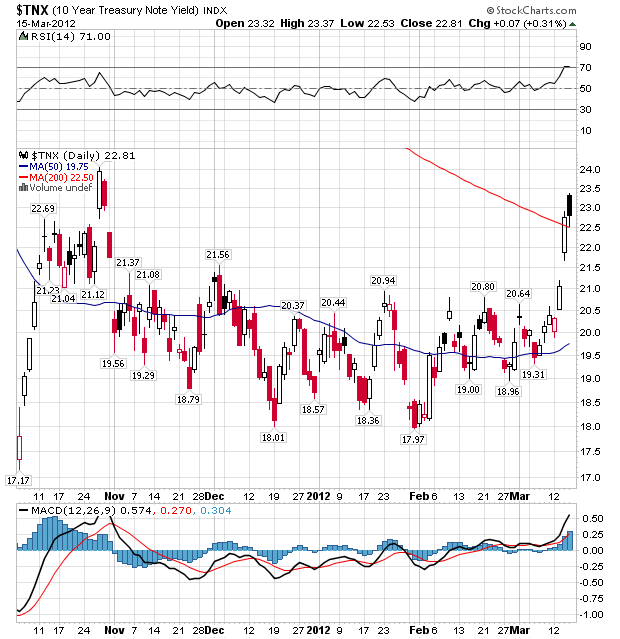
Treasury bond yields added to their breakout, making for what looks like a significant change of trend. Money should accordingly flow into pro-risk. My short treasuries trade is now in the money.

Source: Stockcharts

Looking at the 30 year bond, the initial target would be a return to the trend line:

Source: Stockcharts

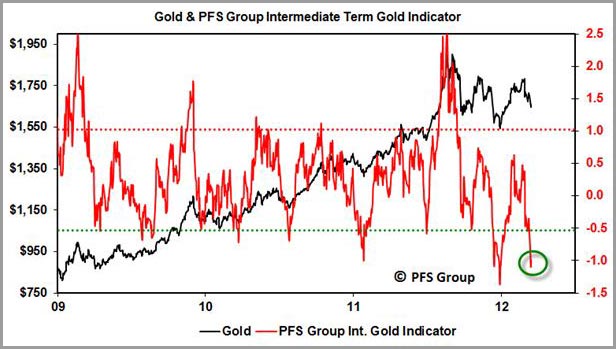
Pessimistic sentiment is at an extreme in gold miners, and gold itself is very oversold by PFS’s intermediate term indicator, an indicator that I have found reliable for entry points in the past. I have added to my gold long position and opened a long gold miners ETF position.

Source: PFS Group

Turning to equities, Apple made a third attempt at a top yesterday, and maybe third time is the charm:

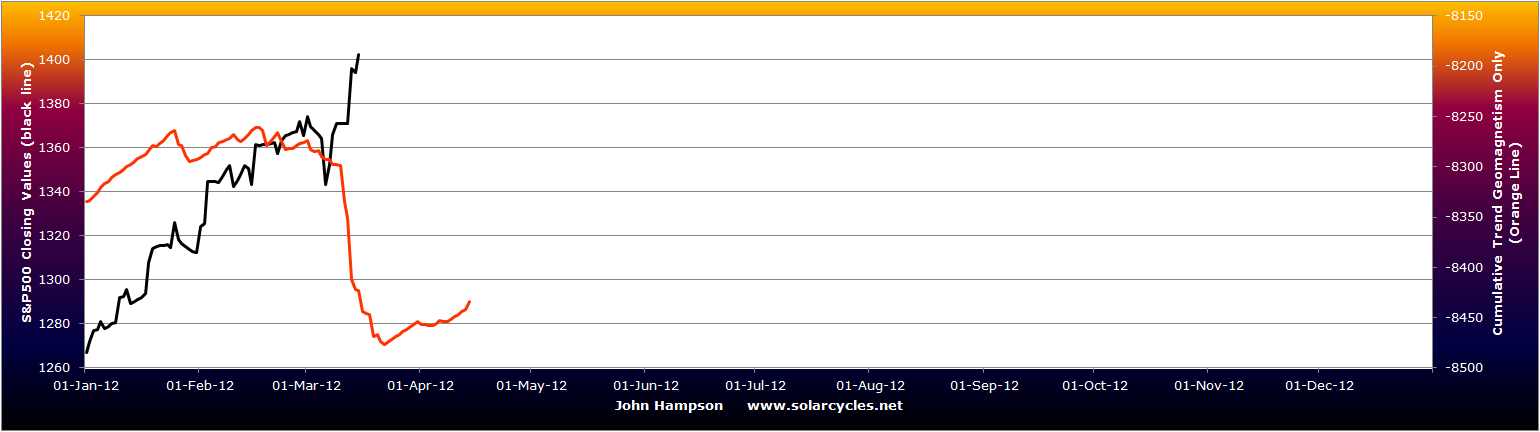
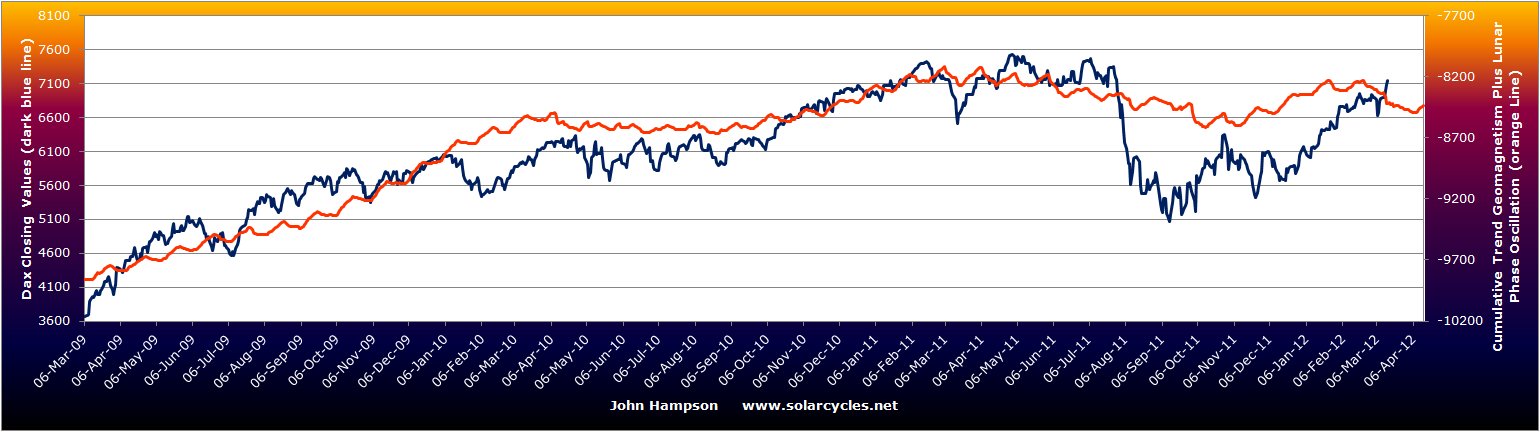
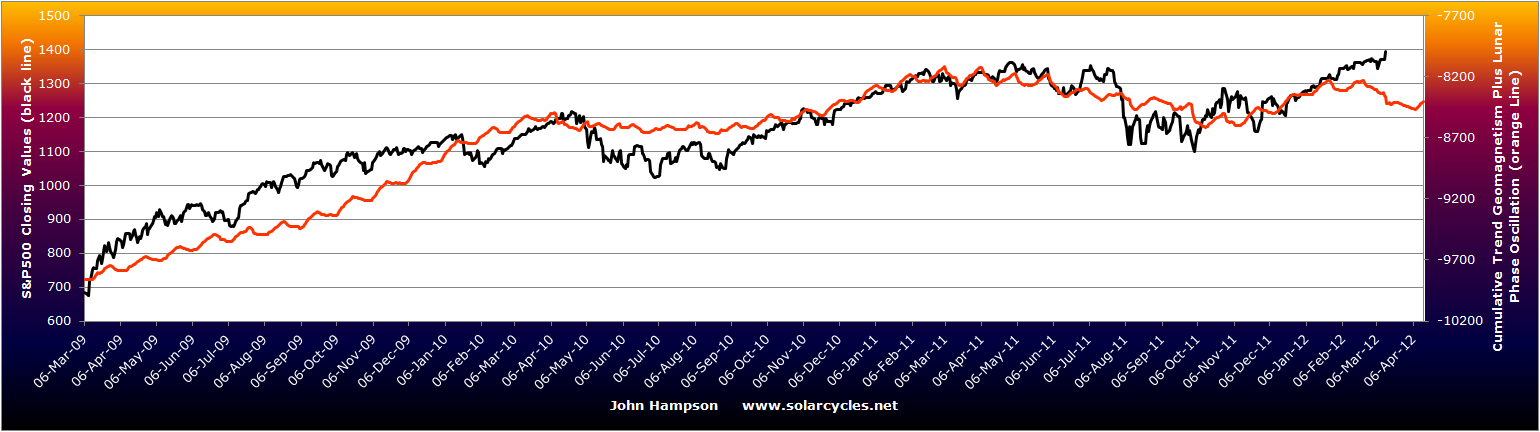
The stock indices held up despite that, but from today into next Friday we are into a likely turn window, drawing together my models, Bradley and the Equinox. Geomagnetism also continues, making for a significant gap between SP500 actuals and my model. The Dax has also moved above the model.

We see a partial set of overbought and overbullish indicators in stocks. Ideally a push a little higher into next week would give us a more complete set and make for a more compelling turn in the turn window. Here is bullish percent over call/put – into the excessive zone again:

Source: Stockcharts

I have sold part of my remaing stock indices long position today. I will sell the remainder later next week if the stock market can push on further.

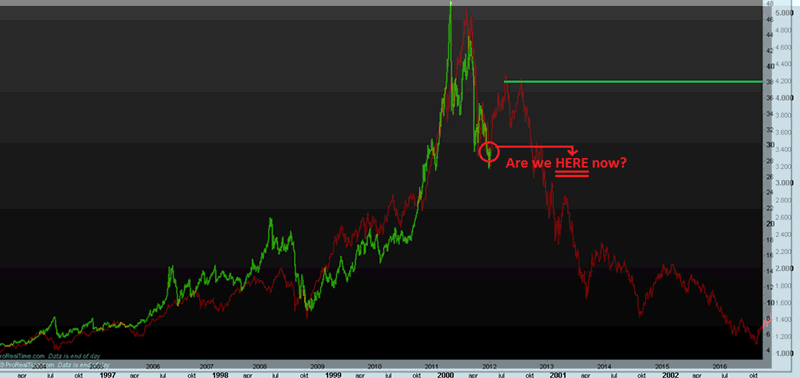
I don’t see evidence of a major top in stocks here. But with Economic Surprises continuing to fall away, geomagnetism pulling the models down, and based on historic rhymes, a rounded top or flatting out or consolidation is likely. The Vix is down at its bottom bollinger band, potentially ripe to pick up again. Given the likely trend change in treasuries, reflecting the economic pick-up, stocks will remain attractive. But with gold and gold miners at pessimistic and oversold extremes it seems likely that soon we see some money flows that way. Even if you believe that precious metals topped out last year, then they should enjoy a rally, as per this post-mania parallel chart (chart from several weeks ago – silver is around 32 at the time of writing):

Source: Willem Weytjens

I maintain precious metals are due for more than just a bounce though, and will have more on this next week.

Markets Update

Yesterday’s upward thrust in stocks, on good breadth and volume, supports my favoured scenario of a push on into 21-23 March.

There is a potential divergence in % stocks above 50MA that could spell a period of sideways range action after that.

Source: IndexIndicators

A significant divergence is now present on my medium term model for the S&P500, whilst noting that the Dax is on model, having been playing catch up from underperformance.

A couple more sessions of contined upside for stocks and we will start to hit overbought and overbullish measures again. I still have a couple of stock indices longs and will be looking to exit them at the end of this week or the beginning of next if that occurs.

A key development yesterday was an upwards break in treasury yields – the rounded bottom is gaining momentum. There is a large wall of money in treasuries that could start to flow towards risk assets.

Source: Stockcharts

My expectation, based on my previous analysis, is that commodities should be the main recipient, and that commodities should outperform stocks leading into next year’s solar peak. Yet, what we are currently seeing is the opposite.

Here are commodities versus the medium term model – very much on model. Yet I was anticipating stocks aligning with the model whilst commodities pull away. So what’s up?

The US dollar is strong again. Good economic data from the US is helping support the USD, as well as no further indication yesterday of more, or further extended, dollar-diluting programmes. As I previously noted, the US dollar is in a delicate long term position, which I expect to break downwards, helping propel commodities to their secular conclusion. However, right now we lack a trigger for that, and with fairly neutral sentiment towards the Dollar and the Euro, that doesn’t give us a reason either.

Of course a strengthening USD does not make a commodities rally impossible. Another key factor is China. Recent Chinese data has been softer than expected, and whilst expectations are for Chinese easing/stimulus, as yet the Chinese authorities are being cautious. Here are the latest OECD leading indicators, and whilst we now see a definite up turn in most countries, China isn’t following suit yet.

Source: OECD

Here’s gold. The smaller wedge is the first potential reversal opportunity. Failing that, the confluence of long term rising support, falling s/r and the 23 fib look like the next most likely bounce point.

Marc Faber is still a longer term gold bull, but anticipates gold could fall to $1500 here. Such a move would put it below all the key moving averages that have supported the secular gold bull to date and so I think it’s unlikely, but, much like the USD, it is delicately poised, and I am closely following both.

What’s Ahead

FOMC tomorrow. First major Bradley turn on the 16th March. Major Gann turn around the Equinox 21-23 March, which equates to the next top on my models. US Earnings Season begins again 10th April. Seasonal geomagnetism to peak in March-April and sunspots to ramp up again in the weeks ahead.

Take a look at the damage from the solar storms of the last few days:

That is an impressive spike. Now take a look how the models have tipped over on my Short Term and Medium Term models page. The message is clear – a market correction, or at least some volatility, is due. So I reiterate what I suggested at the end of last week: I expect either the markets to tip over and correct imminently, or for them to continue higher into 21-23 March, make a significant divergence from the models in doing so, and then correct.

Economic Surprises for both the US and the major economies continue to fall away from their peaks, and here’s a reminder of how stocks performed in 2009-2011 after Surprises twice peaked (blue line):

Essentially, upside was limited, the market was on borrowed time before it corrected. That said, the ‘borrowed’ time could last a couple of months, so I would want to see evidence of the market topping out from other sources, before shorting. So how do things look?

Insider selling continues to be at an extreme. Short Yen positions are also at the extreme. The former suggests stocks should pull back, and the latter that money should pour into the safe haven Yen. But these two aside, we don’t see extremes. The consolidation in pro-risk has reset some of the indicators that had were toppy, suggesting more upside may be required to reach an overbought and overbullish reversal.

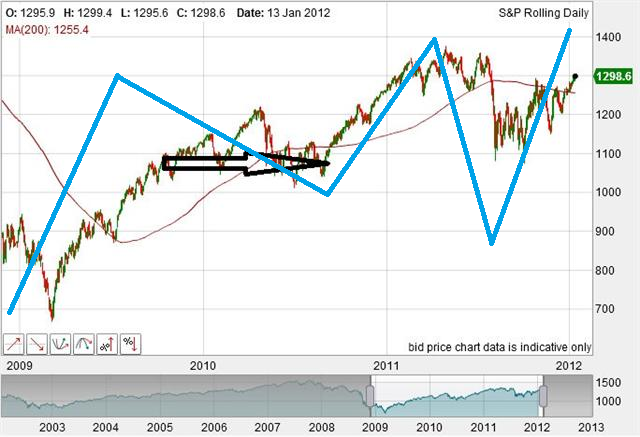
If we look at the technical picture for the S&P500, we see it is flirting with its 2011 high, with potentially clear air above if it can break out, but also that it is within a rising wedge which would normally break to the downside. For my first scenario above of imminent correction, the index could potentially double top today with its high of the start of March, reversing at that horizontal resistance. For my second scenario of a push upwards into 21-23 March, the index could break out but within the wedge and overthrow to 1400 before a correction.

Meanwhile, the US dollar has been rallying, which has taken the wind out of commodities to some extent. If the Fed is dovish tomorrow, extends Twist or similar, we could see a reversal, and precious metals gaining ground again. However, if they do nothing, the USD could maintain popularity. It remains in a very delicate long term position, and whilst I continue to believe that it will ultimately break to the downside in a mirror of the 1970s, we need a trigger for that to occur.

Source: Stockcharts

I look at both precious metals and at mining stocks and see evidence for a big move up coming up, but not quite yet. Fed action tomorrow could provide a trigger, but failing that, a little more time looks needed. Treasury bonds continue to make a rounded top, yields a rounded bottom. If this is the prelude to a notable change in trend, then the Fed may have a reason to step in.

OK, let me sum up with my favoured scenario: stocks push on higher into 21-23 March, making a big divergence from the models and reaching overbullish/overbought again. I think that would then make for a nice shorting opportunity, and a subsequent period of mean reversion. I suspect that because most indicators have eased off from being toppy we need to push up to hit extremes again. Those extremes, plus some big divergences, would make for a higher probability trade than right now.