State Of The US Markets

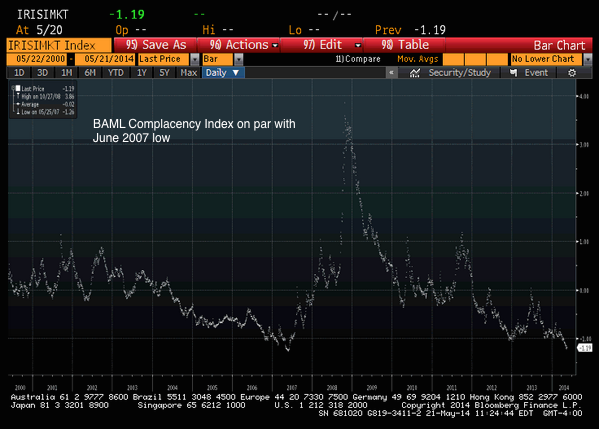
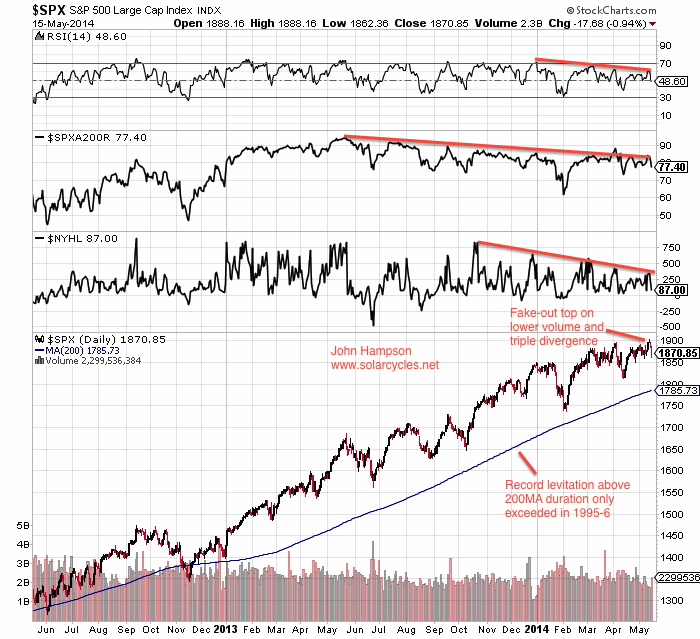
The SP500 is trying to break out again, but once again chances of success are slim. Volume ultra low, new high breadth weakest yet, complacency high:

24m1I rather see prices continue to gradually arch over, captured below:

24m9

Source: Rory Handyside

The historically low put-call ratio range continues, whilst the ratio divergence above is warning of falls ahead, similar to the smart money flow divergence:

24m12

Source: Todd Harrison

Skew remains elevated and the recent cluster of spikes exceeds 2011 where price arched over and then fell hard:

24m10

Source: James Goode

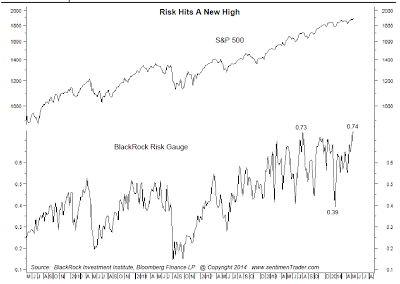
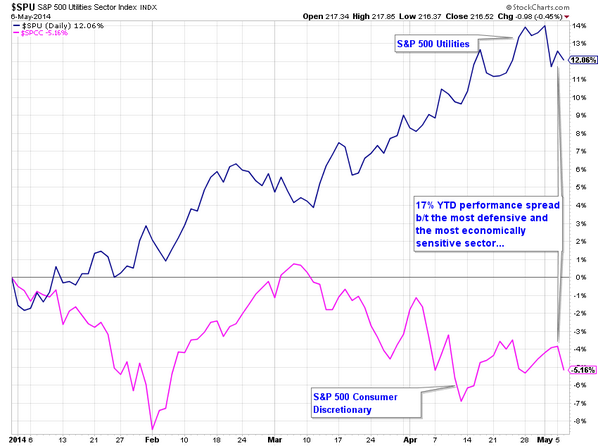
Risk-off remains the dominant theme in 2014, and this is a notable change in backdrop to 2013:
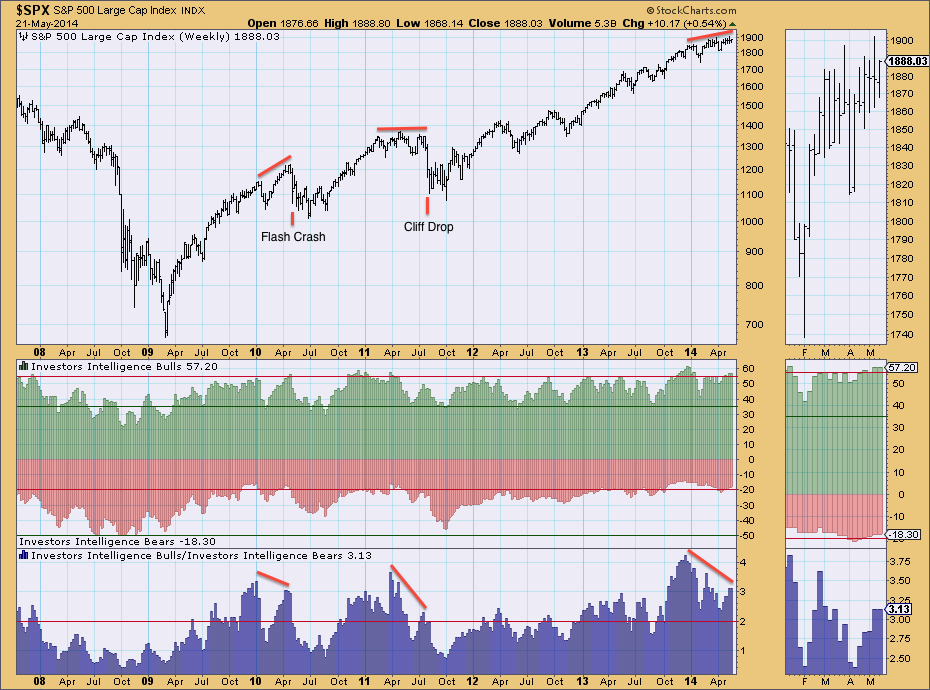
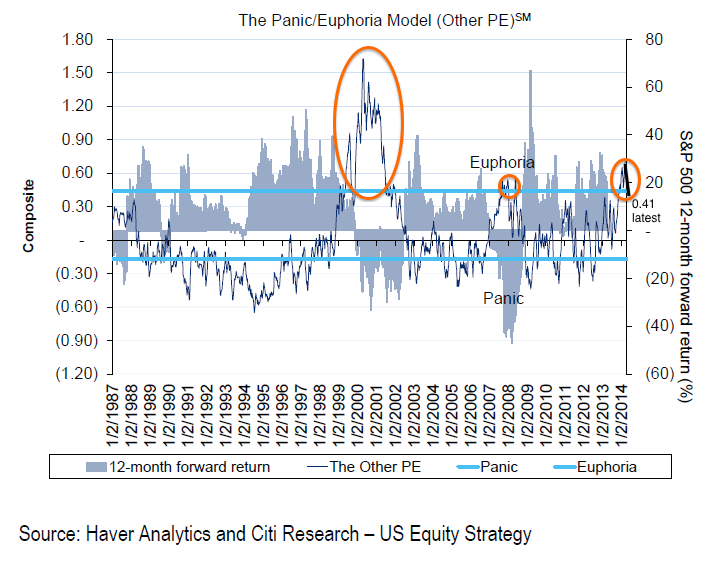
24m7We can see the relative performance of cyclicals just turning up again recently in the bottom of the chart above. The Nasdaq 100 and Russell 2000 perked up last week too. So might we now see all-round bullish resumption? Small caps and tech corrected by price and large caps corrected by time? Well, neither saw the requisite wash-out in indicators to reload the bull. Investors intelligence sentiment has stayed elevated, volatility low and euphoria present. The negative divergences have not been resolved, but worsened, and various indicators continue to be at historic warning levels. All these suggest it is more likely that large caps fall imminently and join the other indices in a true correction, rather than we now see broad bullish resumption.
24m11 24m4

 Source: U Karlewitz

But if there is to be a bullish resolution here, then it appears short interest could provide the fuel for another leg up:
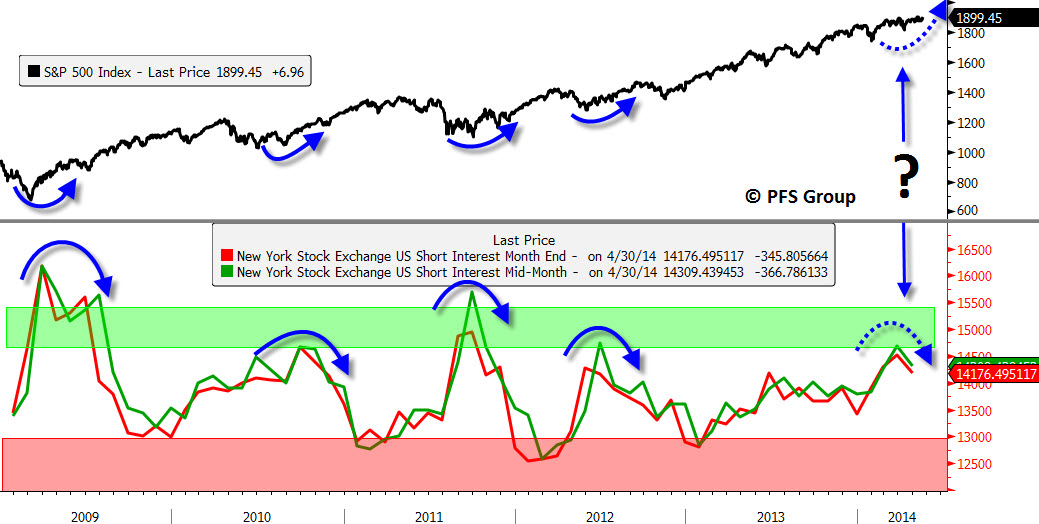
24m3

 Source: Chris Puplava

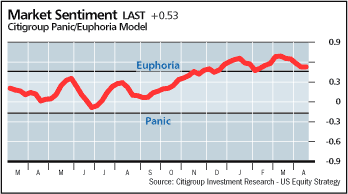
Note though that short interest is a component of the panic/euphoria model above which is more bearish than bullish, but nonetheless we could potentially have room for another leg up in the summer before price finally turns over.

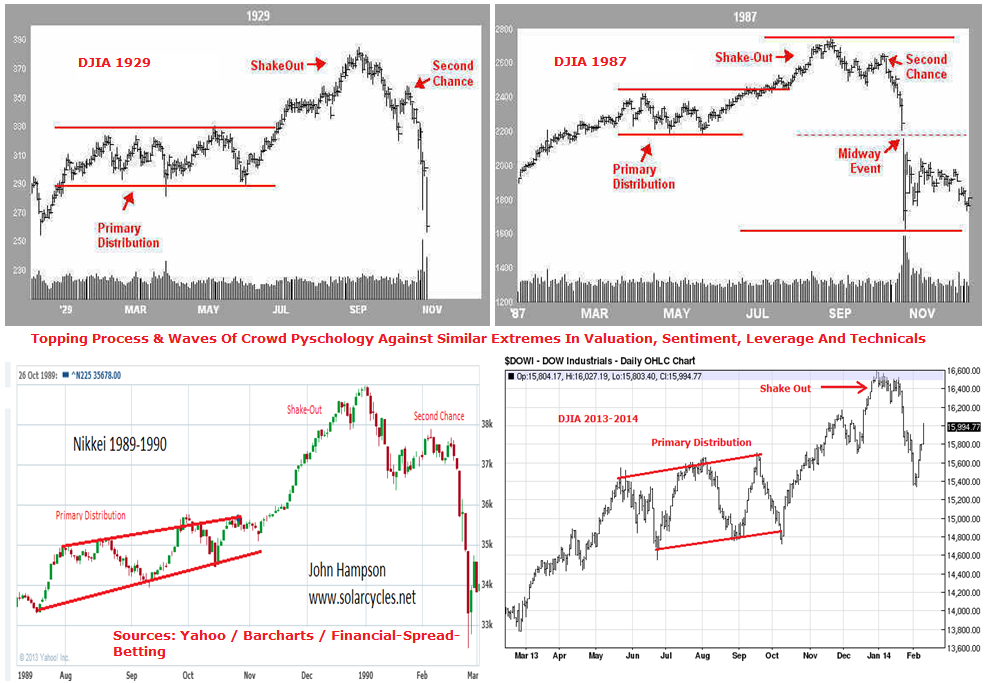
If prices did break upwards here then we might take a fresh look again at those analogs from history (in terms of similar valuations, leverage, sentiment, etc) whereby a price range led to a final overthrow push up before hard falls erupted:

24m5 24m6

 Source: Financial-Spread-Betting

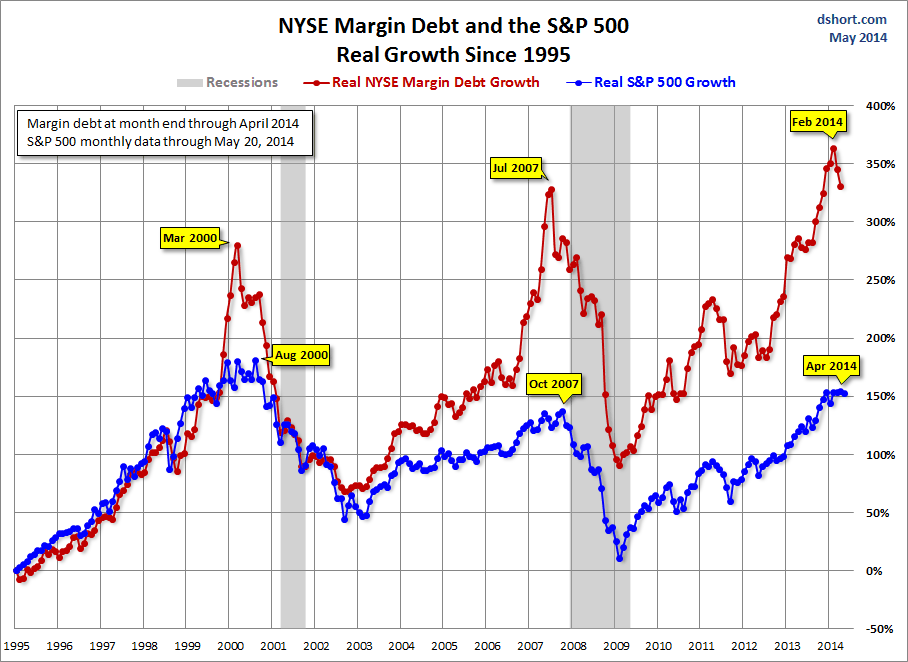
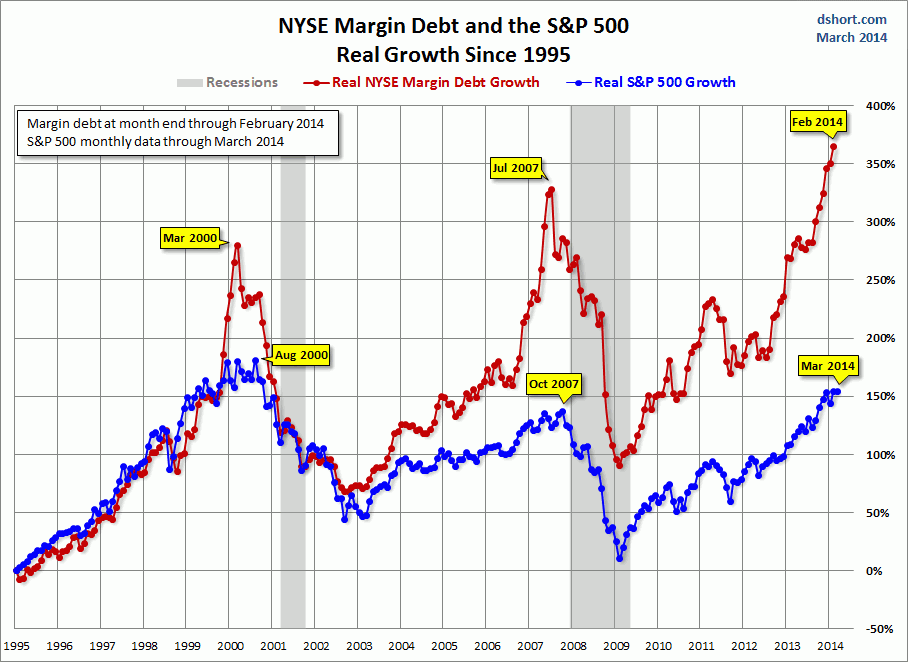
In both those cases prices broke upwards around the end of May out of a trading range. However, know that leverage did not peak until October in 1929 and September in 1987 respectively, whereas it appears that leverage peaked out in February 2014. We ought therefore to see margin debt reverse the recent declines and rally to new highs to enable a further significant rally in equities. There is no demographic tailwind.

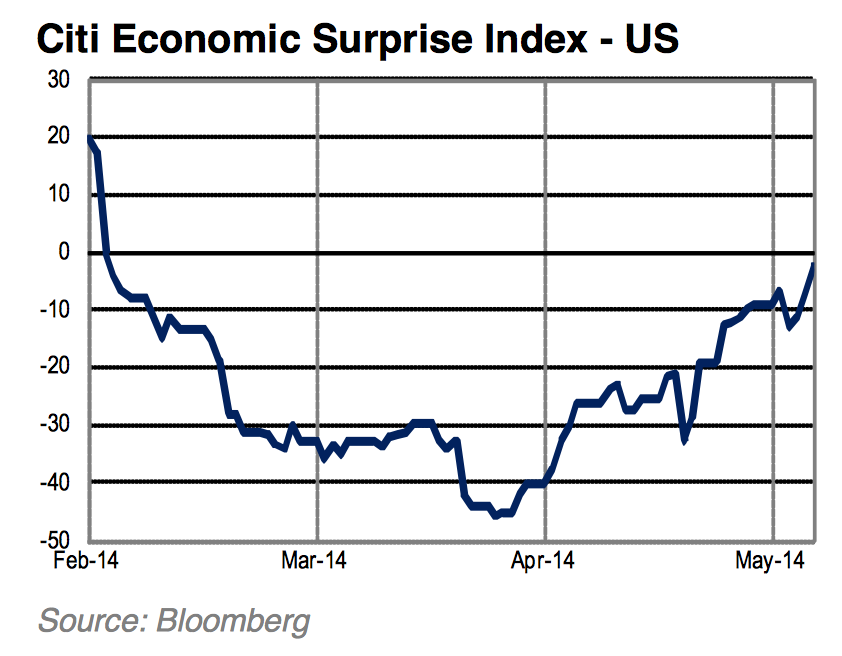
Leading indicators have been pointing to a mid-year pick up in the economy and economic surprises are now trending upwards again for the US. Might that also fuel such a final mid-year up leg, before falls in the Fall? It would fit with the seasonality of geomagnetism, whereas the Presidential cycle suggests trouble as of now. I continue to believe the development of the solar cycle is key. If the waning in sunspots continues (and May is likely to print a 3rd month of declines from the Feb peak) then we should see stocks and the economy turn down together. Margin debt and small caps are leading the way and the rest will follow. If, however, the solar cycle has a sting in its tail and prints an anomaly like SC16 (belated monthly sunspot spike) or SC5 (belated smoothed maximum), then we should see speculation in assets and activity in the economy continue to bubble away and margin debt make higher highs. So we can continue to cross-reference.

Drawing on the 2000 and 2007 margin debt progressions, it looks more likely that margin debt topped already. However, both years saw a pause in margin debt declines whilst a summer rally took stock prices to a secondary peak:

24m12

 Source: DShort

For now, the balance of probability suggests the solar cycle is now on the wane (sunspots since Feb, solar scientists’ predictions, bulk of previous solar cycles compared, margin debt decline and froth stocks peak Feb-Mar), and the balance of probability suggests large caps will tip over imminently and join small caps in true correction, and that this is the last gasp of the cyclical bull. There are too many bearish indicators, divergences, and red flags to enable a bullish resolution here. For stocks to break up and out of 2014’s trading range, we would need to see repairs to volume and breadth and risk-off money flows, and we would need to print anomalies in some historically reliable indicators. Failing that, it looks likely that the SP500 will be repelled again at the top of its arching-over price range. With Monday a US national holiday, there is just one trading day before the new moon which could then initiate renewed downside as lunar phase extremes typically do a good job of marking trend changes when price action is overall choppy.

24m2

In summary, the case is still overwhelmingly bearish for US stocks, and my primary scenario is that prices are arching over into imminent hard falls, to correct the multitude of extremes in valuations, sentiment and technicals that have been in place for some time. Small caps, tech, margin debt and sunspots all look to have peaked around February and I expect large caps to fall in line. However, there is a lesser case for another bullish leg over the summer before hard falls in the Autumn, and that remains my worst case scenario. If that is to occur though, we need to see supportive developments in volume, breadth, cyclicals and other indicators. I continue to attack and trade short, and look to this week’s new moon for another potential definitive peak in the SP500.

Perfect Set-Up?

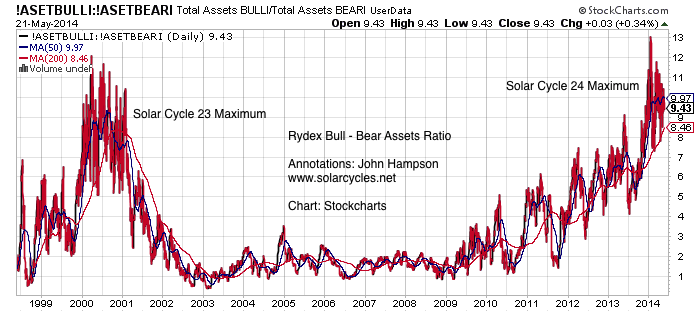
Speculation increasingly looks to have peaked out exactly at the solar cycle maximum again, as demonstrated by these 3 charts:

22m5

22m1

22m2If you have doubts about that beautiful triple cross-referenced set-up, then there are plenty of supporting indicators to shore up confidence:

22m3 22m8 22m9 22m10Once again: I am not an advisor, so don’t follow me. I see as perfect a set-up as I will ever get for a medium-long term trade, and the market is giving me plenty of time to position optimum short. If I wanted an opportunity to make a life-changing amount of money, here it is, and so I am positioned accordingly. Why front-run the market at all? Timing a top is very much possible, and not the game of fools: proponents of that mantra just don’t know the tools. My strongest case short was for the RUT and therefore the home of my biggest shorts – it is already down over 10%. My guess is some traders now see a potential short in that index but are waiting for a retrace that maybe never comes. The wider indices are an elastic band at snapping point. Some traders will be nimble enough to catch it, others will stand like rabbits in the headlights. Those still playing the long side at this point are the dumb money: not just my opinion but as evidenced in indicators.

A historic opportunity, which I hope we will all be celebrating together.

Markets Update

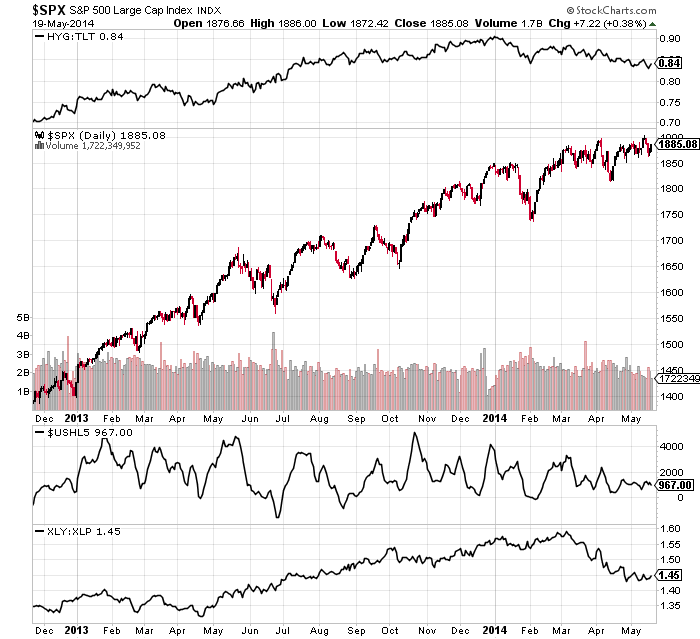
A little rally in US equities Friday-Monday, keeping the market in bull-bear limbo. Volume was bearish, relative performance in defensive sectors was bullish. The bigger picture remains the same, with various divergences suggesting bearish resolution. Shown here is high yield versus treasuries, new highs / new lows, and consumer discretionary versus staples:

20m6The even bigger picture continues to show a historic opportunity on the short side.

20m2 20m3 20m4 20m5

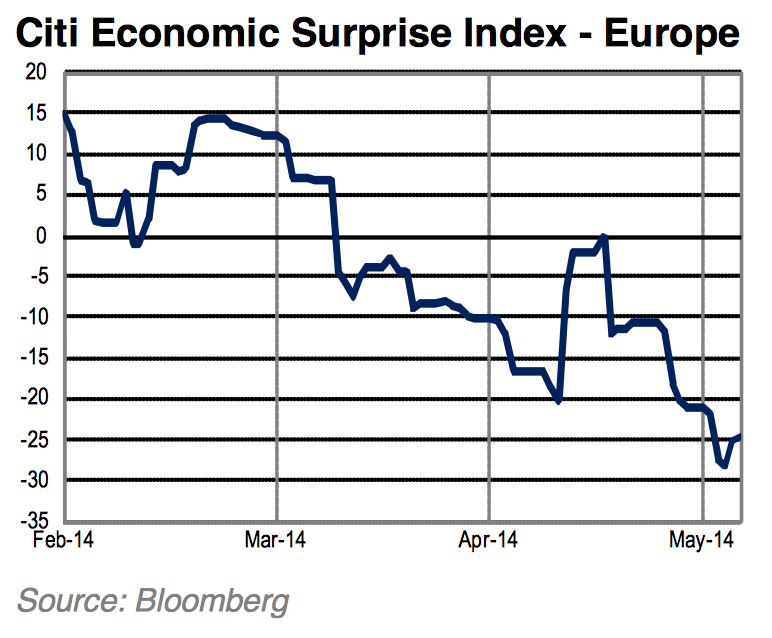
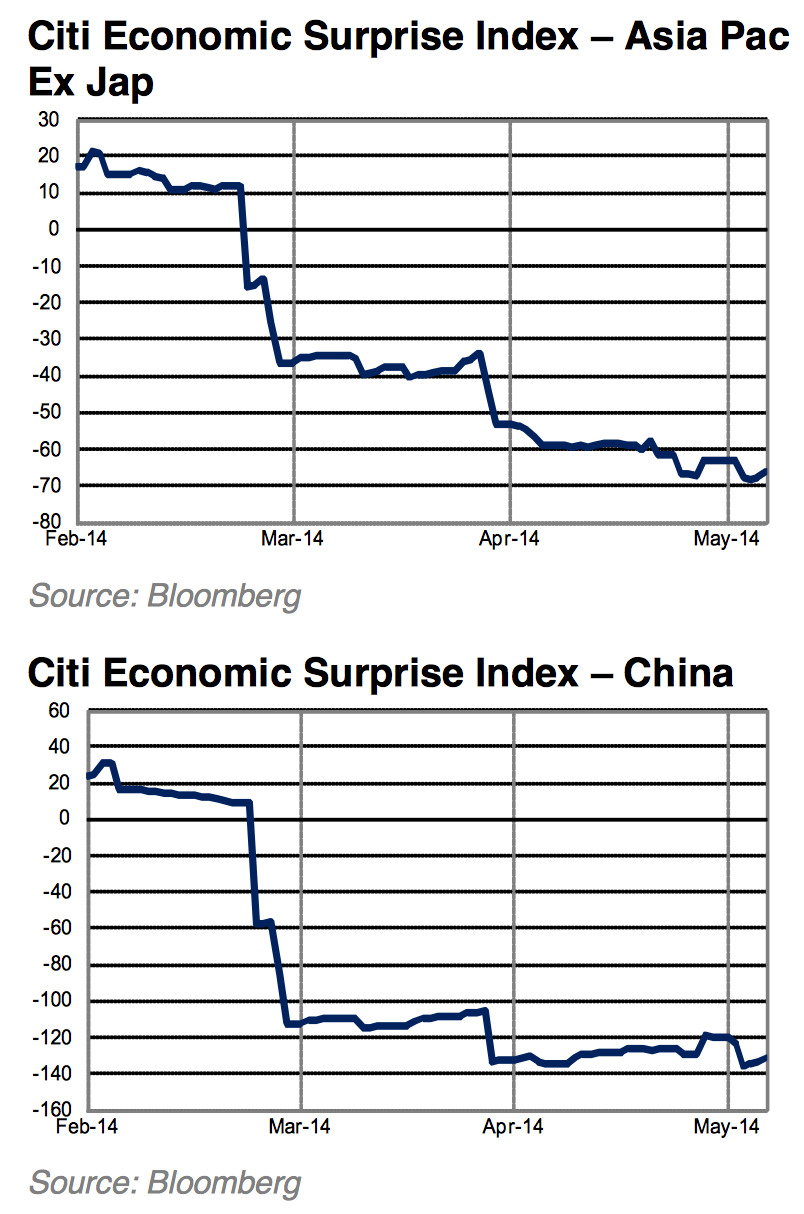
On the flip side, leading indicators point to a pick up in the global economy as of now through the summer, which coincides with the more supportive geomagnetic seasonal period, and economic surprises have turned upwards in the US and Japan.

Screen Shot 2014-05-20 at 06.51.36 Screen Shot 2014-05-20 at 06.51.59 Screen Shot 2014-05-20 at 06.52.11 Screen Shot 2014-05-20 at 06.52.25So far in May, sunspots look set to continue their monthly waning trend from their peak in February. Should this continue, not only should the excess speculation be pulled from stock markets, but the ‘growthflation’ in the economy that typically peaks around the solar maximum should also ebb. In other words, the stock market and economy should fall together.

20m7We currently see various commodities at key decision points, in the noses of technical price triangles, such as oil and silver. Are they going to break upwards and outperform as late cyclicals as equities turn down, or are they going to break downwards as deflationary post-solar-maximum forces take over? Either way, their predicament is suggestive of a big move ahead in assets.

Returning to equities, whilst I cannot rule out higher prices in the near term, the stronger case is that the markets already peaked out and that stocks tip over again this week. Should that short term prognosis prove false, then the medium and longer term cases are unequivocally bearish, and so I stick with my strategy of selling into strength. The safety is on the short side, time is ticking towards the elastic band snapping in large caps.

Fake Out Top

By my work, that completes the cyclical stocks bull market peak.

The solar maximum is looking likely to have run from Dec 2013 through to April 2014 (smoothed peak ~Dec, monthly peak ~February, daily peak ~April). The real inflation-adjusted Dow peak stands at 31 Dec, along with the Nikkei, at the new moon. Various cross-asset measures also inverted at that turn-of-the-year, which has been historically potent, as the inverted geomagnetism peak. The Nasdaq and Russell 2000 peaks were at the turn of Feb-Mar, also at the new moon. The nominal SP500 and Dow peaked-to-date at the full moon of two days ago, making for an inversion.

If the solar maximum, inverted geomagnetism peak, and lunar phase extremeties rule the markets, then all four indices are now likely in bear markets, and whilst we won’t know that for sure for some time, we will know soon enough if those peaks are taken out.

It is the cross-referencing of the timing measures (solar max, geomag, lunar phase, DeMark) with the technical and fundamental indicators (valuations, sentiment, equity allocations, leverage, divergences, cross-asset performance, bull market measures, demographics) that makes this so compelling. The technical/fundamental indicators suggest the top timing should be now (Dec-May), the timing measures in turn suggest the indicators ought to be flashing red in that window, and they are. Indicators on red began to accumulate towards the end of 2013 and the last few recently fell into place: a decline in margin debt, a waning in the monthly sunspot count, a snapping of the parabolics (biotech, internet), DeMark exhaustion.

For these reasons, it is unlikely that the markets can extend longer or higher, and whilst I cannot rule out higher prices, the attempted break-out by the large caps of several days ago was an important test that looks to have failed. I still remain confident that waterfall declines will erupt, as the historic leverage is unwound, but the question is when. I was too early in their prediction as the solar maximum extended beyond solar scientists’ expectations. Assuming the solar cycle continues to wane from here, then I have two possibilities in mind. The one is those sharp falls erupt imminently, once technical price supports are broken. The other is they erupt around Sep/Oct at the inverted geomagnetism seasonal low, which has hosted most of the major historic waterfall declines. I am specifically talking about 3-4 weeks of panic selling, differentiating that from a more measured bear trend.

16m3

16m4

16m1

16m716m8

16m5


Exhaustion Or Breakout

Superficially a bullish breakout, but behind the scenes both the SP500 and Dow met DeMark’s exhaustion topping criteria yesterday.

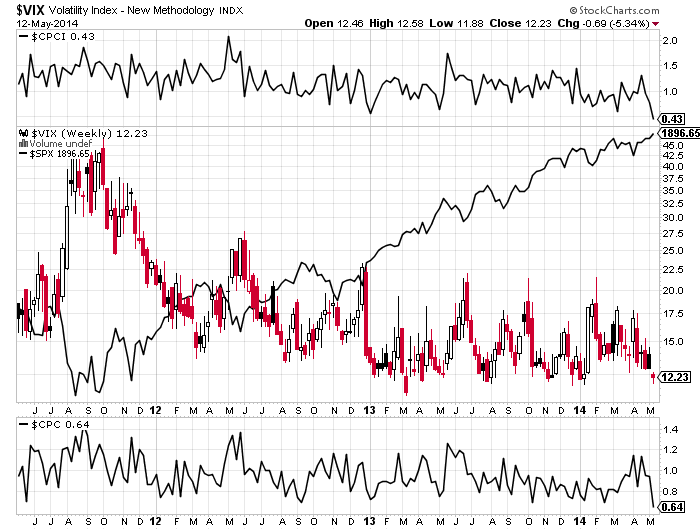
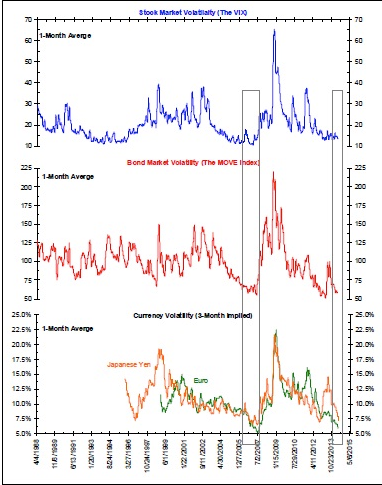
Supporting that, the breakouts/rallies were on low volume, the put/call ratio for the indices (CPCI) finished at one of its lowest ever readings, and the CPC and VIX also reached contrarian low levels:

13m2Source: Stockcharts

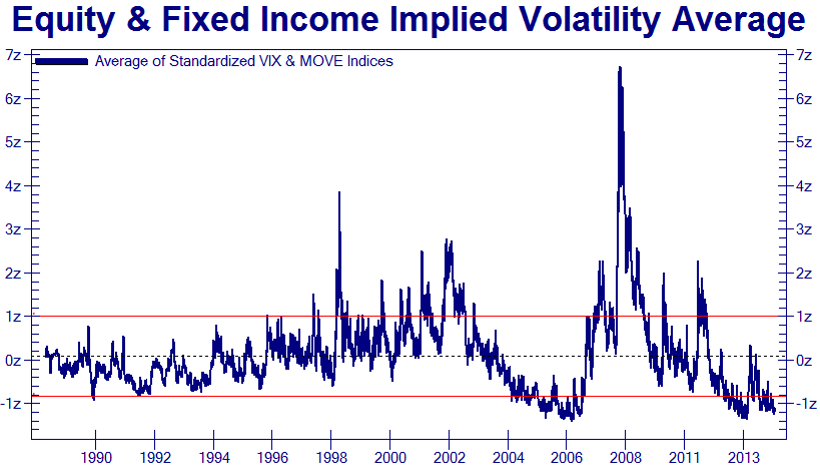
A longer term look at stocks volatility plus treasuries volatility reveals historic compression:

13m3Source: @Not_Jim_Cramer

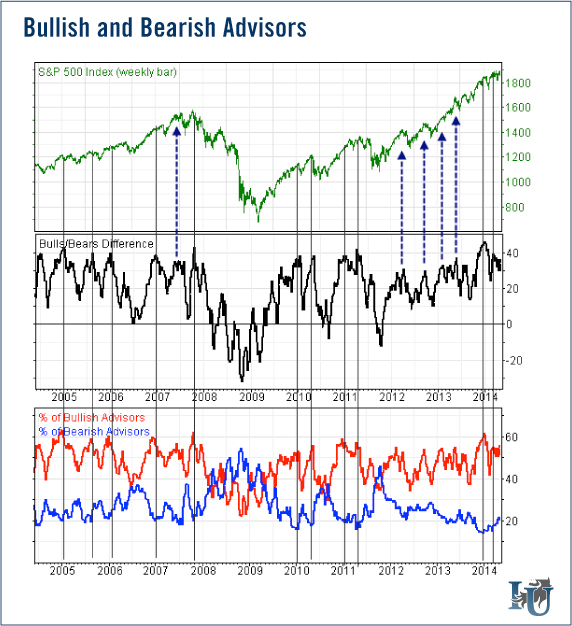
Sentiment remains elevated, as the March/April falls in the Nasdaq and Russell 2000 made little impact:

13m4Source: Investment U

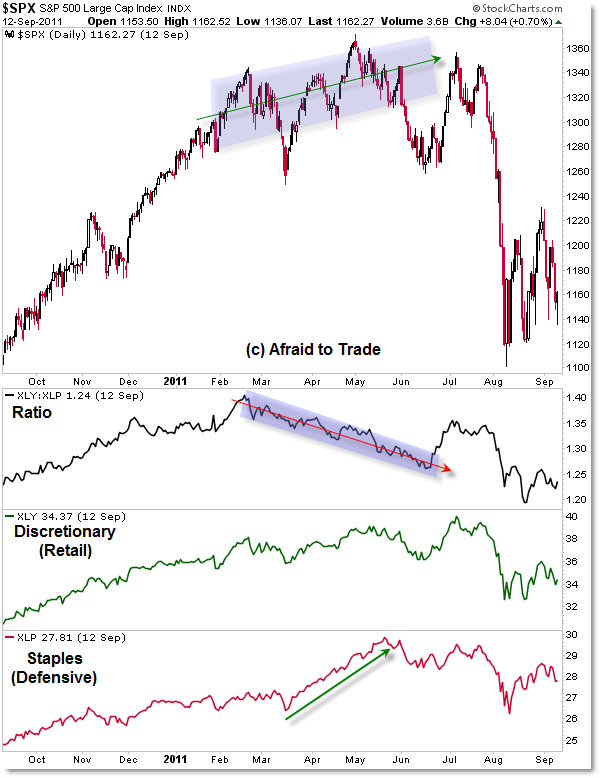
So, put/call, volatility and sentiment all signal high complacency, whilst the last time we saw such persistent money flow into defensives was 2011:

13m5Source: AfraidToTrade

I’ve added again to the SP500 and Dow short positions. Tomorrow is the full moon, let’s see if we get an inversion and bull trap.

To finish, this is how the Dow peak looked at solar cycle 20 maximum, namely a topping process at a turn-of-year solar top:

13m6

Underlying Source: FiendBear

As things stand, the current solar cycle (24) smoothed peak is likely to have fallen circa Dec 2013, the monthly sunspot spike in Feb 2014, the real Dow peak likely end of Dec 2013 and the secondary high here in May: all very similar to 1968/9.

Window Closing

Some more charts:

1. Financials leading down:

9m9Source: Charlie Bilello

2. Consumer Discretionary leading down:

9m10

Source: Charlie Bilello

3. Defensives outfperform:

9m11


Source: Charlie Bilello

4. Consumer staples performance relative to SP500 echoes previous peaks:9m1

Source: AThrasher

5. Investors Intelligence sentiment leading sharp corrections:

9m2Source: Stocktwits

6. New highs consistent with 2000 peak:

9m6Source: J Lyons

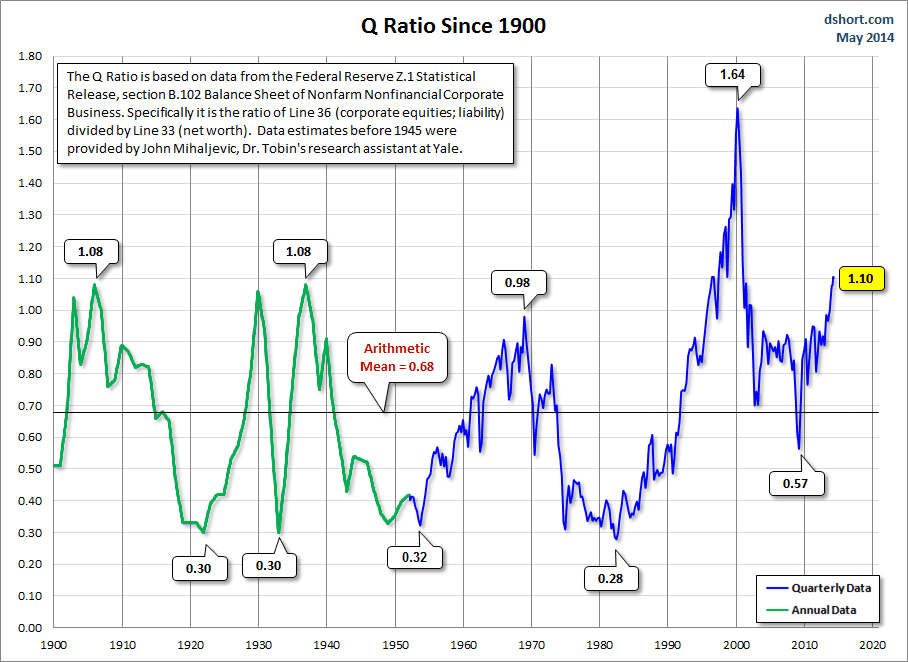
7. Q ratio valuation now exceeds 1907 and 1929 peaks:

9m4Source: DShort

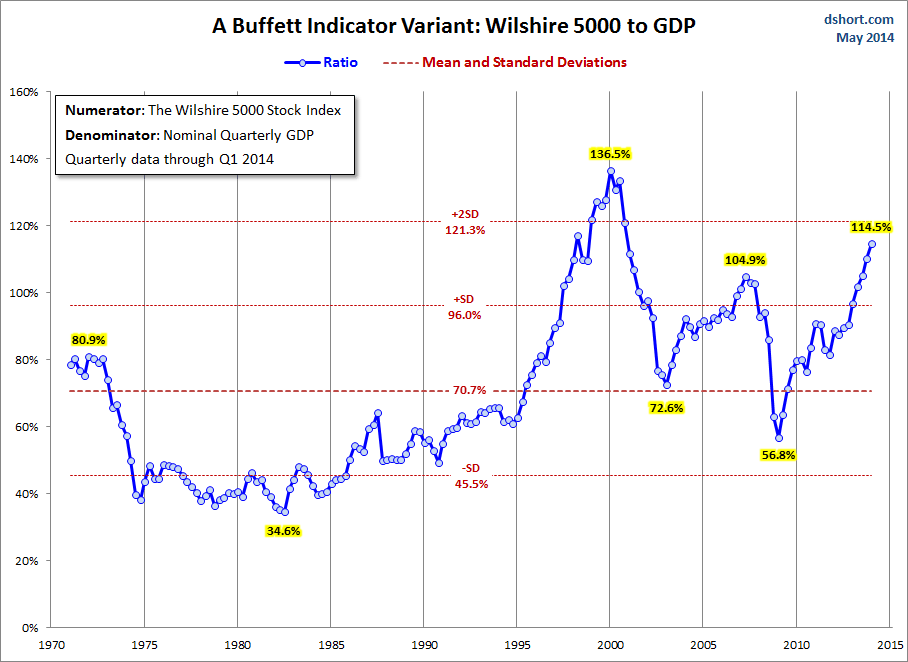
8. Market Cap to GDP valuation also now only superseded by the 2000 mania:

9m5

Source: DShort

9. Evidence for a bubble:

9m3Source: Market Watch

10. Tom DeMark’s indicators predict peaks in the large caps are now at hand. He says the Dow effectively peaked on December 31st and a secondary move up to a level of 16,660 will create a top for the Dow.

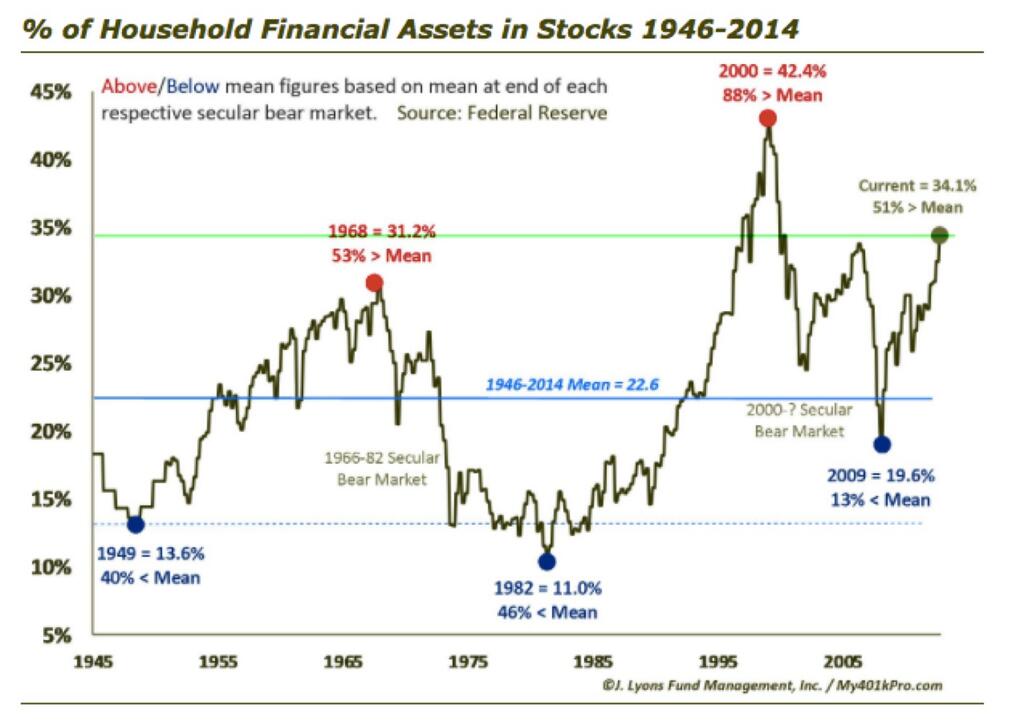
At this point, the number of bearish indicators I have amassed is a source of great conviction. It will be a long time before such an opportunity re-appears. Those who suggest that too many bearish indicators is conversely bullish are confusing contrarian investing. Too many bulls, too much euphoria, too much allocation to equities: those are contrarian indicators. They are measures of ‘all-in’ and no-one left to buy.

I have more than 50 bearish indicators, each with a reliable history. Just one on its own should be a reason to be cautious. Many different angles, and together a solid cross-referenced case. To dismiss them all is effectively to argue that this time is different for each indicator, that each one was valid until now but no longer. To proponents of this time it’s different: Fed policy does not trump all, but has been the mantra behind bidding up equities to historic valuations; Low interest rates and low growth reflect recessionary deflationary demographic trends that cannot be stopped; Secular bulls do not erupt from these levels of valuations, leverage and euphoria – in fact, the worst bear markets in history do. Anyone still playing the long side at this point is playing a truly woeful risk-reward set-up.

Don’t trust me, trust the indicators. This is as good as it’s ever going to get for a medium/long term trading set-up. It’s right here, and I’ve done my best to demonstrate what that is so by drawing it all together as objectively as I can. I withhold from putting it more bluntly because I am not an advisory service, so I just share what I am doing, which is deploying my biggest ever trades in shorting the US stock indices (with the biggest in the RUT), trying to negociate a level of exposure which reflects maximum opportunity-taking whilst avoiding risk of wipe-out.

Unprecedented collective demographic downtrends in the major nations suggest this is a short-and-hold opportunity on a par with the Nikkei at the end of 1989, and accordingly I believe it’s RIP Warren Buffet’s buy-and-hold value strategy 1950s-2014, which only works if the long term nominal is up.

9m12

Price Cheerleading

Time to look at what has been invalidated from my Q1 analysis.

I am no permabear. I played equities long-only from 2009 through to 2013 but by the end of 2013 there was an impressive congregation of topping indicators, which aligned with a predicted peak in the solar cycle. Adding in my demographic research, the case was particularly compelling to short stocks and hunt for a major peak. So I decisively switched teams. That compelling bearish case still stands, as just a couple of weeks ago I produced a list of 30 indicators advocating short. See that list here.

In short, focussing on US stock indices, whether we look at valuations, bull market characteristics, sentiment, euphoria, leverage, IPOs, equity allocations, smart money flows, breadth divergences and other indicators with reliable histories, we have a case for a top in US equities. Add them all together, and it’s just about the timing. Therefore I don’t understand shorters throwing in the towel at this point, and particularly because as things stand, US stock indices have traded sideways in 2014. There is no definitive bull or bear trend, and at the time of writing 3 of the 4 main US indices are below their Dec 31 close, whilst only marginally so. Price has only paid for short term trading over the last 4 months, and the rest of us are patiently – or impatiently – waiting. Pending that resolution, beware the price-cheerleading from both bull and bear camps, thinly disguised as analysis.

So, with that multi-angled case for a top, why have stocks not fallen decisively yet? I argue that the reason is the solar cycle maximum extending beyond the predictions of the major solar scientists, and its implication on speculation in the markets.

23ap1

Therefore, my anticipated waterfall declines in March and April and analog aggregation did not happen:

23ap2

However, by indicator extremes and similarities, the set up remains for a crash in the markets and the delivery of those waterfall declines as the peak leverage is unwound. But, for now, the stock indices have morphed into sideways ranges, as the solar maximum has extended. The solar maximum, through human excitement, influences speculation and also economic activity. Once the solar maximum begins to wane I expect both to ebb together, and I therefore consider this one of the most important items to track.

Should the solar maximum not peak out until mid-2014 then I would look to the possible analogs of 2011 and 1987 as price guides. Both these analogs shared similar indicator extreme readings and backdrops, and both saw waterfall declines in the Fall/Autumn. 2011 produced a long sideways range ahead of the falls, whilst 1987 eked out further price gains in the summer, before the falls. My approach is to stay short and attack short until we see the major declines, shearing off profits as I see fit based on the short term action, and should stocks eke out further new highs before the falls, as per 1987, then my current exposure can cope with that.

Should the smoothed solar maximum be behind us, and sunspots wane from here, then those Q1 2014 trading ranges in the indices may turn out retrospectively to be the beginning of a new downtrend, made clear by imminent sharp falls (declines from here would fit the Presidential cycle). In support of that possibility, my January call that the Dow and Nikkei peaked 31 Dec still stands at the time of writing, and my March 2 call that the Russell 2000 and Biotech sector peaked out around last day of Feb is so far accurate.

From a bullish perspective, cumulative advance-declines continue to support, and cyclical sectors recovered after their January sell-off. Gold and miners have fallen back since mid-March. Leading indicators suggest a pick up in global industrial production as of mid-May, so that could become a tailwind if stocks do not significantly sell off over the next couple of weeks. Q1 earnings are projected to produce an overall decrease in earnings, for the first quarter in some time, but thus far we do not see overall bearish price reaction to those that have reported. Economically, we do not yet see the tip into outright deflation or negative growth, but I expect that to come hand in hand with the stock market declines post-solar-maximum, i.e. sharp stock market declines will affect the economy and vice versa, all guided by the sun’s influence on people.

My Q1 2014 ‘misses’ in terms of analysis can be summed up as impatience over the sharp falls into a definitive bear trend, but I believe the reason for that is the extension of the solar maximum, which was unknown at the time. The bulk of my analysis still stands, and will continue to do so until that definitive selling erupts.

In the near term I am looking at market reaction to earnings, how price behaves into the new moon at the end of April, and the indicator reports at the turn of April-May for sunspots, margin debt, and more. I am adding short into the stock market rallies, such as this 6-day rally into today, looking to short term indicators for overbought/exhaustion. I am also watching commodities to see if they can continue to rally as a late cyclical class (considering gold separate) which typifies a top, but I have been taking profits on commodities positions as I have my doubts about the longevity of their rally due to deflationary/recessionary pressures. Potentially reflecting such pressures, treasuries have continued to perform since their turn-up as of the start of January and are another clue into what lies ahead.

23ap3


Sell Into Strength

Or buy into weakness, what’s it going to be?

Valuation looks like this:

17ap1And the Russell 2000 trailing p/e is now over 100.

Bull market looks like this:

17ap2

Sentiment looks like this:

17ap3

Leverage looks like this:

17ap4

Solar cycle looks like this:

17ap5


Economic surprises for all the main regions continue to wallow negative, and US earnings season is kicking off with 84% negative guidance.

Biotech, Social Media, the Russell 2000 and the Nasdaq all broke down as of the start of March, fulfilling negative divergences.

17ap6We now await the large caps of the SP500 and the Dow to follow suit.

My calls for the Dow and Nikkei having topped out Dec 31 still stand. The Dow did everything it could to close above the 31 Dec high without actually achieving it this far.

No crash Monday or Tuesday of this week. Instead the market sold off into the full moon and then bounced intraday. So time to get bullish? No way! The waterfall declines are the last piece of the jigsaw. On the back of a 3 day rally we now look to earnings season to support the market, but earnings are projected to disappoint. We need a historic normalisation of earnings at this point to justify the valuations. The market could of course continue to range-trade rather than sell off, and so to the question as to whether it’s appropriate to sell into strength or buy into weakness here. For me it’s clear: the multi-angled case to be short is compelling and a rare opportunity. The rug may be pulled at any point, but will be pulled eventually. I’m short equities and still looking for opportunities to add short on the rips.

Set Up For A Stock Market Crash

Last week I posted 30 bearish indicators here. Since then equities have begun to sell off and change trend after historic and solar-maximum inspired levitation. There is a long way to go to mean-revert, wash-out or fulfil these indicators, but that can be achieved in a shorter timescale with the help of HFT by way of a crash or waterfall declines.

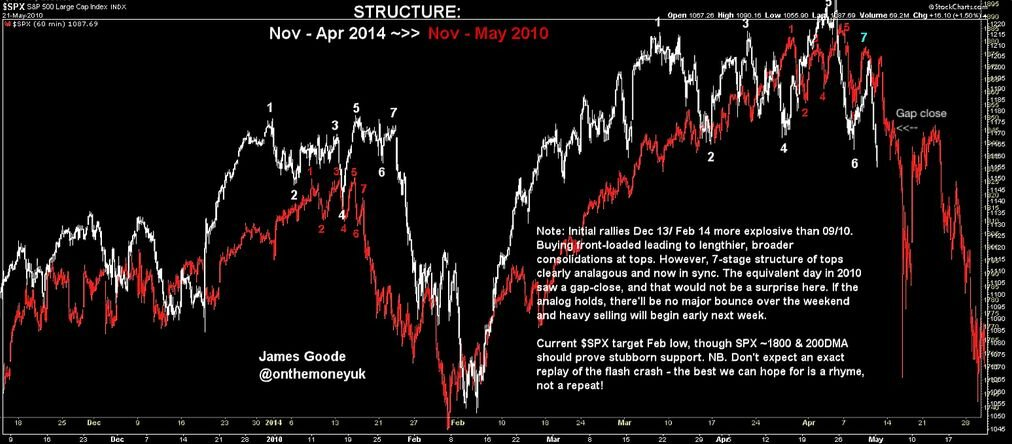
Within that list of indicators we see identification similar to the backdrop to the May 2010 flash crash, and I posted about that here.

We see a similar price pattern into the flash crash repeated here too:

13ap1

Source: James Goode

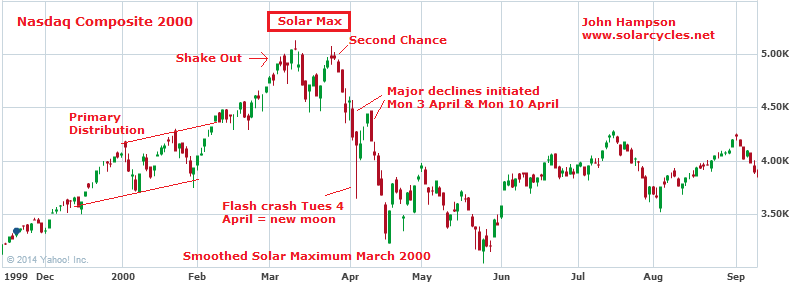
We also see identification similar to the Nasdaq peak in 2000, before a flash crash and waterfall declines:

13ap2

13ap1

And the same applies to the Nikkei 1989 and solar maximum.

Additionally, recall that major declines in history have often initiated following a weekend, where equities sold off into the Friday close, and market participants have time to stew Saturday and Sunday. Stocks sold off into the close on Friday, in a fairly decisive Thu-Fri trend change.

Recall that the biggest decline days in history have typically occurred close to new moons and full moons. This coming Tuesday is a full moon.

Recall that geomagnetism is bearish for the stock market. We have been experiencing geomagnetic disturbance both Saturday and Sunday this weekend.

Recall that periods of heavy falls in the stock market have typically occurred in the inverted geomagnetic seasonal lows of March/April and October. This is April.

In short, the set-up is here for a crash or waterfall declines, and the greatest potential lies in Mon April 14 – Tues April 15 (tomorrow and Tuesday) for a major historic down day. I balance that with certain short term indicators suggestive of bounce potential, and were that to occur we might look to around the new moon of April 28th for fulfillment. But the crash set up is there for tomorrow, so let’s see.