Charts Update

The exhaustion gap (from Friday) is still in play, and I’m now looking for a gap down day. The current Nasdaq is shown below followed by a typical exhaustion gap pattern:
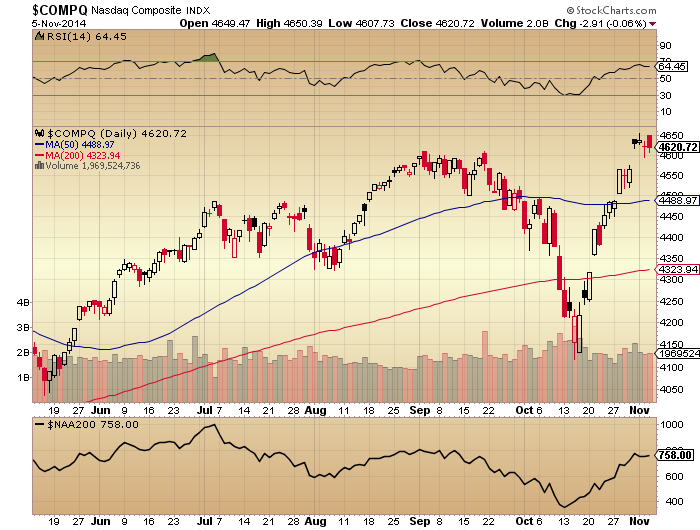
6nov85

Source: Stockcharts6nov82

Source: TraderPower

The equivalent point from the year 2000 looked like this on the SP500:
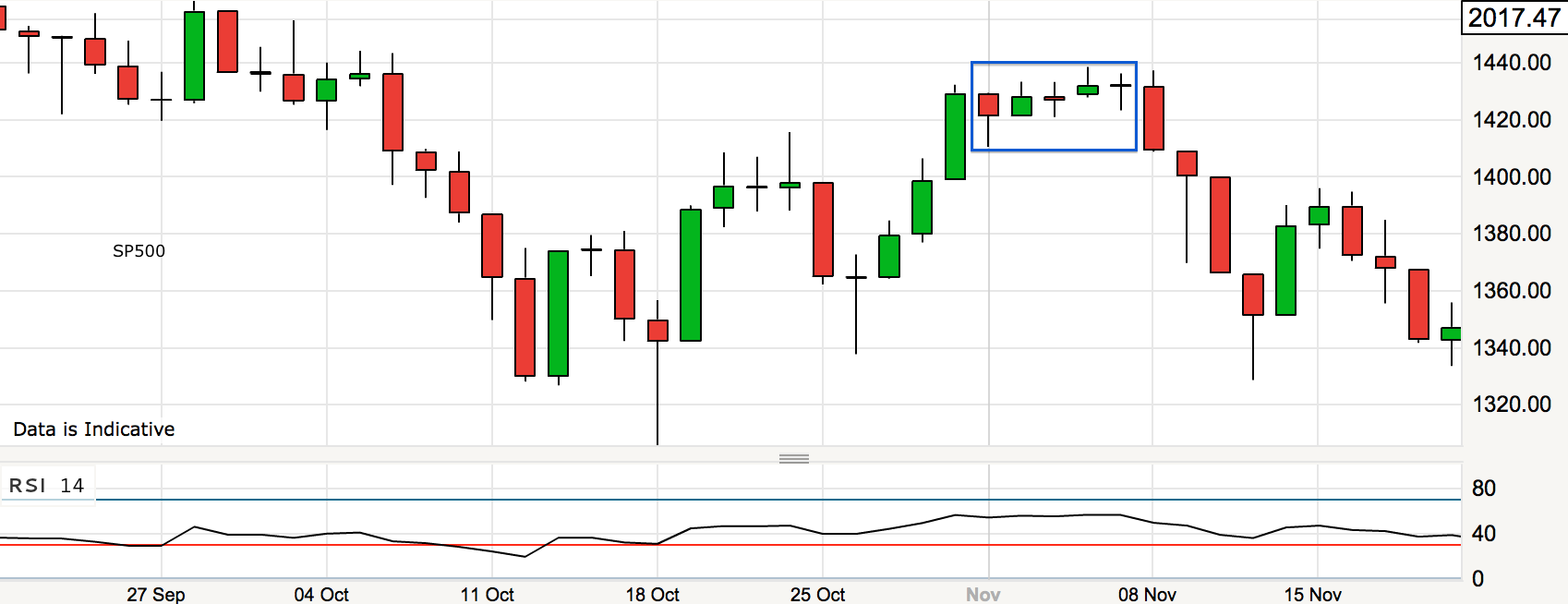
Screen Shot 2014-11-06 at 06.29.45It took a few days to reverse, but the key is no significant break higher. Today is the full moon (or early tomorrow if in the US) which could mark the reversal, plus we have a potential gap down trigger from ECB disappointment. If the ECB surprise to the upside then I still don’t have a case for a continued rally, and that’s because I don’t see the fuel for higher.

The latest II % bears reading is 15, which has been the historic limit, and AAII bears also now stand at 15%, which is their lowest reading since 2005. Rydex closed yesterday just below 12 which is thereabouts the historic limit too. Here we can see the market went down or sideways-then-down at such high allocation readings:

5nov62

Add in the overbought indicators and current geomagnetic disturbance and it is likely the next move is down. Junk bonds appear to be leading this move.

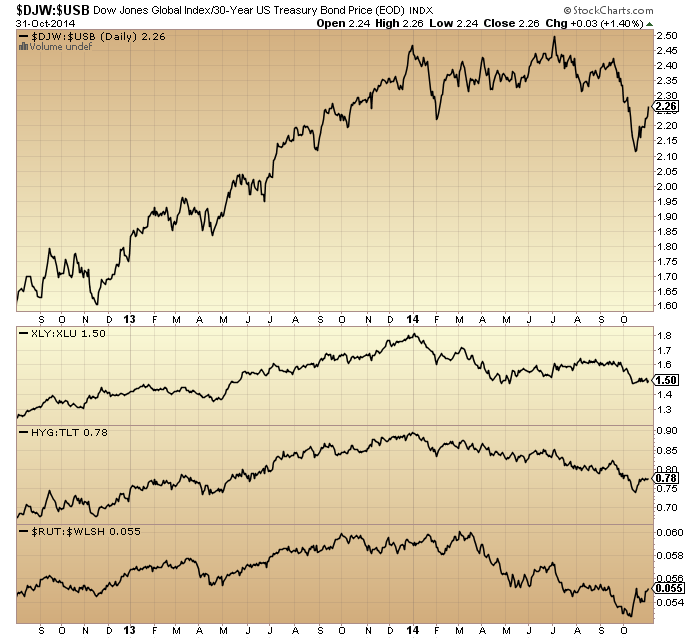
6nov80Plus note at the foot of the chart the renewed move lower in defensives versus cyclicals: XLY:XLU.

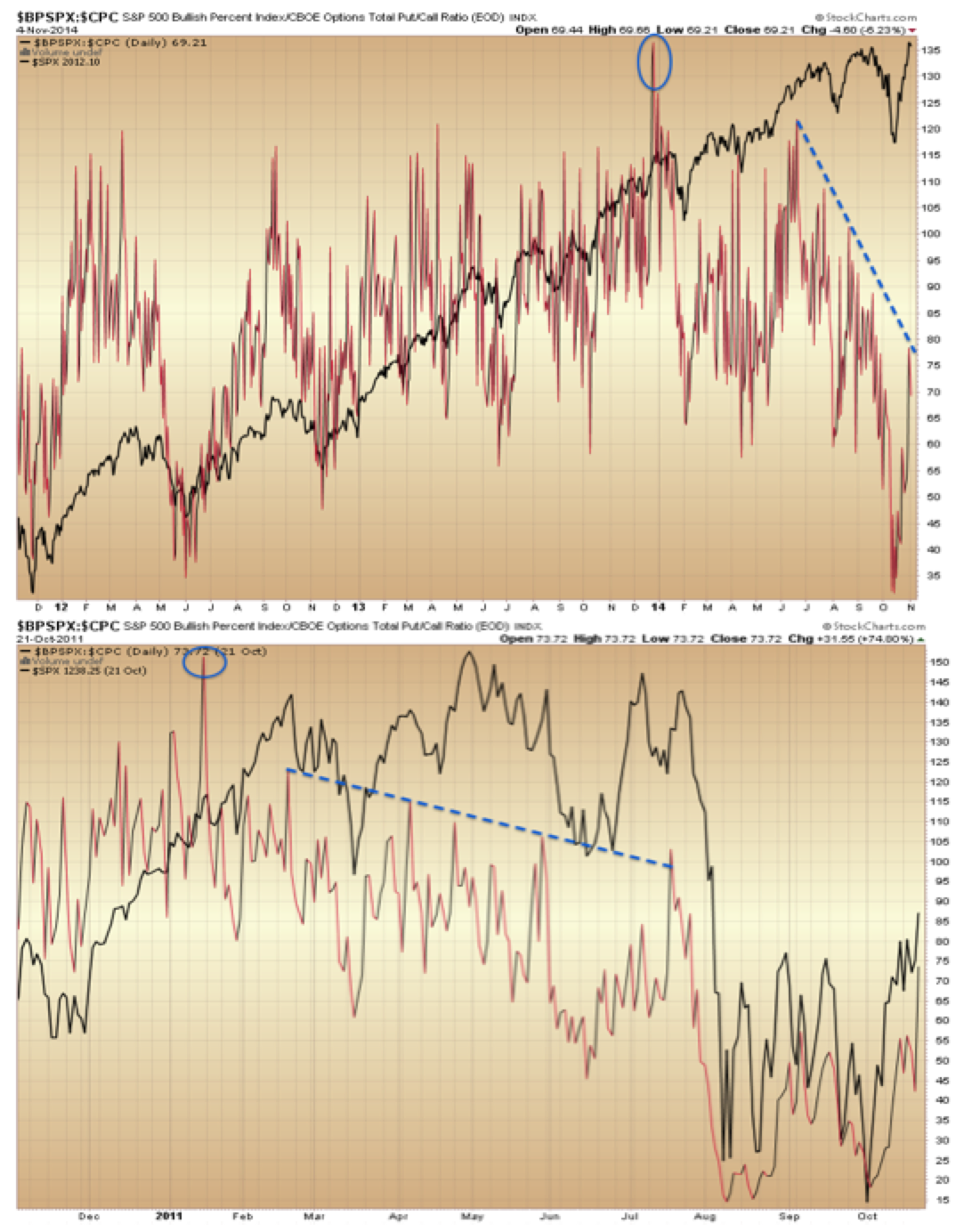
Bullish percent over put/call ratio is showing a five month divergence following a turn-of-year spike peak. The only mirror I can find for this is 2011, where something very similar occurred.
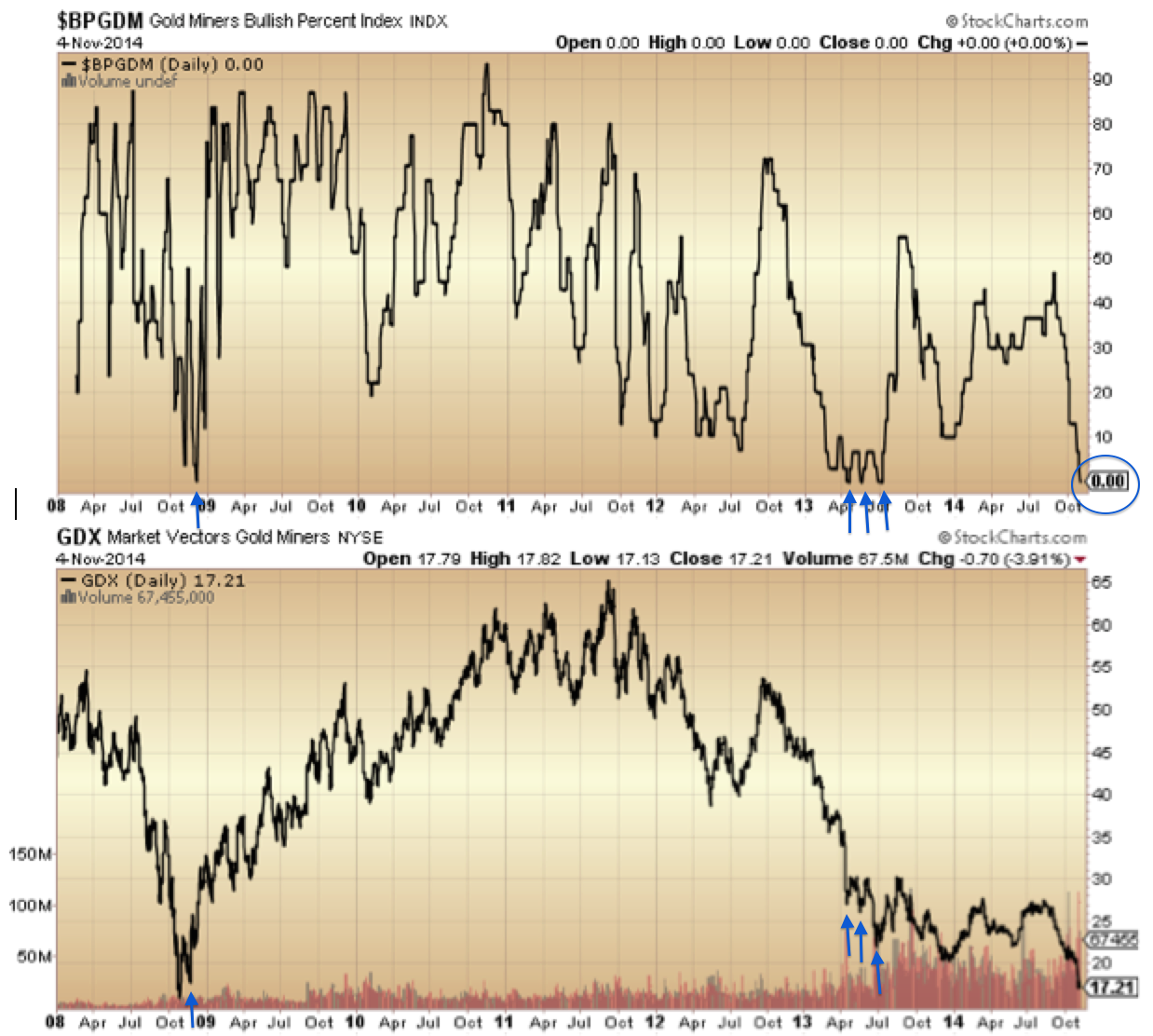
Screen Shot 2014-11-05 at 12.33.33For those who missed it, gold miner bullish percent is now at zero and suggests an imminent bounce or bottom for GDX:
Screen Shot 2014-11-05 at 12.54.51

This is the flip side of the equation: gold and miners are capitulating whilst stocks top out. Reversals in both should occur together. I wondered previously whether gold miners would be sold off in a steep stocks sell-off, but the difference this time, say compared to 2008, is that they start from total washout levels, so I see the only way is up.

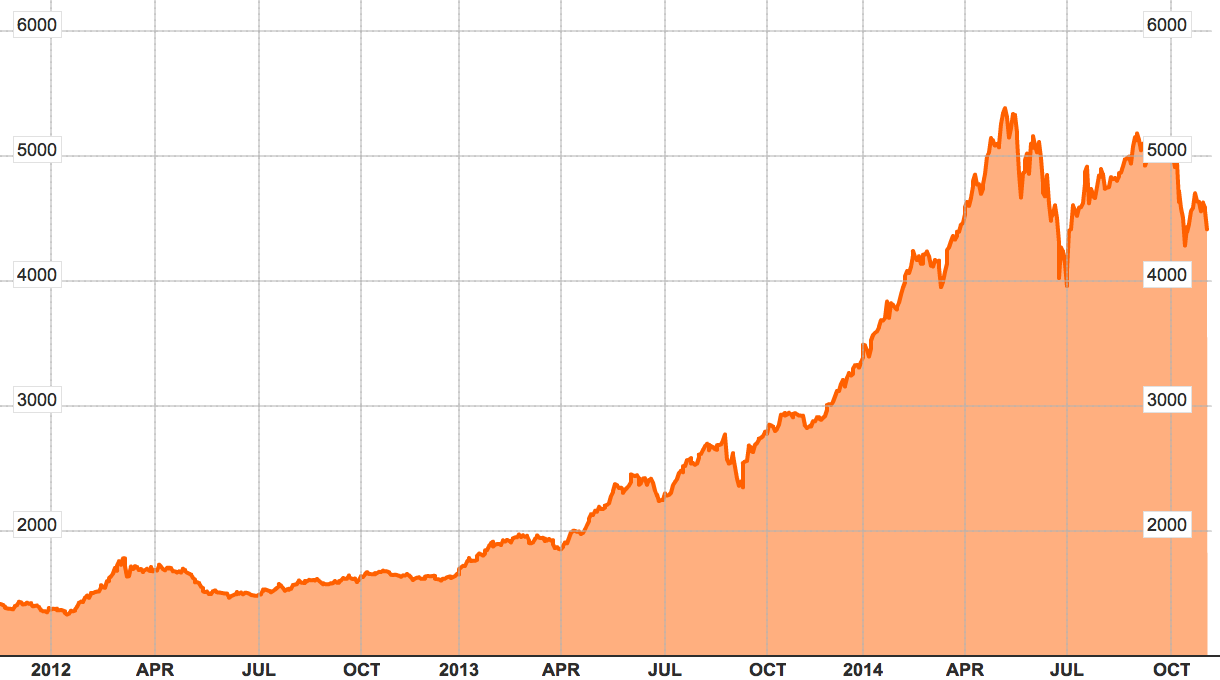
Moving on, a bubble I noted previously was the Dubai stock index. The parabolic terminated in May and there is a clear second chance peak since. This is a text book bubble/pop chart as it stands, and plays into the solar max being behind us circa April.
Screen Shot 2014-11-06 at 06.30.52Source: Bloomberg

The bubbles in Indian and US stocks look to be the the last to pop.

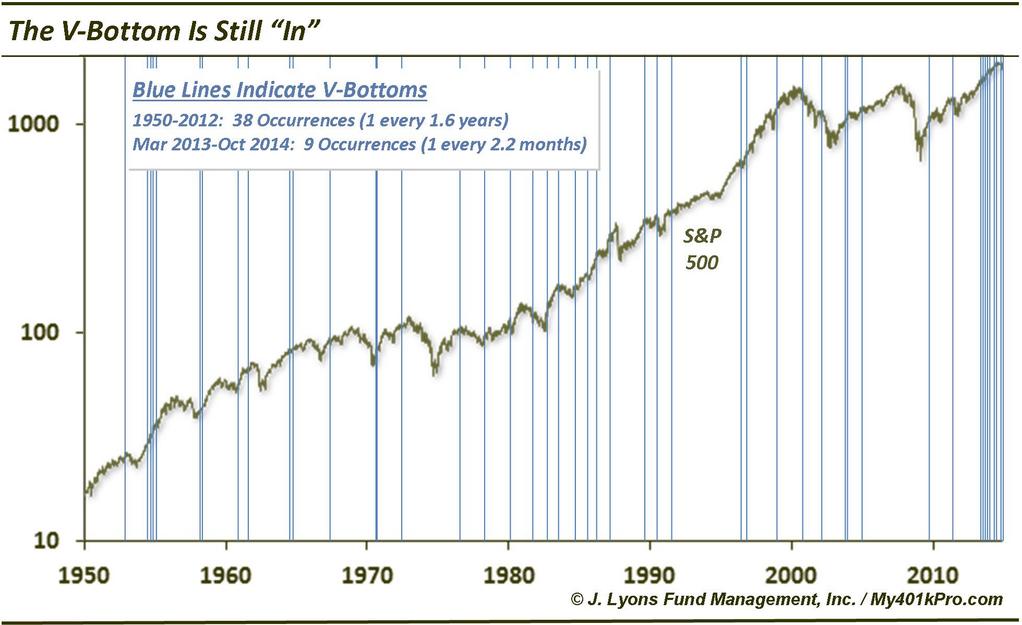
The mania in US stocks has been unprecedented in history in various ways:
2nov9

Source: Dana Lyons
Screen Shot 2014-11-02 at 07.16.11

Source: Ed Yardeni

6nov87

Source: Rory Handyside6nov89Source: Doug Short

6nov90

In short, sentiment, allocations and leverage have stretched to levels and durations not seen before. The unprecedented v-bounce cluster or swift dip buying has, in my opinion, stored up a mega-correction, and the record Skew level and duration warns of such a large drop. The October drop in equities did nothing to reset sentiment or allocations. I won’t be shifted from my stance that this is the set-up for a crash unless these indicators reset without a crash (which would also be a first in history).

It’s clear to me that the solar maximum has driven the mania and the lack of demographic tailwind has been compensated for by investors going all in on allocations, leverage and bullishness. With the mantra for the mania being central bank policy trumps all and the Fed being the most aggressive CB (until BOJ this year) I believe that’s why the stretching has been so pronounced in US markets. But ultimately, no-one could be prepared for this set of unprecedented developments in the markets. History has been well and truly made this year.

Recall at the October low we saw a capitulative breadth reading similar to bear market bottom lows? Bullish percent shows something similar:

Screen Shot 2014-11-05 at 12.27.19

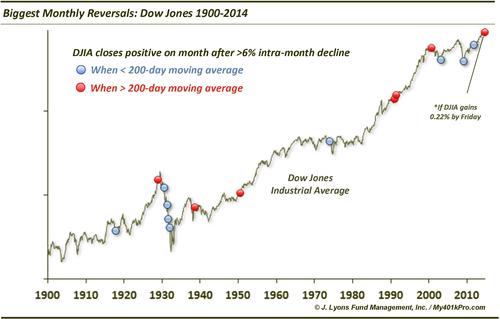
Drawing in the nature of the reversal…
6nov85Source: Dana Lyons

…similar reference points are popping up. Namely, what happened in October is either a sign of a market top or early bear, or it is a bear market bottom or major (~20%) correction bottom. It is neither of the latter two, so I suggest it is in fact the market peak / early bear sign and I have shown similar hanging man candles to October’s at the end of the 2000 and 2007 topping processes. However, there is one other option: it is an unprecedented catapult to an even bigger leg up in equities, which would fit with an anomalous delayed solar peak, if the bulk of the solar scientist models have it wrong, as well as the general ‘unprecedented’ markets theme.

I can’t rule that out. But it’s the cross-referencing again that keeps me from giving that serious probability. Leverage has failed to increase since February, sentiment and allocations are at an invisible limit. Negative divergences in breadth, defensives, volatility, smart money and other indicators are mature, and particularly compelling since the start of July. Since that point we have lower highs and lower lows on European indices and US small caps, which I believe are in bear markets. The positioning by indicators puts us right at the end of the topping process, meaning the next leg down is the definitive. In my opinion the case is so strong now that I can’t give an alternative much weight. So I continue short stock indices and long precious metals, but I am ready to step aside and wait if the market decides otherwise.

UBS see similar signs for a leg down from here but believe we will then scrape another marginally higher high by the end of December – but just in US large caps. I know this fits with some of your views that the final peak won’t happen until then. So, I would say: let’s see what indicator signals we get if and when this November leg down erupts. I believe this will be the definitive fall, but the possibility of a year-end peak would become clearer if we were to see swift capitulation again.
Game Over Start Of July

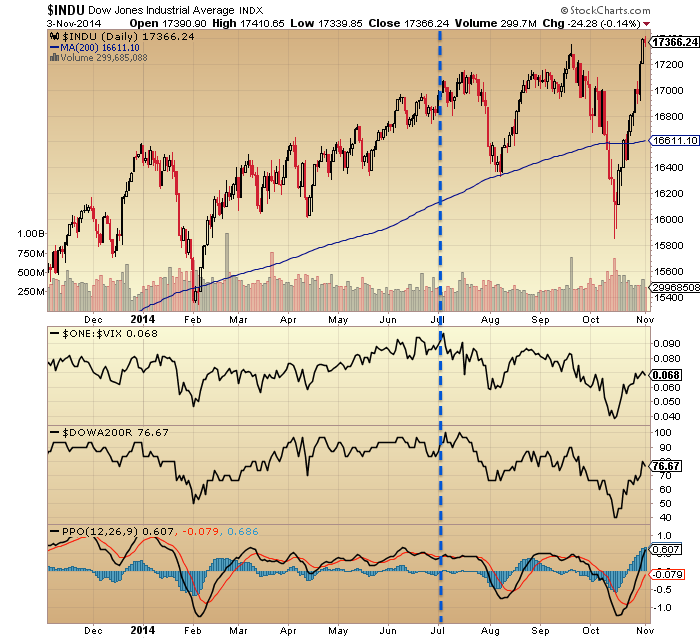
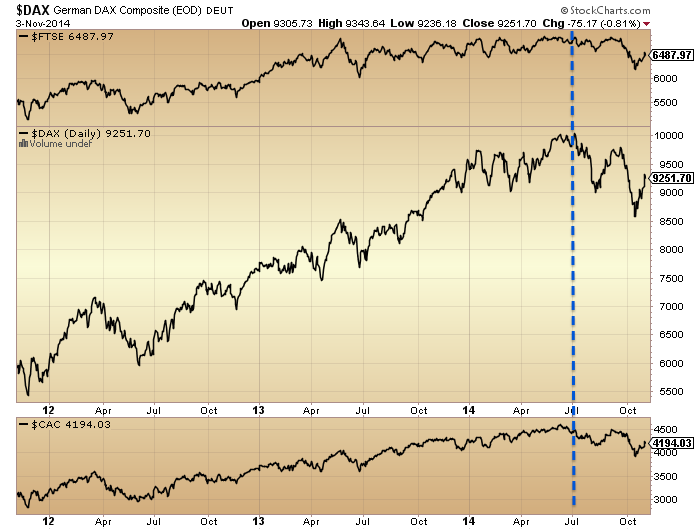
Many charts and indicators say equities finally topped out at the start of July.

1. European stock indices peaked out at that time and have since made a lower high and lower low.

4nov3Source: Stockcharts

2. US small caps and the Dow Jones World index show likewise:

4nov21

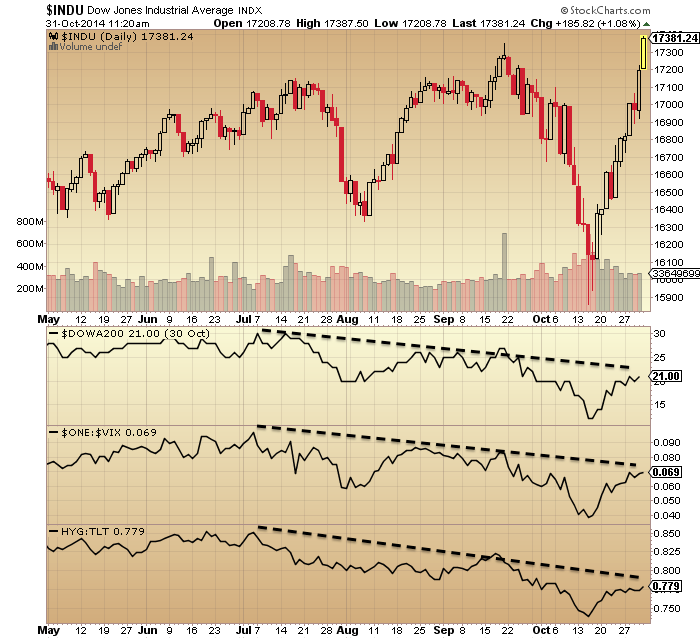
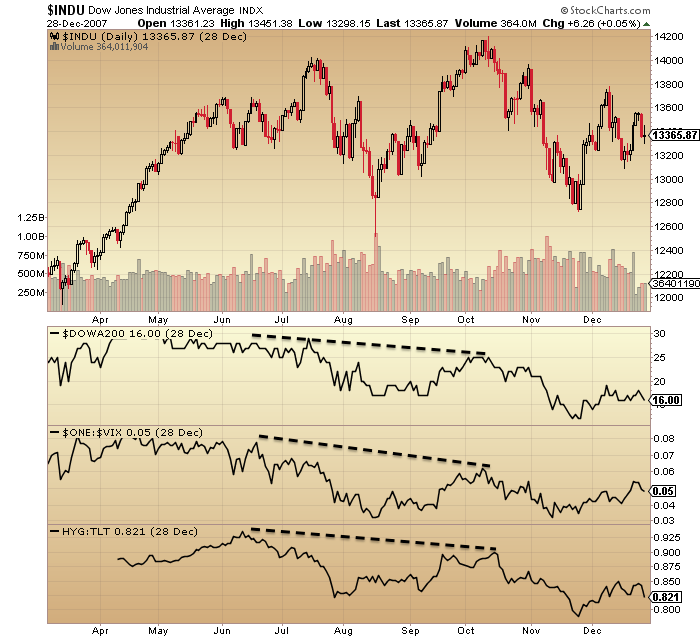
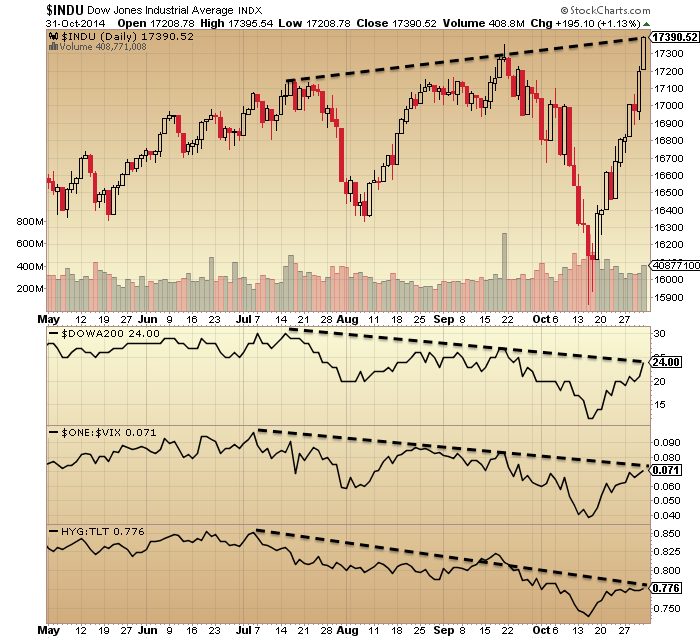
3. Whilst Dow Industrials shows a megaphone formation since then, Dow breadth and Vix (inverted) reveal a similar decline since the start of July.

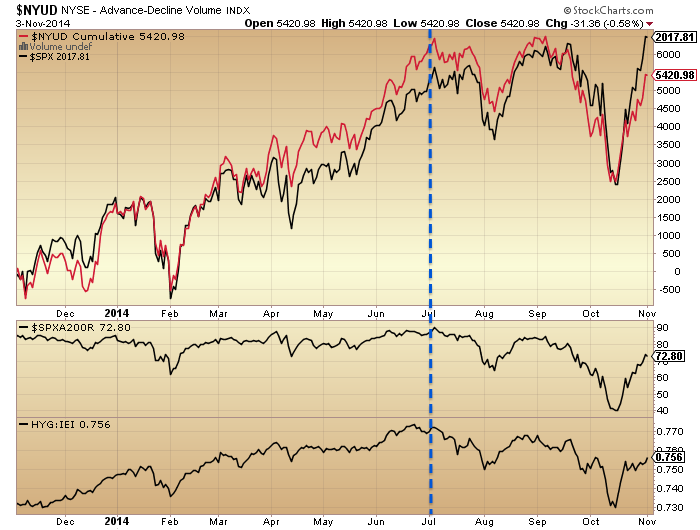
4nov44. The SP500 shows a megaphone too, however its breadth followed the same declining pattern since the dotted line. NYSE advance-decline volume and the high yield to treasuries ratio also reveal the start of July peak.

4nov95. Ditto the Mclellan Summation Index and the trend change in put/call ratios:

4nov7

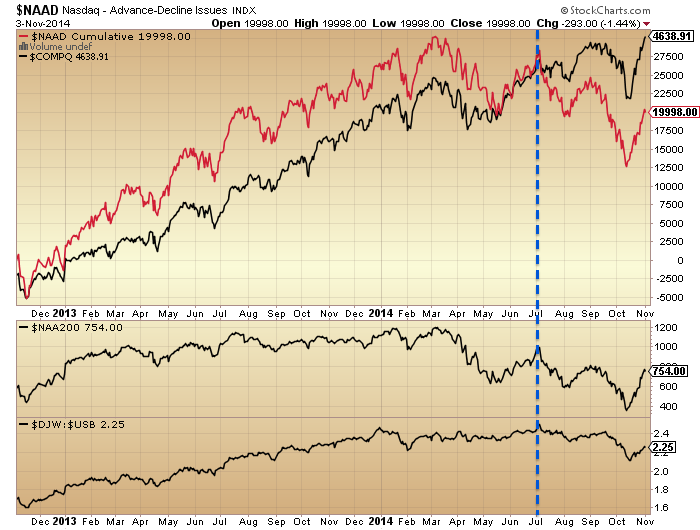
6. Nasdaq breadth significantly diverged at that point.

4nov8

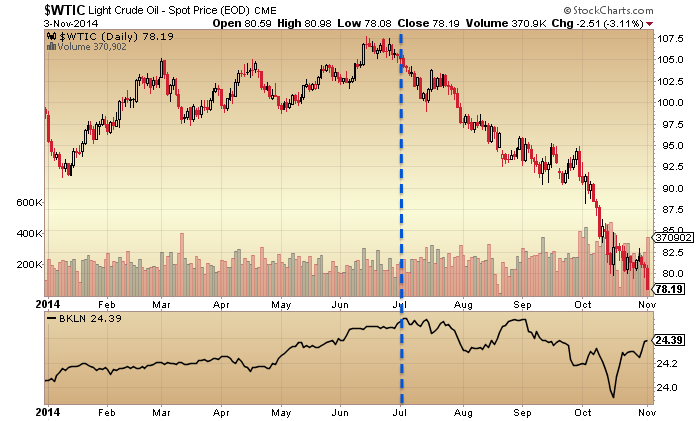
7. Oil took on a deflationary track at the start of July and leveraged loans made their peak.

4nov18

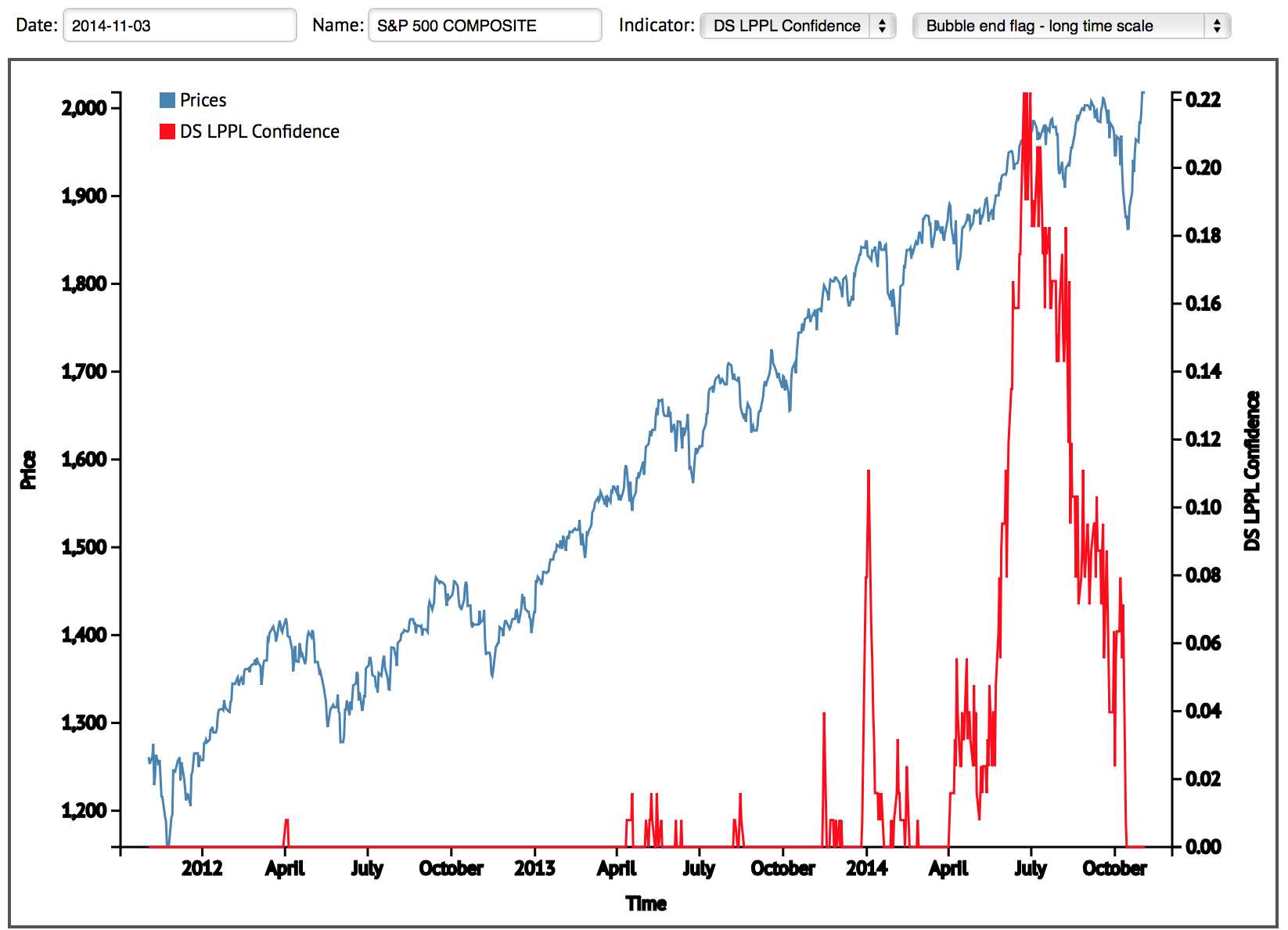
8. And lastly, the Sornette bubble end flagged on the SP500 at that time:

Screen Shot 2014-11-04 at 08.00.44Source: Financial Crisis Observatory

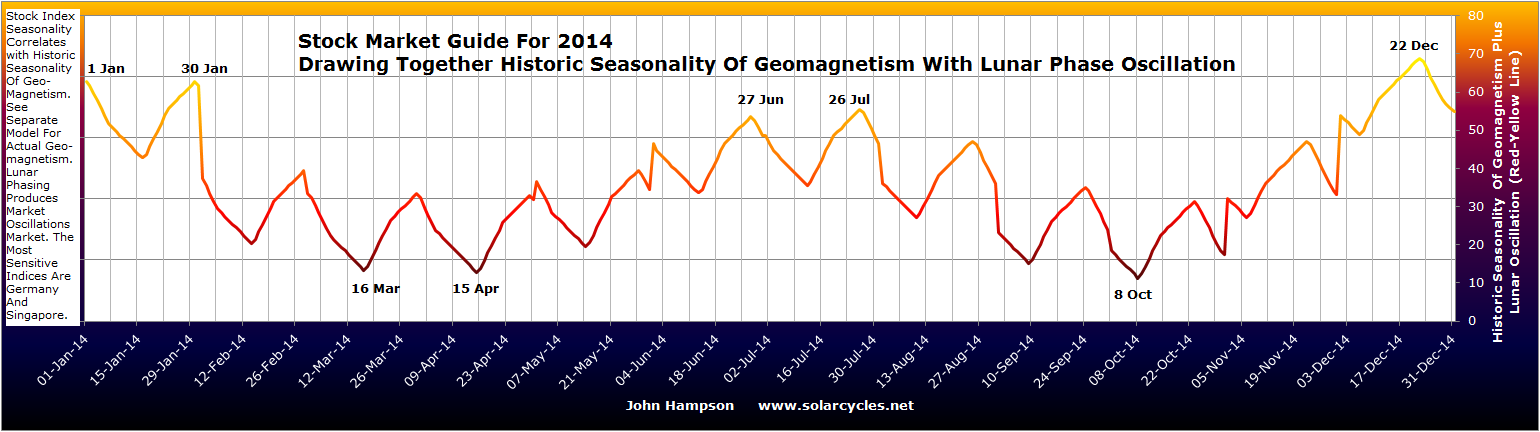
Why the start of July? It is the mid-year geomagnetic (inverted) seasonal peak, falling close to the June 27 new moon (2 trading days away) and the first such double optimism peak following the April smoothed solar maximum. If we think of the idealised speculation peak being the triple confluence of solar, geomagnetic (inverted) and lunar peaks, then 27th June would be the closest to that.

4nov15

On which note I’d like to point out the increased recent actual geomagnetism which has caused a declining cumulative geomagnetic trend over the last couple of months, aligning with action in most of the above indicators and indices. Here shown with the Dax:

4nov16

In short, the ‘red herring’ is the higher highs in price in the SP500, Dow and Nasdaq. They appear to the untrained eye to still be in bull market uptrends, but analysis says otherwise.

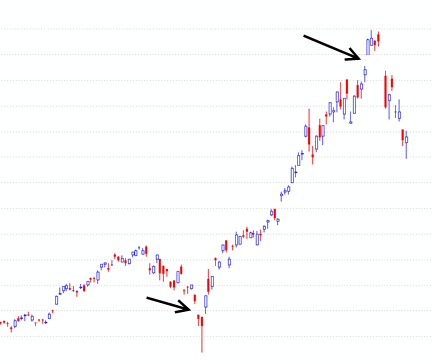
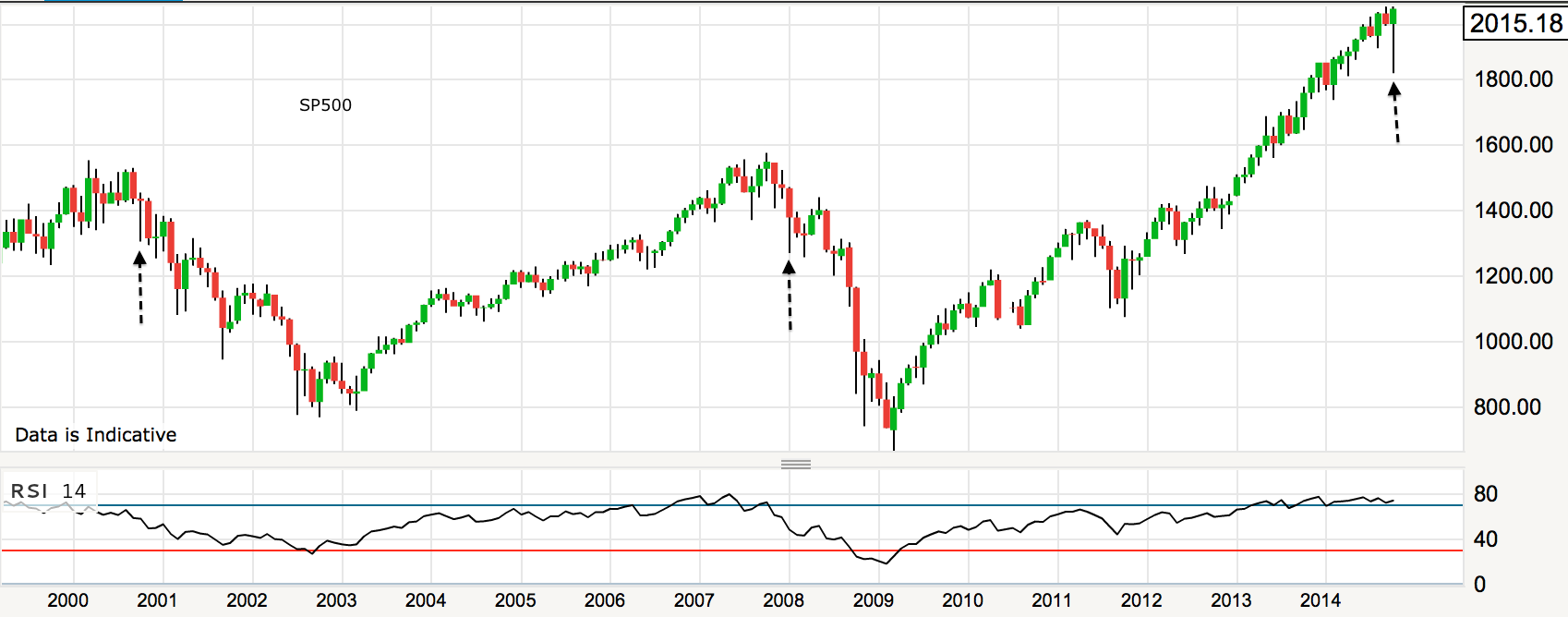
By various indicators, November 2014 should be equivalent to the two monthly arrows shown in the last two major SP500 peaks here:

Screen Shot 2014-11-04 at 07.53.54

The previous month in each case was a large hanging man candle (long-tailed). November should be a down month in price and the large price megaphones in large caps resolved to the downside.

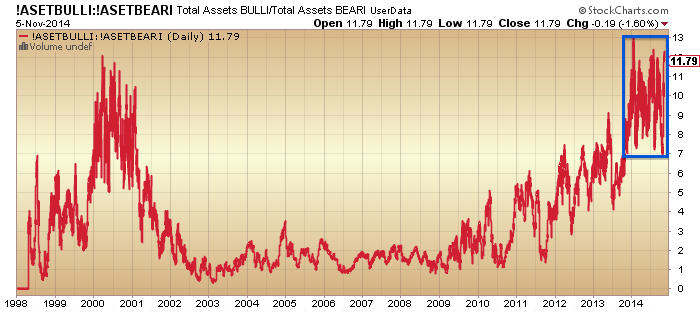
Bullishness and allocations are back to their invisible limits at this point:

4nov19 4nov1Whilst it is mathematically possible that they could both reach further extremes, these levels – which are absolute historic extreme levels – have so far acted as a cap, so the next move in equities should be down.

We can add to that the diminishing fuel over the last few months from put/call ratios and NAAIM exposure (a smart money indicator), as well as the number of stocks that are serving to rally the markets and the number of stock indices participating, plus the risk appetite proxies such as junk bonds and cyclical sectors versus defensives, all suggesting the rug is being gradually pulled from underneath stocks.

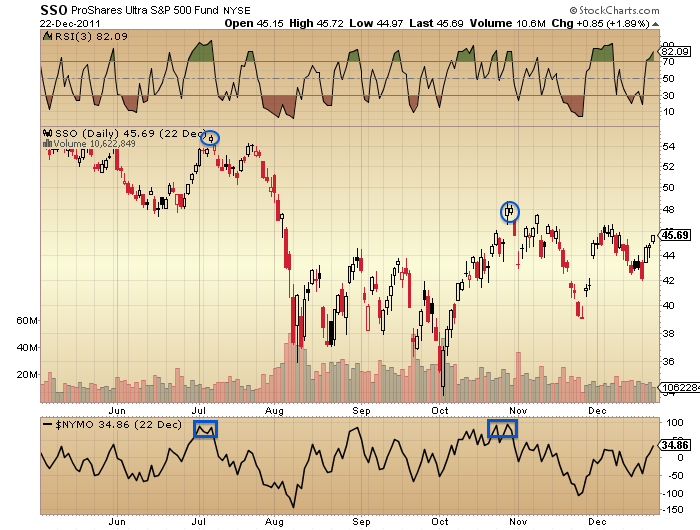
Friday’s gap up in price was a potential exhaustion gap. Add to this that Nymo reached over 80 for the second time in 5 days and previous instances from recent history that suggest a reversal should be swift and decisive. Yesterday’s candle has the look of a reversal candle too. The second chart below shows such combinations of exhaustion gap plus Nymo>80 from 2011, and what happened next.

4nov2 3nov1Stocks should roll over this week. Then November should be a big down month. This really should be game over for the bulls.

November

October ended with new marginal highs on the SP500, Dow and Nasdaq. The bottom line is: my analysis doesn’t change. Here’s why.

There are too many stock market topping indicators for this not to be a bull market peak. I refer you to this list:

Screen Shot 2014-10-16 at 17.57.40

We can add to this now that ECRI leading indicators have turned negative, financial conditions are in decline and we have various additional negative divergences.

We can then cross-reference the list with the solar maximum for timing. Being able to refine with hindsight, the smoothed solar maximum looks likely to have been April 2014, with SIDC no longer running an alternative model with a higher high ahead. That puts the stock market on borrowed time since April.

Screen Shot 2014-11-02 at 06.44.48Source: Solen

We have evidence the stock market topping process initiated 31 Dec 2013, with a persistent move to defensives since then.

2nov3Source: Stockcharts

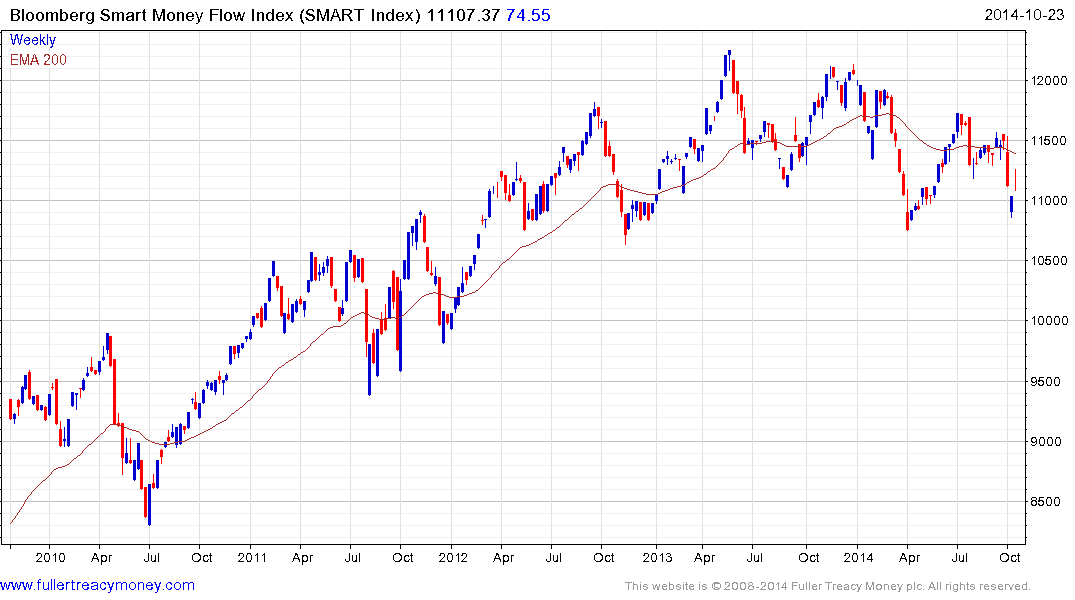
Plus dumb money flow took over from smart:

31oc20Source: Fullertreacymoney

The stock market topping process appears to closely mirror the last solar/stocks peak of 2000, putting us right at the end of the process:

30oc530oc6The question mark is over the higher highs in price here in 2014. US large caps have now made yet another higher high in October. However, they do so on negative divergences, similar to 2011 or 2007’s peaking (just marginal highs on clear divergences).

31oc2 31oct1

Indeed this powerful rally in price over the last two weeks is weak under the hood, with multiple further divergences:

2nov6 2nov7 2nov8This rally ought to fail imminently, and this is backed up by overbought stats: Nymo hit over 80 on Friday for the second time in 5 days. Per Andrew Kassen, this twin-occurrence happened 9 times before, resulting in an 11% average fall, with 8 out of 9 of them turning down the day after this signal.

That means Friday’s gap up could turn out to be an exhaustion gap. But it’s fairly unequivocal: stocks ought to turn down at the start of this coming week, and being just several days from the full moon the pressure ought to be downward. We can draw into this picture the position in gold and miners, which appear to be capitulating on heavy volume:

2nov10

Source: Dr.Cooper

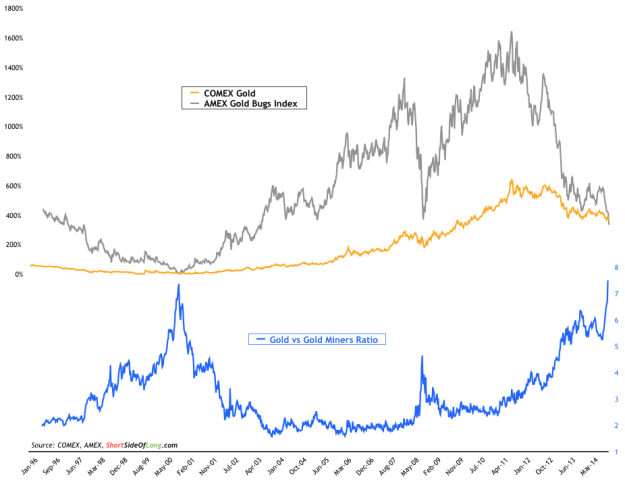
The extremes reached echo the 2000 bottom:

2nov9

Source: ShortSideOfLong

I’m looking for a high volume intraday reversal candle on gold and miners to tie in with a peak in stocks.

Also unequivocal is that November should be down, per the positioning in the topping process by multiple indicators. October 2014 is matched up with its counterparts in the last two major tops below:

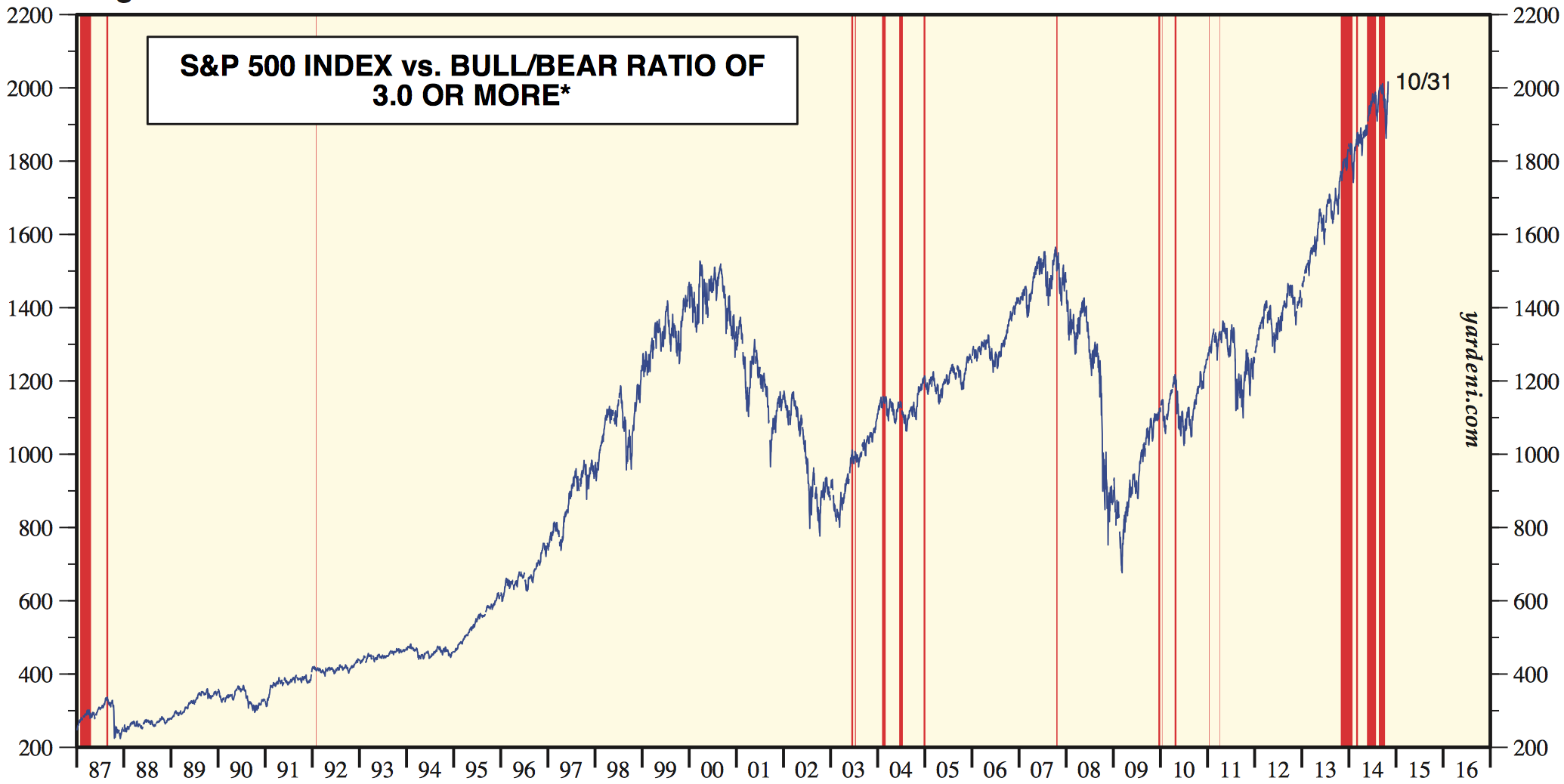
Screen Shot 2014-11-02 at 07.10.34The long tails look the same, but the candle tops do not. Things are different this time. Look at the clustering of V-bounces and of extreme lop-sided sentiment:

2nov9

Source: Dana Lyons
Screen Shot 2014-11-02 at 07.16.11

 Source: Ed Yardeni

Unprecedented. It seems fairly certain that both are reflective of a mania but does it mean a stock market topping process won’t play out in the ‘usual’ way? It’s not easy to answer that without a historical precedent.

However, this brings us to the bull case which would advocate that central bank policies have caused this and postponed any bear market. Supporting this we have once again made new highs on large caps following a very strong buying-of-the dip, whilst seasonality is doubly positive from here into year end (geomagnetic, Presidential). The Japanese BOJ shocked the markets with increased QE and the Japanese pension fund announced increased purchases of Japanese equities. So is it a losing battle fighting such intervention and support? Could those 37 topping indicators shown above all be attributed to ZIRP and QE making equities the only home for a decent return, and therefore this time not actually signals for a market peak?

I just don’t believe that. If you don’t agree with me, then I’m fine with that: you’ll find plenty of bullish blogs to follow. Understand that I’m feeling the pain with a significant drawdown on my short positions, so it’s imperative that I try to be as objective as possible. Ultimately, this is about my money and my life. I go over and over the data and come to the same conclusions:

I see a large cluster of market topping indicators aligning with timing by solar maximum. I see multiple negative divergences on this last rally up. I see lower highs and lower lows on US small caps, European indices and junk bonds since July, making the price action in US large caps the anomaly that will be the last to resolve. I see a positioning by indicators right at the end of the topping process. I see a mantra for this mania of ‘central bank policy trumps all’.

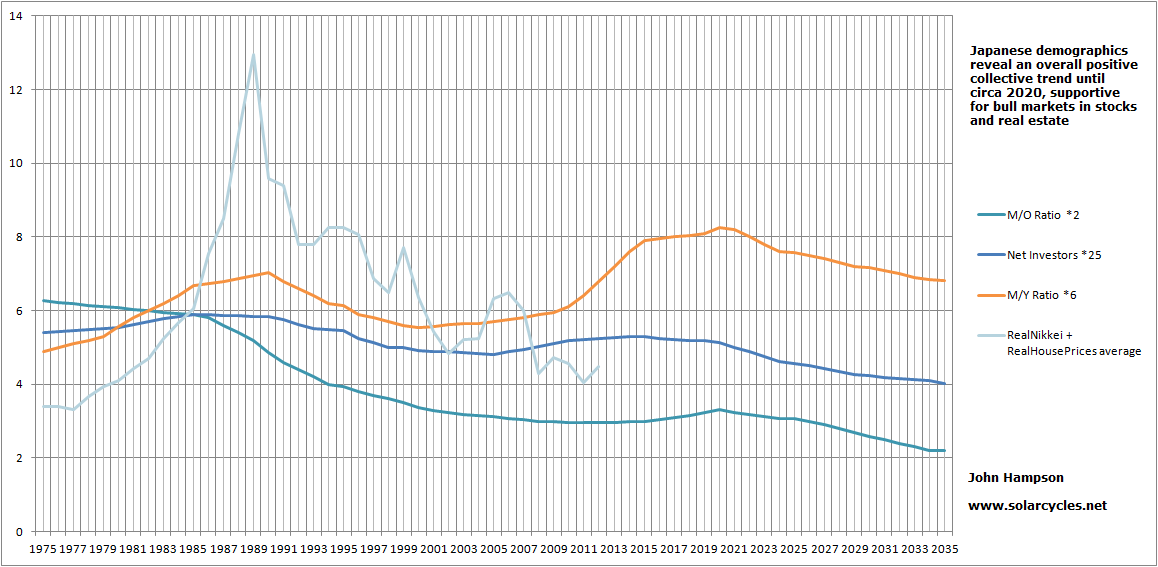
Note: I would not want to be short Japanese equities here. I may go long this week with a stop if the Nikkei can hold its breakout. Japan is in a slight demographic tailwind window in contrast to the other majors, and the direct buying of stocks by the Government is notable.

2nov15

But this doesn’t affect my view on US and European equities where I remain short, and gold where I remain long. By my analysis it’s fairly clear that a renewed turn-down in these stock indices and a capitulative low in precious metals should occur within the next few days and November should be a strong down month for stocks, as this is the only fit by indicators. If this doesn’t happen I will be stepping aside, closing positions and waiting. I am not being stubborn or wedded to a view, I just have such an overwhelming multi-angled bearish topping case that I think even if I was a total delusional, it has to be right.

So, it looks like we are making a megaphone top on the Dow and SP500. There is room for just a fraction higher into the top of the megaphone but the reversal ought to be close at hand. Nymo suggests as soon as Monday, so let’s see.

2nov20